Plinko Casino Australia: Games, Payments and Terms
 Available in AU

Plinko’s falling-disc format sits between slot-style presentation and a distinct game, while payment options and bonus rules shape the practical choice.
Table of Contents
- Plinko in the Slot-Machine World
- The Online Casino Question Australia Cannot Settle at the Screen
- What “Plinko Casino Australia” Means in 2026
- Real-Money Play, Withdrawals and the Cost of Waiting
- Plinko Beside the Pokie Jackpot Machine
- A Review Is Only as Useful as Its Fine Print
- Free Play, Bonus Funds and the Difference Between Them
- Crypto Payments and the Price of Speed
- Bonus Terms: The Wagering Arithmetic Behind the Promise
- Lucky Names, Casino Guides and Victoria’s Pokie Debate
Plinko in the Slot-Machine World
Plinko borrows its most recognisable image from a board game: a disc drops from the top, meets a field of pegs and ricochets towards a prize space below. In a digital casino catalogue, that familiar descent may be presented as a slot title. The label can be useful, but it does not mean the game behaves like a traditional reel machine. The distinction lies in what moves, what determines the result and how the software frames the event.
A conventional pokie builds its identity around reels, symbols and combinations. A Plinko-style game puts the fall itself at the centre. The player sees a ball or disc pass through a pattern of obstacles, while the software determines where it lands. The screen borrows the suspense of a physical game of chance: each deflection appears to narrow the possibilities, even though the display is part of a designed digital system. It is a small theatre of uncertainty, with the route made visible and the underlying calculation less so.
That difference explains why the category can feel unsettled. A title may be grouped with slots because it appears in the same software catalogue, carries familiar casino presentation or uses a slot-like interface. Yet its central action resembles a drop-board game more than a line of spinning reels. “Slot” can describe a place in a catalogue as much as a precise account of the mechanics. Labels are tidy; games are not always so obliging.
The same distinction matters when several Plinko-themed titles appear side by side. A shared name or visual motif does not establish that they are identical products, nor that they come from the same developer. The title, provider and rules belong to separate pieces of information. A game’s name can evoke a temple, a rush or a mythic figure; those decorations say little on their own about its software, return setting or the way a result is produced. Branding is the loud part. The rules are the useful part.
Pokies Tips and Tricks: What Advice Can Change
Casino software providers make games for operators to place in their catalogues. Their work can include the visual design, sound, interface and rules that shape a title. Providers may specialise in different styles, from reel-based pokies to table games or games built around a single repeated action. A Plinko-style title therefore sits at the meeting point of a recognisable game idea and the larger machinery of digital game production. Its appearance may be simple; its classification depends on the product and its provider, not merely on the pegs drawn on screen.
That is also why a title’s presentation should not be mistaken for evidence about its mechanics. A promotional name cannot establish whether a game has reels, a fixed set of landing spaces, adjustable settings or particular rules. Those details have to be stated in the game information itself. If the information is vague, the attractive image of a ball tumbling through pegs does not fill the gap. It only gives the uncertainty better lighting.
Return-to-player figures require the same care. KA Gaming slot titles typically show RTP percentages in the 94% to 96% range, but that provider-level range should not be transferred automatically to every Plinko-themed game. RTP is attached to a particular game configuration, not to a broad visual family. A title’s own published information is the relevant place to look for its stated figure. Even then, RTP describes a statistical measure across extended play, not a forecast of what a particular session will return.
There is a cultural reason the falling-disc format travels so easily. Its movement is legible at a glance: the ball goes down, the pegs interrupt its path, and the landing becomes the scene’s final punctuation. Reel symbols require combinations to be read; a falling object makes chance look physical. The screen turns an abstract result into a little journey. That journey can feel more transparent than it is, because watching the route unfold is not the same as knowing how the result was determined.
The word “demo” can also describe a version intended to show how a title looks and works without representing every condition of another setting. A demonstration may help explain the interface, but its presence does not establish that every version has identical rules or settings. Likewise, a review is only informative when it identifies the game being discussed and distinguishes observed features from assumptions drawn from its theme. Calling something a “top” title is not a substitute for describing it.
Plinko is a game idea that may be packaged within the broad slot category, but its mechanics involve a falling disc rather than spinning reels.
Plinko, then, is best understood as a game idea that may be packaged within the broad slot category, rather than as a guarantee of one standard format. The catalogue label, provider, rules and published game information each answer a different question. Keeping them separate prevents a familiar name from doing more work than it can bear.
The distinction is modest, but useful. A bouncing disc is not a set of reels.
The Online Casino Question Australia Cannot Settle at the Screen
A game can appear on a screen without becoming lawful merely because the screen is private. That distinction sits at the centre of Australia’s approach to online casino services: the law addresses what operators provide to people in the country, while the internet makes the service seem close at hand. A page presenting Plinko as an online casino game may look like an ordinary entertainment product. Its appearance does not settle its legal status.
The Interactive Gambling Act 2001 makes it illegal for operators to provide real-money online casino games to people physically in Australia. The prohibited category includes slots, poker and table games, as well as familiar casino formats such as blackjack and roulette. The rule is about the service being offered to customers here; a digital interface does not turn a casino product into something outside the law.
Hobart Casino Information: What Searches Can Confirm
That arrangement reflects a broader Australian choice about gambling. The country has not treated every form of wagering as interchangeable, or every screen as a neutral venue. Different laws and authorities govern different parts of the field. For online casino services, the federal framework is restrictive, and enforcement has a visible presence in the form of blocked websites and compliance action. The technology crosses borders easily. The legal line does not.
ACMA’s role
The Australian Communications and Media Authority, usually shortened to ACMA, is the federal body responsible for enforcing the Interactive Gambling Act and monitoring compliance with federal interactive gambling laws. Its work is not limited to identifying a prohibited service after it has been reported. It can also take action that affects whether the service can be reached from within Australia.
Where a website provides a prohibited interactive gambling service, or advertises one in Australia, ACMA can ask Australian internet service providers to block access to it. The regulator makes the request; internet providers implement the block. This is an important distinction. A website disappearing from a connection does not necessarily mean that the underlying business has vanished, but the measure can cut off access for people using Australian providers.
Blocking is a practical instrument for a regulator working in a market where websites can be hosted and operated beyond national borders. It is not a complete account of enforcement, nor does every blocked page represent the same kind of operation. ACMA’s stated role is broader: monitoring compliance with federal interactive gambling laws and enforcing the Act. The screen is the point where a distant service becomes visible; it is also where enforcement can interrupt that visibility.
Legal Restriction
The Interactive Gambling Act 2001 makes it illegal for operators to provide real-money online casino games to people physically in Australia.
The scale of that work is substantial. Following enforcement actions, ACMA has blocked more than 1,455 illegal gambling and affiliate websites since November 2019. The total includes affiliate sites as well as gambling sites, so it should not be read as a count of casino operators alone. It does, however, show that enforcement reaches beyond the game interface to the surrounding web pages that direct people towards prohibited services.
There is also a reported count of services that have withdrawn from the Australian market after ACMA began enforcing the rules in 2017. Published figures disagree: one gives a total of more than 210, while another reports more than 190. The difference should remain visible rather than being flattened into a single, falsely precise figure. Both accounts describe services leaving the market after enforcement began; neither makes the internet a fixed or easily counted territory.
A screen is not a jurisdiction
The language used to describe casino-style games online can blur distinctions. A title may be labelled a game, a live experience or a pokie, and a search for a Plinko casino can lead towards pages that present the format in several ways. Those labels describe how a product is packaged, not whether providing it for real money to people in Australia is permitted. Under the federal law, the nature of the service matters more than the decoration around it.
Big Red Pokies Online in Australia: Rules and Demos
Advertising is part of that boundary. ACMA’s blocking power applies not only to websites providing prohibited interactive gambling services, but also to sites advertising them in Australia. That matters because the route to a gambling service may begin with a promotional page rather than a game itself. The legal framework recognises that an invitation and the service it points towards can belong to the same regulatory problem.
This is one reason a page that appears readily accessible should not be mistaken for an endorsement or a local authorisation. The internet offers a visual impression of availability: a logo loads, a game screen opens, a payment option is displayed. None of those details changes the federal rule governing the operator’s offer to people in Australia. A screen can make distance feel irrelevant. The law insists otherwise.
The regulatory question also has a human edge. Gambling is not merely a dispute over where software is hosted or which authority can reach a website. Problem gambling can cause serious harm, particularly to vulnerable individuals. A system that restricts online casino services is therefore part of a wider public decision about exposure and risk, even when its most visible tool is technical—an access block rather than a sign on a physical door.
ACMA cannot make every offshore page disappear from the global internet, and a block is not the same thing as erasing a service. Its powers operate within a defined national framework: enforce the Act, monitor compliance and request that Australian providers restrict access to prohibited services or their advertising. That framework is less dramatic than the promise of a seamless game, but more consequential. The page may be built elsewhere. The offer is still judged in Australia.
What “Plinko Casino Australia” Means in 2026
Choosing a Plinko casino in Australia calls for checking the details that are actually available, such as licensing, deposit requirements and payout information. This list offers a concise reference to those known details for 2026.
1. SpinsUp
License: Curacao Gaming Control Board OGL/2023/174/0082 (Dama N.V.) SpinsUp is listed with a Curaçao Gaming Control Board licence, OGL/2023/174/0082, held by Dama N.V.
2. Bizzo Casino
License: Curacao Gaming Control Board (TechSolutions Group N.V.) Bizzo Casino is listed with a Curaçao Gaming Control Board licence, with TechSolutions Group N.V. named as the operator.
3. WinSpirit Casino
License: Curacao eGaming OGL/2024/923/0383 (Antillephone N.V.) · Min. deposit: A$30 WinSpirit Casino is listed with a Curaçao eGaming licence, OGL/2024/923/0383, held by Antillephone N.V. Its minimum deposit is A$30.
4. DragonSlots Casino
License: Curacao Gaming Authority (Jumpman Gaming Ltd) DragonSlots Casino is listed under the Curaçao Gaming Authority, with Jumpman Gaming Ltd named in connection with its licence.
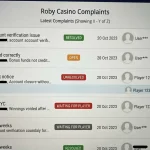
5. Roby Casino
License: Curacao eGaming (Roby Games Ltd) Roby Casino is listed with a Curaçao eGaming licence, with Roby Games Ltd named as the operator.
6. LevelUp Casino
License: Curacao eGaming OGL/2023/174/0082 (Dama N.V.) · Min. deposit: A$15 LevelUp Casino is listed with a Curaçao eGaming licence, OGL/2023/174/0082, held by Dama N.V. Its minimum deposit is A$15.
7. Lucky Dreams
License: Curacao · Min. deposit: A$20 (POLi) Lucky Dreams is listed with a Curaçao licence. The stated minimum deposit is A$20 when using POLi.
8. Ricky Casino
Payout speed: crypto under 1 hour, PayID 1-3 business days · Min. deposit: A$20 (A$30 to qualify for the bonus) Ricky Casino lists crypto payouts as taking under an hour and PayID payouts as taking 1–3 business days. Its minimum deposit is A$20, or A$30 to qualify for the bonus.
9. GoldenCrown
License: Curacao Gaming Control Board OGL/2023/176/0095 (Hollycorn N.V.) GoldenCrown is listed with a Curaçao Gaming Control Board licence, OGL/2023/176/0095, held by Hollycorn N.V.
10. House of Pokies
License: international iGaming licence – jurisdiction not named in the source · Payout speed: PayID 1-24 hours · Min. deposit: A$30 (PayID from A$10) House of Pokies is listed with an international iGaming licence, though the jurisdiction is not named in the source. PayID payouts are stated as taking 1–24 hours; the minimum deposit is A$30, or A$10 with PayID.
The phrase can make a single activity sound like a local product: a Plinko-style casino game, offered to Australians under Australian rules. The legal position is less tidy. Under the Interactive Gambling Act 2001, operators cannot provide real-money online casino services to people physically in Australia. That restriction includes casino-style games offered over the internet; a familiar game name does not create an exception.
The distinction is between the person playing and the business providing the service. The Act places the prohibition on operators. Players are not criminalised simply for using an offshore site. That does not make the service locally authorised, or turn an offshore licence into an Australian one. Different questions, often collapsed into one.
Some offshore casinos do accept Australian payments and operate under licences issued elsewhere. A payment option that works from Australia, however, says something about the site’s commercial arrangements, not about whether it may lawfully provide online casino services here. Nor does the word “licensed” settle the local question: the relevant licence may belong to another jurisdiction, while the Australian restriction still applies to the operator’s offer to people in Australia.
That is the hinge in the meaning of Plinko casino in Australia in 2026. The phrase may describe a game encountered on an offshore gambling website, but it should not be mistaken for an Australian-regulated casino category. “Available” and “permitted to offer” are not synonyms. The internet has always been good at making that distinction look smaller than it is.
The same applies when the wording shifts around—Plinko casino, casino Plinko, or a site presenting the game among other casino offerings. A change in label does not change the service’s legal character. The question is not whether the page uses a particular name, but whether an operator is providing a real-money online casino service to someone in Australia.
Lightning Link Online Pokies in Australia Explained
This is not a claim that every offshore website behaves alike, nor a recommendation to use one. It is a description of the boundary: Australian law restricts the operator’s provision of the service, while the player is not made a criminal merely by accessing an offshore site. The distinction is narrow, but consequential. A border drawn around the business, not the browser.
Real-Money Play, Withdrawals and the Cost of Waiting
A balance displayed on an offshore gambling account is not the same thing as money in a bank account. Between the two lie the operator’s payment rules, processing steps and identity checks. That distinction matters in any discussion of Plinko played for money: a game screen can update immediately, while a withdrawal may not.
The first practical question is how a deposit or withdrawal moves. Payment methods do not share a single timetable, and the name of a method alone cannot promise when funds will arrive. A specialist review has reported that a BPAY transfer may take a bank day. That is a reported possibility, not a clock that every transaction follows. Bank processing, the operator’s own handling and the point at which a request is submitted can all affect the wait. A payment marked as pending is not yet a completed transfer.
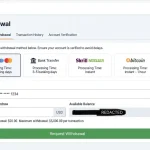
Withdrawal thresholds create another gap between the balance shown and the amount that can be requested. Offshore sites commonly set minimum withdrawals between A$75 and A$150. A smaller balance may therefore remain on the account until it reaches the stated threshold, subject to the site’s rules. The threshold is not a fee, but it can have a similar practical effect: money that cannot yet be withdrawn is money that is not available elsewhere.
Attention: A displayed balance is not the same as money in a bank account, as it may be subject to withdrawal thresholds and identity checks.
The threshold should be read alongside any transaction conditions shown for the chosen payment route. A site may distinguish between the method used to deposit and the method used to withdraw, and the rules may not be identical. Those details matter before money is sent, not after a request is waiting in a queue. A payment option that accepts funds into an account does not, by itself, establish how or when the same funds can be returned.
Why the first withdrawal takes longer
The first cashout is often the point at which an account must prove who controls it. KYC checks commonly ask for identity documents such as a passport or driver’s licence, together with a utility bill. The purpose is to connect the account details with a real person and address. Until the requested documents are reviewed, a withdrawal can remain on hold even if the balance appears ready.
That pause is especially easy to misread when deposits were accepted without the same scrutiny. Verification at withdrawal may feel like a newly invented obstacle, but it is a familiar feature of offshore account procedures. The useful question is not whether a site displays a withdrawal button; it is what documents it requires, how it asks for them, and whether the account information matches the evidence submitted. Inconsistent names or outdated address details can make a routine check more complicated.
Documents should be handled carefully. A request for identity material should be assessed through the site’s stated secure process, rather than sent casually through an unrelated channel. If the instructions are unclear, the uncertainty itself is part of the payment risk. A fast-looking deposit flow cannot settle it.
Pokies in Geelong: Checking Current Venue Information
A mobile app or downloaded game changes none of these mechanics. Software on a phone may make an account easier to reach, but it does not alter a withdrawal threshold, complete KYC or guarantee that a payment has cleared. The same goes for a balance attached to a particular Plinko title: the game interface and the payment account are separate parts of the transaction. One can move quickly while the other waits.
Free-play labels and no-deposit language also do not answer the question of whether cash can be withdrawn. They describe an offer or a mode of access, not the arrival of money in a bank account. Any conditions attached to promotional funds belong to a separate calculation; the immediate cash question remains whether the balance is withdrawable and whether identity checks are complete.
For someone considering money-based gambling, these delays are not a strategy to manage around. They are a reason to treat funds placed in an account as unavailable until returned, and never as income or a way to recover losses. Gambling can cause serious harm, particularly for vulnerable people. Participation should be restricted to adults aged eighteen or older.
The plain arithmetic of a cashout is less glamorous than the bouncing disc on screen: a displayed balance, a minimum threshold, documents, processing, then—if the transfer completes—funds outside the account. Each step has its own terms. Waiting is part of the cost.
Plinko Beside the Pokie Jackpot Machine
Plinko and a progressive pokie jackpot can share the same broad casino setting without sharing the same mechanics. In Plinko, a ball drops through a field of pegs and lands in a position associated with an outcome. A progressive jackpot, by contrast, is a prize pool that grows as play feeds into it. The resemblance is mostly visual: movement, suspense, and a result arriving at the bottom. The machinery behind the result is different.
Progressive Jackpot Mechanics
A progressive jackpot is a prize pool that grows as play feeds into it, unlike standard Plinko where outcomes are determined by the ball’s landing position without a shared accumulating pool.
That distinction matters because “jackpot” can suggest a prize that keeps accumulating, even when a game has no such feature. A Plinko title should not be assumed to have a progressive prize simply because its presentation feels dramatic or because it appears beside jackpot games. The relevant question is whether the game’s rules describe a growing pool funded by play. Without that mechanism, a Plinko result is not a progressive jackpot.
Progressive pokie jackpots come in two broad forms. A standalone version is attached to a local machine, so its pool grows through play on that machine. A networked version connects multiple machines or a wider fleet under an operator, allowing play across that network to contribute. The pool is therefore not just a large fixed prize: it is linked to a system of participating games.
The word “progressive” describes the changing prize, not a promise that it will be won soon, or that every stake contributes in the same way. The contribution rate determines how much qualifying play feeds into the pool. A game may also set a minimum bet for jackpot eligibility. A specialist review gives A$1.00 as an example of such a threshold; that is an example, not a universal setting. A stake below the stated requirement may not qualify for the jackpot, even where the underlying game remains playable.
Those details belong to the jackpot’s rules, not to the general label on a game. The contribution rate and qualifying minimum bet need to be read together: one describes the connection between play and the prize pool, while the other marks the stake at which that connection applies. A screen showing a prominent jackpot figure cannot answer either question by itself.
Best Pokies in South Australia: How to Compare
This is where Plinko-style titles and progressive pokies can be confused by their shared casino vocabulary. A Plinko game may have changing outcomes and a top prize, but that does not establish that its prize increases through linked play. Conversely, a progressive pokie can look like an ordinary machine while its prize depends on contributions from a wider network. The display is not the mechanism.
The distinction also holds whether Plinko is described as a ball game or as a casino game. Those labels say something about its format, but not whether it is connected to a progressive pool. Nor does a crypto payment option establish a jackpot feature; payment method and prize structure are separate matters. A game’s own rules are the place where a progressive feature, contribution terms and minimum qualifying stake should be specified.
For Australian readers, the wider setting is not a neutral invitation to play. Online casino games are prohibited services when offered for real money to people in Australia, and problem gambling can cause serious harm, particularly to vulnerable people. The mechanics can still be described without treating either Plinko or pokies as a source of income. A jackpot is a designed prize pool, not a financial plan.
The neatest distinction is also the least glamorous: Plinko describes how an outcome is produced; progressive describes how a prize pool grows. Sometimes the two ideas may appear in the same product, but one does not imply the other. Different machinery.
A Review Is Only as Useful as Its Fine Print
A review of a Plinko-branded casino game is worth little if it offers a verdict without showing what that verdict rests on. The useful details are plain ones: the game’s provider, its rules, the way a round is resolved and any published return-to-player figure. Without those, “good” and “bad” are decoration.
Best RTP Slots in Australia: Understanding RTP
Plinko is a familiar visual idea: a piece drops through pegs and lands in a space that determines an outcome. A casino version may borrow that look while operating under the rules of a digital game. A review should explain which version it is describing, rather than letting the name do the work. “Plinko” can refer to a format, a title or branding attached to a casino page; those are not interchangeable.
That distinction matters when names such as Plinko Rush, Plinko Verde or Plinko Deluxe appear in a review. A title alone does not establish who made the game, what its rules are or whether an article has examined the actual product. The same goes for celebrity-linked labels, including claims that connect a Plinko game with MrBeast. A name or image is not proof of endorsement, authorship or a relationship with a game provider. A careful review separates what can be confirmed from what is merely suggested by presentation.
RTP is one useful item when it is stated for the specific game. It describes a theoretical return across extensive play, not a promise about an individual session. KA Gaming’s slot RTP figures typically fall between 94% and 96%. That range is contextual information about the provider’s slots, not a figure that can automatically be assigned to every Plinko title, nor a prediction of what any player will receive. A review that cites an RTP should identify the game it applies to and avoid turning a long-run measure into a personal forecast.
Keno Online Casinos in Australia: Legal Rules
The word “review” can also conceal a change of subject. Some pages assess the game itself; others describe a casino, repeat promotional language or discuss access without establishing anything about the software. For a search about Plinko casino reviews, the distinction is decisive: claims about a site do not substitute for details about a game, and claims about a game do not settle the legal status of an online casino service in Australia.
The strongest review is therefore not the most emphatic one. It gives enough specific information to check the object being described, marks uncertainty honestly and keeps game facts separate from advertising language. If it cannot say which title, provider or published RTP it means, its verdict has little to stand on.
A confident tone is not evidence.
Free Play, Bonus Funds and the Difference Between Them
“Free play” can describe a version of a game that uses no real-money balance. It can also appear in promotional language, where the apparent freebie is attached to an account or an offer. Those meanings are not interchangeable. A no-money demonstration has no winnings to withdraw; a bonus-linked spin may produce a balance governed by conditions.
Do
- Check if a demonstration balance has winnings available for withdrawal
- Review the specific wagering terms attached to bonus funds
Don’t
- Assume “free spins” are a gift without conditions
- Confuse a demonstration mode with a real-money bonus
That distinction matters in Plinko-themed promotions as much as anywhere else. “Free spins” sounds like a small gift, neatly separated from the machinery around it. In practice, any resulting bonus funds are not cash. They may be subject to wagering checks before withdrawal, and the conditions determine whether winnings can become withdrawable at all. The label alone does not answer that.
A useful reading of “free” therefore begins with what the play produces and what rules attach to the result. Does it stay within a demonstration balance, or does it create bonus-derived funds? If the latter, the offer’s terms—not the word “free”—set the limits. A balance displayed on screen can look spendable while remaining conditional.
A specialist review gives one concrete illustration: a $100 bonus carrying a 40x wagering requirement would call for $4,000 in bets before bonus-derived winnings could be withdrawn. That is an example of how a stated condition works, not a universal rule for casino offers. The arithmetic is plain; the fine print decides whether it applies.
The same caution belongs to phrases such as “free Plinko” or “free spins”: they do not establish that a game or offer is available without restrictions, nor that any resulting funds are withdrawable. In Australia, the legal setting also matters; real-money online casino services cannot lawfully be offered to people in the country. Promotional language does not alter that boundary.
For adults, gambling can cause serious harm, particularly for people vulnerable to it. Free-play wording can soften the appearance of risk, but it does not change the difference between a demonstration and conditional bonus funds. “Free” is a label, not a settlement.
Crypto Payments and the Price of Speed
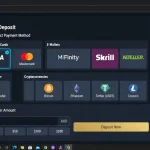
For people comparing Plinko games that mention cryptocurrency, the apparent attraction is speed: a crypto withdrawal can clear faster than other routes. A specialist review reports that this advantage can be offset by network fees and conversion spreads, both of which reduce the amount that arrives. The useful comparison is therefore not simply how quickly a balance leaves an account, but how much value survives the journey.
Fast Payout Online Casinos in Australia: Legal Context
A network fee is charged for processing a transaction on the chosen blockchain. Its size can vary with network conditions, so the amount deducted may not be obvious from the withdrawal screen alone. A conversion spread works differently: it is the gap between the rate used to convert one currency or asset into another and the rate a player might see elsewhere. Neither cost necessarily appears as a separate, clearly labelled charge. The difference may instead be folded into the final exchange rate.
That distinction matters when a balance is displayed in one currency but sent or received in another. A withdrawal described as fast can still arrive with less value than expected after fees and conversion. The screen may show a completed transfer; the destination balance tells the quieter part of the story.
Crypto is not a single payment method with one fixed cost. The network selected, the asset used and the conversion route can all affect the result. Claims about speed are therefore incomplete when they say nothing about the deductions. The same applies to Plinko-branded pages that foreground cryptocurrency without explaining how the amount is calculated.
A “Plinko casino script” is a different phrase: it may refer to software used to build a game or site, not to a way of paying. Payment language and software language should not be treated as evidence of one another.
A crypto withdrawal’s actual value may be lower than the displayed balance due to network fees and conversion spreads.
Fast is not the same as full. A withdrawal’s practical value depends on what remains after the transaction has crossed the network and any conversion has taken place.
Bonus Terms: The Wagering Arithmetic Behind the Promise
A bonus can look like extra balance while functioning more like a set of conditions attached to future withdrawals. The key term is the wagering requirement: it says how much must be bet before bonus-derived winnings become eligible to leave the account. Until those conditions are met, the displayed balance is not the same thing as spendable cash.
A specialist review describes a 40x requirement on a $100 bonus. The arithmetic is exact: $100 multiplied by 40 means $4,000 in bets must be placed before winnings derived from that bonus can be withdrawn. That is an example from a particular review, not a standing rule across casinos or offers. The multiple, eligible games and deadline can differ, so the headline amount alone tells little about the eventual value.
Game contribution rates make the calculation less straightforward. A specialist review says blackjack may count for only 10% toward wagering. Under that term, a $10 blackjack bet would add $1 to the qualifying total, rather than the full stake. A game that appears to help clear a requirement can therefore move it very slowly. The written terms matter more than the game’s name.
Some specialist reviews describe requirements in the range of 30x to 50x, but that range should not be mistaken for a universal standard. The relevant offer’s own rules determine which bets count, whether a maximum stake applies and what happens if the requirement is not completed in time. A generous-looking bonus can shrink under those clauses.
The same arithmetic applies to Plinko-themed promotions, including offers framed around a no-deposit bonus: the label does not remove wagering conditions. Nor does a game title change the contribution rate set in the terms. Bonus funds are not cash; they remain conditional until the stated checks are satisfied.
Melbourne Casino: Hotels, Dining and Visitor Details
In Australia, online casino services are prohibited for operators offering them to people in the country. Gambling can cause serious harm, particularly for vulnerable people; gambling is for adults aged 18 and over. The small print is the real mechanism.
Lucky Names, Casino Guides and Victoria’s Pokie Debate
Names such as “lucky” promise a personal relationship with chance; casino guides promise to make a sprawling leisure industry legible. Neither changes the arithmetic of gambling. A name can suggest fortune, while a guide can describe a game, but the language of discovery sits beside a much older Australian argument about who bears the cost when gambling becomes routine.
A report published by gamble.com.au put Victorian poker-machine losses at $2.6 billion over the year it examined, more than $44.7 million above the figure for 2015. The same report said Melbourne’s Epping Plaza Hotel, in the city’s north, generated over $21 million from 100 machines during the reported year. These are dated snapshots, not timeless measures; their force lies in the scale they assign to an ordinary local venue.
Reform proposals have tried to bring that scale back to the individual transaction. Senator Nick Xenophon and MP Andrew Wilkie advocated a one-dollar ceiling on poker-machine bets, challenging a system in which the speed and size of play can obscure cumulative losses. The proposal did not make the machines harmless. It made the argument visible.
That tension is present even in the cheerful vocabulary surrounding games. “Lucky” makes chance sound intimate, while a casino guide presents choice as a matter of sorting and comparison. Victoria’s pokie debate points elsewhere: toward venues, machine settings and the public consequences of repeated play. A guide may organise names; it cannot settle those questions.
Gambling can cause serious harm, particularly for vulnerable people. It is not an income source, and participation in gambling is for adults aged 18 or older. The culture around it is more than entertainment language. It is also a record of what a society permits, measures and tries to change.
Pokies

3-Reel Slots in Australia: Features and RTP
Learn how bonus rules, configured RTP, free-play options and Australia’s regulatory boundary shape the way...

5-Reel Slots in Australia: How the Odds Work
Explore how RTP, bonus rounds, paytables and game availability shape the experience without predicting the...

Seven-Reel Slots in Australia: RTP and Bonus Features
A practical look at how reel formats, bonus rules, RTP and free-play modes shape what...

Online Pokies Australia: Legal and Payment Guide
Australia’s rules put the licensing burden on operators, while bonus terms, payment routes and practice...

Aussie Online Casinos: Legal Status, Bonuses and Payments
A clear-eyed look at offshore casino sites, the terms attached to offers and the limits...

Aussie Pokies Online: What “Best” Really Means
A practical look at terminology, legal boundaries, game settings, payments and the limits of rankings...

Australian Pokies Online: Legal and Payment Risks
Offshore access does not equal local authorisation, and payment methods or bonus offers do not...

Bonus Buy Slots in Australia: How They Work
A bonus buy pays for direct entry to a feature round, but the result remains...

Best Casino in Adelaide: Venue and Online Context
A practical distinction between a city destination and online services, with context on the venue...

Casino in Brisbane: Hotels, Dining and Visitor Guide
Understand how accommodation, dining, gaming, transport and venue details differ across Brisbane casino search results....

Best Casino in Canberra: What the Search Can Establish
A practical look at accommodation, gaming searches and amenities, distinguishing what a search suggests from...

Darwin Casino: Venue, Work and Entertainment Guide
A practical look at venue information, employment and entertainment claims, and how online casino offers...

Hobart Casino Information: What Searches Can Confirm
Searches about poker, accommodation, dining and facilities raise distinct questions, and a keyword alone does...

Melbourne Casino: Hotels, Dining and Visitor Details
A guide to nearby stays, booking conditions, dining, entertainment and other questions that shape a...

Casino in Perth: Hotel Stays and Visitor Details
A practical look at accommodation, access and visitor questions, with a clear distinction between a...

Best Casino in Queensland: Rooms, Dining and More
A practical look at room categories and booking terms, with related details on dining, parking...

Best Casino in Sydney: Hotels, Play and Practicalities
A practical guide to comparing a Sydney casino stay with the venue’s gaming, dining and...

Casino Stays in Tasmania: What to Verify
Room rates, promotions and nearby amenities require a named property and current terms before they...

Casino in Victoria: Hotels, Gaming and What’s Verified
A clear guide to what casino searches can establish about accommodation, gaming, food, location and...

Western Australia Casinos: Hotel and Venue Details
Casino-related searches cover hotels, poker, dining and facilities, but property-specific terms and venue facts need...

Fast Payout Online Casinos in Australia: Legal Context
A clear look at what withdrawal-speed claims can—and cannot—show about offshore casino services, payment routes...

High-volatility slots in Australia: how they work
A guide to how volatility affects the pattern of payouts, why past spins do not...

Instant Payout Online Casinos in Australia
Offshore withdrawal claims, verification checks and payment routes do not establish licensing, guaranteed timing or...

Keno Online Casinos in Australia: Legal Rules
The guide examines real-money online keno, Australian gambling rules, venue machines, offshore payment risks and...

Live Dealer Casinos Online in Australia: Legal Context
The guide explains why live streams do not change the legal treatment of online casino...

Live Casino Online in Australia: Legal Limits
Australia has no locally licensed online casinos, so a site's visibility is not proof of...

Low-Volatility Slots in Australia: How They Work
Low volatility generally describes more frequent, smaller wins and less variation, but it does not...

Pokie Machines in Australia: What Players Should Know
A practical guide to online game features, RTP, free play and the legal and payment...

Best pokies in Adelaide: hours, access and rules
Venue listings do not confirm gaming-room hours; this guide also separates local access, online play...

Pokies in Brisbane: venues, online rules and limits
Brisbane searches can point to physical gaming venues or online services, but location-based wording does...

Best Pokies in Canberra: Hours, Venues and Limits
A practical look at venue hours, gaming-area access and what public information can—and cannot—establish about...

Pokies in Geelong: Checking Current Venue Information
Venue listings may show a building as open without confirming that its gaming room is...

Melbourne Pokies: Locations, Hours and What “Best” Means
Venue names and search labels alone do not confirm distance, opening hours or whether a...

Pokies in New South Wales: Hours and Venue Access
Venue schedules can differ from gaming-area access, so availability needs checking with the specific NSW...

Best Pokies in Perth: Hours, Venues and Checks
A practical guide to venue hours, return figures, duty of care and the limits of...

Best Pokies in South Australia: How to Compare
A practical look at RTP, venue hours, locations and the limits of online and venue-based...

Best Pokies in Sydney: What Search Results Can Prove
Search terms can suggest locations and rankings, but they do not verify addresses, opening hours,...

Best pokies in Tasmania: hours, access and legal context
Tasmanian venue listings, gaming-room schedules, chance and online-play rules require separate checks rather than a...

Progressive Jackpot Slots: How They Work
Progressive slots add part of eligible wagers to a changing prize pool, but the rules...

Online pokies for real money in Australia: legal guide
A practical look at offshore operators, payment limits, bonus terms and why access does not...

RTP for Australian pokies: what it really means
A guide to long-run return, independent spins and the practical limits of RTP. What a...

Best RTP Slots in Australia: Understanding RTP
RTP is a long-run theoretical measure, not a forecast of individual spins or a guarantee...

Video Slots in Australia: Spins, RTP and Play
Explore how random outcomes, return settings and play options shape the experience of online video...

Big Red Pokies Online in Australia: Rules and Demos
The name does not change Australia’s rules on real-money online pokies or what a free-play...

Casino Dice Games in Australia: Rules and Formats
Casino dice games vary in how they use the roll, set wagers and connect outcomes...

Crash casino games in Australia: legal limits
Australian players are not criminalised simply for using offshore gambling sites, but operators face restrictions...

Lightning Link Online Pokies in Australia Explained
Lightning Link is played on Australian venue machines, while online searches may lead to similarly...

Live Baccarat Online Casinos in Australia: Legal Guide
A practical look at Australia’s legal context, baccarat formats, payments and the features that distinguish...

Live Blackjack Online Casinos in Australia: Legal Context
Australia’s rules distinguish locally licensed services from offshore offers, while a live stream does not...

Live Roulette in Australia: English-Speaking Dealers
A practical overview of roulette mechanics, betting options, odds and the legal boundary for real-money...

Mines Casino Game in Australia: Rules and Risks
A Mines grid describes a play format, not proof of an Australian product or a...

Most Trusted Online Casino in Australia: Legal Limits
Australia has no domestic online-casino licences, so payment options, bonuses and game details must be...

Pokies Tips and Tricks: What Advice Can Change
A practical look at what players can control, what random outcomes mean, and why rituals...
Real Money Casino Table Games in Australia
Live streams show activity at a physical table, while digital games use software to determine...