Trustly Casino Sites in Australia: What Is Known
 Available in AU

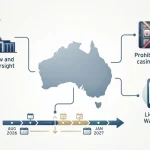
The Interactive Gambling Act 2001 prohibits operators from providing real-money online casino games to people in Australia, while payment details remain uncertain.
Table of Contents
- Australian Pokies and the Legal Boundary
- Deposits, Verification and the Limits of What Is Known
- Withdrawal Timing Is Not the Same as Instant Access
- What Can—and Cannot—Be Established About Trustly
- Comparing Payment Options Without Naming a Winner
- A Payment Method Does Not Determine Which Games Are Offered
- Australia’s Everyday Payment Habits, and the Missing Trustly Evidence
- Withdrawal Routes and Casino-Specific Conditions
- Paying by Trustly: What the Available Evidence Does Not Confirm
- Slots and Payment Methods Are Separate Questions
Australian Pokies and the Legal Boundary
“Pokies” is the familiar Australian word for gaming machines, but familiarity does not make online versions a lawful service. The distinction matters: the Interactive Gambling Act 2001 places the central prohibition on operators, not on Australians merely for using an offshore site. Online casino games offered for real money to people in Australia—including pokies, poker and table games—fall within the services operators are prohibited from providing.
That division can be easy to miss in the language of casino websites. A page may speak of Australian customers, local currency or a mobile experience designed for Australian users. Those details do not change the legal boundary. The Act concerns the provision of the gambling service to people physically in Australia; a foreign address or a familiar interface does not turn prohibited provision into a permitted local offering.
The law is therefore not a licensing checklist for Australian online casinos. It does not create a domestic licence that makes real-money online casino games lawful for Australian residents when offered by an operator. Advice to choose a locally licensed casino would suggest a route that this framework does not provide. A carefully phrased warning can still be wrong.
Use this list as a starting point when checking casino sites for Trustly availability in Australia in 2026. The details below identify what is known about each operator, but do not confirm that Trustly is currently offered.
1. SpinsUp
License: Curacao Gaming Control Board OGL/2023/174/0082 (Dama N.V.) SpinsUp is listed with a Curaçao Gaming Control Board licence, OGL/2023/174/0082, held by Dama N.V. The available details do not specify its payment methods.
2. Bizzo Casino
License: Curacao Gaming Control Board (TechSolutions Group N.V.) Bizzo Casino is listed with a Curaçao Gaming Control Board licence held by TechSolutions Group N.V. No payment-method details are provided.
3. WinSpirit Casino
License: Curacao eGaming OGL/2024/923/0383 (Antillephone N.V.) · Min. deposit: A$30 WinSpirit Casino is listed with a Curaçao eGaming licence, OGL/2024/923/0383, held by Antillephone N.V., and a minimum deposit of A$30. The available details do not specify whether Trustly is accepted.
4. DragonSlots Casino
License: Curacao Gaming Authority (Jumpman Gaming Ltd) DragonSlots Casino is listed with a Curaçao Gaming Authority licence held by Jumpman Gaming Ltd. No payment-method details are provided.
5. Roby Casino
License: Curacao eGaming (Roby Games Ltd) Roby Casino is listed with a Curaçao eGaming licence held by Roby Games Ltd. The available details do not specify its payment methods.
6. LevelUp Casino
License: Curacao eGaming OGL/2023/174/0082 (Dama N.V.) · Min. deposit: A$15 LevelUp Casino is listed with a Curaçao eGaming licence, OGL/2023/174/0082, held by Dama N.V., and a minimum deposit of A$15. Trustly availability is not specified in the provided details.
7. Lucky Dreams
License: Curacao · Min. deposit: A$20 (POLi) Lucky Dreams is listed with a Curaçao licence and a A$20 minimum deposit via POLi. The supplied information does not say whether Trustly is available.
8. Ricky Casino
Payout speed: crypto under 1 hour, PayID 1-3 business days · Min. deposit: A$20 (A$30 to qualify for the bonus) Ricky Casino lists crypto payouts in under 1 hour and PayID payouts in 1–3 business days. Its minimum deposit is A$20, or A$30 to qualify for the bonus; Trustly availability is not specified.
9. GoldenCrown
License: Curacao Gaming Control Board OGL/2023/176/0095 (Hollycorn N.V.) GoldenCrown is listed with a Curaçao Gaming Control Board licence, OGL/2023/176/0095, held by Hollycorn N.V. No payment-method details are provided.
10. House of Pokies
License: international iGaming licence – jurisdiction not named in the source · Payout speed: PayID 1-24 hours · Min. deposit: A$30 (PayID from A$10) House of Pokies lists an international iGaming licence, though the jurisdiction is not named in the source, and PayID payouts of 1–24 hours. Its minimum deposit is A$30, or A$10 via PayID; Trustly availability is not specified.
The operator’s position and the player’s position
The Act is directed at operators providing prohibited interactive gambling services. It does not explicitly make an individual player’s use of an offshore site a criminal offence. That difference is significant, though it should not be mistaken for approval, protection or a guarantee about what may happen in any particular circumstance. The law’s prohibition on supply remains in place even where the player is not the person it expressly criminalises.
The Australian Communications and Media Authority, usually referred to as ACMA, is responsible for enforcing the Act. Enforcement gives the prohibition practical force; it is not merely a statement of principle. Offshore services may be subject to blocking and other enforcement measures, so the fact that a site appears online does not establish that it is lawful to offer its games to people in Australia, or that access will remain uninterrupted.
There is also a separate practical cost to the legal distinction: Australian consumer law does not protect people who use offshore casinos. A player may be outside the Act’s explicit criminal reach and still be outside the protections that would ordinarily accompany a domestic consumer transaction. These are not opposing answers. One concerns whether the player is criminally liable under this law; the other concerns the protections available when dealing with an offshore service.
AUD Banking and Payment Options at Roby Casino Australia · Casino Sites That Accept Paysafecard in Australia
The limits of a payment label
A payment method cannot settle the legal question. Whether a site describes itself as accepting Trustly, cards or another means of payment says nothing by itself about whether its real-money casino games may lawfully be offered in Australia. Nor does the presence of a payment option amount to a local licence or consumer safeguard. The cashier and the law occupy different parts of the same transaction.
That distinction matters because online gambling is often presented as a series of practical choices: a game, a payment route, an account, a device. Regulation draws a less convenient line through the sequence. The service itself is the issue. If an operator provides real-money casino games to people physically in Australia, changing the payment instrument does not change the character of that service under the Act.
The law also does not depend on whether a game resembles a machine in a club or appears as a small image on a phone. Online pokies remain online casino games. The screen may shrink; the legal category does not. That is the point at which the everyday vocabulary of entertainment meets a rule about supply.
Australia’s approach leaves a deliberately uneven picture: operators are prohibited from providing these services, while the Act does not explicitly criminalise players who use offshore sites. But that does not make offshore play a protected consumer activity, and it does not create a lawful Australian online casino market. Visibility is not legality. A site being reachable, or a payment route being displayed, cannot supply the permission the law withholds.
Legal Prohibition
Under the Interactive Gambling Act 2001, it is prohibited for operators to provide real-money online casino games to people physically in Australia.
Deposits, Verification and the Limits of What Is Known
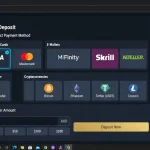
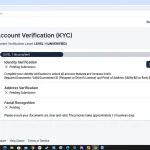
A deposit is often imagined as the first step in gambling: money moves, an account balance appears, and the business begins. In practice, the sequence can start earlier, with identity checks. Online casinos commonly ask customers to complete a Know Your Customer assessment before carrying out financial transactions. The cashier, then, is not always a simple doorway. It sits behind a checkpoint.
That distinction matters when a payment method is named. Trustly may sound like a complete answer to the question of how a deposit would work, but a payment brand does not, by itself, establish that a particular cashier offers the service. Nor does the name disclose what amount a site might accept. Those details belong to the arrangements of the individual service, not to the word “Trustly” in isolation.
A figure can look reassuringly precise while being no more than a guess. The same restraint applies to claims about which sites accept Trustly: a payment method cannot be assumed to appear in every cashier.
That silence is not merely a technical inconvenience. A payment choice has consequences for who can move money, under what terms, and after which checks. The KYC stage makes that visible. It places identity verification before a financial transaction, rather than treating a deposit as an anonymous act detached from the person making it. The account may appear to belong to a user; the transaction is still subject to procedures around that user’s identity.
Casino Sites That Accept Skrill in Australia Explained · Casinos That Accept POLi in Australia: What to Know
The arrangement reflects a wider feature of financial services: access is conditional. A person may see a payment option described in general terms, yet its availability in a particular setting is a separate matter. An account, a card or a bank-linked service does not make every transaction possible. The cashier is where a provider’s rules meet an operator’s arrangements, and neither can be inferred simply from the method’s name.
Bank transfers offer a limited point of comparison. A specialist review has described them as potentially involving longer waits and higher fees. That is a qualified observation, not a universal rule for every bank transfer or every service. It also cannot be carried across to Trustly: similarity in being associated with banking does not establish identical processing, charges or availability. Payment categories are not interchangeable just because they share a financial neighbourhood.
The distinction between funding an account and using a particular method is especially important in Australia. The Interactive Gambling Act 2001 prohibits operators from providing real-money online casino games to people physically in the country. Offshore sites do not become lawful Australian services because a cashier displays a familiar payment brand, and the use of such a site does not bring Australian consumer-law protection to its customers. The law places the restriction on operators; the payment label does not alter that boundary.
In that setting, language such as “deposit accepted” can suggest more certainty than it contains. It may refer to a listed method, an operator’s arrangements, or a payment route that depends on checks and conditions. It should not be mistaken for a promise that a transaction will be available to every Australian customer. Nor does a stated method establish the amount that may be deposited.
KYC Procedures
Identity verification (Know Your Customer) typically occurs before financial transactions, meaning a deposit is not an anonymous act but is subject to the user’s identity procedures.
The KYC check and the cashier’s payment choices answer different questions. Verification concerns the customer and whether financial activity can proceed under the site’s procedures. A payment method concerns how funds might be transferred if the relevant route is offered. Neither tells the whole story alone. A named service cannot be treated as confirmation of the deposit’s size, terms or availability.
For a topic that invites neat figures and lists, the responsible account is less tidy. Trustly cannot be assigned a deposit minimum or a routine Australian casino procedure on the basis of its name. And where online casino services themselves are prohibited for operators to provide in Australia, a payment method is not a quiet exception. The machinery remains subject to the law.
Withdrawal Timing Is Not the Same as Instant Access
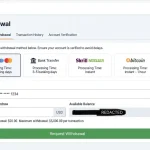
“Instant” can describe a payment claim without describing every part of a withdrawal. Money leaving a casino account and becoming available elsewhere are not necessarily the same event; the word alone does not explain what a stated speed measures. That distinction matters when comparing reports about payment methods, particularly when one figure comes from a specialist review rather than a universal rule.
A specialist review reports that an Amex casino withdrawal can take as long as five days to clear. That is a bounded claim about one payment method, not a promise that every withdrawal follows the same timetable. Nor does it establish when a casino approves a request, when a transfer is initiated, or when a receiving account reflects the funds. Those are separate points in the journey, and the reported clearance period should not be made to answer questions it does not address.
Casino Sites That Accept BPAY in Australia: What’s Known · Casinos That Accept MiFinity in Australia: What to Know
There is a temptation to treat a withdrawal as a single click followed by a single clock. The language of payment services encourages that neat picture. In practice, the description “instant” needs a subject: instant deposit, instant withdrawal, or instant availability after a withdrawal has been processed. Without that distinction, two descriptions may sound comparable while referring to different stages. A quick transaction is not necessarily quick access to the money.
The Amex figure also cannot be transferred to Trustly. A timing reported for one method does not establish how another method works, whether it is offered by a particular casino, or how long a withdrawal through it might take. The same restraint applies to claims about “instant Trustly” withdrawals in Australia. A phrase that sounds precise is not evidence of a route or a processing time. It is only useful when the payment method, the direction of payment and the meaning of the timing are all clear.
Cryptocurrencies such as Bitcoin and Ethereum are described as offering instant deposits and withdrawals, with limited or no fees. That is a separate comparison, not a reason to assign the same speed or fee structure to other payment methods. It also should not be read as a guarantee that every casino handles every cryptocurrency in the same way. The claim concerns the stated characteristics of these currencies; it does not settle how a particular operator’s withdrawal process works.
Amex
Specialist reviews report that withdrawals can take as long as five days to clear.
Cryptocurrencies
Bitcoin and Ethereum are described as offering instant deposits and withdrawals with limited or no fees.
“Instant” remains an unusually elastic word. It can make a financial process sound like a door opening, when the relevant question is whether the money is merely moving or is actually available. That difference is easy to lose in a headline and hard to recover from it. A reported time is most meaningful when its source and scope remain attached.
There is also a more consequential boundary around the setting in which these payment comparisons arise. Under the Interactive Gambling Act 2001, operators may not provide real-money online casino games to people physically located in Australia. Australian consumer law does not protect people who use offshore casinos. Payment speed does not alter either point, and an instant transfer would not make an unlawful service lawful or supply consumer protections that are absent.
The law draws its line around the service, not around the speed of the cashier. That is worth keeping in view whenever payment language makes access seem like the only issue. “Fast” can describe a transaction; it cannot describe the legal or consumer position of the person using an offshore casino.
For a withdrawal, then, the available comparisons are narrow: a specialist review gives a stated Amex clearance period, while cryptocurrencies are described as allowing instant withdrawals with limited or no fees. Neither statement supplies a Trustly timetable. Neither should be stretched into one. The difference is small in wording, but substantial in meaning.
Casino Sites That Accept Osko in Australia: What’s Known · Casinos That Accept Neteller in Australia: What to Check
What Can—and Cannot—Be Established About Trustly
The year attached to a payment-method search does not settle what a particular operator accepts. A casino’s cashier can change, and a payment option shown in one market or at one point in time does not establish that it is available to people in Australia. Trustly’s name alone says nothing about whether an Australian customer could use it at a given site.
That distinction matters because a list of casinos accepting Trustly in Australia would sound like a practical directory, not a guess. Without current confirmation from each operator, naming sites as Trustly-enabled would risk presenting an unverified claim as a usable fact. The same caution applies to descriptions such as “best” or “available”: neither tells anyone whether the service is actually offered to Australians, and neither changes the legal position.
There is a more basic boundary. Under the Interactive Gambling Act 2001, operators must not provide real-money online casino games to people in Australia. The prohibition covers online casino services, rather than turning on which payment method a site displays. The Australian Communications and Media Authority (ACMA) is responsible for enforcing the Act. A payment brand cannot make an otherwise prohibited service lawful.
The law’s treatment of operators and players is not identical. The Act does not explicitly criminalise an individual for using an offshore casino. That does not amount to official approval, or create the protections that would come with a lawful local service. Australian consumer law does not protect players who use offshore casinos. The distinction is narrow, and easily mistaken for reassurance. It is not one.
Consumer Protection
Australian consumer law does not protect individuals who use offshore casinos, as these services operate outside the domestic legal framework.
Nor can a site’s general claim of supporting Trustly establish that the option applies to Australians. A payment facility may be described broadly while access depends on location or the operator’s own arrangements. Those details require direct, current confirmation; an old page, a brand name or a search result cannot substitute for it.
The year 2026 does not alter that standard. A date in a heading is not a guarantee that an operator’s cashier, market access or terms have remained unchanged. More importantly, even a confirmed payment route would not resolve the separate question of whether the underlying online casino service may lawfully be provided to people in Australia. Payment and legality are different matters.
This leaves a deliberately limited answer. Trustly should not be treated as proof that an Australian-facing casino is available, lawful or suitable. The decisive context is the law: the Act prohibits operators from providing real-money online casino games to people in Australia, while ACMA enforces that rule and players using offshore sites do not receive Australian consumer-law protection.
A payment logo is not a legal status.
Comparing Payment Options Without Naming a Winner
A payment method’s reach can look like a useful shortcut when comparing casino websites, but it answers only a narrow question: whether a particular route is reported as accepted. It does not establish which site is best, and it says nothing reliable about Trustly. A comparison between Visa and Amex cannot be converted into a Trustly ranking by filling in the missing column.
EcoPayz Casinos in Australia: What Is Verified · Casinos That Accept PayID in Australia: Legal Context
A specialist review has reported that Visa may be accepted at more Australian online casinos than Amex. That is a limited, time-sensitive comparison, not a permanent market rule. Acceptance can depend on the individual operator and the arrangements behind a payment method; a statement about two card brands does not establish the position of a bank-linked service such as Trustly. Nor does broader reported acceptance settle whether a site is lawful to provide casino games to people in Australia.
This is where rankings often claim more than their evidence can carry. A site described as the best for a payment option might be judged by its cashier, but payment acceptance alone cannot establish the quality of the wider service. It cannot show that Trustly is available to Australian customers, that a Trustly transaction would be accepted, or that the method would suit a particular account. A casino list labelled by payment brand is only as dependable as its current, site-specific checks.
There is also a legal boundary behind the comparison. Under the Interactive Gambling Act 2001, operators may not provide real-money online casino games to people physically located in Australia. The law does not explicitly criminalise players who use offshore sites, but Australian consumer law does not protect people using them. A payment label does not alter either point. It is not a licence, a safeguard, or evidence that a service is lawful for Australian residents.
Do
- Verify current payment options directly with the operator
- Check site-specific terms for each payment route
Don’t
- Assume a payment logo equals a local licence
- Use general card acceptance rates to rank Trustly casinos
The Visa–Amex comparison therefore has modest value: it illustrates that payment methods do not have identical acceptance across casino cashiers. It cannot identify the best Trustly casino in Australia, confirm a Trustly casino website, or support a list of Trustly-accepting sites. Those are separate claims and require direct, current evidence about the specific operator and the specific payment route. Without that, naming a winner would be guesswork dressed as comparison.
A broader card footprint is not a verdict. And a Trustly badge, wherever displayed, would not by itself resolve the legal status of online casino games for Australians. The distinction is plain, if inconvenient: payment acceptance describes a transaction option; it does not certify the operator, the games, or the protections available to a customer.
A Payment Method Does Not Determine Which Games Are Offered
A cashier and a games catalogue answer different questions. One concerns how an account might be funded; the other concerns what an operator makes available. A payment label cannot establish that a particular game is offered, and a game listing cannot establish that a particular payment route works. The two may sit beside each other on a website, but proximity is not evidence of a connection.
That distinction matters when Trustly is mentioned alongside casino games. Nothing in the payment method’s name identifies a particular catalogue, provider or title. Nor does the phrase “Trustly casino payment” describe a game feature. It describes a proposed way of moving money, subject to the arrangements of the service involved. A cashier entry, even if displayed, would say nothing by itself about which games appear elsewhere on the site.
Casino Sites That Accept Credit Cards in Australia
In Australia, however, the legal question comes before the catalogue question. The Interactive Gambling Act 2001 makes it unlawful for operators to provide real-money online casino games to people physically in Australia. The rule covers casino-style offerings such as poker and table games as well as pokies. A payment option does not alter that classification, and it cannot turn a prohibited service into a lawful one.
The statute’s focus is the operator providing the service; it does not expressly make an Australian player’s use of an offshore site a criminal offence. That distinction is not an endorsement. Australian consumer law does not protect people who use offshore casinos, leaving them without the ordinary local consumer safeguards in a dispute. The legal burden and the practical risk do not fall in identical places.
This is one of those arrangements in which the cashier can look more definite than the law surrounding the business. A familiar payment name may suggest ordinary commerce, while the underlying service remains subject to a prohibition on operators serving people in Australia. Familiarity is not permission.
It cannot establish which games are offered, whether a particular cashier route exists, or whether an operator may lawfully serve Australians. Those are separate matters, and collapsing them into one label makes a payment method appear to answer questions it does not. A neat shortcut. Not a legal one.
Australia’s Everyday Payment Habits, and the Missing Trustly Evidence
Australian payment culture is accustomed to switching channels. Contactless credit and debit cards are accepted almost everywhere, while mobile wallets such as Google Pay and Apple Pay have become similarly familiar. A card tap, a phone held near a terminal, and a bank-linked service such as PayPal belong to the same ordinary landscape: people move between them without treating the change as remarkable.
Common Australian Payment Habits
Australians frequently use contactless credit and debit cards, mobile wallets like Google Pay and Apple Pay, and bank-linked services such as PayPal for daily transactions.
That familiarity says something about how payment habits have adapted to daily life. It does not establish what an online casino cashier offers. A service being well known or widely used in Australia does not mean it is available for gambling transactions, and the popularity of bank-linked payments cannot be carried across as proof that Trustly is accepted by an Australian-facing casino.
The distinction matters because payment systems are not simply interchangeable labels. A method familiar in shops or for routine online purchases may have a different place, or no place, in a particular gambling service. Trustly’s name in a list of familiar payment options would therefore need support from the individual operator’s actual payment terms; general Australian habits cannot supply it.
There is also a larger boundary behind the cashier. Under the Interactive Gambling Act 2001, operators may not provide real-money online casino games to people physically in Australia. The law places the prohibition on operators, rather than explicitly criminalising players who use offshore sites. That difference does not turn an offshore service into a protected domestic one: Australian consumer law does not protect people using offshore casinos.
The country’s easy movement among cards, phone wallets and bank-linked services can make a new payment brand seem like a natural extension of an existing routine. Yet familiarity and availability are separate questions. Trustly may be part of the broader vocabulary of digital payments, but that alone cannot identify an Australian casino using it, or confirm that an Australian casino with Trustly is available. Habit is not evidence.
Casinos That Accept Tether USDT in Australia
Withdrawal Routes and Casino-Specific Conditions
A payment method appearing in a casino’s cashier does not necessarily work in both directions. A specialist review reports that some Australian-facing online casinos do not allow withdrawals to American Express. That is a report about particular arrangements, not a rule that applies across the market. Payment routes are conditional, and the distinction between funding an account and receiving money matters.
The same caution applies to Trustly. A reference to Trustly as a payment method would not, by itself, establish that a casino supports withdrawals through it. The phrase “Trustly withdrawal” sounds like a single feature; in practice, a withdrawal route depends on the terms and arrangements of the individual operator. General descriptions of a payment service cannot settle that casino-specific question.
Amex limits are also not uniform. A specialist review says that individual online casinos set their own deposit and withdrawal limits, which can differ between operators. That leaves no sound basis for treating a limit at one site as a standard for another, or for assuming that a payment method’s withdrawal conditions mirror its deposit conditions. The cashier is not a universal rulebook.
There is a broader legal context. The Interactive Gambling Act 2001 makes it illegal for operators to provide real-money online casino games to people in Australia. The absence of player liability for using an offshore site does not make such services lawful for operators, and Australian consumer law does not protect people who use offshore casinos. A payment route does not alter that boundary.
Withdrawal Realities
- Payment routes are conditional and may not work in both directions
- Deposit and withdrawal limits are set individually by each casino
- A payment label does not guarantee a specific withdrawal route or timeframe
So the relevant distinction is not simply between Trustly and Amex, but between a method being mentioned and a withdrawal being permitted under a particular casino’s terms. For Amex, specialist reporting indicates that availability and limits can vary. That cannot be converted into a general claim about Trustly withdrawals, or into a promise that a casino will return funds through any particular route.
Conditions are site-specific.
Paying by Trustly: What the Available Evidence Does Not Confirm
Trustly’s role as a casino payment method cannot be inferred from the fact that a site accepts other bank-linked services. A cashier’s options are set by the individual operator and can also depend on the payment provider and the customer’s bank. Naming a method in a general description of online payments does not establish that it can fund a casino account in Australia.
Amex offers a useful, limited contrast. A specialist gambling review has reported that some Australian online casinos accept Amex deposits. That does not make Amex acceptance universal, and it says nothing about Trustly. Nor does the appearance of a payment brand guarantee that a transaction will go through: Australian banks may block gambling-related Amex payments at the issuer level.
The distinction matters because “available” can describe several different things. A method may appear in a cashier, be offered only to some account holders, or be declined by a bank. Those are not interchangeable claims.
That is not a technical quibble. Payment systems sit between businesses, financial institutions and customers; each can impose its own conditions. A familiar name in one setting does not settle its use in another. The cashier is the point at which those arrangements become visible, but a generic reference to Trustly cannot substitute for a particular operator’s terms.
Casinos That Accept Apple Pay in Australia: Evidence
The question of paying with Trustly at a casino therefore has to remain separate from the broader fact that people use bank-linked payment services. In a market where real-money online casino services are prohibited for operators, a payment label also does not change the legal character of the service.
Names travel easily. Permissions do not.
Slots and Payment Methods Are Separate Questions
A payment label and a game catalogue belong to different parts of an online service. Trustly, where offered, would be a way to move money; it would not identify a particular game or change the rules governing what operators may provide in Australia. The phrase “Trustly slots” can blur those two questions, as though a banking route could confer a legal status on the games beside it. It cannot.
The Interactive Gambling Act 2001 prohibits operators from offering online casino games to people in Australia. That category includes online slots, alongside poker and table games. The law is directed at operators; it does not explicitly make an individual player’s use of an offshore site a criminal offence. That distinction is not an endorsement. Australian consumer law does not protect people who use offshore casinos, and the Australian Communications and Media Authority enforces the Act.
A cashier, then, is not a guide to what may lawfully be supplied. Nor does a payment method make an online game lawful simply because a transaction can be arranged. The legal question concerns the service being offered to people in Australia, not the brand attached to a payment button.
This matters because “online slots that accept Trustly” sounds like a simple pairing of product and payment. In practice, those are separate claims: one concerns a cashier arrangement, the other concerns games and the law applying to their provision. Treating the two as interchangeable turns a payment detail into a misleading assurance about the service itself.
The boundary is plain. A payment route is not a permission slip.
What are the deposit and withdrawal limits at the best Amex casinos?
Each casino sets its own Amex deposit and withdrawal limits, so they can vary. Check the casino’s cashier for its limits.
How do you check if casino sites accept Amex deposits?
Look for American Express in the casino’s cashier or listed payment options before depositing.
Does American Express work for online casinos?
Yes, some Australian online casinos accept Amex deposits, though acceptance is not universal. Some casinos do not allow withdrawals to Amex.
What are the fees involved with American Express payments?
Amex deposits typically have no fee, but a casino may add a 1.5% surcharge, and card currency conversion can incur a 3% fee. Withdrawal fees may also apply.
Are there fees for using Amex at online casinos?
Deposits are typically free, but a casino may charge a 1.5% surcharge or withdrawal fee. Amex card currency conversion can also incur a 3% fee.
AUD Banking and Payment Options at Roby Casino Australia

AUD Deposit Options at Roby Casino Australia
Roby supports several deposit categories that are relevant to Australian players: Visa, Mastercard, Skrill, Neteller,...

AUD Withdrawal Limits and Times at Roby Casino Australia
Roby supports several payment categories that can be relevant to withdrawals, including cards, e-wallets, bank...

$1 Minimum Deposit Casinos in Australia: What to Know
A casino’s stated minimum may differ from a payment method’s floor or the amount needed...

$1 Minimum Deposit Pokies in Australia: How It Works
A casino’s stated minimum is only one part of the transaction; the payment route may...

$10 Minimum Deposit Casinos in Australia: How It Works
The amount accepted depends on both the casino cashier and payment route, while costs and...

$10 Minimum Deposit Pokies in Australia: What It Means
A site's stated minimum may differ from what its card processor, wallet or other payment...

$2 Minimum Deposit Casinos in Australia: What to Know
A low operator threshold may not survive the payment chain, where processors can set a...

$20 Minimum Deposit Casinos in Australia
Australian casino deposit minimums can depend on the operator’s terms or on the payment method...

$20 Minimum Deposit Pokies in Australia: What It Means
A displayed minimum may come from a payment provider rather than the operator, and the...

$5 Minimum Deposit Casinos in Australia: Payment Rules
The amount accepted by an operator can differ from the minimum transaction required by the...

$5 Minimum Deposit Pokies in Australia: What It Means
The operator’s stated floor can differ from the minimum accepted by a payment method, while...

Anonymous crypto casinos in Australia: risks and tax
Bitcoin can ease casino payments, but anonymity, withdrawals, tax treatment and Australian access all have...

Aristocrat Online Pokies in Australia: What to Know
The search phrase does not verify a game's maker or availability, and Australian rules set...

Aussie Crypto Casinos: Rules, Risks and Payments
Australia’s rules distinguish domestic wagering from online casino services, leaving offshore crypto platforms outside the...

New Australian Online Pokies: Games and Risks
A closer look at how release labels, free-play modes, account access and bonus terms shape...

Online casino payment methods for Australians
See how PayID, transfers, vouchers and mobile wallets differ across deposits, withdrawals, processing delays and...

Best-Paying Online Pokies in Australia: Bitcoin Guide
A practical look at Bitcoin payments, payout claims, bonus conditions and the limits of Australian...

Bitcoin Pokies Australia: How Payments Work
Bitcoin changes how an account is funded, not the pokies themselves; free-play credits and real-money...

Casino Sites That Accept Amex in Australia
Acceptance can differ between operators, while deposit conditions, withdrawal eligibility and payment costs depend on...

Casino Sites That Accept BPAY in Australia: What’s Known
BPAY availability and withdrawal terms need confirmation; Australian-facing language does not make offshore casino games...

Casino Sites That Accept Credit Cards in Australia
Australia’s rules apply before the cashier, while card acceptance, issuer checks and withdrawal support vary...

EcoPayz Casinos in Australia: What Is Verified
The evidence distinguishes payment acceptance from legality and explains why no verified EcoPayz deposit or...

Casino Sites That Accept Osko in Australia: What’s Known
Australian payment habits may make Osko familiar, but they do not confirm that a casino...

Casino Sites That Accept Paysafecard in Australia
Paysafecard availability does not establish that an offshore casino offer is lawful or that a...

Casino Sites That Accept Skrill in Australia Explained
Skrill availability can describe a cashier option, but it does not establish that an online...

Under an Hour Casino Withdrawals in Australia Explained
Withdrawal estimates depend on when the operator’s review ends and when the payment channel begins...

No-ID Verification for Casino Withdrawals in Australia
Identity checks remain part of withdrawal processing, while payment methods and bonus conditions can affect...

Casinos That Accept Apple Pay in Australia: Evidence
Mobile-wallet availability in everyday Australian payments does not establish that an online casino supports Apple...

Casinos That Accept Bitcoin in Australia: Payments
Bitcoin changes how funds move, while operator procedures still govern accounts, disputes and the terms...

Bitcoin Cash Casinos in Australia: Legal and Payment Guide
Australian law bars operators from offering online casino games locally; this guide also covers offshore...

CashToCode Casinos in Australia: Acceptance Checks
A payment option listed online does not establish that a casino accepts CashToCode for Australian...

Casinos That Accept Ethereum in Australia
Ethereum is a possible transaction method, but its availability does not establish which games a...

Casinos That Accept Google Pay in Australia: What to Know
Australian law prohibits operators from offering real-money online casino games to people in Australia, and...

Casinos That Accept Litecoin in Australia: What’s Verifiable
The page distinguishes cryptocurrency payment language from evidence of Australian availability, cashier support, or specific...

Casinos That Accept Mastercard in Australia: Legal Limits
A card option at the cashier does not establish legality, and the route used for...

Casinos That Accept MiFinity in Australia: What to Know
Familiar Australian payment options do not show whether an individual casino supports MiFinity or how...

Casinos That Accept Neosurf in Australia: What’s Verified
Neosurf payment claims, casino services and Australian gambling rules are distinct issues that require separate...

Casinos That Accept Neteller in Australia: What to Check
Neteller availability does not establish that an offshore casino may serve Australians or that deposits,...

Casinos That Accept PayID in Australia: Legal Context
Payment availability can explain a cashier’s options, but it cannot establish whether an offshore casino...

Casinos that accept PayPal in Australia: key facts
The article separates everyday payment familiarity from casino cashier availability and examines the limits of...

Casinos That Accept POLi in Australia: What to Know
A POLi label alone does not establish that an online casino can lawfully serve Australians...

Casinos That Accept Tether USDT in Australia
USDT payment claims do not establish which casinos accept it or verify their networks, games,...

Casinos That Accept Visa in Australia: Key Details
Visa availability varies by operator and card, while deposits, withdrawals and legal context remain separate...

Dragon Link Online Pokies in Australia: What Search Shows
The name alone does not establish a particular machine, an online version or availability to...

Easy Withdrawal Casinos in Australia: How Payouts Work
Withdrawal timing depends on operator review and fund release as well as the payment method’s...

Fast Casino Withdrawals in Australia: Payment Routes
Payment networks, casino approval, verification and terms all affect timing, while Australian law limits the...

Instant Bank Transfer Casinos in Australia: How They Work
Banking labels can cover different payment flows, and a deposit method may not be available...

Instant PayID Withdrawals for Real Money in Australia
PayID can move released funds through Australia's NPP, but it cannot determine when an operator...

Instant PayID Withdrawals in Australia: What to Know
PayID can move funds quickly after release, but casino checks, account verification and withdrawal terms...

Low deposit online casinos in Australia: payment limits
A low operator minimum does not guarantee a payment will go through, since the chosen...

New PayID Pokies in Australia: Payments and Checks
PayID can route quick bank transfers, but cashier details, bank limits, delays and bonus terms...

No-KYC Casino Australia: Crypto Payments Explained
A practical look at crypto and PayID payments, identity checks, and the conditions that can...

No Minimum Deposit Casinos in Australia: Payment Limits
The operator’s deposit rule is only one part of the chain; payment providers and purchase...

Online pokies instant withdrawals in Australia
A withdrawal request, operator approval and payment release are separate stages, so transfer speed alone...

Online pokies and PayID in Australia: what to know
PayID can move funds quickly, but cashier confirmation, bank limits, withdrawal checks and wagering terms...

Pay by Phone Casinos Australia: PayID and Bills
PayID can use a mobile number to identify a bank account, but the funds come...

Quick Casino Withdrawals in Australia: How Payouts Work
Payout timing depends on more than the payment method, while Australia's legal position on online...

Real cash online pokies in Australia: law and Bitcoin
A guide to Australia's restrictions on online pokies and the practical trade-offs of using Bitcoin...

Safe online pokies in Australia: legal and payment risks
The guide examines Australian legal limits, offshore operators, Bitcoin payment points, verification and bonus terms...

Same-Day Payout Casinos in Australia: How It Works
A withdrawal estimate can cover operator checks, the payment route, or both, so the stages...

Solana Casino Comparison for Australia
The guide separates Australian law on offshore operators from token transfers, bonus terms, cash-outs and...