Roby Casino and Australian Law: ACMA, the IGA and 2026 Reforms
 Available in US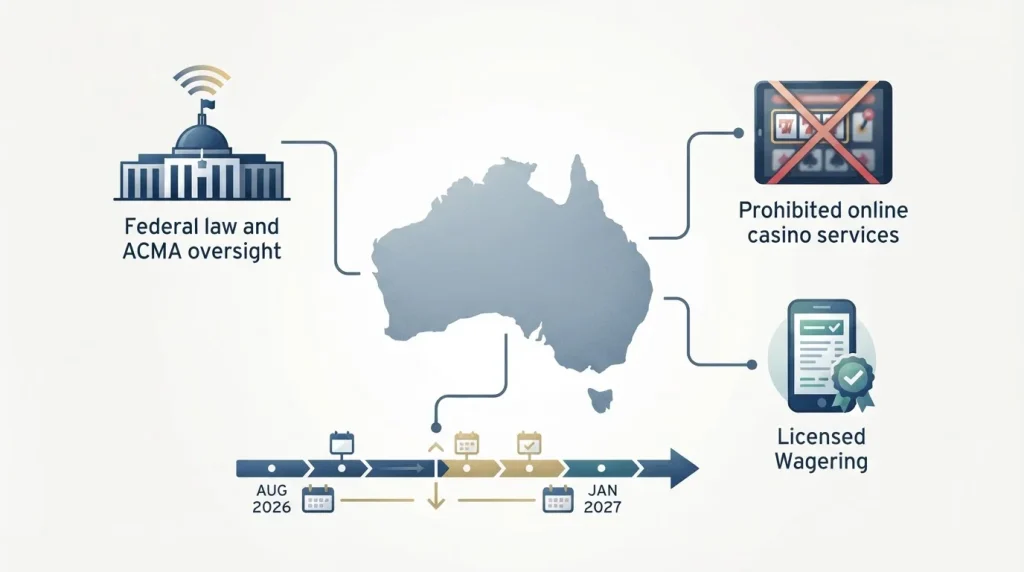
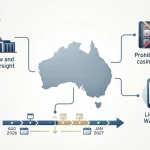
Australian gambling law is product-specific rather than a simple “online gambling is legal” or “online gambling is illegal” rule. Under the Interactive Gambling Act 2001, providers must not offer prohibited online casino-style services to customers physically present in Australia. Licensed online and phone wagering sits in a different framework and requires an Australian state or territory licence. Roby Casino falls on the prohibited-service side of that distinction: ACMA formally found that NovaForge Ltd provided Roby Casino as a prohibited and unlicensed regulated interactive gambling service with an Australian customer link. The regulator’s formal warning is dated 4 November 2025, and Roby was later named in a website-blocking action on 11 December 2025.
Australia also passed major gambling reforms in August 2026. The Interactive Gambling Amendment (Gambling Reform) Act 2026 received assent on 26 August 2026, while the Government has identified 1 January 2027 as the start date for the main reform package. Until that commencement date arrives, it is important not to describe the 2027 measures as already operating.
Table of Contents
- The Interactive Gambling Act is the federal starting point
- ACMA is the key federal enforcement body
- How the law applies specifically to Roby Casino
- Australian licensing is different from an offshore casino licence
- Advertising rules sit alongside the service prohibition
- What changed in the 2026 reform package
- BetStop does not cover every offshore gambling service
- Payments can be affected by enforcement even when a site remains reachable
- Gambling winnings and tax need a fact-specific answer
- Three legal categories that should not be mixed together
- Reading Roby’s Australian position in 2026
- Is Roby Casino Safe for Australians? Licence, ACMA Status and Trust Checks
The Interactive Gambling Act is the federal starting point
The Interactive Gambling Act 2001 (Cth), usually shortened to the IGA, is the central federal law for online gambling services. Its structure matters because it regulates different products differently. Casino-style games supplied online to customers in Australia are prohibited interactive gambling services. Regulated wagering services can operate, but the provider needs the relevant Australian state or territory licence and must comply with federal rules that apply to interactive wagering.
That is why a statement such as “all online gambling is illegal in Australia” is inaccurate. Australians can legally access licensed wagering products offered by authorised operators, while online casino-style services such as roulette, blackjack and slots supplied over the internet are in the prohibited category for providers when there is an Australian customer link.
The law’s focus on the service provider is another important distinction. The federal prohibition described here should not be casually rewritten as a claim that an ordinary player automatically commits a criminal offence merely by visiting or playing on an offshore casino site. The enforcement framework is primarily directed at providers, advertising, payment disruption and access to prohibited services.
ACMA is the key federal enforcement body
The Australian Communications and Media Authority is the federal regulator responsible for enforcing the interactive gambling rules. ACMA investigates suspected illegal services, can issue formal warnings and other enforcement measures, and can request that Australian internet service providers block access to websites that breach the IGA.
For consumers, ACMA’s records are more important than an offshore casino’s marketing language. A site can display a foreign licence, accept Australian dollars or present an English-language interface without becoming Australian-licensed. Australian regulatory status depends on the Australian legal and licensing framework, not on localisation.
This is covered in more practical terms in the Roby licence and trust, which explains how to weigh an Australian regulator finding against offshore licensing claims.
How the law applies specifically to Roby Casino
ACMA opened an investigation on 7 October 2025 into several services provided by NovaForge Ltd, including Roby Casino. In its formal warning, the regulator recorded that the services offered casino-style games for money as well as betting services, were supplied over the internet, and had an Australian customer link. ACMA also recorded that NovaForge Ltd was not licensed by an Australian state or territory to provide regulated interactive gambling services to Australians.
The regulator found that NovaForge contravened the IGA by providing a prohibited and unlicensed regulated interactive gambling service to customers physically present in Australia. The formal warning is dated 4 November 2025. This is a brand-specific finding, not merely a general explanation of Australian policy.
On 11 December 2025, ACMA also named Roby Casino in a further website-blocking action, with robycasino3.com among the URLs identified. Website blocking is one of Australia’s practical disruption tools against illegal offshore gambling services. It does not make every mirror or replacement domain permanently inaccessible, but it demonstrates direct enforcement against access to the service.
Australian licensing is different from an offshore casino licence
Australia does not provide an ordinary local licence for offshore operators to offer online casino-style services to Australian customers. The product is prohibited rather than simply waiting for an Australian casino licence. By contrast, online wagering operators that fall within the regulated category require a state or territory licence.
This means a foreign licence cannot be presented as equivalent to Australian authorisation. An offshore licence may still matter for questions about who regulates the operator in another jurisdiction, but it does not create ACMA approval, Australian licensing or access to the same local consumer-protection arrangements that apply to licensed wagering services.
For Roby specifically, the ACMA finding removes much of the ambiguity: the regulator has already addressed the service and its Australian customer link. The appropriate description is not that Roby is “fully legal in Australia” or “ACMA licensed”. Neither statement is supported.
Advertising rules sit alongside the service prohibition
Australian law also restricts advertising for prohibited interactive gambling services. Existing rules already ban advertising of prohibited online gambling services across television, radio and online channels. The 2026 reform package goes further on wagering advertising, especially around sport, children, inducements and online targeting.
The reforms passed by Parliament include tighter limits on wagering advertising during live sport, restrictions on athlete and celebrity promotion, limits on the number and timing of broadcast ads, an online advertising opt-out structure and stronger controls on direct marketing of inducements to vulnerable customers. These measures concern the wider regulated wagering environment as well as illegal-service disruption; they should not be confused with permission for offshore online casinos.
What changed in the 2026 reform package
The Interactive Gambling Amendment (Gambling Reform) Act 2026 is Act No. 72 of 2026 and received assent on 26 August 2026. Government material describes the package as strengthening protections against gambling harm, tightening wagering advertising rules, strengthening BetStop, improving action against illegal operators and adding further controls around products such as online keno and foreign-matched lotteries.
One particularly relevant enforcement change is the expansion of tools aimed at illegal operators, including measures that allow banks and payment systems to block transactions and give ACMA more capacity to act quickly against websites. For a reader assessing an offshore casino, that means the enforcement environment is becoming more interventionist rather than more permissive.
The Government has said the major reforms are to begin from 1 January 2027. Until that commencement point, the position remains future-facing: the laws have been passed and assented, but the main package has not yet fully commenced.
BetStop does not cover every offshore gambling service
BetStop is Australia’s National Self-Exclusion Register for Australian licensed online and phone wagering services. A person registered with BetStop can exclude themselves from those licensed wagering providers. Its scope should not be overstated.
BetStop is not a universal technical block on every offshore online casino website. It should therefore not be described as protection that automatically prevents access to Roby Casino or another prohibited offshore casino service. If gambling is causing harm, national support channels such as the National Gambling Helpline and Gambling Help Online are available independently of whether a particular offshore site participates in Australian licensing systems.
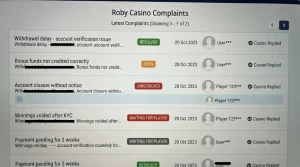
Roby also provides its own support-based self-exclusion route, but that is an operator process rather than the same thing as BetStop. Public complaints about account closure are discussed separately in the Roby complaints and reputation.
Payments can be affected by enforcement even when a site remains reachable
Access to a website is not the only enforcement point. Australian policy increasingly includes payment disruption and cooperation with financial systems. A service may therefore remain technically visible through a changing domain while facing separate barriers around payments, advertising or ISP access.
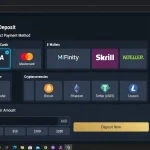
This matters when evaluating practical availability. A payment method listed by an offshore operator should not be read as proof of Australian legal authorisation. The Roby payment methods treats payment support as a separate factual question from licensing; legal authorisation depends on the regulatory framework governing provision of the service.
Gambling winnings and tax need a fact-specific answer
For ordinary or casual Australian players, gambling winnings are generally not assessable income. The position can be different where gambling activity amounts to carrying on a business, so a blanket statement that every gambling win is always “tax-free” would be too broad.
Tax treatment is separate from whether the gambling service itself is prohibited for a provider to offer. A tax rule about the character of a player’s winnings does not legalise an offshore casino service, and an ACMA enforcement action does not by itself determine an individual’s tax position.
Three legal categories that should not be mixed together
Australian discussions about online gambling become confusing when three different categories are treated as one. The first is prohibited online casino-style gambling supplied to people physically present in Australia. The second is regulated wagering, such as licensed online betting services operating under state or territory licensing and federal interactive-gambling rules. The third is an offshore service that may hold a licence somewhere else but does not thereby gain Australian permission.
These categories answer different questions. A foreign licence can identify the jurisdiction that supervises an operator abroad, but it does not answer whether the service may be offered to Australians. A state or territory wagering licence can authorise a regulated wagering operator, but it does not convert online casino games into a licensable Australian online-casino product. ACMA enforcement then sits above these distinctions at the federal level, investigating prohibited and unlicensed interactive services and using tools such as warnings, blocking requests and other disruption measures.
This framework also explains why technical access is weak evidence of legality. Domains can change, blocking may occur at different times across providers, and a site may still open even after regulatory action. Conversely, a temporary access problem does not itself prove a legal finding. The stronger evidence is the regulator’s published action and the statutory category of the service.
For Roby, that stronger evidence exists. ACMA did not merely note an offshore licence gap; it made a formal finding about NovaForge Ltd’s provision of Roby Casino to customers with an Australian link. That is why the brand’s Australian legal context can be described more precisely than many offshore sites where only general policy information is available.
Reading Roby’s Australian position in 2026
For Roby Casino, the legal picture is unusually concrete because there is a direct ACMA finding rather than merely an absence from a licence list. The regulator found NovaForge Ltd’s Roby service had an Australian customer link and breached the IGA, and ACMA later included the brand in a website-blocking action. Those facts should be the centre of any Australian legal description of Roby.
The wider Australian framework is also moving. Parliament has passed the 2026 reform Act, and the Government’s stated 1 January 2027 commencement means advertising, harm-minimisation and illegal-service disruption rules are entering a new phase. Until then, readers should distinguish existing law from measures scheduled to start later.
The practical result is not a binary slogan about gambling. Licensed wagering, prohibited online casino services, BetStop and offshore enforcement all occupy different parts of the framework. Understanding those categories gives a much more accurate picture of where Roby sits than a generic “legal” badge or the fact that a website happens to load.
For a broader brand overview, return to the Roby Casino Australia review.