Online pokies for real money in Australia: legal guide
 Available in AU

A practical look at offshore operators, payment limits, bonus terms and why access does not equal Australian approval.
Table of Contents
- The Legal Line Around Real-Money Pokies in Australia
- PayID Is a Payment Rail, Not a Seal of Approval
- Bonuses Turn Play Into Arithmetic
- A Win Is Not the Same as Money in Hand
- Deposits, Bank Blocks and the Price of Convenience
- What “Australian” Means in an Offshore Market
- An App Does Not Change the Legal or Payment Picture
- Mobile Play, With the Same Limits as Desktop
- New PayID Offers Still Need the Small Print
- PNG Searches and the Limits of What Can Be Verified
The Legal Line Around Real-Money Pokies in Australia
The legal position turns on a distinction that can be easy to miss: what a company may offer, and what an individual player may do. Under the Interactive Gambling Act 2001, companies cannot provide real-money online pokies to people in Australia without a domestic licence. No such licences have been issued. There is no Australian-licensed online casino.
That does not mean every offshore site is inaccessible. Some accept Australians, and the law described here targets the operators rather than individual players. The result is an unusual arrangement: a person may be able to play, while the company taking the bet is not authorised to provide that service in Australia. Availability is not approval. A page loading on a screen does not redraw the legal boundary around the business behind it.
The distinction matters because “online pokies in Australia” can sound like a domestic market, complete with local oversight and familiar protections. In practice, real-money play offered to Australians comes from outside that licensed framework. The words “Australian” or “Australia” on a site may describe its intended audience or its presentation; they do not create an Australian licence. Nor does the fact that a site accepts a deposit establish that it is operating under Australian authorisation.
Choosing an online pokies site involves more than the games on offer: licensing and practical details such as deposit options or payout times can help you decide what to check. Use these short notes as a starting point, and verify the terms that matter to you before playing.
1. SpinsUp
License: Curacao Gaming Control Board OGL/2023/174/0082 (Dama N.V.) SpinsUp is listed with a Curaçao Gaming Control Board licence, OGL/2023/174/0082, held by Dama N.V.
2. Bizzo Casino
License: Curacao Gaming Control Board (TechSolutions Group N.V.) Bizzo Casino is listed with a Curaçao Gaming Control Board licence associated with TechSolutions Group N.V.
3. WinSpirit Casino
License: Curacao eGaming OGL/2024/923/0383 (Antillephone N.V.) · Min. deposit: A$30 WinSpirit Casino is listed with a Curaçao eGaming licence, OGL/2024/923/0383, held by Antillephone N.V. Its minimum deposit is A$30.
4. DragonSlots Casino
License: Curacao Gaming Authority (Jumpman Gaming Ltd) DragonSlots Casino is listed with a Curaçao Gaming Authority licence associated with Jumpman Gaming Ltd.
5. Roby Casino
License: Curacao eGaming (Roby Games Ltd) Roby Casino is listed with a Curaçao eGaming licence held by Roby Games Ltd.
6. LevelUp Casino
License: Curacao eGaming OGL/2023/174/0082 (Dama N.V.) · Min. deposit: A$15 LevelUp Casino is listed with a Curaçao eGaming licence, OGL/2023/174/0082, held by Dama N.V. The stated minimum deposit is A$15.
7. Lucky Dreams
License: Curacao · Min. deposit: A$20 (POLi) Lucky Dreams is listed with a Curaçao licence and a A$20 minimum deposit via POLi.
8. Ricky Casino
Payout speed: crypto under 1 hour, PayID 1-3 business days · Min. deposit: A$20 (A$30 to qualify for the bonus) Ricky Casino lists crypto payouts under 1 hour and PayID payouts in 1–3 business days. The minimum deposit is A$20, or A$30 to qualify for the bonus.
9. GoldenCrown
License: Curacao Gaming Control Board OGL/2023/176/0095 (Hollycorn N.V.) GoldenCrown is listed with a Curaçao Gaming Control Board licence, OGL/2023/176/0095, held by Hollycorn N.V.
10. House of Pokies
License: international iGaming licence – jurisdiction not named in the source · Payout speed: PayID 1-24 hours · Min. deposit: A$30 (PayID from A$10) House of Pokies lists an international iGaming licence, though the jurisdiction is not named in the source. PayID payouts are stated as 1–24 hours; the minimum deposit is A$30, or A$10 via PayID.
This is not a technical wrinkle reserved for lawyers. Licensing is one of the ways a regulator can hold a company to account. Where there is no domestic licence, the relationship between an Australian player and an offshore operator lacks that local regulatory footing. The arrangement may still appear ordinary at the point of play: an account, a balance, a game, a result. But the legal status of the service remains different from that of a locally licensed business. Familiarity is not jurisdiction.
The most consequential difference appears when something goes wrong. If an offshore casino refuses to pay winnings, Australian players have no legal recourse in Australia against that operator. The issue is not whether a particular dispute seems fair or whether a balance appears on a screen. It is the absence of an Australian-licensed casino within the domestic system to which a player could turn for a remedy against the company. A displayed win and an enforceable claim are not the same thing.
That gap should be kept separate from the question of individual criminal liability. The stated legal distinction is that the Interactive Gambling Act targets companies offering the prohibited service, not the individual Australians who play on offshore sites that accept them. It would therefore be wrong to treat a player’s access as proof that the operator is lawful; it would also be wrong to describe the player as the target of this particular prohibition. The law draws its line around the provision of the service.
Pokie Machines in Australia: What Players Should Know
The phrase “real-money pokies” can obscure how much of the transaction lies on the other side of that line. A site may be designed to feel local, accept Australian customers, and present a familiar style of play. None of those features changes the absence of a domestic licence. For Australians, the central legal fact is not that an offshore operator has found a way to reach the country, but that no Australian online casino has been licensed to offer this kind of real-money service.
There is a social history in that distinction. Gambling has long been organised through rules about who may operate, where play may happen, and which institutions answer for it. Online services unsettle the geography: the player is here, while the company may be elsewhere. The law still has to decide which party it regulates and what protection follows from that decision. In this case, access crosses borders more readily than accountability does.
For anyone considering real-money play, that is the risk context, not a recommendation. Offshore availability should not be mistaken for a domestic safeguard, and a site’s willingness to accept Australians does not supply the recourse that a local licence might imply. If the operator withholds winnings, Australian players have no legal recourse in Australia. The line is clear. The protection is not there.
Legal Recourse
If an offshore casino refuses to pay winnings, Australian players have no legal recourse in Australia against that operator.
PayID Is a Payment Rail, Not a Seal of Approval
PayID is best understood as an alias layer for bank transfers, not as a separate wallet or a certificate attached to a gambling service. It sits on Australia’s New Payments Platform (NPP), which supports transfers using an email address, mobile number or Australian Business Number (ABN) as the payment identifier. The identifier points to a bank account; the underlying transfer still depends on that account and the participating payment systems.
That distinction matters because payment labels can make a complicated arrangement look reassuringly simple. An email address is easier to recognise than a string of banking details, but it does not tell anyone what kind of business receives the money, how that business is regulated, or what happens if a dispute follows. An alias is a route, not a verdict.
The NPP is supported by all major Australian banks and uses end-to-end encryption. Those are properties of the payment infrastructure. They describe how the platform is supported and how information is protected as it moves through the system; they do not certify the conduct of every merchant that might request a transfer. Secure transmission and trustworthy service are separate questions, even when a familiar payment name appears on the same screen as a deposit button.
Best Casino in Sydney: Hotels, Play and Practicalities
For real-money play at an online casino, PayID must first be linked to a bank account. In practical terms, the payment method is therefore tied to an existing banking relationship rather than floating free as an independent balance. The alias makes the transfer addressable; the bank account remains the source of funds. That arrangement can feel ordinary because it uses familiar banking infrastructure. Ordinary is not the same as endorsed.
This is especially important in Australia, where the legal position is not settled by the payment route. The Interactive Gambling Act 2001 prohibits operators from providing real-money online casino games to people in Australia without a domestic licence, and no such licences have been issued. The law targets operators rather than individual players, but a PayID option does not alter the status of the service receiving a payment. Nor does the presence of a familiar bank transfer system create Australian legal recourse if an offshore operator refuses to pay.
Melbourne Pokies: Locations, Hours and What “Best” Means
There is a similar distinction between the payment rail and the games themselves. PayID cannot establish that a pokie is fair, that its stated return percentage (RTP) is accurate, or that a particular casino uses the same RTP setting as another. Some game providers allow casinos to choose among different RTP settings for the same game. A deposit method cannot disclose which setting applies. It moves money; it does not audit the game.
That is why phrases such as “PayID pokies” describe a payment arrangement, not a quality category. A service accepting PayID may be able to receive a transfer through the NPP, but that fact alone says nothing about licensing, game integrity, withdrawal practices or the accuracy of published information. The payment infrastructure can be sound while the business at the other end remains beyond the practical reach of Australian protections. A polished payment page does not bridge that gap.
One specialist review characterises PayID as being treated in the same way as other qualifying deposit methods by the operators it assesses. That is a description of those operators’ deposit rules, not a general feature that PayID imposes on every service. The distinction is easy to miss: the NPP defines a way to transfer money, while an operator decides which methods it accepts and how it classifies them. Terms can differ between services and can change.
The phrase “online pokies that pay real money” also compresses two different events into one. A deposit transfer is not a promise about a later result, and a payment method cannot guarantee that winnings will be honoured. PayID’s role ends at the movement of funds between accounts. It has no independent power to decide a dispute, verify a game’s settings or compel a casino to act.
Best Pokies in Sydney: What Search Results Can Prove
The public familiarity of PayID can lend a transaction an air of domestic normality. That is understandable: Australians encounter the same payment infrastructure in ordinary banking. But the system’s local roots should not be mistaken for local oversight of every business using it. The NPP is Australian infrastructure; an online casino accepting a transfer through it is not thereby an Australian-licensed casino.
So the useful question is not simply whether a site accepts PayID, but what that fact actually establishes. It establishes that a payment route is offered, subject to the bank account being linked and the relevant service accepting the method. It does not establish a licence, fairness, a particular RTP, or a remedy if something goes wrong. A rail carries the transaction. It does not vouch for the destination.
Bonuses Turn Play Into Arithmetic
A bonus is advertised as extra play, but its practical value depends on the work attached to it. Wagering requirements turn a headline amount into a turnover target: the multiplier is applied to a stated base, and that base matters as much as the multiplier. A promotion described simply as “40x” leaves a crucial question unanswered until its terms say whether the calculation uses the bonus alone or the deposit and bonus together.
The distinction is easy to miss because both offers can display the same attractive bonus figure. Yet the resulting amount of betting can be markedly different. A specialist review uses a $500 bonus with a 40x requirement to illustrate the bonus-only calculation: the player must place $20,000 in bets before the winnings can be withdrawn. The bonus is not a cash gift waiting to be collected. It is a conditional balance whose terms prescribe substantial turnover first.
That calculation concerns the total value of bets, not a promise about how much will be lost or won along the way. It also does not mean the player has to build the stated amount from a single stake. The arithmetic is cumulative, but the obligation remains: until the required turnover is completed, the bonus conditions can restrict access to winnings. The label is simple. The ledger is not.
Bonus Wagering Calculations
Step 1: Bonus-only calculation
A $500 bonus with a 40x requirement requires $20,000 in bets before winnings can be withdrawn.
Step 2: Deposit plus bonus calculation
A $500 deposit plus a $500 bonus creates a $1,000 base; at 35x, this requires $35,000 in bets.
Now change the base. If the multiplier applies to the deposit plus the bonus, a $500 deposit paired with a $500 bonus creates a $1,000 wagering base. At 35x, that means $35,000 in bets. The smaller-looking multiplier therefore produces a larger turnover target than the previous example, because it is attached to twice the starting amount. Comparing two offers by their multipliers alone is like comparing prices while ignoring what is in the basket.
The figures also show why a specialist review’s suggested benchmark—35x or lower—needs to be read as a rule of thumb from that review, not as a universal standard. The same review describes requirements above 40x as punishing. Those judgments are useful only alongside the offer’s calculation method and conditions. A lower multiplier can still require extensive play if it applies to deposit plus bonus; a higher one may apply to the bonus alone. Neither phrase, standing by itself, tells the whole story.
The wording around eligible play matters too. Terms set out what counts toward turnover and what happens while a bonus remains active. Those details determine whether ordinary play advances the requirement or whether some conditions narrow the route to completion. The arithmetic can be checked, but the terms define the inputs. Reading only the promotional headline leaves the most consequential part of the offer unopened.
Western Australia Casinos: Hotel and Venue Details
Free spins can look more straightforward because they arrive as a set of plays rather than as a cash balance. Their winnings, however, may still be subject to a ceiling on the amount that can ultimately be cashed out. A player could therefore see a balance rise during play and discover that the promotion’s terms allow only a limited portion of those winnings to leave the account. That cap is separate from the excitement of the spin; it is a condition on the offer.
This is why “free” does not settle the question of value. A free-spin promotion can carry both a wagering requirement and a cash-out ceiling, and each changes what the advertised benefit can become. The relevant comparison is not simply the number of spins or the size of a bonus. It is the combination of the turnover base, the multiplier, any limits on eligible play, and the rule governing the amount available for withdrawal.
Pokies in Geelong: Checking Current Venue Information
For anyone weighing bonuses attached to online pokies for real money, the same arithmetic applies whether the offer is called a welcome bonus, a deposit match or a free-spin package. The language changes; the conditions do the accounting. Offers that appear generous can demand a large volume of bets before withdrawal, while a smaller offer with clearer terms may be easier to assess. No bonus removes the uncertainty inherent in play, and no multiplier changes the fact that turnover is a requirement, not a forecast of returns.
In the end, the useful figure is not the bonus printed in large type. It is the total betting obligation created by the fine print—and, for free spins, whether a cash-out cap trims the result. That is the price written in arithmetic.
A Win Is Not the Same as Money in Hand
A result on screen and a withdrawal in a bank account belong to different parts of the process. The first is governed by chance; the second depends on the operator’s rules, checks and ability to release funds. A win on a pokie is not, by itself, proof that the money will arrive.
Each spin is generated separately by a Random Number Generator. A previous result does not make a particular outcome more or less likely on the next spin. A run of losses is not a signal that a win is due, and a recent win does not make another one more likely. The machine has no memory worth consulting.
There is another detail that can be easy to miss when comparing the same game across casinos: its return-to-player setting may not be identical everywhere. A specialist review reports that some game providers let casinos choose between multiple RTP configurations for a pokie. The title and appearance can match while the theoretical return differs. RTP describes a long-run statistical measure, not a promise about an individual session or a way to predict the next result.
RTP for Australian pokies: what it really means
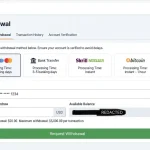
Then comes the cash-out process. Specialist reviews report that casinos may set weekly or monthly withdrawal ceilings of $5,000–$10,000. Under such a cap, a $50,000 jackpot could be paid in instalments over a multi-year period rather than arriving as one transfer. The stated win and the pace at which it can be withdrawn are therefore separate questions. A cap does not mean a payout is assured; it describes a limit in the operator’s terms if a withdrawal is approved.
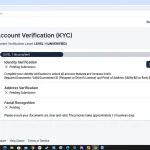
Verification can add another pause. Specialist reviews report that an operator may ask for identity documents before a first withdrawal, including a photograph of identification and proof of address, and sometimes a selfie holding the identification. The requirement is not merely administrative decoration: an incomplete or inconsistent submission can leave a cash-out pending while the operator checks the account. The relevant documents and instructions should be understood before funds are deposited, not after a win has made the process urgent.
That practical distinction matters particularly in Australia. Offshore sites may accept local players, but Australian players have no legal recourse in Australia if an offshore casino refuses to pay. A game’s RNG, a displayed balance and a withdrawal request do not create a domestic remedy. Nor does BetStop bind offshore sites: it applies to Australian-licensed operators, and none of those licences have been issued for online casinos.
Free online pokies can demonstrate how a game works, but a free-play result is not money available to withdraw. Real-money play adds the separate questions of account verification, withdrawal terms and whether the operator actually releases a requested payment. These are not details the spin can settle. Chance ends at the result; paperwork begins after it.
Withdrawal Limits
Some operators may set weekly or monthly withdrawal ceilings between $5,000 and $10,000, meaning large jackpots may be paid in instalments over several years.
Deposits, Bank Blocks and the Price of Convenience
A deposit is not simply a number entered on a screen. It has to pass through a bank or card issuer, and those institutions can decide that a gambling transaction should not proceed. A specialist review reports that Australian banks and credit card companies are increasingly blocking payments to known gambling sites. That makes a failed transaction a feature of the payment route, not necessarily a technical fault at the receiving end.
Cards can carry a different cost even when a payment goes through. A specialist review notes that a bank or card issuer may classify a gambling deposit as a cash advance. In that case, a fee of 3–5% may apply, with interest charged immediately rather than after an ordinary card grace period. The exact treatment depends on the issuer and the transaction. Convenience, in this instance, can arrive with its own invoice.
That matters because a card payment may look familiar while being processed under a less favourable category. A small deposit can still attract a fee, and interest can begin before the balance is paid off. A blocked transaction has a different consequence: the intended payment simply does not reach the gambling account. Neither outcome is something an advertised payment logo can settle in advance.
The minimum is only one part of the cost
A specialist review puts many operators’ minimum deposits at AU$10 to AU$20, with some accepting AU$5. These are reported thresholds, not a promise that every site will accept the same amount or that a bank will approve the payment. The operator sets its deposit floor; the financial institution controls whether a transaction is allowed. Two separate decisions, often blurred together on a payment page.
Pokies in Brisbane: venues, online rules and limits
This distinction also helps explain why a low minimum is not the same as a low-cost way to play. A card deposit could be declined or treated as a cash advance, while an accepted payment still places money at risk. The practical question is not only how little an account will accept, but what the bank does with the transaction and what that means for the account holder’s balance.
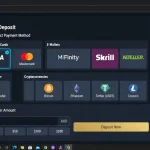
PayID is another possible route at some offshore services, but its presence does not remove the possibility of a bank block. Some banks block PayID transfers to known gambling merchants, according to a specialist review. Payment availability can therefore vary with the bank and the merchant. The label on a deposit screen does not promise that a transfer will clear.
“No deposit” is a different claim
A no-deposit real-money offer speaks to whether an initial payment is required; it says nothing by itself about whether the offer has useful terms. That is separate from the minimum-deposit question. A promotion may require no initial deposit and still have conditions that determine what can be done with any resulting balance. The headline answers only one narrow question.
The distinction is especially important where a bank blocks a gambling transaction. A no-deposit offer may avoid that particular deposit step, but it does not make the offer valuable merely by removing the payment at entry. The terms, not the absence of an initial charge, decide its practical worth. Convenience is not the same as value.
Do
- Check if a deposit is treated as a cash advance
- Verify the operator’s minimum deposit threshold
Don’t
- Assume a payment logo guarantees transaction approval
- Mistake a no-deposit offer for a value guarantee
What “Australian” Means in an Offshore Market
The word “Australian” can describe an audience, a currency or a style of presentation. It does not establish where an online casino is licensed. In this market, the distinction matters: there is no Australian-licensed online casino. A site can present itself in language aimed at Australians without acquiring a domestic licence by doing so.
That leaves a familiar phrase such as “Australian real-money pokies” doing more descriptive work than legal work. It may signal that a service is directed towards people in Australia, but it is not evidence of Australian authorisation. Nor does a locally familiar name or appearance change the regulatory position. Geography in a marketing label is not a licence.
The domestic framework is administered by the Australian Communications and Media Authority, or ACMA. It enforces the Interactive Gambling Act 2001, which bars operators from providing prohibited real-money online casino games to people in Australia. The regulator’s role is not merely to set out a rule and leave it on a shelf. ACMA also acts against illegal offshore gambling sites by blocking access to them.
Internet service providers are required to comply with ACMA’s blocklist. A blocked site may therefore become inaccessible through an Australian internet connection. This is an enforcement measure directed at access to services identified as illegal; it does not turn an offshore operation into a domestic one, nor does a site’s appearance in Australian-facing material imply that it has escaped the rules.
The arrangement reflects a particular division of responsibility. The law is directed at operators supplying prohibited services, while the regulator can work through the infrastructure that connects users to sites. The result is neither a domestic online casino market nor an assurance that every offshore page will remain reachable. It is a market in which the legal status of the service and its visibility from Australia are separate questions.
Casino in Brisbane: Hotels, Dining and Visitor Guide
For anyone comparing claims about the “best Australian online pokies for real money,” the adjective should be read cautiously. It may refer to intended customers, not to a locally licensed business. ACMA’s blocking powers make the distinction more than a matter of wording: access can be restricted precisely because the operator is offshore and the service is prohibited. Australian branding is easy to print. Domestic authorisation is another matter.
An App Does Not Change the Legal or Payment Picture
An app can make an online service look like a fixture on a phone: an icon, a familiar sign-in screen, perhaps a smoother route back to a game. None of that changes who operates the service, where it is licensed, or what happens to a deposit. The screen is the entrance, not the institution behind it.
That distinction matters in Australia. The Interactive Gambling Act 2001 prohibits operators from providing real-money online pokies to people in the country, and no Australian online casino licences have been issued. An app offering access does not create a domestic licence or make the underlying service lawful. Nor does its presence on a device settle whether a payment will be accepted or winnings returned.
Payment arrangements belong to the operator and the channels it makes available, not to the format used to reach it. A transfer or card payment made from within an app is still a transaction with the service behind the interface. A familiar payment method cannot certify that service; an app cannot do so either. The machinery may feel domestic while the protections remain elsewhere.
The practical friction often arrives at withdrawal. Specialist review material reports that casinos may require identity checks before releasing a first cash-out. These can involve images of identity documents and proof of address, with some services also asking for a selfie holding an identity document. The checks may be requested after an account has already been used, making the polished entry point a poor guide to what will be required later. Account access is not the same as access to funds.
Best pokies in Adelaide: hours, access and rules
There is another limit to familiar tools. BetStop applies to Australian-licensed operators; it does not bind offshore sites. Since there are no Australian-licensed online casinos, the presence of an app does not turn BetStop into a barrier against those services. It is a distinction worth keeping plain: a tool’s name may sound broad, but its reach depends on the operators it covers.
The phone, in this arrangement, changes the route of access, not the rules around the service. Whether the interface is an app or a browser, the operator and payment relationship remain the substance. Small icon. Same underlying questions.
Mobile Play, With the Same Limits as Desktop
A phone changes the screen, not the nature of the service. Pokies played on a mobile device remain online gambling; putting the same game behind an app-shaped icon does not create a separate category or an exception to Australia’s rules. The distinction matters because convenience often arrives dressed as novelty. In law, the costume does little.
Pokies in New South Wales: Hours and Venue Access
The Interactive Gambling Act 2001 prohibits operators from providing real-money online casino games to people in Australia, and no Australian online casino licences have been issued. Offshore sites may still be encountered, but mobile access does not make their services locally licensed or remove the risks attached to dealing with an operator beyond Australian recourse. Nor does a small screen make a blocked service lawful.
A mobile session can also make time feel less like a boundary. That is precisely where ordinary safeguards matter. Deposit limits can restrict what goes into an account; loss limits can set a ceiling on losses; session time limits can mark how long play continues; and self-exclusion can block access for someone who needs a stronger break. These are standard responsible-gambling tools, though their presence on a particular offshore service should not be assumed.
BetStop requires a separate distinction. It applies to Australian-licensed operators and does not bind offshore sites. Since no Australian-licensed online casino exists, it cannot be treated as a dependable barrier to offshore pokies. A familiar name or a mobile-friendly interface does not extend its reach.
Mobile Gambling Limits
- Mobile access does not make offshore services locally licensed
- Standard tools like deposit and session limits are essential for safety
- BetStop does not bind offshore sites as no Australian-licensed online casinos exist
The useful question about mobile play is therefore not whether a phone makes pokies different. It does not. The question is whether the same boundaries remain visible and usable when play is carried in a pocket. Limits and exclusion tools are not decorative settings; they are among the few mechanisms designed to put friction back into an activity built for immediate continuation. A smaller screen changes the setting. Not the stakes.
New PayID Offers Still Need the Small Print
A fresh PayID offer can look like a change in the market. It may only be a new promotion attached to an existing offshore service. PayID is a way to route a bank transfer; its appearance at a site does not establish that the operator is licensed in Australia, that its games are fair, or that its terms are favourable. No Australian-licensed online casino exists.
Payment access is not assured, either. One specialist gambling review reports that some Australian banks, including members of the Big Four, occasionally block PayID transfers to gambling merchants they recognise. A failed transfer is a practical obstacle, not evidence that a service has been vetted or endorsed.
The offer itself needs a separate calculation. A bonus with a wagering requirement is not cash ready to withdraw: the required turnover determines how much must be bet before any eligible winnings can be cashed out. One specialist review advises treating requirements of 35x or less as the more manageable range and describes anything above 40x as punishing. Those figures are a rule of thumb, not a promise about what any particular promotion allows.
The multiplier’s base matters as much as its size. Terms may apply it to the bonus alone or to the deposit and bonus together, producing very different turnover obligations. Free spins can also carry a cap on winnings eligible for withdrawal. A headline that says “new” does not make these conditions disappear.
Best pokies in Tasmania: hours, access and legal context
In Australia, real-money online pokies offered to residents by operators without a domestic licence remain prohibited under the Interactive Gambling Act 2001; no such licences have been issued. A new payment option or bonus does not change that legal position. The small print is not fine print.
PNG Searches and the Limits of What Can Be Verified
Papua New Guinea and Australia are separate jurisdictions, so a reference to PNG does not establish what rules apply there or which services may be available to people there. Nothing about a site, game or provider should be inferred from the label alone.
For Australians, the relevant distinction is domestic authorisation versus offshore availability. Under the Interactive Gambling Act 2001, companies cannot legally offer real-money online pokies to Australian residents without an Australian licence, and no such licences have been issued. A site accepting Australians from offshore does not become Australian-licensed by doing so.
Best Pokies in Canberra: Hours, Venues and Limits
That distinction matters when regional wording appears beside claims about real-money play. A country name in a site description is not proof of where its operator is licensed, who may lawfully be served, or what protections apply. Nor does it tell Australian residents anything reliable about the rules in Papua New Guinea.
The law draws its line around the operator’s offer to people in Australia; it does not turn an offshore site’s acceptance of a customer into domestic approval. “Available” and “licensed here” are different statements. The difference is easy to blur in a market where the same internet address can be presented across borders. It remains a difference all the same.
Claims about PNG-specific games, providers or sites would require information about that country and those services, not assumptions borrowed from Australian law. The Australian framework can clarify the status of an offer made to Australians; it cannot serve as a guide to another country’s gambling rules.
Are online pokies legal for Australian players?
Australians can legally play on offshore sites that accept them, but companies cannot legally offer real-money online pokies to Australians without a domestic licence, and none have been issued. If an offshore casino refuses to pay winnings, players have no legal recourse in Australia.
Are online pokies rigged?
Each spin is an independent random event determined by a Random Number Generator. However, a game may have different return-to-player (RTP) settings at different casinos.
What is the cost-benefit calculation of casino promotions?
Compare the bonus with its wagering requirement: a $500 bonus at 40x requires $20,000 in bets before winnings can be withdrawn. If the 40x requirement applies to a $500 deposit plus a $500 bonus, the required turnover is $40,000.
Do PayID deposits qualify for bonuses?
Yes. PayID is treated like any other qualifying deposit method at the recommended sites.
What is the legal age for online gambling in Australia?
You must be 18 or older to gamble online in Australia.
Pokies

3-Reel Slots in Australia: Features and RTP
Learn how bonus rules, configured RTP, free-play options and Australia’s regulatory boundary shape the way...

5-Reel Slots in Australia: How the Odds Work
Explore how RTP, bonus rounds, paytables and game availability shape the experience without predicting the...

Seven-Reel Slots in Australia: RTP and Bonus Features
A practical look at how reel formats, bonus rules, RTP and free-play modes shape what...

Online Pokies Australia: Legal and Payment Guide
Australia’s rules put the licensing burden on operators, while bonus terms, payment routes and practice...

Aussie Online Casinos: Legal Status, Bonuses and Payments
A clear-eyed look at offshore casino sites, the terms attached to offers and the limits...

Aussie Pokies Online: What “Best” Really Means
A practical look at terminology, legal boundaries, game settings, payments and the limits of rankings...

Australian Pokies Online: Legal and Payment Risks
Offshore access does not equal local authorisation, and payment methods or bonus offers do not...

Bonus Buy Slots in Australia: How They Work
A bonus buy pays for direct entry to a feature round, but the result remains...

Best Casino in Adelaide: Venue and Online Context
A practical distinction between a city destination and online services, with context on the venue...

Casino in Brisbane: Hotels, Dining and Visitor Guide
Understand how accommodation, dining, gaming, transport and venue details differ across Brisbane casino search results....

Best Casino in Canberra: What the Search Can Establish
A practical look at accommodation, gaming searches and amenities, distinguishing what a search suggests from...

Darwin Casino: Venue, Work and Entertainment Guide
A practical look at venue information, employment and entertainment claims, and how online casino offers...

Hobart Casino Information: What Searches Can Confirm
Searches about poker, accommodation, dining and facilities raise distinct questions, and a keyword alone does...

Melbourne Casino: Hotels, Dining and Visitor Details
A guide to nearby stays, booking conditions, dining, entertainment and other questions that shape a...

Casino in Perth: Hotel Stays and Visitor Details
A practical look at accommodation, access and visitor questions, with a clear distinction between a...

Best Casino in Queensland: Rooms, Dining and More
A practical look at room categories and booking terms, with related details on dining, parking...

Best Casino in Sydney: Hotels, Play and Practicalities
A practical guide to comparing a Sydney casino stay with the venue’s gaming, dining and...

Casino Stays in Tasmania: What to Verify
Room rates, promotions and nearby amenities require a named property and current terms before they...

Casino in Victoria: Hotels, Gaming and What’s Verified
A clear guide to what casino searches can establish about accommodation, gaming, food, location and...

Western Australia Casinos: Hotel and Venue Details
Casino-related searches cover hotels, poker, dining and facilities, but property-specific terms and venue facts need...

Fast Payout Online Casinos in Australia: Legal Context
A clear look at what withdrawal-speed claims can—and cannot—show about offshore casino services, payment routes...

High-volatility slots in Australia: how they work
A guide to how volatility affects the pattern of payouts, why past spins do not...

Instant Payout Online Casinos in Australia
Offshore withdrawal claims, verification checks and payment routes do not establish licensing, guaranteed timing or...

Keno Online Casinos in Australia: Legal Rules
The guide examines real-money online keno, Australian gambling rules, venue machines, offshore payment risks and...

Live Dealer Casinos Online in Australia: Legal Context
The guide explains why live streams do not change the legal treatment of online casino...

Live Casino Online in Australia: Legal Limits
Australia has no locally licensed online casinos, so a site's visibility is not proof of...

Low-Volatility Slots in Australia: How They Work
Low volatility generally describes more frequent, smaller wins and less variation, but it does not...

Pokie Machines in Australia: What Players Should Know
A practical guide to online game features, RTP, free play and the legal and payment...

Best pokies in Adelaide: hours, access and rules
Venue listings do not confirm gaming-room hours; this guide also separates local access, online play...

Pokies in Brisbane: venues, online rules and limits
Brisbane searches can point to physical gaming venues or online services, but location-based wording does...

Best Pokies in Canberra: Hours, Venues and Limits
A practical look at venue hours, gaming-area access and what public information can—and cannot—establish about...

Pokies in Geelong: Checking Current Venue Information
Venue listings may show a building as open without confirming that its gaming room is...

Melbourne Pokies: Locations, Hours and What “Best” Means
Venue names and search labels alone do not confirm distance, opening hours or whether a...

Pokies in New South Wales: Hours and Venue Access
Venue schedules can differ from gaming-area access, so availability needs checking with the specific NSW...

Best Pokies in Perth: Hours, Venues and Checks
A practical guide to venue hours, return figures, duty of care and the limits of...

Best Pokies in South Australia: How to Compare
A practical look at RTP, venue hours, locations and the limits of online and venue-based...

Best Pokies in Sydney: What Search Results Can Prove
Search terms can suggest locations and rankings, but they do not verify addresses, opening hours,...

Best pokies in Tasmania: hours, access and legal context
Tasmanian venue listings, gaming-room schedules, chance and online-play rules require separate checks rather than a...

Progressive Jackpot Slots: How They Work
Progressive slots add part of eligible wagers to a changing prize pool, but the rules...

RTP for Australian pokies: what it really means
A guide to long-run return, independent spins and the practical limits of RTP. What a...

Best RTP Slots in Australia: Understanding RTP
RTP is a long-run theoretical measure, not a forecast of individual spins or a guarantee...

Video Slots in Australia: Spins, RTP and Play
Explore how random outcomes, return settings and play options shape the experience of online video...

Big Red Pokies Online in Australia: Rules and Demos
The name does not change Australia’s rules on real-money online pokies or what a free-play...

Casino Dice Games in Australia: Rules and Formats
Casino dice games vary in how they use the roll, set wagers and connect outcomes...

Crash casino games in Australia: legal limits
Australian players are not criminalised simply for using offshore gambling sites, but operators face restrictions...

Lightning Link Online Pokies in Australia Explained
Lightning Link is played on Australian venue machines, while online searches may lead to similarly...

Live Baccarat Online Casinos in Australia: Legal Guide
A practical look at Australia’s legal context, baccarat formats, payments and the features that distinguish...

Live Blackjack Online Casinos in Australia: Legal Context
Australia’s rules distinguish locally licensed services from offshore offers, while a live stream does not...

Live Roulette in Australia: English-Speaking Dealers
A practical overview of roulette mechanics, betting options, odds and the legal boundary for real-money...

Mines Casino Game in Australia: Rules and Risks
A Mines grid describes a play format, not proof of an Australian product or a...

Most Trusted Online Casino in Australia: Legal Limits
Australia has no domestic online-casino licences, so payment options, bonuses and game details must be...

Plinko Casino Australia: Games, Payments and Terms
Plinko’s falling-disc format sits between slot-style presentation and a distinct game, while payment options and...

Pokies Tips and Tricks: What Advice Can Change
A practical look at what players can control, what random outcomes mean, and why rituals...

Real Money Casino Table Games in Australia
Live streams show activity at a physical table, while digital games use software to determine...