Crash casino games in Australia: legal limits
 Available in AU

Australian players are not criminalised simply for using offshore gambling sites, but operators face restrictions on providing online casino services.
Table of Contents
- Crash Games in Australia: The Legal Line Around Offshore Casinos
- What “Best” Can Mean When No Casino List Belongs Here
- Playing Online Across a Blocked and Offshore Market
- Crash Games, Slots and the Names That Blur the Boundary
- Crypto Deposits and the Cost of Getting Money Back
- Bitcoin Cashouts: Fast Is Not the Same as Cost-Free
- Free Play Without Mistaking a Demo for Cash
- When “Cash or Crash” Means the Pokies Debate
- Crash Strategy, Bonus Maths and the Cost of Conditions
- Provably Fair: What the Label Does—and Does Not—Establish
Crash Games in Australia: The Legal Line Around Offshore Casinos
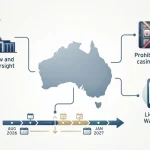
A crash game may look unlike a table game or a pokie: a rising multiplier, a moving line, a decision about when to stop. But appearance does not settle its legal status. In Australia, the important question is whether a service is offering real-money online casino gambling to people physically in the country. The Interactive Gambling Act 2001 restricts operators from providing that kind of service to Australians.
That distinction places the legal burden on the provider, not the person who encounters the site. Australian players are not criminalised simply for using offshore gambling websites. The law instead addresses the supply of prohibited services and the promotion of them. A site’s willingness to accept Australian payments does not alter that framework; offshore casinos may take those payments while operating under licences issued elsewhere.
A foreign licence is not an Australian authorisation. Nor does a payment method make a service local. This can be an awkward arrangement: the site may present itself as available to Australians, while the legal system does not permit the underlying real-money casino service to be supplied to people here. Commercial availability and domestic legality are not the same thing.
The distinction matters for crash games because “crash” describes a game format, not a legal exemption. If a real-money game is offered as part of an online casino service to people in Australia, its distinctive graphics or rules do not by themselves remove it from the wider framework. The Act treats online casino-style services as prohibited when they are provided to customers in Australia. The legal line concerns the service and its supply, rather than the novelty of the screen.
There is also a boundary around promotion. Advertising real-money online casino services to Australian audiences is prohibited. That makes an operator ranking, recommendation or invitation to play more than a question of taste: it would risk presenting a prohibited service as a consumer choice. A discussion of the legal setting can explain the rules; it cannot turn offshore casino access into something endorsed or domestically approved.
Casino Dice Games in Australia: Rules and Formats · Online pokies for real money in Australia: legal guide
What enforcement looks like
The Australian Communications and Media Authority, or ACMA, is the federal regulator responsible for enforcing the Interactive Gambling Act and monitoring compliance with federal interactive gambling laws. Its work includes seeking to limit access to prohibited services. ACMA can ask Australian internet service providers to block websites that provide prohibited interactive gambling services or advertise them in Australia.
The scale of that response is substantial. Following enforcement actions, ACMA has blocked more than 1,455 illegal gambling and affiliate websites since November 2019. A block is a practical measure, not a change in the underlying rule: it makes a site harder to reach through Australian internet connections, while the law continues to govern the service being offered.
The count of services that have left the market is less settled. Published accounts give different totals for withdrawals since ACMA began enforcing the rules in 2017: one reports more than 210, while another gives more than 190. Those figures should not be collapsed into a single confident number. The difference itself reflects how enforcement totals can be reported and counted; it does not suggest that offshore operators have acquired permission to serve Australians.
Blocking and withdrawal are signs of enforcement, but neither creates a dependable promise about what will happen to an individual website next. A site can be accessible at one moment and unavailable later. That uncertainty is part of the legal landscape, not evidence that the rules have changed. The regulator’s role is not to certify an offshore casino for Australian use; it is to enforce the domestic restrictions.
The narrow meaning of a legal line
For a crash casino game, the useful distinction is therefore between describing a format and directing people towards a real-money service. The first can be discussed without endorsing an operator. The second would cross into promotion of online casino gambling that Australian law prohibits operators from providing to people here.
Legal Warning
Advertising real-money online casino services to Australian audiences is prohibited under the Interactive Gambling Act 2001.
This is not a claim that every offshore site is identical, or that an offshore licence has no meaning in the country that issued it. It is simply that such a licence does not replace Australia’s own rules. The fact that a website accepts Australian dollars, displays Australian-facing material or remains reachable does not establish that its casino service is lawful to supply in Australia.
The law draws its line around provision, advertising and enforcement, while leaving players outside criminal liability for using offshore sites. That division can be easy to miss when a game is presented as a small, self-contained diversion. The interface is brief. The jurisdiction is not.
A restrained account can explain that framework and the role of ACMA. It cannot responsibly recommend offshore casino services, rank them, or treat access as approval. In this market, a crash game’s design may be unusual; the legal question is not.
What “Best” Can Mean When No Casino List Belongs Here
For Australians exploring crash casino games in 2026, this list offers a concise reference to the operator details available. Check the relevant terms and game availability before deciding where to play.
1. SpinsUp
License: Curacao Gaming Control Board OGL/2023/174/0082 (Dama N.V.) SpinsUp is listed with a Curacao Gaming Control Board licence, OGL/2023/174/0082, held by Dama N.V.
2. Bizzo Casino
License: Curacao Gaming Control Board (TechSolutions Group N.V.) Bizzo Casino is listed with a Curacao Gaming Control Board licence, with TechSolutions Group N.V. named.
3. WinSpirit Casino
License: Curacao eGaming OGL/2024/923/0383 (Antillephone N.V.) · Min. deposit: A$30 WinSpirit Casino is listed with a Curacao eGaming licence, OGL/2024/923/0383, held by Antillephone N.V. Its minimum deposit is A$30.
4. DragonSlots Casino
License: Curacao Gaming Authority (Jumpman Gaming Ltd) DragonSlots Casino is listed with a Curacao Gaming Authority licence, with Jumpman Gaming Ltd named.
5. Roby Casino
License: Curacao eGaming (Roby Games Ltd) Roby Casino is listed with a Curacao eGaming licence, with Roby Games Ltd named.
6. LevelUp Casino
License: Curacao eGaming OGL/2023/174/0082 (Dama N.V.) · Min. deposit: A$15 LevelUp Casino is listed with a Curacao eGaming licence, OGL/2023/174/0082, held by Dama N.V. Its minimum deposit is A$15.
7. Lucky Dreams
License: Curacao · Min. deposit: A$20 (POLi) Lucky Dreams is listed as holding a Curacao licence. Its minimum deposit is A$20 when using POLi.
8. Ricky Casino
Payout speed: crypto under 1 hour, PayID 1-3 business days · Min. deposit: A$20 (A$30 to qualify for the bonus) Ricky Casino lists crypto payouts as taking under one hour and PayID payouts as taking 1–3 business days. The minimum deposit is A$20, or A$30 to qualify for the bonus.
9. GoldenCrown
License: Curacao Gaming Control Board OGL/2023/176/0095 (Hollycorn N.V.) GoldenCrown is listed with a Curacao Gaming Control Board licence, OGL/2023/176/0095, held by Hollycorn N.V.
10. House of Pokies
License: international iGaming licence – jurisdiction not named in the source · Payout speed: PayID 1-24 hours · Min. deposit: A$30 (PayID from A$10) House of Pokies is listed with an international iGaming licence, but the source does not name the jurisdiction. PayID payouts are listed at 1–24 hours; the minimum deposit is A$30, or A$10 with PayID.
“Best” sounds like a simple superlative, but it hides a decision about what is being judged. A crash game might be compared with another for its pace, interface or clarity of rules. A casino service, by contrast, brings questions about access, money and the conditions attached to play. Putting both under one ranking makes a game review look like an endorsement of the place offering it.
That distinction matters in Australia. The Interactive Gambling Act 2001 prohibits operators from providing real-money online casino games to people in the country. A ranked guide to offshore casinos with crash games would therefore do more than describe software: it would direct attention towards services that cannot lawfully offer those games to Australians. Calling the list “informational” would not change what it does.
There is a further problem with rankings: their criteria can be made to sound more solid than they are. A label such as “best” may combine a game’s presentation with a casino’s payments, bonuses or customer service, though those are separate matters and can change independently. Without a transparent, relevant basis for comparison, the result is not a useful finding so much as a recommendation dressed as measurement.
Mines Casino Game in Australia: Rules and Risks · Online Pokies Australia: Legal and Payment Guide
A discussion of game characteristics can stay narrower. It can describe what a title appears to offer, or explain the difference between a game’s stated return and a casino’s terms, without telling Australians where to play for money. Even that kind of description needs restraint: a polished interface is not proof of fair outcomes, and a familiar theme is not evidence of better value. Appearance is not a verdict.
The word “crash” can also be attached to unrelated things. Some casino searches use “slot” as if it were interchangeable with a crash game; others fold a rocket theme into the name. Shared vocabulary does not establish shared rules, mathematics or return figures. A title’s label is a poor substitute for knowing what is actually being measured.
KA Gaming provides a useful example of why the distinction matters. Its slot RTP figures typically fall between 94% and 96%. Those percentages describe slots, not crash games. They cannot be carried across to a crash title simply because both appear under the same provider name or on the same casino page. An RTP figure belongs to the game and calculation it describes, not to an entire catalogue.
That sounds obvious until numbers start travelling. A percentage has an authority that a theme or slogan lacks; once placed beside a game name, it can be mistaken for a promise about an individual session. RTP is a long-run theoretical measure for the relevant game, not a forecast of what one player will receive. And a slot figure says nothing about the return of a different format.
RTP Calculation
Return to Player (RTP) is a long-run theoretical measure for a specific game, not a forecast of what an individual player will receive in a session.
So the responsible meaning of “best” is limited. It might refer to a clearly defined feature of a game, provided the evidence actually concerns that feature. It cannot responsibly become a ranked Australian shopping list for offshore casino services. Nor does a game’s presence in a catalogue make the catalogue appropriate to recommend.
The distinction is not a technical nicety. Real-money gambling can cause serious harm, particularly for vulnerable people, and promotional language tends to turn uncertainty into confidence. A high score or a “top pick” can make a risky service appear vetted, even when the ranking has blurred the game, the operator and the law into one convenient badge.
A careful account can explain terms and keep unlike products apart. It can state what a published slot percentage refers to and refuse to lend it to crash games. What it cannot do is turn that information into a claim that one offshore casino is the right choice for Australians.
A list would be easier. Not more responsible.
Playing Online Across a Blocked and Offshore Market
An offshore crash game can appear to be part of the ordinary online landscape one day and become unreachable later. That uncertainty is not a technical footnote. It shapes what “playing online” means in Australia: access to a site does not establish that it will remain available, or that the service is operating within the Australian market.
The Australian Communications and Media Authority (ACMA) can ask internet service providers to block websites that provide prohibited interactive gambling services or advertise them. Since November 2019, the regulator has blocked more than 1,455 illegal gambling and affiliate websites after enforcement action. Blocking is therefore a practical feature of the online environment, not simply a warning attached to a distant legal framework.
Live Baccarat Online Casinos in Australia: Legal Guide · Best Casino in Sydney: Hotels, Play and Practicalities
A blocked site may be absent from one connection while still being discussed elsewhere online. That difference can leave a misleading impression of permanence: a name in a review, a social post or an old bookmark may outlast access to the service itself. Conversely, a page that loads is not proof that its presence is authorised or secure. Availability is a thin measure of reliability.
Enforcement has also been associated with services leaving the Australian market. Published figures differ: one account puts the number above 210 since enforcement began in 2017, while another gives a figure above 190. The disagreement matters less as a contest between totals than as evidence of movement. The offshore landscape is not a stable directory. Some services withdraw; others are blocked; what remains visible at a particular moment does not describe the whole market.
That instability complicates the experience of a crash game, whose appeal rests on a simple, immediate visual event: a multiplier rises, then the round ends. The screen may make the activity feel self-contained, as though the game and its consequences are both inside the browser. But the service around it is not. Access depends on a provider’s continued presence, the status of its website and the network conditions through which it is reached. The abruptness belongs to the game; the uncertainty belongs to the setting.
Searches for an online casino crash game often treat the internet as a shop window: locate a title, open a page, begin. In Australia, that sequence cannot be assumed. A result may refer to a service that has withdrawn, a site that ACMA has acted against, or material that no longer reflects current access. A familiar name is not a guarantee that the same operator, terms or service remain behind it.
Attention: The availability of a website is not proof that its presence is authorised or secure, nor does it guarantee a dependable route for resolving disputes.
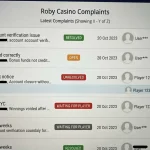
Nor does a working page settle what happens if a dispute arises. The existence of a website does not itself supply a dependable route for resolving complaints or recovering funds. Those questions sit beyond the moment of access, and can become most important after the screen has stopped being entertaining. A site being reachable and a service being dependable are different claims.
The distinction is especially important because online gambling can cause serious harm, particularly for vulnerable people. A game’s speed can make repeated decisions feel smaller than they are; a changing access landscape can make the service itself harder to assess. Neither condition makes the activity safer. People under eighteen must not gamble, and online casino games should not be promoted to Australian audiences.
In this market, “online” describes a connection, not a guarantee of continuity. A crash game may be visible, blocked or no longer offered to Australians, while references to it remain in circulation. The page is not the whole service. nor is it a promise that the service will be there tomorrow.
Crash Games, Slots and the Names That Blur the Boundary
The word casino is often used as a broad label for games that have little in common beyond their setting. A crash game and a pokie may both appear under that label, but the label does not describe how either game works. That distinction matters when a phrase such as “crash slots” is used as though it named a single kind of game.
Aussie Online Casinos: Legal Status, Bonuses and Payments
A crash game is built around a changing multiplier and a round that ends at an unpredictable point. The player’s central decision is when to stop and take the displayed amount; if the round ends first, the opportunity is gone. A pokie, by contrast, presents a sequence of spins and symbols. Its familiar imagery may borrow the language of storms, flight or sudden collapse, but a dramatic theme does not turn spinning reels into a crash game.
Names can muddy the boundary further. A title containing crash might refer to a game with a rising multiplier, a pokie with a collision-themed story, or simply an evocative phrase used in a casino catalogue. The word alone does not settle the mechanics. Nor does the presence of a casino label establish that games grouped together share the same rules, risks or return structure.
This is why “what is a casino crash game?” has a more useful answer than a catalogue of names: it describes a format, not a guarantee about a particular product. The defining feature is the round’s rising value and abrupt endpoint, rather than reels, paylines or a sequence of symbol combinations. A game can resemble that format in its presentation without matching it in play. The distinction is plain enough. The labels are not.
Searches that combine a casino name with “crash” can also blur the difference between a provider, a platform and a game type. A casino is a service or venue; a provider makes games; a crash format describes a style of play. These categories are not interchangeable. A phrase that places them side by side may sound like a product name, but it does not by itself identify who made a game or what its rules are.
Crash Game
A format built around a changing multiplier and a round that ends at an unpredictable point.
Pokie
A game presenting a sequence of spins and symbols, even if the theme involves a crash.
Casino
A service or venue that may provide various games and platforms.
The same caution applies to references to a “thunder crash” game. Thunder may be a theme, a title element or a loose description; it is not evidence of a distinct mechanic. Likewise, asking about crash games in the plural does not establish that all such games follow identical rules. The shared feature may be the rising multiplier and sudden end, while details of presentation and play can differ.
The phrase “crash simulator” adds another possible confusion: simulator may suggest a practice version, but the word alone says nothing about whether a particular game is free, a demonstration or a real-money product. Those distinctions depend on the actual offering, not on a label that sounds technical.
A pokie’s theme can borrow the vocabulary of a crash, just as a crash game can sit in a casino catalogue. Neither fact makes one a version of the other. Names travel easily between categories; mechanics do not.
Crypto Deposits and the Cost of Getting Money Back
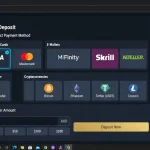
Crypto can make a crash game’s payment screen look simpler than the money movement behind it. A balance appears in digital units, a withdrawal is requested in the same form, and speed becomes the most visible measure of success. Yet the amount that arrives is a separate question from how quickly a transfer clears.
A specialist review describes crypto withdrawals as often clearing faster than other payment methods, while noting that network fees and conversion spreads can reduce the sum received. That is a useful distinction, not a promise about any particular service. A transfer may move promptly and still leave less value at the other end.
Fast Payout Online Casinos in Australia: Legal Context
The first subtraction may be the fee for sending funds across a blockchain network. The next may come when crypto is converted into another currency: the exchange rate offered can differ from the rate used to describe the balance on screen. These costs do not necessarily appear together, or in language that makes them easy to compare. “Fast” describes timing. It does not describe the final value.
This matters especially when the original deposit and the eventual withdrawal are measured differently. A digital balance is not the same thing as Australian dollars in a bank account. Conversion introduces another step, and with it a difference between the nominal amount shown and what can be spent after the transfer. The payment route has its own arithmetic.
There is also a small cultural shift in the way crypto is presented: money becomes a sequence of tokens, network transfers and exchange rates, rather than a note or bank balance. That can make a transaction feel abstract. The costs remain concrete.
For crash games, where the game’s pace can make every decision feel compressed, payment speed may seem like part of the attraction. But a quick withdrawal does not make the activity safer, nor does it establish that an offshore casino service is lawful in Australia. Crypto changes the payment rail, not the nature of the service. Real-money online casino games remain prohibited when offered to people in Australia.
The relevant comparison is therefore not simply which method clears first. It is the difference between the amount requested, the fees deducted along the way and the value after conversion. If those figures are not clear before a transfer, speed alone cannot fill in the gap. A fast arrival can still be a smaller one.
Do
- Consider network fees and conversion spreads
- Check final value after currency conversion
Don’t
- Assume speed equals cost-free transfers
- Mistake a digital balance for bank-ready cash
Crypto deposits and withdrawals should not be mistaken for a neutral convenience. They involve moving value through systems whose costs may be less visible than a familiar bank charge. In a market where offshore casino services are prohibited, the payment method does not remove the legal or financial uncertainty. It only changes how the money travels.
Bitcoin Cashouts: Fast Is Not the Same as Cost-Free
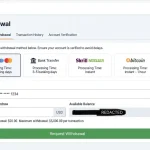
Bitcoin may be the word attached to a crash game, but it does not make the withdrawal process weightless. A balance displayed after a round is not necessarily money ready to leave an account. Offshore services can set a minimum cashout threshold, and the first withdrawal may bring identity checks that were not part of the moment-to-moment game.
For offshore sites, minimum withdrawal thresholds commonly fall between A$75 and A$150. A smaller balance may therefore remain unavailable until it reaches the stated floor. That condition matters more than a claim about speed: a quick transfer cannot help if the account has not met the withdrawal minimum. The relevant amount is the threshold written into the site’s terms, not an assumption based on the payment method.
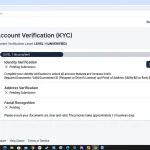
The first cashout can also be the point at which KYC becomes practical rather than abstract. Documents commonly requested include a passport or driver’s licence, alongside a utility bill. The account holder may need to provide these before a withdrawal is processed. This can make the first attempt slower or more demanding than later ones, and a Bitcoin label on the cashier does not remove the requirement.
Most Trusted Online Casino in Australia: Legal Limits
That distinction is easily lost in searches for Bitcoin crash games, whether the game is described as a balloon rising before it bursts or a chicken moving through escalating risk. The visual theme and the payment rail are separate matters. A crash format describes how a round unfolds; it says nothing by itself about the account’s cashout floor or what documents will be required.
There is a wider Australian context. Under the Interactive Gambling Act 2001, it is illegal for operators to provide real-money online casino games to people in Australia. Offshore sites may accept Australian payments, but an offshore licence does not make their casino services locally authorised. Players are not criminalised for using such sites, while ACMA enforces the law and can seek to block prohibited services. This is not a recommendation to use them.
A withdrawal policy is also not a guarantee that a balance will be paid on a particular schedule. Thresholds and KYC conditions are part of the terms, and the first withdrawal is where those terms can become tangible. “Fast” is a description of a transfer, not a promise that every preceding condition has already been satisfied.
Real-money gambling is for people aged 18 or older, and it can cause serious harm to vulnerable individuals. The machinery of a cashout may look administrative, but it sits at the point where game balance becomes a financial decision. The line between the two is contractual.
Free Play Without Mistaking a Demo for Cash
Free play changes the meaning of a crash game before the first round begins. In a demonstration, the balance is a display for simulated play, not money held for withdrawal. A rising multiplier may look familiar, and the decision to stop may resemble a real-money round, but resemblance is not equivalence. There is no cash balance merely because the screen gives one a number.
Difference between Demo and Cash
A demonstration uses simulated funds to show the rhythm of a game, such as the multiplier climbing. These funds are not withdrawable, and a demo does not turn prohibited real-money play into a lawful service.
That distinction matters in searches for free versions of crash games and for the software behind them. “Software” can refer to the program that generates the game, a demonstration mode, or simply the interface visible on a screen. Those are related ideas, not interchangeable promises. The word does not, by itself, establish that a particular game is available to try, how its demo behaves, or whether a displayed result corresponds to any real-money product.
A demonstration can show the rhythm of a game: a multiplier climbing, a decision point approaching, a round ending. It cannot make simulated funds withdrawable. Nor does familiarity with a demo establish what would happen in a cash game. The screen may borrow the same visual language while the stakes, account conditions and consequences belong to a different setting.
There is a more distinctly Australian boundary beneath that distinction. Real-money online casino games are prohibited services when offered to people in Australia under the Interactive Gambling Act 2001. A free demonstration is not a way to turn prohibited real-money casino play into a lawful cash service; equally, the presence of simulated play does not make its balance money. The law draws a line around the service, while the interface can make the line look less visible than it is.
That is why “free” deserves a literal reading. It can describe a mode with no cash stake, not a free route to winnings or a rehearsal that predicts them. A crash-game screen may make chance look orderly, with a multiplier that rises in plain view. The clarity is visual, not financial.
For anyone under eighteen, gambling is not appropriate; for adults, simulated play should still be understood as simulation. The distinction is modest in wording and substantial in consequence. A demonstration ends where cash begins.
Live Roulette in Australia: English-Speaking Dealers
When “Cash or Crash” Means the Pokies Debate
“Cash or crash” can sound like a choice between two styles of casino play. In Australia, though, the wording also sits beside a more familiar public argument: what poker machines take from communities, and whether governments should limit the speed and scale of that loss. A crash game and a pokie are not the same thing. The shared language of risk does not make their mechanics or social settings interchangeable.
The scale of machine gambling gives that debate its weight. Gamble.com.au reported that Victorian players lost $2.6 billion on poker machines over a year, more than $44.7 million above the figure recorded in 2015. The numbers describe losses across a state, not a typical player’s experience, and they should not be mistaken for a measure of what any one person will lose. Still, the total is hard to keep abstract when it is set beside a local venue.
Live Blackjack Online Casinos in Australia: Legal Context
The same report said the Epping Plaza Hotel, in Melbourne’s north, generated more than $21 million from its 100 machines over the year. “Generated” is the language of venue revenue; for players, the corresponding sum is money spent and lost. The difference between those descriptions is not merely rhetorical. It marks the point where private play becomes a public question about who benefits, and who bears the cost.
That question has shaped proposals to curb the machines. Senator Nick Xenophon and MP Andrew Wilkie advocated a cap that would hold each poker-machine bet to one dollar. The proposal was a political response to the scale of losses, not a rule that should be mistaken for a current limit. Its logic was plain: reducing the size of each permitted bet could slow the pace at which money leaves a player’s hands. Whether such a measure would change the wider pattern is another matter; reform debates often begin with the part that can be counted.
Pokies Debate
- Victorian players lost $2.6 billion on poker machines over a year.
- Some venues, like the Epping Plaza Hotel, generated over $21 million from machines annually.
- Proposed reforms by Senator Xenophon and MP Wilkie suggested a one-dollar bet cap to slow losses.
Searches blending “cash or crash” with casino language can therefore lead into two quite different subjects: an online game’s name, or Australia’s long argument over pokies. The latter concerns public policy and documented community losses, not a guide to playing. Poker-machine gambling can cause serious harm, particularly for vulnerable people, and it is not an income source. The distinction matters.
The machines are local. The consequences are, too.
Crash Strategy, Bonus Maths and the Cost of Conditions
A crash game’s rules may let a player choose when to leave a round, but that choice is not a way to dictate where the multiplier will stop. A plan can shape how someone responds to uncertainty; it cannot turn an unpredictable result into a predictable one. That is the limit of any crash-game strategy.
Bonus conditions introduce a different kind of arithmetic. A specialist review describes wagering requirements in the range of 30–50 times the bonus amount. Those terms concern the bonus, not a method for improving a game outcome, and they can determine whether winnings linked to the bonus are withdrawable at all. Bonus funds are not cash in hand.
The scale is plain in a specific example reported by a specialist review: a $100 bonus with a 40-times wagering requirement calls for $4,000 in bets before bonus-derived winnings can be withdrawn. That is a calculation of required turnover, not a promise that the amount will be won back. The distinction is easy to obscure when a large headline figure is placed first and its conditions are left below it.
Reading the rules means separating the round’s mechanics from the promotion’s conditions: which funds count, what kinds of bets contribute, and when a withdrawal is allowed. The figures and terms can vary between offers, so a stated multiplier should be treated as a condition of that particular offer, not as a universal rule for crash games.
Big Red Pokies Online in Australia: Rules and Demos
There is no betting sequence that makes a bonus less conditional. A system may simply make the required betting feel purposeful, while the obligation remains unchanged. For anyone under eighteen, gambling is not an option; for vulnerable people, it can cause serious harm. The arithmetic is exact. The comfort it offers may not be.
Provably Fair: What the Label Does—and Does Not—Establish
“Provably fair” is a claim about how a game’s outcomes can be checked, not a synonym for honest play. The distinction matters in crash games, where a multiplier’s sudden stop can make an outcome look simple while concealing the process that produced it. A label cannot do the work of an explanation.
A meaningful fairness claim needs a method that can be examined: what information is committed before a round, what becomes available afterwards, and how those pieces allow the result to be reproduced or checked. The rules also need to explain which parts of the process are controlled by the game and which, if any, can be influenced by a participant. Without that account, “verifiable” remains an adjective on a screen.
Australian Pokies Online: Legal and Payment Risks
Even a working verification method has a boundary. It may show that a particular result followed the stated procedure; it does not establish that the procedure is safe, that the game is suitable, or that any eventual return is predictable. Fairness is not a promise of winning. Nor does a technical check settle questions about who operates the service or what protections apply.
The word can therefore carry more weight than its evidence. In a crash casino game, a displayed result and a fairness label are not themselves proof. The useful distinction is between a claim that sounds reassuring and a process whose steps are transparent, repeatable and intelligible.
That is a narrower standard than trust, and a more useful one. A label may invite confidence; only a checkable method gives the claim something to stand on.
Pokies

3-Reel Slots in Australia: Features and RTP
Learn how bonus rules, configured RTP, free-play options and Australia’s regulatory boundary shape the way...

5-Reel Slots in Australia: How the Odds Work
Explore how RTP, bonus rounds, paytables and game availability shape the experience without predicting the...

Seven-Reel Slots in Australia: RTP and Bonus Features
A practical look at how reel formats, bonus rules, RTP and free-play modes shape what...

Online Pokies Australia: Legal and Payment Guide
Australia’s rules put the licensing burden on operators, while bonus terms, payment routes and practice...

Aussie Online Casinos: Legal Status, Bonuses and Payments
A clear-eyed look at offshore casino sites, the terms attached to offers and the limits...

Aussie Pokies Online: What “Best” Really Means
A practical look at terminology, legal boundaries, game settings, payments and the limits of rankings...

Australian Pokies Online: Legal and Payment Risks
Offshore access does not equal local authorisation, and payment methods or bonus offers do not...

Bonus Buy Slots in Australia: How They Work
A bonus buy pays for direct entry to a feature round, but the result remains...

Best Casino in Adelaide: Venue and Online Context
A practical distinction between a city destination and online services, with context on the venue...

Casino in Brisbane: Hotels, Dining and Visitor Guide
Understand how accommodation, dining, gaming, transport and venue details differ across Brisbane casino search results....

Best Casino in Canberra: What the Search Can Establish
A practical look at accommodation, gaming searches and amenities, distinguishing what a search suggests from...

Darwin Casino: Venue, Work and Entertainment Guide
A practical look at venue information, employment and entertainment claims, and how online casino offers...

Hobart Casino Information: What Searches Can Confirm
Searches about poker, accommodation, dining and facilities raise distinct questions, and a keyword alone does...

Melbourne Casino: Hotels, Dining and Visitor Details
A guide to nearby stays, booking conditions, dining, entertainment and other questions that shape a...

Casino in Perth: Hotel Stays and Visitor Details
A practical look at accommodation, access and visitor questions, with a clear distinction between a...

Best Casino in Queensland: Rooms, Dining and More
A practical look at room categories and booking terms, with related details on dining, parking...

Best Casino in Sydney: Hotels, Play and Practicalities
A practical guide to comparing a Sydney casino stay with the venue’s gaming, dining and...

Casino Stays in Tasmania: What to Verify
Room rates, promotions and nearby amenities require a named property and current terms before they...

Casino in Victoria: Hotels, Gaming and What’s Verified
A clear guide to what casino searches can establish about accommodation, gaming, food, location and...

Western Australia Casinos: Hotel and Venue Details
Casino-related searches cover hotels, poker, dining and facilities, but property-specific terms and venue facts need...

Fast Payout Online Casinos in Australia: Legal Context
A clear look at what withdrawal-speed claims can—and cannot—show about offshore casino services, payment routes...

High-volatility slots in Australia: how they work
A guide to how volatility affects the pattern of payouts, why past spins do not...

Instant Payout Online Casinos in Australia
Offshore withdrawal claims, verification checks and payment routes do not establish licensing, guaranteed timing or...

Keno Online Casinos in Australia: Legal Rules
The guide examines real-money online keno, Australian gambling rules, venue machines, offshore payment risks and...

Live Dealer Casinos Online in Australia: Legal Context
The guide explains why live streams do not change the legal treatment of online casino...

Live Casino Online in Australia: Legal Limits
Australia has no locally licensed online casinos, so a site's visibility is not proof of...

Low-Volatility Slots in Australia: How They Work
Low volatility generally describes more frequent, smaller wins and less variation, but it does not...

Pokie Machines in Australia: What Players Should Know
A practical guide to online game features, RTP, free play and the legal and payment...

Best pokies in Adelaide: hours, access and rules
Venue listings do not confirm gaming-room hours; this guide also separates local access, online play...

Pokies in Brisbane: venues, online rules and limits
Brisbane searches can point to physical gaming venues or online services, but location-based wording does...

Best Pokies in Canberra: Hours, Venues and Limits
A practical look at venue hours, gaming-area access and what public information can—and cannot—establish about...

Pokies in Geelong: Checking Current Venue Information
Venue listings may show a building as open without confirming that its gaming room is...

Melbourne Pokies: Locations, Hours and What “Best” Means
Venue names and search labels alone do not confirm distance, opening hours or whether a...

Pokies in New South Wales: Hours and Venue Access
Venue schedules can differ from gaming-area access, so availability needs checking with the specific NSW...

Best Pokies in Perth: Hours, Venues and Checks
A practical guide to venue hours, return figures, duty of care and the limits of...

Best Pokies in South Australia: How to Compare
A practical look at RTP, venue hours, locations and the limits of online and venue-based...

Best Pokies in Sydney: What Search Results Can Prove
Search terms can suggest locations and rankings, but they do not verify addresses, opening hours,...

Best pokies in Tasmania: hours, access and legal context
Tasmanian venue listings, gaming-room schedules, chance and online-play rules require separate checks rather than a...

Progressive Jackpot Slots: How They Work
Progressive slots add part of eligible wagers to a changing prize pool, but the rules...

Online pokies for real money in Australia: legal guide
A practical look at offshore operators, payment limits, bonus terms and why access does not...

RTP for Australian pokies: what it really means
A guide to long-run return, independent spins and the practical limits of RTP. What a...

Best RTP Slots in Australia: Understanding RTP
RTP is a long-run theoretical measure, not a forecast of individual spins or a guarantee...

Video Slots in Australia: Spins, RTP and Play
Explore how random outcomes, return settings and play options shape the experience of online video...

Big Red Pokies Online in Australia: Rules and Demos
The name does not change Australia’s rules on real-money online pokies or what a free-play...

Casino Dice Games in Australia: Rules and Formats
Casino dice games vary in how they use the roll, set wagers and connect outcomes...

Lightning Link Online Pokies in Australia Explained
Lightning Link is played on Australian venue machines, while online searches may lead to similarly...

Live Baccarat Online Casinos in Australia: Legal Guide
A practical look at Australia’s legal context, baccarat formats, payments and the features that distinguish...

Live Blackjack Online Casinos in Australia: Legal Context
Australia’s rules distinguish locally licensed services from offshore offers, while a live stream does not...

Live Roulette in Australia: English-Speaking Dealers
A practical overview of roulette mechanics, betting options, odds and the legal boundary for real-money...

Mines Casino Game in Australia: Rules and Risks
A Mines grid describes a play format, not proof of an Australian product or a...

Most Trusted Online Casino in Australia: Legal Limits
Australia has no domestic online-casino licences, so payment options, bonuses and game details must be...

Plinko Casino Australia: Games, Payments and Terms
Plinko’s falling-disc format sits between slot-style presentation and a distinct game, while payment options and...

Pokies Tips and Tricks: What Advice Can Change
A practical look at what players can control, what random outcomes mean, and why rituals...

Real Money Casino Table Games in Australia
Live streams show activity at a physical table, while digital games use software to determine...