Casinos That Accept Mastercard in Australia: Legal Limits
 Available in AU

A card option at the cashier does not establish legality, and the route used for deposits may not determine how withdrawals are handled.
Table of Contents
- Online Casino Payments and Australia’s Legal Boundary
- Deposits, Cashiers and the Identity Check
- Card Acceptance Is Not the Same as Card Choice
- Why ‘Instant Withdrawal’ Needs Careful Reading
- What an Acceptance Claim Can—and Cannot—Establish
- Cards, Wallets and the Wider Payment Habit
- Australian Payment Preferences Beyond the Casino
- Withdrawal Routes Are Not Always the Deposit Route
- When a Card Payment Is Blocked Upstream
- Bonuses and the Cost of the Payment Method
Online Casino Payments and Australia’s Legal Boundary
A Mastercard logo can look like a small assurance: a familiar institution, a recognisable payment network, a transaction that appears to belong to ordinary commerce. In Australia, however, the appearance of a payment option does not settle the legal question around an online casino. A card brand describes a way money might be handled; it does not turn the service receiving it into a lawful one.
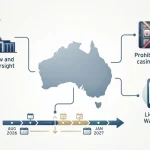
The relevant boundary is set by the Interactive Gambling Act 2001. The law prohibits operators from providing real-money online casino games to people located in Australia. The restriction concerns the service offered, not the design of its website or the payment methods displayed there. A foreign operator does not acquire permission to serve Australian customers merely because its cashier shows a familiar card logo, or because a transaction appears technically possible.
That distinction matters because payment systems are built to move money, not to confer legal status. A Mastercard symbol may indicate that a site claims to accept that card, but it is not an Australian authorisation, a local licence or a promise that the service is protected under Australian law. The same principle applies to any other payment route. The method and the underlying activity are separate questions.
When choosing a casino that accepts Mastercard in Australia, check the details that matter to you, such as licensing and the payment information available. These listings offer a concise starting point for reviewing your options.
1. SpinsUp
License: Curacao Gaming Control Board OGL/2023/174/0082 (Dama N.V.) SpinsUp is listed with a Curaçao Gaming Control Board licence, OGL/2023/174/0082, held by Dama N.V.
2. Bizzo Casino
License: Curacao Gaming Control Board (TechSolutions Group N.V.) Bizzo Casino is listed with a Curaçao Gaming Control Board licence held by TechSolutions Group N.V.
3. WinSpirit Casino
License: Curacao eGaming OGL/2024/923/0383 (Antillephone N.V.) · Min. deposit: A$30 WinSpirit Casino is listed with a Curaçao eGaming licence, OGL/2024/923/0383, held by Antillephone N.V. Its minimum deposit is A$30.
4. DragonSlots Casino
License: Curacao Gaming Authority (Jumpman Gaming Ltd) DragonSlots Casino is listed with a Curaçao Gaming Authority licence held by Jumpman Gaming Ltd.
5. Roby Casino
License: Curacao eGaming (Roby Games Ltd) Roby Casino is listed with a Curaçao eGaming licence held by Roby Games Ltd.
6. LevelUp Casino
License: Curacao eGaming OGL/2023/174/0082 (Dama N.V.) · Min. deposit: A$15 LevelUp Casino is listed with a Curaçao eGaming licence, OGL/2023/174/0082, held by Dama N.V. Its minimum deposit is A$15.
7. Lucky Dreams
License: Curacao · Min. deposit: A$20 (POLi) Lucky Dreams is listed with a Curaçao licence. The stated minimum deposit is A$20 when using POLi.
8. Ricky Casino
Payout speed: crypto under 1 hour, PayID 1-3 business days · Min. deposit: A$20 (A$30 to qualify for the bonus) Ricky Casino lists crypto payouts in under 1 hour and PayID payouts in 1–3 business days. Its minimum deposit is A$20, or A$30 to qualify for the bonus.
9. GoldenCrown
License: Curacao Gaming Control Board OGL/2023/176/0095 (Hollycorn N.V.) GoldenCrown is listed with a Curaçao Gaming Control Board licence, OGL/2023/176/0095, held by Hollycorn N.V.
10. House of Pokies
License: international iGaming licence – jurisdiction not named in the source · Payout speed: PayID 1-24 hours · Min. deposit: A$30 (PayID from A$10) House of Pokies is listed with an international iGaming licence, though the source does not name the jurisdiction. PayID payouts are stated as 1–24 hours; the minimum deposit is A$30, or A$10 with PayID.
The law’s focus is on operators. It does not explicitly make an Australian player’s use of an offshore casino a criminal offence. That difference is easy to blur in casual discussion: an activity can be prohibited for the business supplying it without the law imposing the same liability on the person using it. But the absence of explicit player criminalisation is not an endorsement, and it does not create the protections that would accompany a locally authorised service. A legal gap is not a safety net.
Enforcement sits with the Australian Communications and Media Authority, commonly known as ACMA. Its role is to apply the Interactive Gambling Act to prohibited services. Offshore sites are subject to active blocking and enforcement, so availability can change or disappear even when a page, account or payment option has previously been visible. A site’s momentary accessibility is not proof that it has been accepted into Australia’s legal framework. Online presence is a poor substitute for permission.
There is a further consequence for consumers. Australian consumer law does not protect players who use offshore casinos. If a dispute arises over an account, a balance or a transaction, the operator’s willingness to respond is not the same thing as access to Australian consumer remedies. Nor does the presence of a known payment brand supply those remedies. A recognisable logo can make a service feel nearer and more accountable than it is.
Casinos That Accept MiFinity in Australia: What to Know · Casinos That Accept POLi in Australia: What to Know
This is why searches for an Australian online casino that accepts Mastercard can collapse two different matters into one phrase. One concerns whether a site says it can process a card. The other concerns whether an operator may lawfully provide real-money casino games to people in Australia and what recourse a customer has if something goes wrong. A matching card option answers, at most, a narrow question about payment compatibility. It does not answer the legal one.
The distinction is especially important because the interface of an offshore site is designed to resemble familiar commercial life. It may use Australian currency, describe services in local terms and present payment choices as if they were routine. None of those details changes the law’s treatment of the underlying service. A smooth interface can lend a transaction the look of ordinary retail; the law does not take its cues from the interface.
Australian regulation draws a firm line around the supply of real-money online casino services, while leaving players outside the same explicit criminal prohibition. That structure does not amount to a locally regulated casino market operating under another name. It means the operator’s conduct and the player’s exposure are treated differently, while the ordinary protections of Australian consumer law do not extend to someone using an offshore casino.
The distinction is not a technical footnote. It is the frame around every claim about cards and casinos in Australia. A payment method may be named, displayed or accepted by an offshore operator; none of those facts establishes that the operator may lawfully serve Australian residents, or that a player has local consumer protection. The card may be familiar. The legal position is not.
Legal Warning
The Interactive Gambling Act 2001 prohibits operators from providing real-money online casino games to people in Australia. Offshore sites are subject to active blocking and enforcement by ACMA.
Deposits, Cashiers and the Identity Check
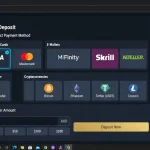
A payment option displayed in a cashier can look like the beginning of a transaction. It is not, by itself, proof that a deposit can proceed. In online gambling, the cashier sits inside an account system, and that system may require an identity assessment before it handles financial activity. The apparent simplicity of a card symbol therefore conceals a prior condition: the account must pass through the operator’s checks.
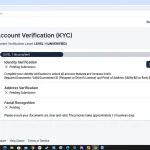
Online casinos generally require customers to complete a Know Your Customer, or KYC, assessment before financial transactions. The label may sound like administrative furniture, but it marks a real threshold. The payment method and the person using the account are separate questions. A cashier can show a card option while the account remains unverified; seeing the option does not establish that the transaction is available to that customer.
That distinction matters in discussions of a casino deposit by Mastercard. A method’s presence on a page is not evidence that every account can use it, or that a payment will be accepted. Nor does a card logo settle what happens before a transaction is considered. The identity process comes first in the account relationship, even when a payment button is more visible.
There is also a legal boundary specific to Australia. The Interactive Gambling Act 2001 prohibits operators from providing real-money online casino games to people located in the country. A cashier that appears accessible, or a card method displayed within it, does not alter that rule. The Australian Communications and Media Authority enforces the Act. Australian consumer law does not protect people who use offshore casinos. Those points matter because payment language can make an offshore service seem like an ordinary retail checkout. It is not.
Casino Sites That Accept Paysafecard in Australia · Casinos That Accept Bitcoin in Australia: Payments
The ordinary retail pattern is familiar: choose a method, enter details, confirm. Casino payment pages borrow the shape of that experience, but the resemblance has limits. Here, the account’s identity status can stand between the visible payment option and any financial transaction. Treating the cashier as a simple card terminal leaves out the process that precedes it—and, in Australia, the legal status of the service itself.
KYC is often reduced to a box to tick, as though verification were merely a delay between registration and payment. More accurately, it is a condition attached to financial activity. That condition can explain why a payment option appears without being immediately usable. It does not tell a user whether Mastercard is accepted at a particular site, whether a payment will be approved, or whether a service is lawful to offer in Australia. Those are distinct questions, not different phrasings of the same one.
This is why a search for a Mastercard deposit at a casino cannot be answered by the cashier display alone. A card logo might indicate a stated payment route; it cannot establish that a customer has completed the required assessment. And passing that assessment would not transform an offshore casino into a locally authorised service. Verification is about the account. Legality is about the operator’s conduct. The two should not be confused.
KYC
An identity assessment, known as Know Your Customer, that online casinos generally require customers to complete before financial transactions can be handled.
The language of deposits tends to foreground the moment money moves. Yet the entry point is less a single click than a sequence of gates: the account, its identity assessment, and the payment facility shown by the operator. A step may be visible without being available, and availability does not confer protection. That is a less tidy story than a row of familiar card marks.
The term “cashier” lends the process a reassuringly mundane air. It evokes a counter, a clerk, perhaps the small rituals of commerce. Online, it is an interface inside a service whose legal position depends on more than the method it displays. A Mastercard symbol cannot answer the prior questions, and a completed identity check cannot answer them either.
The practical distinction is narrow but important: a displayed payment route is not a completed deposit. Before financial transactions, online casinos commonly place an identity assessment in the way. In Australia, the legality of an offshore casino is a separate and more fundamental issue. The cashier does not settle it.
Card Acceptance Is Not the Same as Card Choice
A card brand can look like a simple yes-or-no matter: a symbol appears beside a cashier option, and the payment seems settled in advance. In practice, acceptance is a decision made at the level of a particular operator and transaction. A brand’s general presence in the payments world does not establish that every online casino offers it, or that a displayed option will be available in every circumstance.
CashToCode Casinos in Australia: Acceptance Checks
The distinction matters when comparing Amex and Visa. A specialist review has reported that some online casinos do not accept Amex. The same kind of source has suggested that Visa may be accepted more widely at Australian online casinos than Amex. Those are limited, source-dependent observations, not a permanent map of the market. Payment arrangements can change, and a comparison drawn from a review cannot stand in for a current statement from an operator.
That narrow comparison offers no basis for a similar claim about Mastercard. The fact that people look for casinos that accept Mastercard does not prove that a named casino takes it, that the option is available to Australian customers, or that deposits and withdrawals follow the same route. Nor does a card logo by itself settle what happens when a payment is attempted. The useful distinction is between a brand being familiar and a particular service actually accepting it.
“Choice” can be a misleading word here. It suggests that all brands sit in a neat row, ready to be selected according to preference. But a cashier is not a universal catalogue. Its displayed methods reflect the arrangements of that operator and can differ from one service to another. A card accepted in one setting may not appear in another. A familiar brand name tells little about the specific options presented by a particular site.
Payment Availability
Reports suggest that Visa may be accepted more widely at Australian online casinos than Amex, though these are source-dependent observations and not a permanent market map.
This is why broad claims about the “best” Mastercard casino or the “best” sites for Mastercard deposits should be treated cautiously. A ranking would imply comparable, current evidence about the same feature across operators. A payment label alone cannot supply that evidence. And calling a site a Mastercard casino does not establish that Mastercard is available for every transaction, or that the service is lawful to offer in Australia. The label has a narrower meaning than its confident sound suggests.
The same restraint applies to claims about games. A payment method belongs to the cashier, not to an individual game. A game title cannot establish which card brands an operator accepts, and a card brand cannot establish that a particular game is available. Joining the two in a phrase may make a tidy description, but it does not create a verified connection between them.
Visa’s possible advantage over Amex is therefore best understood as a reported comparison of availability, not a verdict on quality or a guarantee that Visa will be present wherever Amex is absent. It also says nothing about Mastercard. Card networks are not interchangeable labels, and evidence about one brand cannot be transferred to another simply because all are used for card payments.
For anyone assessing a payment claim, the distinction is plain: general familiarity is not operator acceptance; acceptance is not a promise of availability in every transaction; and availability is not an endorsement. Each step requires its own evidence. A card name can make a cashier look settled. It does not make the underlying arrangement so.
Casinos That Accept PayID in Australia: Legal Context
Why ‘Instant Withdrawal’ Needs Careful Reading
“Instant” is a word that changes meaning at the cashier. A payment going in and money coming back out are separate stages, handled under different conditions. A quick deposit therefore says little about when a withdrawal might clear. The distinction is particularly important where a search for a Mastercard casino payment appears to promise that both directions move at the same speed.
The available timing detail concerns Amex, not Mastercard. A specialist review describes Amex casino deposits as being processed instantly, while reporting that an Amex withdrawal can take as long as five days to clear. That is a specific account of one payment method, not a general timetable for Australian casinos and not evidence about Mastercard. A label on a payment page cannot carry the detail across from one card network to another.
Nor does “processed” necessarily mean that funds are immediately available in an account. It can describe a stage in the payment chain rather than the moment money reaches its destination. The deposit may be accepted quickly; a withdrawal still has to move through its own steps. Treating those as mirror images is convenient for advertising and poor arithmetic.
The word “instant” also tends to flatten the difference between a casino’s handling of a request and the later movement of funds. A cashier might record an action promptly without that settling every part of the transaction. The Amex comparison makes the point plainly: the reported speed of the incoming payment does not prevent the outgoing one from taking longer. Two directions, two clocks.
This matters even when the card brand in a headline is Mastercard. The Amex detail can illustrate why deposit speed and withdrawal speed should not be conflated, but it cannot establish that a Mastercard withdrawal is instant, delayed, or available at all. Those are distinct claims. A payment-method badge is not a timetable.
Transaction Speeds
Deposit and withdrawal speeds are separate; for example, Amex deposits may be processed instantly while withdrawals can take up to five days to clear.
Search phrases that combine “instant withdrawal” with “Mastercard” or “pokies” compress several assumptions into a few words: that the card is accepted, that it can be used for withdrawals, and that the transfer clears immediately. The Amex evidence supports none of those conclusions about Mastercard. It shows only that, for the method it discusses, a swift deposit and a slower withdrawal can coexist.
There is a wider reason to read speed claims narrowly. In Australia, real-money online casino services are prohibited for operators to provide to people in the country. A foreign site’s payment wording does not alter that legal position, and Australian consumer law does not protect people using offshore casinos. A promise of rapid payment is not a substitute for protection or legal status. Speed is not shelter.
“Instant withdrawal” should therefore be read as a claim requiring a specific method and a specific stage, not as a general quality of a casino or card. The reported Amex timing is a useful contrast: money may enter at once, while a withdrawal may take days to clear. It is not a Mastercard rule, and it is no assurance that winnings will arrive immediately.
What an Acceptance Claim Can—and Cannot—Establish
A statement that a casino takes Mastercard is a statement about payment availability, not a certificate of lawful operation. At most, it suggests that the operator presents the card as a way to fund an account. It does not establish that the service may legally be offered to people in Australia, that a payment will be approved, or that the player has recourse if a dispute arises.
Casinos That Accept Litecoin in Australia: What’s Verifiable
That distinction matters because payment networks and gambling law answer different questions. A card symbol belongs to the language of commerce: it signals a method the business says it can process. The Interactive Gambling Act 2001 addresses the service itself. It makes it illegal for operators to offer online casino games to Australian residents. A cashier page cannot alter that boundary.
Nor does the presence of a familiar payment brand turn an offshore operator into a locally protected business. Australian consumer law does not protect players who use offshore casinos. A recognisable logo may lend an operation the appearance of ordinary retail, but appearance is not legal status. The card network is not a local gambling regulator, and a successful payment is not an endorsement of the operator.
The law draws a further distinction between the operator and the player. The Act prohibits the provision of the service; it does not explicitly criminalise an individual for using an offshore site. That does not make the service lawful, or create consumer protections that are otherwise absent. It is a narrow difference, easily blurred when a transaction looks as routine as paying for any other online purchase.
So the phrase “casino that accepts Mastercard” should be read with care. It describes a claimed payment route, not a finding about legality, fairness, or the availability of help when something goes wrong. Even a casino that advertises Mastercard may impose conditions, and the card issuer may not approve a particular transaction. Neither outcome settles the legal question.
Do
- Treat payment logos as claims of compatibility
- Check operator terms for specific conditions
Don’t
- View a card logo as legal authorisation
- Assume Australian consumer law protects offshore play
This is why payment claims cannot carry the weight of a safety label. They say nothing, by themselves, about whether an operator is permitted to provide casino games in Australia or whether Australian consumer protections apply. The law is concerned with what is being offered and to whom, not with which logo sits beside the cashier button.
A card can make an offshore service look familiar. Familiarity is not protection.
Cards, Wallets and the Wider Payment Habit
In Australia, tapping a card has become an ordinary part of buying things. Contactless credit and debit card payments are accepted almost everywhere, and mobile wallets such as Google Pay and Apple Pay have a similarly broad everyday presence. The gesture is small: a card or phone meets a terminal, and the purchase is done. Its familiarity can make payment methods seem interchangeable across settings.
They are not. A method common in shops does not thereby become available for every kind of online transaction. Nor does a card’s routine use at a retail terminal establish that an online gambling service can lawfully offer its games to people in Australia. Those are separate questions, governed by different circumstances. A familiar tap is not a legal argument.
That distinction matters when a payment card is mentioned alongside casino games. The phrase can suggest that the card is part of the game itself, when payment and play are separate matters. A card does not alter the rules that apply to a service, and everyday acceptance offers no assurance about what an online operator may provide. The broad reach of contactless payments belongs to Australian commerce generally, not to a blanket permission for online gambling.
Casinos That Accept Neteller in Australia: What to Check
Mobile wallets make the contrast more visible. They place a card or bank-linked credential inside a phone, turning a familiar payment instrument into a different-looking gesture. At a shop counter, the phone may stand in for the physical card. That convenience can blur the boundary between the payment device and the service being paid for. But a wallet is a way to present a payment credential; it does not determine whether the underlying transaction is permitted.
This is why searches combining Mastercard with casino games can carry an assumption that needs separating out. The everyday ubiquity of card and wallet payments says something about how Australians pay for ordinary purchases. It does not prove that a particular online game accepts a card, or that a gambling service is authorised to reach Australian residents. Retail habit is not casino availability.
The distinction is easy to miss precisely because the payment gesture has become so ordinary. A phone held near a reader looks much the same wherever it is used; the rules around the transaction do not. Small gesture. Different boundary.
Australian Payment Preferences Beyond the Casino
Australian payment habits are not organised around a single instrument. Consumers are comfortable moving between cards, mobile wallets and services linked to bank accounts, such as PayPal. That flexibility matters more than any one brand: a card may suit one purchase, a wallet another, while a bank-linked service offers a different route altogether.
AUD Banking and Payment Options at Roby Casino Australia
The habit is less a grand declaration of loyalty than a practical willingness to change lanes. Payment methods have become familiar tools, selected according to circumstance rather than treated as badges of identity. Mastercard belongs to that wider card vocabulary, but its name alone says nothing about whether a particular service accepts it. A familiar payment method and an available payment route are not the same thing.
That distinction becomes important when casino language borrows from ordinary retail life. People may be accustomed to tapping a card, opening a mobile wallet or using a bank-linked service in everyday transactions. Those routines do not establish that an online casino can lawfully offer its services in Australia, or that a payment provider will process a gambling transaction. Everyday ease does not travel intact into every setting.
There is also a quiet social change in the comfort with switching. A generation ago, payment could feel like a fixed relationship with a bank or a piece of plastic carried in a wallet. Now the same person may move among cards, phone-based wallets and account-linked services without treating the change as remarkable. The method becomes part of the background, while the transaction itself remains the point.
This broader mix helps explain why searches for an Australian casino using Mastercard can sound like a simple question about preference. It is not. Familiarity with cards is a feature of daily payment culture; it is not evidence of casino access, legality or consumer protection. Those are separate matters, governed by rules that do not bend merely because a payment interface looks ordinary.
Casinos That Accept Tether USDT in Australia
A crowded wallet, digital or otherwise.
Withdrawal Routes Are Not Always the Deposit Route
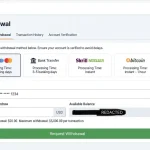
A card accepted for a deposit does not automatically follow the money back out. A specialist review has reported that some Australian-facing casino sites may not offer withdrawals to Amex, even where it can be used to fund an account. That is an Amex-specific caveat, not evidence of how a Mastercard withdrawal would be handled.
The distinction matters because payment methods are not simply two-way pipes. A site may set separate rules for incoming and outgoing transactions, and those rules can depend on the payment method and the operator’s own arrangements. A label such as “withdrawal to card” therefore does not, by itself, establish that winnings can be returned to the same card used for a deposit.
Limits are another operator-level variable. A specialist review describes Amex deposit and withdrawal limits as being set by each casino and varying between them. No single limit can be carried from one site to another, and an Amex limit says nothing about Mastercard limits. The cashier’s stated conditions are the relevant terms for a particular transaction; a broad claim about card acceptance cannot substitute for them.
There is also a larger boundary that payment descriptions can obscure. The Interactive Gambling Act 2001 prohibits operators from providing real-money online casino games to people in Australia. Australian consumer law does not protect people who use offshore casinos. A payment route, whether described as Mastercard withdrawal or otherwise, does not change either point.
Legal and Payment Realities
- Payment method availability does not establish the legal status of an operator in Australia
- Deposit routes do not always guarantee identical withdrawal routes
- Card issuers may block gambling transactions independently of the casino’s cashier
- Australian consumer law does not extend to players using offshore casinos
The language of a cashier can make a transaction look neatly circular: deposit by card, withdraw by card. In practice, the route out may differ from the route in, and a card brand alone cannot establish what an operator permits. For Amex, the reported restriction is specific; for Mastercard, it should not be inferred from that comparison. The distinction is modest, but consequential.
When a Card Payment Is Blocked Upstream
A payment can fail before a casino’s cashier has a chance to process it. The cashier may display a card option, and the card details may be entered correctly, yet the issuer can still refuse the transaction. In that case, the obstacle sits with the bank or card provider, not necessarily with the payment page.
Australian banks may block gambling-related transactions made with Amex at issuer level. That distinction matters: a casino’s apparent acceptance of a card does not compel the issuer to approve a particular payment. The cashier and the issuer are separate gates, and passing the first does not open the second.
Casinos That Accept Neosurf in Australia: What’s Verified
This Amex example should not be treated as a rule about Mastercard. A declined Amex transaction says nothing, by itself, about whether a Mastercard payment would be accepted or rejected. Nor does a Mastercard option shown at a cashier establish that every issuer will authorise a gambling-related transaction. Card-brand labels can look like a complete answer; they are only one part of the chain.
That leaves a practical difference between “the casino accepts Mastercard” and “this card payment will go through.” The first is a statement about a cashier’s stated methods. The second depends on an individual transaction and the decisions made beyond the cashier. A payment method can be listed without guaranteeing approval.
The same caution applies to searches for casinos where Mastercard can be used. A visible card logo is not proof of universal access, and an Amex restriction cannot be used as evidence of a Mastercard restriction. The issuer-level example is specific to Amex and Australian banks; extending it to another card would turn a narrow fact into an unsupported generalisation.
Casino Sites That Accept Credit Cards in Australia
There is little drama in a payment refusal, but it reveals how many institutions sit between a card and a completed transaction. The cashier is only the visible counter. Beyond it, an issuer may still close the door.
Bonuses and the Cost of the Payment Method
A promotion and a payment charge are separate parts of a transaction. A casino may describe an offer in promotional terms, while the cashier or payment conditions determine whether a particular method carries a fee. Treating a card as a route to a bonus confuses those two things: the card itself is not the offer, and its acceptance does not establish that an offer applies.
A specialist review reports that Amex deposits may carry no fee, but that charges depend on the casino and withdrawals may incur a fee. That is a limited, operator-dependent claim, not a general price rule for card payments. It says nothing about Mastercard charges, nor does an Amex fee note establish any Mastercard-specific bonus or eligibility condition. Payment terms and promotional terms need to be read as distinct provisions, not folded into one attractive headline.
Casinos That Accept Ethereum in Australia
In Australia, that distinction sits within a stricter boundary. The Interactive Gambling Act 2001 makes it illegal for operators to provide real-money online casino games to people in Australia. A payment method or promotional label does not alter that position; nor does it make an offshore service locally protected. Australian consumer law does not protect players using offshore casinos.
The language of bonuses can make a payment choice sound like a reward in itself. It is not. A fee concerns the cost of moving money; a promotion concerns an inducement attached to an operator’s offer. Neither should be inferred from the other, and a card brand is no substitute for the terms that govern a transaction. Dry accounting, but still accounting.
Which online casinos accept American Express for deposits?
Jackpot City Casino, Spin Palace, Ruby Fortune, Ignition Casino, Joe Fortune and PlayAmo are listed as supporting Amex deposits for Australian players. Availability can vary by account and site.
How do you check if casino sites accept Amex deposits?
Check the site’s cashier for American Express and whether it is available on your account. A displayed payment option does not guarantee a deposit will be accepted, and the casino may require identity verification first.
How long do Amex casino deposits take to process?
Amex deposits are processed instantly.
How safe is my money when using American Express at online casinos?
Using Amex does not make an offshore casino safer or provide Australian consumer protection. Australian law prohibits operators from offering online casino games to residents, and ACMA enforces that law.
Is it safe to use American Express for transactions at online casinos?
Amex is a payment method, not a guarantee that an offshore casino is lawful or that your money is protected. Australian consumer law does not protect players using offshore casinos.
Are there any fees associated with using American Express at online casinos?
Amex deposits typically have no fee, but a casino may add a 1.5% surcharge. A 3% currency conversion fee may also apply, and withdrawal fees can vary by casino.
What should I do if my American Express deposit is declined?
Check with Amex or your card issuer, as they may block gambling transactions or payments to a particular website. Australian banks may also block gambling-related Amex transactions.
What are the fees involved with American Express payments?
Deposits are typically free, but a casino may charge a 1.5% surcharge and Amex may charge a 3% currency conversion fee. Withdrawal fees may also apply and vary by casino.
AUD Banking and Payment Options at Roby Casino Australia

AUD Deposit Options at Roby Casino Australia
Roby supports several deposit categories that are relevant to Australian players: Visa, Mastercard, Skrill, Neteller,...

AUD Withdrawal Limits and Times at Roby Casino Australia
Roby supports several payment categories that can be relevant to withdrawals, including cards, e-wallets, bank...

$1 Minimum Deposit Casinos in Australia: What to Know
A casino’s stated minimum may differ from a payment method’s floor or the amount needed...

$1 Minimum Deposit Pokies in Australia: How It Works
A casino’s stated minimum is only one part of the transaction; the payment route may...

$10 Minimum Deposit Casinos in Australia: How It Works
The amount accepted depends on both the casino cashier and payment route, while costs and...

$10 Minimum Deposit Pokies in Australia: What It Means
A site's stated minimum may differ from what its card processor, wallet or other payment...

$2 Minimum Deposit Casinos in Australia: What to Know
A low operator threshold may not survive the payment chain, where processors can set a...

$20 Minimum Deposit Casinos in Australia
Australian casino deposit minimums can depend on the operator’s terms or on the payment method...

$20 Minimum Deposit Pokies in Australia: What It Means
A displayed minimum may come from a payment provider rather than the operator, and the...

$5 Minimum Deposit Casinos in Australia: Payment Rules
The amount accepted by an operator can differ from the minimum transaction required by the...

$5 Minimum Deposit Pokies in Australia: What It Means
The operator’s stated floor can differ from the minimum accepted by a payment method, while...

Anonymous crypto casinos in Australia: risks and tax
Bitcoin can ease casino payments, but anonymity, withdrawals, tax treatment and Australian access all have...

Aristocrat Online Pokies in Australia: What to Know
The search phrase does not verify a game's maker or availability, and Australian rules set...

Aussie Crypto Casinos: Rules, Risks and Payments
Australia’s rules distinguish domestic wagering from online casino services, leaving offshore crypto platforms outside the...

New Australian Online Pokies: Games and Risks
A closer look at how release labels, free-play modes, account access and bonus terms shape...

Online casino payment methods for Australians
See how PayID, transfers, vouchers and mobile wallets differ across deposits, withdrawals, processing delays and...

Best-Paying Online Pokies in Australia: Bitcoin Guide
A practical look at Bitcoin payments, payout claims, bonus conditions and the limits of Australian...

Bitcoin Pokies Australia: How Payments Work
Bitcoin changes how an account is funded, not the pokies themselves; free-play credits and real-money...

Casino Sites That Accept Amex in Australia
Acceptance can differ between operators, while deposit conditions, withdrawal eligibility and payment costs depend on...

Casino Sites That Accept BPAY in Australia: What’s Known
BPAY availability and withdrawal terms need confirmation; Australian-facing language does not make offshore casino games...

Casino Sites That Accept Credit Cards in Australia
Australia’s rules apply before the cashier, while card acceptance, issuer checks and withdrawal support vary...

EcoPayz Casinos in Australia: What Is Verified
The evidence distinguishes payment acceptance from legality and explains why no verified EcoPayz deposit or...

Casino Sites That Accept Osko in Australia: What’s Known
Australian payment habits may make Osko familiar, but they do not confirm that a casino...

Casino Sites That Accept Paysafecard in Australia
Paysafecard availability does not establish that an offshore casino offer is lawful or that a...

Casino Sites That Accept Skrill in Australia Explained
Skrill availability can describe a cashier option, but it does not establish that an online...

Trustly Casino Sites in Australia: What Is Known
The Interactive Gambling Act 2001 prohibits operators from providing real-money online casino games to people...

Under an Hour Casino Withdrawals in Australia Explained
Withdrawal estimates depend on when the operator’s review ends and when the payment channel begins...

No-ID Verification for Casino Withdrawals in Australia
Identity checks remain part of withdrawal processing, while payment methods and bonus conditions can affect...

Casinos That Accept Apple Pay in Australia: Evidence
Mobile-wallet availability in everyday Australian payments does not establish that an online casino supports Apple...

Casinos That Accept Bitcoin in Australia: Payments
Bitcoin changes how funds move, while operator procedures still govern accounts, disputes and the terms...

Bitcoin Cash Casinos in Australia: Legal and Payment Guide
Australian law bars operators from offering online casino games locally; this guide also covers offshore...

CashToCode Casinos in Australia: Acceptance Checks
A payment option listed online does not establish that a casino accepts CashToCode for Australian...

Casinos That Accept Ethereum in Australia
Ethereum is a possible transaction method, but its availability does not establish which games a...

Casinos That Accept Google Pay in Australia: What to Know
Australian law prohibits operators from offering real-money online casino games to people in Australia, and...

Casinos That Accept Litecoin in Australia: What’s Verifiable
The page distinguishes cryptocurrency payment language from evidence of Australian availability, cashier support, or specific...

Casinos That Accept MiFinity in Australia: What to Know
Familiar Australian payment options do not show whether an individual casino supports MiFinity or how...

Casinos That Accept Neosurf in Australia: What’s Verified
Neosurf payment claims, casino services and Australian gambling rules are distinct issues that require separate...

Casinos That Accept Neteller in Australia: What to Check
Neteller availability does not establish that an offshore casino may serve Australians or that deposits,...

Casinos That Accept PayID in Australia: Legal Context
Payment availability can explain a cashier’s options, but it cannot establish whether an offshore casino...

Casinos that accept PayPal in Australia: key facts
The article separates everyday payment familiarity from casino cashier availability and examines the limits of...

Casinos That Accept POLi in Australia: What to Know
A POLi label alone does not establish that an online casino can lawfully serve Australians...

Casinos That Accept Tether USDT in Australia
USDT payment claims do not establish which casinos accept it or verify their networks, games,...

Casinos That Accept Visa in Australia: Key Details
Visa availability varies by operator and card, while deposits, withdrawals and legal context remain separate...

Dragon Link Online Pokies in Australia: What Search Shows
The name alone does not establish a particular machine, an online version or availability to...

Easy Withdrawal Casinos in Australia: How Payouts Work
Withdrawal timing depends on operator review and fund release as well as the payment method’s...

Fast Casino Withdrawals in Australia: Payment Routes
Payment networks, casino approval, verification and terms all affect timing, while Australian law limits the...

Instant Bank Transfer Casinos in Australia: How They Work
Banking labels can cover different payment flows, and a deposit method may not be available...

Instant PayID Withdrawals for Real Money in Australia
PayID can move released funds through Australia's NPP, but it cannot determine when an operator...

Instant PayID Withdrawals in Australia: What to Know
PayID can move funds quickly after release, but casino checks, account verification and withdrawal terms...

Low deposit online casinos in Australia: payment limits
A low operator minimum does not guarantee a payment will go through, since the chosen...

New PayID Pokies in Australia: Payments and Checks
PayID can route quick bank transfers, but cashier details, bank limits, delays and bonus terms...

No-KYC Casino Australia: Crypto Payments Explained
A practical look at crypto and PayID payments, identity checks, and the conditions that can...

No Minimum Deposit Casinos in Australia: Payment Limits
The operator’s deposit rule is only one part of the chain; payment providers and purchase...

Online pokies instant withdrawals in Australia
A withdrawal request, operator approval and payment release are separate stages, so transfer speed alone...

Online pokies and PayID in Australia: what to know
PayID can move funds quickly, but cashier confirmation, bank limits, withdrawal checks and wagering terms...

Pay by Phone Casinos Australia: PayID and Bills
PayID can use a mobile number to identify a bank account, but the funds come...

Quick Casino Withdrawals in Australia: How Payouts Work
Payout timing depends on more than the payment method, while Australia's legal position on online...

Real cash online pokies in Australia: law and Bitcoin
A guide to Australia's restrictions on online pokies and the practical trade-offs of using Bitcoin...

Safe online pokies in Australia: legal and payment risks
The guide examines Australian legal limits, offshore operators, Bitcoin payment points, verification and bonus terms...

Same-Day Payout Casinos in Australia: How It Works
A withdrawal estimate can cover operator checks, the payment route, or both, so the stages...

Solana Casino Comparison for Australia
The guide separates Australian law on offshore operators from token transfers, bonus terms, cash-outs and...