Roby Casino Complaints and Reputation: What Public Reports Show
 Available in US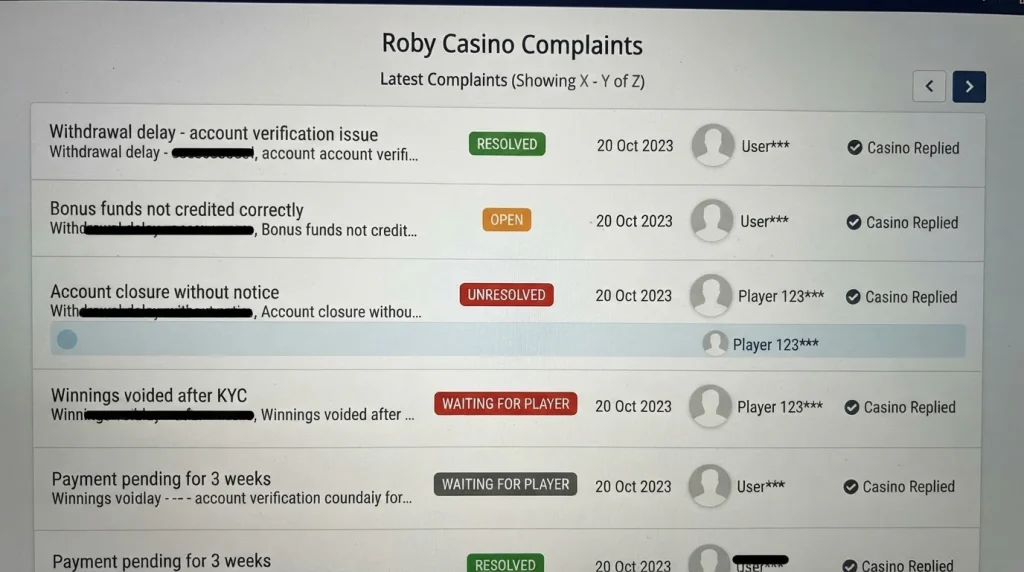
Public complaint and review platforms show recurring reports about Roby Casino withdrawals taking longer than users expected, along with a smaller but important set of complaints about account closure and self-exclusion handling. Those reports deserve attention, but they are not the same as a regulator finding or a court decision. Some AskGamblers cases are marked resolved, while others are open or unresolved, and Trustpilot reviews remain individual user opinions. The useful way to read this material is therefore to look for repeated themes across independent platforms, check the date and status of each case, and separate a customer’s allegation from any operator response and the platform’s final resolution.
For Australian readers, reputation evidence should sit alongside the stronger regulatory context. ACMA has separately taken enforcement action involving Roby Casino, which is covered in the Roby licence and trust. Complaint records can help assess day-to-day customer experience, but they should be weighed according to their detail, recency and outcome.
Table of Contents
- The main complaint pattern is withdrawal delay
- Account closure and self-exclusion complaints require extra care
- Resolved, open and unresolved cases do not mean the same thing
- Trustpilot numbers are a signal, not a verdict
- How to assess a Roby complaint before relying on it
- What the complaint record says about practical risk
- Why complaint age and repetition matter
- Using reputation evidence before you commit funds
- Is Roby Casino Safe for Australians? Licence, ACMA Status and Trust Checks
The main complaint pattern is withdrawal delay
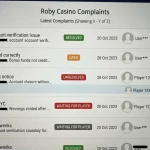
The clearest recurring theme is delayed withdrawals. AskGamblers currently lists multiple Roby complaints in which users say a payout remained pending for days or weeks. The platform also shows that several of those cases were later marked resolved. This matters because a headline such as “withdrawal delayed” describes the original dispute, not necessarily the final result.
That pattern is also visible in public review material. Trustpilot contains recent negative reviews describing slow or difficult payouts. Review text, however, is not independently adjudicated evidence. A reviewer can misunderstand a bonus rule, omit account history, exaggerate a delay or simply report a genuine problem that another customer never encounters. The repetition of the same theme raises its relevance, but it does not justify a universal claim that Roby never pays or that every withdrawal will be delayed.
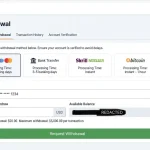
There is a practical distinction between reputation evidence and a verified cashier rule. Exact Roby withdrawal limits, fees and processing times are not stable enough across current sources to publish as fixed figures. The Roby withdrawals therefore treats those numbers as account-level details that need to be checked in the current cashier rather than inferred from complaints.
Account closure and self-exclusion complaints require extra care
A second theme involves users who say accounts were reopened, marketing resumed after closure, or self-exclusion requests were not handled as expected. AskGamblers contains cases in this category, including both older resolved material and more recent unresolved reporting. Because responsible gambling can involve serious personal harm, these complaints should not be reduced to star-rating drama.
Roby’s own responsible-gaming information instructs players to contact support to request self-exclusion. That establishes the existence of a self-exclusion route, but it does not prove that every individual request has been handled correctly. Conversely, one disputed complaint does not prove a systematic breach in every case. The strongest reading is narrower: there are public user reports about closure and self-exclusion handling, and anyone relying on those tools should keep written records of requests and confirmations.
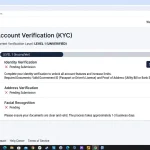
If a player wants to close an account for gambling-harm reasons, saving the initial request, confirmation email, ticket number and later marketing messages can make any escalation much clearer. The Roby KYC and verification explains which account records are useful to retain more generally.
Resolved, open and unresolved cases do not mean the same thing
Complaint platforms add value when they show status. A resolved case tells you that the platform closed the dispute after some form of resolution process, but it does not automatically mean the original complaint was baseless. It can mean the payment arrived, the parties reached an arrangement or the complainant confirmed that the issue was settled. An open case is even less conclusive because the operator may not yet have responded or the deadline for response may still be running.
An unresolved case deserves attention, but the label still needs context. The platform is not a court and may be working with incomplete evidence from both sides. For reputation analysis, status is best treated as a signal of how the dispute progressed, not as a legal judgment about misconduct.
| Case status | What it can tell you | What it cannot prove |
|---|---|---|
| Resolved | The dispute reached a closure point on the platform. | That there was never a real problem. |
| Open | The complaint is still in process. | That the customer or operator is correct. |
| Unresolved | The platform did not record a satisfactory resolution. | Criminal, fraudulent or unlawful conduct by itself. |
Trustpilot numbers are a signal, not a verdict
Trustpilot currently shows Robycasino with a low overall score and a heavy concentration of one-star reviews. That is relevant as a sentiment indicator, especially because withdrawal frustration appears repeatedly in the text. It should not be turned into a precise probability that a new user will have a bad experience.
Trustpilot itself explains that reviews are user opinions and that an unclaimed profile with no history of asking for reviews may not be representative. Online review samples can also be skewed because unhappy customers are often more motivated to post, while reputation campaigns can sometimes push results in the opposite direction. Star distributions are therefore most useful when paired with the substance of reviews and other evidence.
Look for specificity rather than outrage. A review that gives a date, transaction stage, support interaction and later outcome is more informative than a one-line accusation. The same applies to positive reviews: generic praise with no detail says less than a description of an actual deposit, withdrawal or support interaction.
How to assess a Roby complaint before relying on it
A useful complaint has a timeline. It should make clear when the disputed event happened, how long the issue had been pending when the complaint was filed, whether verification or bonus conditions were involved, and what happened after the operator responded. Without those elements, it is difficult to distinguish an ordinary processing delay from a prolonged dispute.
Evidence quality also matters. Cashier-status images, dated emails, support ticket references and account closure confirmations are stronger than recollection alone. Personal documents and account numbers should of course remain private. Public readers need the chronology and the result, not another person’s identifying information.
- Check the complaint date and whether the issue is current.
- Separate the user’s allegation from the operator’s reply.
- Check whether the platform marks the case resolved, open or unresolved.
- Look for the same theme on more than one independent platform.
- Do not treat a disputed withdrawal number as an official Roby limit.
- Give more weight to regulator action than to anonymous accusations.
This method helps avoid two common mistakes: dismissing every complaint because it is anecdotal, or accepting every accusation as established fact. Both approaches lose useful information.
What the complaint record says about practical risk
The public record gives Australians a reason to be cautious about payment friction and account-management disputes. Repeated withdrawal complaints are relevant when deciding how much money to leave in an account and how carefully to document a payout request. The self-exclusion complaints are relevant if account closure is being used as a harm-control measure.
At the same time, complaint evidence should not be stretched into claims it cannot support. It does not establish that games are manipulated, that every payout fails or that Roby is a criminal enterprise. Those are materially stronger allegations and require materially stronger evidence.
The regulatory record is different. ACMA’s finding involving NovaForge Ltd and Roby Casino is an official Australian enforcement fact, not a user-review theme. Readers assessing the brand should therefore combine the reputation record with the Roby licence and trust, rather than letting a star score substitute for legal context.
Why complaint age and repetition matter
A complaint profile can change quickly. A group of complaints from two years ago may say little about current operations if recent cases show different outcomes, while several similar disputes in the last few months deserve more weight than an isolated historic case. The useful question is not simply how many negative posts exist, but whether the same operational issue keeps appearing over time.
Withdrawal complaints are a good example. One delayed payment can result from verification, a payment-provider problem, a disputed bonus or an individual account review. When separate users on different dates describe broadly similar pending-payment experiences, the pattern becomes more relevant even though each case still needs its own explanation. This is why repeated themes can inform risk assessment without becoming proof of a universal rule.
The same approach applies to self-exclusion and account closure. A single dispute may reflect a communication failure or contested facts. Several cases involving similar closure concerns make the topic worth closer attention, especially when some records include operator responses or later platform status changes. Readers should still avoid assuming that every complaint shares the same cause.
For a current decision, prioritise recent cases, then compare them with older ones to see whether the theme is persistent, improving or worsening. A platform’s overall lifetime rating can hide that movement. Recent dates, detailed timelines and resolution status usually tell you more than the headline score alone.
When a complaint platform provides both the original claim and later status changes, read the full sequence rather than relying on the title alone. A dramatic headline can remain visible after a payment arrives or a dispute is otherwise closed. The reverse is also true: a brief title can conceal a long unresolved timeline. Chronology is therefore part of the evidence, not just background detail.
Using reputation evidence before you commit funds
The most defensible takeaway is behavioural rather than sensational. If you are still evaluating Roby, read recent complaints before depositing, check the current withdrawal terms in your own account, avoid relying on a promotional claim as a payout promise, and save copies of important support communications. If a withdrawal is delayed, build a simple dated record before escalating it. If self-exclusion is involved, keep the closure request and confirmation outside the gambling account itself.
Roby’s complaint profile is not clean enough to ignore, particularly around withdrawals, but neither should it be reduced to a single label. The better decision comes from combining repeated complaint themes, resolution status, current account terms and the separate Australian regulatory record.
For a broader brand overview, return to the Roby Casino Australia review.