Solana Casino Comparison for Australia
 Available in AU

The guide separates Australian law on offshore operators from token transfers, bonus terms, cash-outs and the limits of casino comparisons.
Table of Contents
- The Australian legal position behind offshore Solana casinos
- Getting SOL onto a casino platform—and back out
- What a meaningful casino comparison can—and cannot—establish
- Slots, bonus play, and the arithmetic of wagering
- NFT language and what Solana is actually used for
- SOL gambling and the Australian tax distinction
- Dice play: a category, not a verified casino feature
- Casino games and the fine print on bonus eligibility
- SOL, USDC, and the risk of holding value in a volatile token
- Solana’s speed is only part of a casino cash-out
The Australian legal position behind offshore Solana casinos
SOL itself is not prohibited in Australia. People may buy, hold and transfer it. The legal difficulty begins when the token is used to gamble through an offshore online casino: the asset is lawful, but the service accepting it may not lawfully be offered to someone in Australia. That distinction is easy to blur in a wallet interface, where a casino balance can look much like any other digital holding. Legally, they are different things.
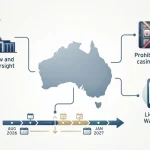
The Interactive Gambling Act 2001 prohibits overseas operators from providing online casino services to Australian residents. Its reach includes real-money casino-style play, rather than turning on whether the stake is sent in dollars or cryptocurrency. A Solana casino does not become exempt simply because its deposits move on a blockchain, or because the operator is based elsewhere.
The Act is directed at operators, not individual Australian players. An individual punter is not directly penalised under it merely for using an offshore casino. That is the narrow sense in which the player’s position can be described as a grey area; it does not mean the service itself is legally permitted, endorsed or protected. No prosecution of a player would not amount to a permission slip.
Use this comparison as a starting point when researching casino options for Australian players in 2026. The details provided do not confirm Solana support, so check each casino’s current payment options before choosing.
1. SpinsUp
License: Curacao Gaming Control Board OGL/2023/174/0082 (Dama N.V.) SpinsUp is listed with a Curaçao Gaming Control Board licence, OGL/2023/174/0082, held by Dama N.V. The available details do not specify whether Solana is supported.
2. Bizzo Casino
License: Curacao Gaming Control Board (TechSolutions Group N.V.) Bizzo Casino is listed with a Curaçao Gaming Control Board licence associated with TechSolutions Group N.V. No Solana payment information is provided.
3. WinSpirit Casino
License: Curacao eGaming OGL/2024/923/0383 (Antillephone N.V.) · Min. deposit: A$30 WinSpirit Casino is listed with a Curaçao eGaming licence, OGL/2024/923/0383, held by Antillephone N.V., and a minimum deposit of A$30. Solana availability is not specified.
4. DragonSlots Casino
License: Curacao Gaming Authority (Jumpman Gaming Ltd) DragonSlots Casino is listed with a Curaçao Gaming Authority licence associated with Jumpman Gaming Ltd. The provided details do not say whether it accepts Solana.
5. Roby Casino
License: Curacao eGaming (Roby Games Ltd) Roby Casino is listed with a Curaçao eGaming licence associated with Roby Games Ltd. No deposit or Solana payment details are provided.
6. LevelUp Casino
License: Curacao eGaming OGL/2023/174/0082 (Dama N.V.) · Min. deposit: A$15 LevelUp Casino is listed with a Curaçao eGaming licence, OGL/2023/174/0082, held by Dama N.V., and a minimum deposit of A$15. The available details do not confirm Solana support.
7. Lucky Dreams
License: Curacao · Min. deposit: A$20 (POLi) Lucky Dreams is listed as Curaçao-licensed and has a minimum deposit of A$20 via POLi. Solana payment availability is not specified.
8. Ricky Casino
Payout speed: crypto under 1 hour, PayID 1-3 business days · Min. deposit: A$20 (A$30 to qualify for the bonus) Ricky Casino lists crypto payouts in under one hour and PayID payouts in 1–3 business days. Its minimum deposit is A$20, or A$30 to qualify for the bonus; the details do not identify Solana as an accepted option.
9. GoldenCrown
License: Curacao Gaming Control Board OGL/2023/176/0095 (Hollycorn N.V.) GoldenCrown is listed with a Curaçao Gaming Control Board licence, OGL/2023/176/0095, held by Hollycorn N.V. The provided information does not specify Solana support.
10. House of Pokies
License: international iGaming licence – jurisdiction not named in the source · Payout speed: PayID 1-24 hours · Min. deposit: A$30 (PayID from A$10) House of Pokies is listed with an international iGaming licence, though the jurisdiction is not named in the source. PayID payouts are listed at 1–24 hours, with a minimum deposit of A$30 or A$10 via PayID; Solana availability is not specified.
Enforcement falls to the Australian Communications and Media Authority (ACMA), which can seek to block access to unlicensed offshore gambling websites. Its public Gambling Prohibition Register records more than 200 sites as of 2026. A block is not the same as a finding about every user’s conduct, but it makes clear that offshore access is not a settled or officially sanctioned route around the law. Using a VPN may also expose an account to seizure and funds to loss under an operator’s own actions; it does not make the underlying service lawful in Australia.
The regulatory landscape for crypto gambling is also unsettled. A specialist review discussing the position in mid-2026 reports that Australia has not developed a specific licensing framework for crypto-gambling operators. That observation should not be mistaken for a special crypto licence waiting to be found, or for the absence of a rule against offering online casino services to Australians. The central prohibition remains the Interactive Gambling Act.
The practical weakness for players is more immediate than the distinction between operator and customer. If an offshore casino freezes an account, withholds winnings or closes, Australian law offers no player protection against that operator. There is no Australian casino regulator to resolve the dispute as a domestic gambling complaint, and the operator’s location can make any challenge difficult. The apparent informality of a crypto account is not a substitute for consumer rights.
Nor does a foreign licence, where an operator claims one, make the arrangement safe under Australian law. It may describe the operator’s position elsewhere; it does not authorise the operator to provide prohibited casino services to people in Australia. A comparison of Solana casinos cannot turn that legal boundary into a guarantee. Offshore is a location, not a safeguard.
EcoPayz Casinos in Australia: What Is Verified · Casinos That Accept Bitcoin in Australia: Payments · Bitcoin Pokies Australia: How Payments Work · Casino Sites That Accept Credit Cards in Australia
For anyone considering the subject, the important distinction is therefore not whether SOL can be legally owned, but what happens when it is used on a prohibited offshore service. The individual player is not directly targeted by the Act, yet may have little recourse if the operator acts against them. Those two facts sit together uneasily. No protection, no clean resolution.
Getting SOL onto a casino platform—and back out
The payment route from Australian dollars to a Solana casino is rarely a direct one. Most platforms do not accept AUD deposits by bank transfer or credit card. Instead, the sequence runs through an Australian exchange: AUD is deposited there, converted to SOL, then sent to a wallet address supplied by the offshore platform. The return journey reverses those steps, with SOL withdrawn to an exchange and converted back to AUD.
That route is a practical description, not an endorsement. Under the Interactive Gambling Act 2001, offshore operators are prohibited from providing online casino games to Australian residents. A smooth transfer does not make the service lawful for the operator or legally safe for the player. The law’s enforcement is directed at operators, but the absence of direct player penalties is not a consumer safeguard.
From AUD to a SOL deposit
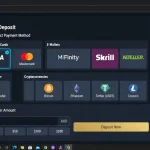
Swyftx, CoinSpot and Coinbase AU support AUD deposits through PayID or bank transfer. Their role is the on-ramp: the exchange receives Australian dollars, processes the purchase of SOL, and makes the cryptocurrency available for transfer. Converting SOL back to AUD uses the corresponding off-ramp process.
AUD to SOL Deposit
Step 1: Exchange Deposit
Deposit Australian dollars into a supported exchange like Swyftx, CoinSpot, or Coinbase AU via PayID or bank transfer.
Step 2: Asset Conversion
Convert the deposited AUD into SOL within the exchange interface.
Step 3: Wallet Transfer
Send the SOL from the exchange to the specific wallet address provided by the offshore casino platform.
Those services are subject to KYC and anti-money-laundering requirements. Identity checks can therefore be part of the exchange journey before a purchase or sale is completed. The casino may have separate requirements, and a withdrawal—particularly a larger one or a bonus-related cash-out—may prompt its own KYC checks and a request for identification. Passing an exchange’s checks does not settle a casino’s checks.
Minimum deposits are not a universal property of Solana; they are set by the platform. One specialist affiliate review reports minimums from 0.01 to 0.1 SOL, corresponding to approximately AUD$2.80–$28 at April 2026 prices. That conversion is time-specific, and the quoted range belongs to that review, not to every casino. The deposit screen and terms are the relevant place to confirm what a particular platform will accept before funds are sent.
A wallet address is not a detail to treat as decoration. SOL transfers are irreversible: sending funds to the wrong address can mean permanent loss. The address shown by the platform must be matched carefully, and the asset being sent must also be the one the receiving wallet expects. A completed transfer cannot be recalled by asking the exchange to reverse it.
The return journey
A casino balance is not the same thing as AUD in a bank account. To cash out, a platform may first require an internal withdrawal request; after it approves and processes that request, SOL is sent to the nominated wallet. The SOL then needs to reach an exchange that supports the relevant deposit, be sold, and be withdrawn in Australian dollars. Each stage has its own requirements and potential delay.
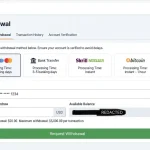
Reported processing times differ according to the operator’s method: automated withdrawals are described in one range of 5–15 minutes, while manual processing can take up to 72 hours. These are not promises for a particular account or transaction. Review queues, account checks and the platform’s own procedures can separate the moment a withdrawal is requested from the moment funds arrive in a wallet. Exchange processing adds another step before AUD reaches a bank account.
Same-Day Payout Casinos in Australia: How It Works
Cash-out terms belong at the beginning of the journey, before any deposit, rather than after winnings appear. They may specify withdrawal procedures, fees, account conditions or checks; an attractive deposit route says nothing about how readily funds can leave. Larger withdrawals and bonus cashouts may trigger KYC checks, which can mean identity documents are required before processing continues.
The value can also change while SOL is held. A fall in SOL’s price between deposit and withdrawal can reduce the AUD value of winnings, even if the number of SOL has not changed. The exchange rate at the time of conversion matters more than the amount originally spent to acquire the tokens. Crypto makes the route reversible in direction, not in price.
Offshore platforms offer limited consumer protection, and Australian authorities provide no recourse if an operator withholds funds or closes. VPN use may also lead to account seizure and loss of funds. None of this is repaired by a transfer confirmation.
The route looks tidy on a diagram. Money is less obedient.
Legal Risk
Offshore casinos are prohibited under the Interactive Gambling Act 2001, and using a VPN may expose your account to seizure and funds to loss.
What a meaningful casino comparison can—and cannot—establish
A comparison of Solana casinos can organise evidence; it cannot turn an offshore operator into a lawful Australian casino. Under the Interactive Gambling Act 2001, offshore operators are prohibited from providing online casino games to people in Australia. A ranking, a foreign licence or a polished payment page does not change that position. Using an offshore site is not legally safe merely because players have not been prosecuted.
The word “best” is therefore doing more work than it can bear. At most, a comparison can show which details were visible and checked, and where uncertainty remains. It cannot certify that an operator will honour a balance, resolve a dispute fairly or remain available. Offshore operators offer limited consumer protection, with no recourse through Australian authorities if funds are withheld or a platform closes. Dry, but consequential.
What the checks actually show
Licensing deserves more than a badge beside an operator’s name. A useful comparison identifies the issuing jurisdiction and checks whether the licence can be matched to the company running the site. It should distinguish a verifiable licence from an unsupported claim, and say plainly when the information cannot be confirmed. Even a genuine offshore licence is not an Australian authorisation to provide casino games to Australian residents.
RTP figures are similarly easy to make look reassuring. A published return-to-player figure describes a game’s theoretical return over extended play, not the result a particular player can expect. A comparison should identify the game or game provider to which a figure applies and whether it can be checked against a reliable record. A general RTP claim attached to an entire casino says little about any one game. Where the calculation or source is unclear, the honest comparison leaves the claim unverified rather than dressing it up as a rating.
Instant Bank Transfer Casinos in Australia: How They Work
Provably fair tools call for another distinction: a feature’s presence is not proof that every part of an operator’s service is fair. A comparison can describe whether the site explains how a result is checked and whether the procedure is accessible, but that does not verify licensing, account handling or payment decisions. Technical transparency has a boundary.
KYC policies also belong in the comparison, not in fine print discovered after a win. The stated policy should explain when identity documents may be requested and what happens to a withdrawal while checks are pending. Larger withdrawals or bonus cash-outs may trigger KYC checks requiring ID verification. A comparison that notes only “verification available” leaves out the practical question of when it can affect access to funds.
Bonus terms need the same attention. Winnings generated from bonus funds must be wagered with real money before withdrawal. The headline offer alone therefore cannot establish its value: playthrough, game contribution, time limits and maximum cash-out caps all matter. A specialist affiliate review describes its bonus-value method as taking those elements into account; that is a method to inspect, not a guarantee that a particular offer will suit every player. A 40x requirement paired with a 4% house edge can make a bonus effectively negative in value. Attractive wording is not arithmetic.
The comparison should also say how its own judgements were reached. If partner links appear beside ratings or operator descriptions, they must be labelled as affiliate or promotional content. Without that disclosure, a commercial relationship can be mistaken for an independent verdict. Even with disclosure, the comparison remains an assessment of stated information, not a promise of performance.
Do
- Verify the issuing jurisdiction of the licence
- Check the specific game or provider for RTP figures
- Inspect playthrough and maximum cash-out caps
- Confirm the KYC policy before depositing
Don’t
- Trust a licence badge without verification
- Rely on general RTP claims for an entire casino
- Assume a headline bonus offer reflects its true value
- Expect Australian legal protection from offshore operators
The limits behind the score
A site may present a clear interface, a published licence, game information and detailed cash-out conditions; none of these establishes safety under Australian law. Nor does a higher position in a table establish that funds are protected. The legal frame remains unchanged: online casino services are prohibited for Australian residents, and the comparison cannot grant an exception.
The payment asset adds risks that a platform score cannot absorb. SOL transfers are irreversible: funds sent to the wrong address can be permanently lost. SOL’s price can also fall between deposit and withdrawal, reducing the Australian-dollar value of winnings. Cash-out terms need to be read before any deposit, not after a balance has been won. Using a VPN may lead to account seizure and loss of funds; it does not make an offshore casino legally safe.
A meaningful comparison is thus less a podium than an annotated record: what was checked, what could not be confirmed, and what remains outside the reviewer’s power. It can sharpen scrutiny. It cannot supply protection.
Slots, bonus play, and the arithmetic of wagering
A slot bonus is not simply extra SOL added to a balance. Its value depends on the amount that must be wagered before any resulting winnings can be withdrawn, and on which bets count toward that total. The arithmetic is plain; the terms around it are where the offer acquires its character.
A specialist review describes a 40x wagering requirement attached to a 5 SOL bonus. That means 200 SOL in qualifying bets must be placed before withdrawal. The figure is turnover, not a payment owed to the casino, but each bet exposes the balance to the game’s chance of losing. Clearing the requirement does not guarantee that the bonus will leave a withdrawable sum behind.
Best-Paying Online Pokies in Australia: Bitcoin Guide
The calculation also changes according to what the multiplier applies to. A separate review describes a 35x requirement on the bonus alone. That wording matters: a requirement based on the bonus is not the same as one calculated on the combined deposit and bonus. Before accepting an offer, the relevant question is not merely how large the multiplier looks, but which balance it multiplies and what the rules count as qualifying play.
Some review material also describes free-spin winnings being credited as bonus funds, with a separate wagering condition attached; one cited example is 50x. A spin can therefore produce a balance that looks like a win while still sitting inside a restricted bonus balance. The terms may distinguish between the original bonus, winnings from free spins and cash funds. Those distinctions decide what can be withdrawn, and when.
Slots are described as contributing the full value of a bet toward wagering requirements. That can make them a more direct route through the stated turnover than games where only a fraction of each stake counts. It does not make the route safer or the bonus profitable: contribution measures progress against a requirement, not the likelihood of keeping the money.
Cash-out rules can impose further limits, including a maximum withdrawal from bonus winnings or an expiry condition. A bonus may therefore be cleared in the accounting sense while still being subject to a cap or deadline. Winnings funded by a bonus must be wagered with real money before withdrawal, so a displayed balance is not necessarily cash available to leave the account.
Bonus Wagering
Slots typically contribute 100% of a wager toward requirements, whereas table games like blackjack or roulette may only contribute 10–20%.
The useful comparison is between the amount required to wager and the restrictions attached to the resulting balance. A large headline offer can conceal substantial turnover, while a smaller one can carry tighter withdrawal conditions. Cash-out terms belong in the decision before a deposit, not in the aftermath of a win. Larger withdrawals or bonus cash-outs may also trigger KYC checks requiring identification; the possibility is another reason that an apparent balance should not be treated as already in hand.
There is no magic in the multiplier. Just arithmetic.
NFT language and what Solana is actually used for
An NFT-themed casino label can suggest that digital collectibles are part of the product: perhaps displayed, traded, or used in play. The label alone establishes none of that. It is a description, not proof of a working feature. Without clear terms explaining what an NFT does, whether a player owns it, or how it connects to a game, the supposed connection remains marketing language.
Solana’s role is more concrete. It is a network on which SOL can be transferred, and a casino may use those transfers to accept funds or pay them out. That is a payment function, not an NFT feature. A casino with Solana payments does not become an NFT casino simply because both subjects share the same technology vocabulary.
The distinction matters because “utility” can sound substantial while saying very little. An image associated with an account, a token used as a payment asset, and an NFT with a defined function are different things. To establish the last of these, a platform would need to explain the NFT’s purpose and the conditions attached to it. A logo, a wallet connection, or a passing reference to collectibles cannot fill that gap.
Real cash online pokies in Australia: law and Bitcoin
Solana’s practical appeal in this context is its transaction infrastructure. A specialist review reports that transactions confirm in about 400 milliseconds and balances update immediately. The same review puts the average transaction fee at $0.00025 USD, effectively near-zero. Those details describe the network’s handling of transactions; they do not show that a casino has created, issued, or integrated NFTs. Nor do they establish the quality of a platform’s games or its treatment of customers.
The language around crypto products often lets one function borrow the glamour of another. A payment network can be presented beside digital art, community tokens, or ownership claims, and the proximity may imply a joined-up product. It is worth separating the visible nouns from the actual mechanics. If a platform claims that an NFT grants access, changes play, or carries value, those claims need specific terms behind them. Otherwise, SOL remains the payment asset and the NFT reference remains decoration.
The distinction is also relevant to custody. SOL transfers are irreversible; sending funds to the wrong address can mean permanent loss. That warning applies whether or not a platform uses NFT language. A digital collectible does not reverse a mistaken transfer, and a themed interface does not alter the underlying payment process.
For Australian residents, this distinction should not be mistaken for reassurance about casino access. Offshore operators are prohibited under the Interactive Gambling Act 2001 from providing online casino games to people in Australia. An NFT label or a Solana payment option does not change that position. The technology may describe how a transfer is made; it does not establish a new legal category or a special consumer safeguard.
Irreversible Transfers
SOL transfers are irreversible; sending funds to the wrong address can result in the permanent loss of your assets.
SOL gambling and the Australian tax distinction
Australian tax treatment draws a line between a recreational gambling win and the cryptocurrency used to make it. Recreational gambling winnings are generally not taxable. That familiar rule does not, by itself, settle the tax position when gambling involves SOL.
The Australian Taxation Office treats cryptocurrency as an asset for capital gains tax purposes. As a result, profits from gambling with SOL are subject to Capital Gains Tax. The distinction matters because a win may feel like a single event at the table, while tax treatment can also attach to the digital asset. Calling the outcome “gambling winnings” does not erase the separate treatment of cryptocurrency.
This is one of the less intuitive features of a Solana crypto casino. A cash gambling win and a profit connected with SOL do not necessarily fall into the same tax category. The asset has its own tax status, even when its role began as a stake in a game. The casino setting does not turn SOL into ordinary cash for tax purposes.
Losses are not a simple counterweight. A specialist tax commentary describes the ability to offset gambling losses against gains as limited to people recognised as professional gamblers, a status with a high threshold. Recreational play therefore should not be treated as if losses can routinely cancel out gains. The distinction is consequential: a player may have a losing run overall while still facing a tax question about gains associated with SOL.
That makes record-keeping relevant to the financial picture, though it does not change the underlying classification. The key point is not that every recreational win is taxed, nor that every loss is deductible. Rather, recreational gambling winnings are generally not taxable, while profits from gambling with SOL fall under the ATO’s capital-gains treatment of cryptocurrency. Loss offsets depend on the demanding professional-gambler threshold.
Casinos That Accept PayID in Australia: Legal Context
The contrast can seem oddly formal. A game is treated as recreation; the token remains an asset. In a crypto casino, those descriptions coexist, and the ordinary intuition that a gambling result is one self-contained sum may not be enough to describe its tax consequences. Tax treatment follows the asset as well as the game.
Dice play: a category, not a verified casino feature
Dice is a recognisable gambling category, but its appearance in descriptions of Solana casinos does not establish that a particular operator provides a dice game. Nor does the label disclose how a game works, how outcomes are generated, or whether a displayed fairness tool can be independently checked. Those details cannot be inferred from the use of SOL or from a casino’s general claims about its platform.
That distinction matters because familiar names can make unfamiliar services look more settled than they are. “Dice” may suggest a simple wager, yet the word alone says nothing about rules, odds, payout calculations or the handling of a disputed result. A description that supplies no verifiable game information is not a substitute for those particulars. Silence is not a feature.
There is also a more fundamental boundary in Australia. Under the Interactive Gambling Act 2001, offshore operators are prohibited from providing online casino games to Australian residents. That prohibition applies to casino-style games, not merely to a particular payment method. The Act targets operators rather than individual players, but the absence of player penalties does not make offshore gambling legally safe. A VPN does not change the position and may expose an account and its funds to seizure.
Dice Gambling Realities
- Dice is a game category, not a guarantee of a verified product
- Offshore operators remain prohibited under the Interactive Gambling Act 2001
- No Australian legal recourse exists if an operator withholds funds
- SOL price volatility can reduce the AUD value of winnings
Consumer protection is limited. If an offshore casino freezes an account, withholds winnings or closes, Australian authorities offer no recourse to recover the money. SOL transfers cannot be reversed: a transfer to the wrong address can mean permanent loss. Larger withdrawals or bonus cash-outs may also prompt KYC checks requiring identity documents. Cash-out terms need to be read before any deposit, not after a win has made the small print suddenly interesting.
The token adds another uncertainty. SOL’s market price can fall between a deposit and a withdrawal, reducing the Australian-dollar value of winnings even if the token balance has not changed. A dice label cannot neutralise that exposure, just as a quick-looking game description cannot establish that a platform’s rules are fair or enforceable.
So dice remains a category, not proof of a verified product. In a market where the underlying service is prohibited for Australian residents, naming a game cannot turn an offshore operator into a protected local venue.
Casino games and the fine print on bonus eligibility
A bonus balance can appear to belong to the player while remaining governed by a separate set of conditions. One of the most consequential is game contribution: the share of each qualifying wager that counts toward clearing a wagering requirement. The same stake can therefore move the balance towards cash-out at very different speeds, depending on the game category.
Slots typically contribute 100% of a wager. Table games such as blackjack or roulette may contribute only 10–20%. If a bonus has to be wagered through before winnings become withdrawable, a table-game wager may do much less to satisfy that condition than an equal slot wager. The difference is not in the size of the bet, but in the operator’s accounting of it.
New PayID Pokies in Australia: Payments and Checks · Instant PayID Withdrawals for Real Money in Australia · Casino Sites That Accept BPAY in Australia: What’s Known
That accounting can make a bonus look more generous than it is. A player who prefers table games may find that the advertised bonus takes longer to clear than its headline terms suggest, or that ordinary play barely advances the requirement. Conversely, a contribution rate is not a promise of value: wagering still exposes the balance to losses, and the bonus conditions may include other restrictions. The fine print does the counting.
Game labels alone are not enough. Terms should be checked for the contribution assigned to each category, whether a game is excluded altogether, and whether contribution changes while bonus funds are active. A casino may describe its catalogue broadly, but eligibility is determined by the written rules, not by the fact that a game is available to play. These details matter across Solana casino games just as they do elsewhere; the payment network does not set bonus accounting.
The Australian context cannot be set aside. The Interactive Gambling Act 2001 prohibits offshore operators from providing online casino games to Australian residents. A comparison of bonus terms does not make using an offshore casino legally safe, and Australian players have no legal protection if an operator withholds funds. A VPN may also lead to account seizure and loss of funds.
Any cash-out conditions deserve attention before a deposit, not after a bonus has been accepted. Larger withdrawals or bonus cash-outs may trigger KYC checks requiring identity documents. Where a site’s terms are unclear about game contribution or eligibility, the uncertainty belongs to the player’s potential balance, not to the small print.
Before Accepting Bonuses
- Check the game contribution rate for each category
- Identify any games excluded from bonus wagering
- Review maximum cash-out caps on bonus winnings
- Confirm identification requirements for bonus cash-outs
SOL, USDC, and the risk of holding value in a volatile token
A casino balance can be displayed in SOL without behaving like a fixed sum of Australian dollars. SOL’s market price moves, so winnings left in the token may be worth less in AUD by the time they are converted or otherwise valued. A winning balance is not a promise of a stable cash value. The reverse movement is possible too, but it does not make the exposure predictable.
Some specialist reviews report that certain Solana casinos accept USDC on Solana for deposits and play as well as SOL. That is a distinction between payment assets, not proof that every platform supports both or that one option is safer. Terms and available currencies need to be considered for the specific service; a token symbol on a site does not settle what the balance will be worth outside it.
USDC may appear to offer a way to avoid holding SOL, but the mere presence of another token does not remove platform risk or make the balance equivalent to Australian dollars. The value displayed by a casino and the amount eventually realised in AUD are separate matters. For SOL in particular, price movement between deposit and withdrawal can reduce the value of winnings. That exposure belongs to the player’s balance, not merely to the casino’s promotional language.
The transfer itself has a different kind of finality: SOL transactions cannot be reversed, and sending funds to the wrong address can mean permanent loss. A displayed balance therefore cannot substitute for careful address checking before a transfer.
Online casino payment methods for Australians · Instant PayID Withdrawals in Australia: What to Know · CashToCode Casinos in Australia: Acceptance Checks
There is also a legal boundary that a token choice cannot soften. Under the Interactive Gambling Act 2001, offshore operators are prohibited from providing online casino games to Australian residents. Using SOL rather than another payment asset does not make an offshore casino legally safe, and a VPN may expose an account to seizure and loss of funds. Offshore platforms offer limited consumer protection; Australian authorities provide no recourse if funds are withheld or a platform closes. Larger withdrawals or bonus cash-outs may also prompt KYC checks, including requests for identification. Cash-out terms belong in the decision before any deposit, not after a balance has accumulated.
A separate financial consequence sits behind the token’s price. The ATO regards cryptocurrency as an asset for capital gains tax, so gambling gains made with SOL can carry a capital-gains obligation. That does not turn a casino balance into a stable asset. It makes the accounting less tidy.
Solana’s speed is only part of a casino cash-out
A Solana transfer can be confirmed in about 400 milliseconds, with the receiving balance updating immediately, according to a specialist review. That describes the network’s part of the journey—not the time between requesting a casino withdrawal and seeing funds arrive. A fast railway does not set the station’s opening hours.
The operator must first approve and send the withdrawal. A specialist review puts automated processing at 5–15 minutes, while manual reviews can take as long as 72 hours. The same review describes native SOL withdrawals as taking 30–60 seconds on competent platforms once processing is complete. These are separate clocks: the casino’s queue, then the blockchain transfer.
Under an Hour Casino Withdrawals in Australia Explained
Fees also have two possible sources. Solana’s average transaction fee is $0.00025 in US dollars, a near-zero network charge. A casino may add its own withdrawal fee; a specialist review reports examples ranging from 0.1% to 1% of the withdrawal. The amount shown in a transaction preview may therefore differ from the sum credited.
A pending request is not necessarily a slow blockchain. Internal checks, including KYC checks on larger withdrawals or bonus cashouts, can hold up release; network congestion can affect the transfer after release. Cash-out terms are worth reading before depositing, when the decision still belongs to the player.
SOL transfers are irreversible. An incorrect destination address can mean permanent loss, with no network mechanism to retrieve the funds. And a platform’s fast processing does not create Australian consumer recourse if it withholds funds or closes. Offshore casinos are prohibited from offering online casino services to Australian residents under the Interactive Gambling Act 2001. Speed is not protection.
How do I play at Solana online casinos from Australia?
You would deposit AUD with an Australian exchange, buy SOL, then transfer it to the wallet address provided by the offshore casino. Withdrawals reverse the route: send SOL to an exchange and convert it back to AUD. The transfer process does not make an offshore casino lawful or provide player protection in Australia.
Is it legal to use Solana casinos in Australia?
SOL is legal to buy, hold and transfer, but the Interactive Gambling Act 2001 prohibits overseas operators from providing online casino services to Australian residents. The Act targets operators rather than directly penalising individual players, but that does not make the service authorised or give players protection if a dispute arises.
How fast are SOL deposits and withdrawals at online casinos?
Solana transactions can confirm in about 400 milliseconds, while native SOL withdrawals typically take 30–60 seconds on competent platforms. Casino processing can take 5–15 minutes when automated or up to 72 hours when handled manually, and network congestion can also affect timing.
Can I use Australian dollars directly?
Most Solana casinos do not accept AUD deposits directly by bank transfer or credit card. You generally need to buy SOL through an Australian exchange using PayID or bank transfer, then send it to the casino.
How does ACMA protect Australian online gamblers?
ACMA enforces the Interactive Gambling Act by blocking access to unlicensed offshore gambling websites and maintains a public Gambling Prohibition Register. It does not provide Australian players with recourse against an offshore casino that freezes an account or withholds winnings.
AUD Banking and Payment Options at Roby Casino Australia

AUD Deposit Options at Roby Casino Australia
Roby supports several deposit categories that are relevant to Australian players: Visa, Mastercard, Skrill, Neteller,...
AUD Withdrawal Limits and Times at Roby Casino Australia
Roby supports several payment categories that can be relevant to withdrawals, including cards, e-wallets, bank...

$1 Minimum Deposit Casinos in Australia: What to Know
A casino’s stated minimum may differ from a payment method’s floor or the amount needed...

$1 Minimum Deposit Pokies in Australia: How It Works
A casino’s stated minimum is only one part of the transaction; the payment route may...

$10 Minimum Deposit Casinos in Australia: How It Works
The amount accepted depends on both the casino cashier and payment route, while costs and...

$10 Minimum Deposit Pokies in Australia: What It Means
A site's stated minimum may differ from what its card processor, wallet or other payment...

$2 Minimum Deposit Casinos in Australia: What to Know
A low operator threshold may not survive the payment chain, where processors can set a...

$20 Minimum Deposit Casinos in Australia
Australian casino deposit minimums can depend on the operator’s terms or on the payment method...

$20 Minimum Deposit Pokies in Australia: What It Means
A displayed minimum may come from a payment provider rather than the operator, and the...

$5 Minimum Deposit Casinos in Australia: Payment Rules
The amount accepted by an operator can differ from the minimum transaction required by the...

$5 Minimum Deposit Pokies in Australia: What It Means
The operator’s stated floor can differ from the minimum accepted by a payment method, while...

Anonymous crypto casinos in Australia: risks and tax
Bitcoin can ease casino payments, but anonymity, withdrawals, tax treatment and Australian access all have...

Aristocrat Online Pokies in Australia: What to Know
The search phrase does not verify a game's maker or availability, and Australian rules set...

Aussie Crypto Casinos: Rules, Risks and Payments
Australia’s rules distinguish domestic wagering from online casino services, leaving offshore crypto platforms outside the...

New Australian Online Pokies: Games and Risks
A closer look at how release labels, free-play modes, account access and bonus terms shape...

Online casino payment methods for Australians
See how PayID, transfers, vouchers and mobile wallets differ across deposits, withdrawals, processing delays and...

Best-Paying Online Pokies in Australia: Bitcoin Guide
A practical look at Bitcoin payments, payout claims, bonus conditions and the limits of Australian...

Bitcoin Pokies Australia: How Payments Work
Bitcoin changes how an account is funded, not the pokies themselves; free-play credits and real-money...

Casino Sites That Accept Amex in Australia
Acceptance can differ between operators, while deposit conditions, withdrawal eligibility and payment costs depend on...

Casino Sites That Accept BPAY in Australia: What’s Known
BPAY availability and withdrawal terms need confirmation; Australian-facing language does not make offshore casino games...

Casino Sites That Accept Credit Cards in Australia
Australia’s rules apply before the cashier, while card acceptance, issuer checks and withdrawal support vary...

EcoPayz Casinos in Australia: What Is Verified
The evidence distinguishes payment acceptance from legality and explains why no verified EcoPayz deposit or...

Casino Sites That Accept Osko in Australia: What’s Known
Australian payment habits may make Osko familiar, but they do not confirm that a casino...

Casino Sites That Accept Paysafecard in Australia
Paysafecard availability does not establish that an offshore casino offer is lawful or that a...

Casino Sites That Accept Skrill in Australia Explained
Skrill availability can describe a cashier option, but it does not establish that an online...

Trustly Casino Sites in Australia: What Is Known
The Interactive Gambling Act 2001 prohibits operators from providing real-money online casino games to people...

Under an Hour Casino Withdrawals in Australia Explained
Withdrawal estimates depend on when the operator’s review ends and when the payment channel begins...

No-ID Verification for Casino Withdrawals in Australia
Identity checks remain part of withdrawal processing, while payment methods and bonus conditions can affect...

Casinos That Accept Apple Pay in Australia: Evidence
Mobile-wallet availability in everyday Australian payments does not establish that an online casino supports Apple...

Casinos That Accept Bitcoin in Australia: Payments
Bitcoin changes how funds move, while operator procedures still govern accounts, disputes and the terms...

Bitcoin Cash Casinos in Australia: Legal and Payment Guide
Australian law bars operators from offering online casino games locally; this guide also covers offshore...

CashToCode Casinos in Australia: Acceptance Checks
A payment option listed online does not establish that a casino accepts CashToCode for Australian...

Casinos That Accept Ethereum in Australia
Ethereum is a possible transaction method, but its availability does not establish which games a...

Casinos That Accept Google Pay in Australia: What to Know
Australian law prohibits operators from offering real-money online casino games to people in Australia, and...

Casinos That Accept Litecoin in Australia: What’s Verifiable
The page distinguishes cryptocurrency payment language from evidence of Australian availability, cashier support, or specific...

Casinos That Accept Mastercard in Australia: Legal Limits
A card option at the cashier does not establish legality, and the route used for...

Casinos That Accept MiFinity in Australia: What to Know
Familiar Australian payment options do not show whether an individual casino supports MiFinity or how...
Casinos That Accept Neosurf in Australia: What’s Verified
Neosurf payment claims, casino services and Australian gambling rules are distinct issues that require separate...

Casinos That Accept Neteller in Australia: What to Check
Neteller availability does not establish that an offshore casino may serve Australians or that deposits,...

Casinos That Accept PayID in Australia: Legal Context
Payment availability can explain a cashier’s options, but it cannot establish whether an offshore casino...

Casinos that accept PayPal in Australia: key facts
The article separates everyday payment familiarity from casino cashier availability and examines the limits of...

Casinos That Accept POLi in Australia: What to Know
A POLi label alone does not establish that an online casino can lawfully serve Australians...

Casinos That Accept Tether USDT in Australia
USDT payment claims do not establish which casinos accept it or verify their networks, games,...

Casinos That Accept Visa in Australia: Key Details
Visa availability varies by operator and card, while deposits, withdrawals and legal context remain separate...

Dragon Link Online Pokies in Australia: What Search Shows
The name alone does not establish a particular machine, an online version or availability to...

Easy Withdrawal Casinos in Australia: How Payouts Work
Withdrawal timing depends on operator review and fund release as well as the payment method’s...

Fast Casino Withdrawals in Australia: Payment Routes
Payment networks, casino approval, verification and terms all affect timing, while Australian law limits the...

Instant Bank Transfer Casinos in Australia: How They Work
Banking labels can cover different payment flows, and a deposit method may not be available...

Instant PayID Withdrawals for Real Money in Australia
PayID can move released funds through Australia's NPP, but it cannot determine when an operator...

Instant PayID Withdrawals in Australia: What to Know
PayID can move funds quickly after release, but casino checks, account verification and withdrawal terms...

Low deposit online casinos in Australia: payment limits
A low operator minimum does not guarantee a payment will go through, since the chosen...

New PayID Pokies in Australia: Payments and Checks
PayID can route quick bank transfers, but cashier details, bank limits, delays and bonus terms...

No-KYC Casino Australia: Crypto Payments Explained
A practical look at crypto and PayID payments, identity checks, and the conditions that can...

No Minimum Deposit Casinos in Australia: Payment Limits
The operator’s deposit rule is only one part of the chain; payment providers and purchase...

Online pokies instant withdrawals in Australia
A withdrawal request, operator approval and payment release are separate stages, so transfer speed alone...

Online pokies and PayID in Australia: what to know
PayID can move funds quickly, but cashier confirmation, bank limits, withdrawal checks and wagering terms...

Pay by Phone Casinos Australia: PayID and Bills
PayID can use a mobile number to identify a bank account, but the funds come...

Quick Casino Withdrawals in Australia: How Payouts Work
Payout timing depends on more than the payment method, while Australia's legal position on online...

Real cash online pokies in Australia: law and Bitcoin
A guide to Australia's restrictions on online pokies and the practical trade-offs of using Bitcoin...

Safe online pokies in Australia: legal and payment risks
The guide examines Australian legal limits, offshore operators, Bitcoin payment points, verification and bonus terms...

Same-Day Payout Casinos in Australia: How It Works
A withdrawal estimate can cover operator checks, the payment route, or both, so the stages...