Australian Pokies Online: Legal and Payment Risks
 Available in AU

Offshore access does not equal local authorisation, and payment methods or bonus offers do not guarantee a way to recover funds.
Table of Contents
- The Legal Gap Behind Real-Money Play
- PayID Is a Payment Rail, Not a Seal of Approval
- What “Australian Pokies” Means Online
- Bonus Arithmetic, Without the Gloss
- Free Spins and the Small Print on Cashing Out
- A Sign-Up Offer Ends at the Withdrawal Desk
- Mobile Access Does Not Change the Odds
- Online Pokies and the Machine-Room Rules
- Trust Has to Be Tested, Not Assumed
- New Games, the Same Randomness
The Legal Gap Behind Real-Money Play
Australian law draws a sharp line between the company supplying real-money online pokies and the person who plays them. Under the Interactive Gambling Act 2001, providing these games to people in Australia without a domestic licence is illegal. No domestic licences for online casinos have been issued. The prohibition therefore falls on the operator, not on an Australian resident who uses an offshore site that accepts them.
That distinction can sound reassuring, but it is not the same as legal protection. The player’s position under Australian law and the player’s practical ability to recover money are separate matters. A resident may not be committing an offence simply by playing, yet still have little power to enforce an offshore operator’s promise to pay.
This is the central difficulty of real-money Australian online pokies: the activity can be available without being backed by a local system of casino licensing and redress. The word “available” does a lot of work. It describes the fact that an offshore site may accept Australian customers; it does not mean the service is authorised under Australian law or supervised as a domestic casino would be.
The gap is easy to miss because the transaction looks ordinary. A person opens an account, deposits money, plays, and may see a balance displayed on a screen. But a displayed balance is not the same thing as money held under Australian oversight. If a dispute arises over a withdrawal, an Australian player has no legal recourse in Australia against an offshore casino that refuses to pay winnings.
That absence changes the meaning of a win. In a land-based setting, the rules around a venue sit within a domestic legal and regulatory structure. Offshore online play crosses a different boundary: the player is in Australia, while the company and the rules it invokes may be elsewhere. Australian law prohibits the company from supplying the service here without a domestic licence, but that does not create a straightforward local route for the player to compel payment from a foreign operator.
Bonus Buy Slots in Australia: How They Work
A complaint and an enforceable remedy are not interchangeable. A message to customer support may produce an answer; a dispute process may exist under the operator’s own terms. Neither, by itself, gives the player the kind of domestic legal recourse that is missing when an offshore casino withholds winnings. The risk is not only that a game may end without a profit. It is that a claimed balance can become difficult to turn into money when the operator disputes the account, the result, or the withdrawal.
The law’s focus on operators can be mistaken for a general endorsement of offshore play. It is not. The fact that individual players are not the target of the prohibition does not make an offshore casino locally licensed, nor does it place the operator under Australian casino supervision. A legal distinction about who is prohibited from supplying a service says nothing by itself about whether a particular company will honour a payment.
There is a social logic in that distinction. The law seeks to restrict the commercial supply of online casino games to people in Australia, rather than make individual players the enforcement target. Yet the border does not neatly divide responsibility from consequence. The company bears the legal prohibition; the player may bear the immediate financial loss if winnings are refused. A rule aimed at supply cannot, on its own, recover a disputed payout.
BetStop does not close this gap. It applies to Australian-licensed operators and does not bind offshore sites. That matters because a protection attached to the domestic system cannot simply be assumed to follow a player onto an offshore service. The name of a safeguard may travel further than its authority.
Nor does the absence of player liability amount to a promise that offshore play is safe, supported, or recoverable. It means something narrower: Australian law targets companies that provide the prohibited service, while residents who play are not the people the Act is designed to punish. The distinction is important, but it is not a substitute for local recourse when a casino refuses to release winnings.
The phrase “real-money Australian online pokies” can therefore suggest a settled market where there is, legally, no Australian-licensed online casino sector. A site may be aimed at Australians or accept Australian customers, but those features do not transform it into a domestic licensee. For anyone assessing the stakes, the most consequential question is not only whether play is possible. It is what happens if the money shown as won is never paid.
No Local Recourse
Australian players using offshore casinos have no legal recourse in Australia if an operator refuses to pay winnings.
That is the gap: permission for the player is not protection from the operator.
PayID Is a Payment Rail, Not a Seal of Approval
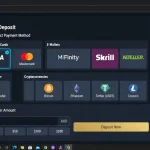
PayID can make a bank transfer easier to address, but it does not turn the destination into a trustworthy one. Its role is narrower: it provides an alias for sending money through the New Payments Platform (NPP), Australia’s payment infrastructure. An alias may be an email address, mobile number or ABN, replacing the need to enter a long account number and BSB for each transfer.
That convenience can make PayID look like a product in its own right. It is not. The NPP carries the payment; PayID supplies a recognisable way to identify its recipient. The distinction matters when a payment option is displayed beside an online pokies cashier. A familiar domestic payment method can make an unfamiliar merchant seem less remote, although the payment rail and the merchant are separate things.
The NPP is supported by all major Australian banks and uses end-to-end encryption. Those are properties of the payment network, not a certificate attached to every business that can receive money through it. Encryption protects the transfer in transit; it does not establish what happens after funds reach the recipient, whether a gambling site is licensed, or whether its games are fair. A PayID logo in a cashier proves only that the site claims to accept that route.
Live Casino Online in Australia: Legal Limits
For real-money use, PayID must first be linked to a bank account. The account is the source of the funds, while the PayID alias acts as the address used to direct the transfer. That arrangement can make a payment feel almost conversational: an email address or mobile number stands in for banking details. Yet the underlying movement is still a bank transfer, with the account holder’s bank involved in authorising it.
This also means that the process is not independent of bank policy. A specialist review has reported that some Australian banks, including members of the Big Four, may block PayID transfers to gambling merchants they recognise. That report describes a possibility, not a permanent rule applying to every account or transaction. Bank controls can change, and an attempted transfer may depend on the bank’s own assessment of its recipient.
A blocked transfer is a payment decision, not a verdict on the games or the site’s honesty. Equally, a successful transfer is not an endorsement from the bank. Banks can support the NPP broadly while applying controls to particular merchants or payment activity. The two statements are not contradictory: the rail can be widely available while individual transactions remain subject to screening.
The cashier’s wording can obscure these boundaries. “PayID accepted” may sound like an assurance about the whole transaction, when it says nothing about the operator’s legal status, the handling of a withdrawal request, or the return percentage attached to a pokie. Those questions belong to the merchant and the game, not to the transfer mechanism. PayID does not inspect a game’s settings or certify the conditions under which money might later be paid out.
PayID Functionality
PayID provides an alias for sending money through the New Payments Platform (NPP) but does not certify the legality or fairness of the recipient merchant.
Nor should a quick-looking bank transfer be confused with a guarantee that funds will move in either direction on identical terms. A deposit route describes how money is sent to an account. It does not by itself explain what happens if the bank declines the transfer, how a site handles a balance, or whether a later payment can be made. Those are separate matters, and the payment label cannot settle them.
There is a small social history in the alias itself. Banking was once made legible through branch counters, printed forms and strings of digits; PayID replaces some of that friction with identifiers already familiar from daily life. The change is practical, but familiarity has its own persuasive force. An address that looks ordinary can soften the sense of distance between a person and an online merchant. A payment rail is not a reference check.
The same caution applies when comparing PayID with other labels shown in a cashier. A list of available methods describes the routes a merchant says it can accept; it does not establish the quality of the merchant. Payment acceptance cannot stand in for transparent information about game settings, and it cannot make an offshore transaction equivalent to one overseen by an Australian online-casino regulator. The method carries money, not assurances.
So PayID’s useful fact is also its limit. It provides an alias-based way to transfer funds through the NPP, subject to the bank account linked to it and to bank controls that may affect gambling-related payments. Beyond that, the name has no authority. Familiar, encrypted and connected to the national payment system: none of those qualities is a seal of approval.
What “Australian Pokies” Means Online
Choosing an online pokies site is easier when you check the details that are available rather than rely on broad promises. This list offers a concise reference to the stated licensing, deposit, and payout information for Australian players.
1. SpinsUp
License: Curacao Gaming Control Board OGL/2023/174/0082 (Dama N.V.) SpinsUp is listed with a Curacao Gaming Control Board licence, OGL/2023/174/0082, held by Dama N.V.
2. Bizzo Casino
License: Curacao Gaming Control Board (TechSolutions Group N.V.) Bizzo Casino is listed with a Curacao Gaming Control Board licence, with TechSolutions Group N.V. named.
3. WinSpirit Casino
License: Curacao eGaming OGL/2024/923/0383 (Antillephone N.V.) · Min. deposit: A$30 WinSpirit Casino is listed with a Curacao eGaming licence, OGL/2024/923/0383, held by Antillephone N.V. Its stated minimum deposit is A$30.
4. DragonSlots Casino
License: Curacao Gaming Authority (Jumpman Gaming Ltd) DragonSlots Casino is listed with a Curacao Gaming Authority licence, with Jumpman Gaming Ltd named.
5. Roby Casino
License: Curacao eGaming (Roby Games Ltd) Roby Casino is listed with a Curacao eGaming licence, with Roby Games Ltd named.
6. LevelUp Casino
License: Curacao eGaming OGL/2023/174/0082 (Dama N.V.) · Min. deposit: A$15 LevelUp Casino is listed with a Curacao eGaming licence, OGL/2023/174/0082, held by Dama N.V. Its stated minimum deposit is A$15.
7. Lucky Dreams
License: Curacao · Min. deposit: A$20 (POLi) Lucky Dreams is listed as operating under a Curacao licence. Its stated minimum deposit is A$20 when using POLi.
8. Ricky Casino
Payout speed: crypto under 1 hour, PayID 1-3 business days · Min. deposit: A$20 (A$30 to qualify for the bonus) Ricky Casino lists crypto payouts as taking under 1 hour and PayID payouts as taking 1–3 business days. The stated minimum deposit is A$20, or A$30 to qualify for the bonus.
9. GoldenCrown
License: Curacao Gaming Control Board OGL/2023/176/0095 (Hollycorn N.V.) GoldenCrown is listed with a Curacao Gaming Control Board licence, OGL/2023/176/0095, held by Hollycorn N.V.
10. House of Pokies
License: international iGaming licence – jurisdiction not named in the source · Payout speed: PayID 1-24 hours · Min. deposit: A$30 (PayID from A$10) House of Pokies lists an international iGaming licence, but the jurisdiction is not named in the source. Its stated PayID payout time is 1–24 hours; the minimum deposit is A$30, or A$10 when using PayID.
“Australian pokies” sounds like a description of a local industry: games made for local players, perhaps under a domestic licensing system. Online, the phrase does not establish that such a system exists. It is a market-facing label, not proof that an online casino is licensed in Australia. There is no Australian-licensed online casino.
That distinction is easy to miss because the language of the internet tends to make geography look like a feature. A site may use Australian currency, refer to pokies rather than slots, or present itself as serving people in Australia. Those details can describe its audience or branding; they do not create an Australian licence. The familiar vocabulary belongs to a real local culture of gambling, but its appearance on a website does not mean that the website is part of a domestically licensed online casino sector.
The legal framework draws a different map. The Interactive Gambling Act 2001 is enforced by the Australian Communications and Media Authority, or ACMA. Its role includes taking action against illegal offshore gambling sites. Where ACMA places a site on its blocklist, internet service providers must follow the direction and restrict access. The result is an enforcement system aimed at limiting access to prohibited services, not a local certification scheme for online pokies.
A blocked page is not a verdict on every detail of a site, just as an accessible page is not evidence of official approval. Access can change as enforcement measures are applied, and a site’s use of Australian-facing language does not settle its legal status. The label and the regulator answer different questions. One describes how a service presents itself; the other concerns the rules that govern online gambling in Australia.
Big Red Pokies Online in Australia: Rules and Demos
This is why “online Australian pokies” can be a misleading phrase if read too literally. It may suggest that the games are offered by Australian-licensed casinos, when none exist. The word “Australian” can point to the intended audience, local terminology or a promotional frame. It cannot turn an offshore service into a domestic one. In online gambling, national flavour is not national authorisation.
There is an odd civic contrast here. Physical gambling venues sit within state and territory systems, with their own rules and oversight. Online casino-style services fall under a federal law that prohibits operators from providing them to people in Australia, while ACMA works to enforce that boundary. The internet’s seamless interface makes the setting feel continuous; the law does not. A screen can make a distant service seem close, but it cannot supply the missing domestic licence.
BetStop has a narrower reach than its name might suggest in this context: it applies to Australian-licensed operators and does not bind offshore sites. Since there is no Australian-licensed online casino, it should not be mistaken for a safeguard that controls offshore online pokies. Its limits matter precisely because a familiar Australian service name can sound broader than its actual scope.
The phrase “best Australian online pokies” therefore describes a category people may use to talk about online games aimed at Australians, not a verified class of locally licensed casinos. ACMA’s blocking role is part of the enforcement picture, but it does not make the category itself a stamp of approval. Words travel more easily than licences.
Keno Online Casinos in Australia: Legal Rules
Bonus Arithmetic, Without the Gloss
A bonus is not simply extra money. Its practical value depends on the wagering requirement attached to it: the amount that must be staked before the bonus conditions are met. The multiplier can make a modest-looking offer demand a great deal of play, so the headline figure is only the first part of the calculation.
A specialist review advises treating wagering requirements of 35x or less as preferable and describes anything above 40x as punishing. That is an assessment, not a universal rule: the terms of an individual offer determine how its multiplier is applied. Still, the arithmetic makes the difference plain. A 40x requirement applied to a $500 bonus means $20,000 in bets before winnings from the bonus can be withdrawn. The bonus is not a cheque for $500. It is a condition attached to a long stretch of turnover.
The base used in the calculation matters just as much as the multiplier. If the requirement applies only to the bonus, a $500 bonus at 40x produces $20,000 in required bets. If it applies to the deposit plus the bonus, a $500 deposit paired with a $500 bonus at 35x means $35,000 in bets. Same advertised bonus, different arithmetic. Small print does the heavy lifting.
That distinction is easy to miss in offers presented as deposit matches. The percentage or amount displayed may draw attention to what is added, while the wagering clause determines the scale of the task attached to it. Before comparing offers, the relevant questions are therefore simple: is the multiplier applied to the bonus alone, or to the deposit and bonus together, and what amount is used as the calculation base? Without those answers, the headline cannot be meaningfully compared.
Bonus Calculation
Step 1: Identify the Base
Determine if the wagering requirement applies only to the bonus amount or to the combined deposit and bonus.
Step 2: Apply the Multiplier
Multiply the identified base by the wagering requirement (e.g., $500 bonus × 40x = $20,000).
Step 3: Determine Total Turnover
Calculate the total amount that must be staked before any bonus winnings can be withdrawn.
No-deposit offers change the starting point, not the logic. A no-deposit bonus or a set of free spins may require wagering on resulting bonus funds or winnings; the terms need to say what counts and which multiplier applies. An offer that requires no initial deposit is not automatically free of conditions. Its value cannot be inferred from the absence of an upfront payment. For the same reason, bonus codes do not reveal the substance of an offer: the code may unlock a promotion, but its terms govern the calculation.
There is no honest shorthand that turns a high multiplier into a small obligation. A low-looking bonus paired with a demanding requirement can call for more turnover than a larger offer with a less severe one. And turnover is not a promise of a corresponding return: the arithmetic counts the amount staked, not money recovered. That is the quiet distinction beneath the gloss.
The calculation also does not settle every question about an offer. It isolates one condition: how much must be wagered under the stated rule. A clear comparison records the bonus amount, the multiplier and the base to which it applies, rather than treating the displayed offer as its cash value. No-deposit pokies, deposit matches and bonus codes are different wrappers around terms that still need reading. The multiplier is the part that turns an attractive figure into a workload.
Free Spins and the Small Print on Cashing Out
Free spins sound like a small, self-contained gift: a set of plays offered without a matching stake. But the name describes how the spins are issued, not necessarily what can be taken away from them. A specialist review reports that free-spin offers may place a cap on winnings eligible for cash-out. The distinction is easy to miss when the headline gives the spins centre stage and leaves the conditions in smaller type.
Best Pokies in Perth: Hours, Venues and Checks
A cap is a ceiling on the amount of winnings that may be withdrawn from an offer. It does not describe how much a spin might return, nor does it make a particular outcome more or less likely. It limits what the offer allows to be cashed out. If winnings exceed that ceiling, the offer’s terms may prevent the excess from being withdrawn. The practical value of free spins therefore depends not only on what they produce, but also on the rule governing the proceeds.
That is a different calculation from wagering requirements. A turnover condition asks how much play must take place before winnings become eligible for withdrawal. A cash-out cap asks how much eligible winnings may ultimately yield. One is a gate; the other is a roof. Confusing them makes an offer appear more generous or more restrictive than its wording warrants.
Free play can also blur an important boundary in ordinary language. “Free” may refer only to the spins themselves, while the conditions attached to any resulting winnings remain binding. The word does not, by itself, promise that every amount displayed as a win can be withdrawn. Nor does a prominent offer description settle the question. The operative detail is the clause that specifies whether a winnings cap applies and what it covers.
This is why a comparison based only on the number of spins tells little about the cash value of an offer. Two promotions described in similar terms could have different withdrawal conditions; the possibility of a cap is enough to make the fine print material. No particular cap should be assumed in advance. The figure, if any, belongs to the terms of the specific offer, and it cannot be inferred from the phrase “free spins.”
Cash-out Caps
Be aware that free spin offers may include a ceiling on the maximum amount of winnings eligible for withdrawal.
The point is not that free spins are necessarily worthless. It is that their apparent value and their withdrawable value are not the same thing. In online promotions, the headline is often the easiest part to read. The ceiling is where the meaning changes.
A Sign-Up Offer Ends at the Withdrawal Desk
A welcome offer is presented at the entrance; access to a balance is decided at the exit. Between those points sit two separate conditions that can matter more than the offer’s headline: identity checks and limits on how much can be withdrawn over time. Neither is visible in the bright, brief language of a sign-up banner.
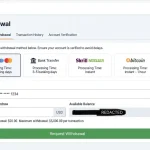
A specialist review reports that casinos may set weekly or monthly withdrawal ceilings between $5,000 and $10,000. On that account, a $50,000 jackpot could become a multi-year payout plan rather than a single transfer. The cap does not necessarily erase the balance, but it changes when that balance can be reached. A win and its availability are not the same thing.
The wording of a limit deserves close attention. A ceiling may apply to withdrawals within a set period, rather than to the total amount held in an account. That distinction determines whether a large balance is paid gradually or whether another condition is in play. The written terms are the only place to establish which arrangement applies; a welcome message cannot settle it.
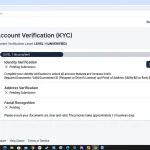
Identity checks form another gate. Specialist reviews describe first-withdrawal verification that can require a photo of an identity document and proof of address, with a selfie holding the document sometimes requested as well. The documents should be verified before the first withdrawal is pursued. A deposit accepted without those checks does not mean the withdrawal process will be equally immediate or uncomplicated.
Instant Payout Online Casinos in Australia
This makes the path from an Australian online pokies welcome bonus to money in hand less like a single transaction than a sequence of permissions. An account can show a balance while the operator is still checking who owns it; a confirmed identity can still leave a withdrawal subject to a periodic cap. Each condition answers a different question: who may access the account, and how quickly funds may be released.
There is a quiet imbalance in that arrangement. The offer is easy to display; the rules governing the way out are usually tucked into terms. That does not make every condition improper, but it does make the exit worth reading before the entrance is taken seriously. The practical value of a sign-up offer cannot be judged by its banner alone.
For Australians considering offshore services, these checks are not a substitute for domestic protection. They are procedures set by the operator, and a request for documents or a stated withdrawal schedule should not be mistaken for a guarantee that funds will arrive. The desk still belongs to the casino.
The offer is the beginning. The withdrawal rules are the test.
Mobile Access Does Not Change the Odds
A search for an Australian pokies app often begins with a practical thought: a phone is already at hand, so play should fit there too. But a smaller screen changes the setting, not the mathematics. Whether a spin is initiated in a mobile browser or on another device, each remains an independent event determined by a Random Number Generator (RNG).
Independence is the part that resists intuition. A run of losing spins does not make a win due; a recent win does not make the next one less likely. The machine has no memory of the sequence as a human might tell it. A streak is a story assembled after the fact, not a signal carried forward into the next spin.
Mobile access can make the distance between an idle moment and a wager very short. That is a change in habit and atmosphere, not in the underlying draw. The familiar gestures of tapping, swiping or turning a screen do not confer influence over the RNG. Nor does moving to a larger display. The mechanism is indifferent to the hand holding the device.
Best Pokies in Sydney: What Search Results Can Prove
The words “top” and “best” can make app searches sound like a contest over technical merit. Yet those labels alone reveal nothing about how a particular game is configured, and the existence of a dedicated app or mobile feature should not be assumed. Access may be browser-based; the device itself is not evidence of a special version or a different set of odds.
There is a small cultural shift in carrying entertainment everywhere: the old machine-room visit had a door, a place, and the visible presence of other people. A phone folds the occasion into private time. Convenience can make play feel less like an event, but the spin does not become more personal or more responsive. It remains a random event, one at a time.
The screen travels. The odds do not.
Online Pokies and the Machine-Room Rules
The word pokies travels easily between settings. In a club or hotel, it refers to machines on a gaming floor, among staff, signs and the routines of a physical venue. Online, the same word can describe a game on a screen. The shared name does not mean the same rules or safeguards follow it there.
A report by regionriverina.com.au describes a venue requirement taking effect from 1 July: a dedicated responsible gambling officer (RGO) must be on duty while machines are operating at venues with more than 20 gaming machines. The report also describes a one-month grace period for venues to remove signage and introduce the officers. These are measures organised around a place: someone is present, patrons are visible, and the venue has time to change what it displays and who is on duty.
The same report says venues will have to maintain a gambling incident register. It is intended to record occurrences, including behaviour suggesting that a patron may be at risk of, or affected by, gambling harm. A register turns an encounter into a record that can be acted on; it does not make the encounter disappear. Nor does a record in a venue imply that an online operator keeps an equivalent one under the same rules.
Live Dealer Casinos Online in Australia: Legal Context
That distinction matters when people talk about Australian casino pokies online as though a machine-room framework had simply acquired a digital door. A venue officer can notice conduct in the room. A register belongs to the venue’s procedures. Neither is automatically present when play happens remotely. Naming an online game after a familiar machine does not establish that it has those local, face-to-face arrangements.
There are responsible-gambling tools associated with online play, including deposit, loss and session limits, and self-exclusion. But they should not be confused with the venue obligations described above. BetStop applies only to Australian-licensed operators; it does not bind offshore sites. The distinction is especially important because those venue rules cannot be treated as a general safety net for every screen carrying the language of pokies.
Physical venues are governed through visible duties: staffing, signs and records. Online play belongs to a different regulatory and practical setting. The machine may look familiar. The room is absent.
Trust Has to Be Tested, Not Assumed
A familiar pokie title can create an impression of continuity: the same name, artwork and rules seem to promise the same game wherever it appears. But appearance is not a complete account of how a game is configured. A specialist review reports that some providers allow casinos to choose between different RTP settings for a pokie. The same title can therefore carry different theoretical return percentages at different casinos.
That distinction makes a published game name a poor substitute for published game details. Where RTP information is available, it needs to identify the setting used, not merely repeat a figure associated with the title in general. Without that connection, a percentage may describe another configuration. Familiarity does not fill the gap.
Nor does a payment method settle the question of trust. It describes one part of a transaction, not the standard of a game or the openness of the site offering it. A site’s confidence-building signals can be easy to display; useful transparency is more specific. It lets a person distinguish claims about a provider or game from claims about the particular version being offered.
This is why searches for trusted Australian pokies sites cannot be answered by a recognisable logo, a known game name or a payment option alone. Those details may be relevant, but none establishes how clearly the site explains its terms or identifies its games’ settings. Trust is not a decoration attached to a familiar product. It rests on information that can be understood and checked.
Best pokies in Adelaide: hours, access and rules
The distinction is technical, but its consequence is ordinary: two screens can show the same pokie while offering different stated return settings. That does not predict the result of any spin. Each spin remains random; RTP is a theoretical measure over extended play, not a promise about an individual session. Transparency can clarify what is being offered. It cannot turn probability into certainty.
A careful account separates what is known about the game itself from what is disclosed about its configuration at a particular casino. When those details are blurred, confidence is being requested where evidence should be doing the work. Familiarity is not verification.
New Games, the Same Randomness
Interest in newly released pokies often rests on the promise of a fresh look: different graphics, themes or ways of presenting a spin. Novelty can change the experience around the game, but it does not make the result of a spin more knowable. The distinction is easy to blur. A new design feels like a new possibility; randomness offers no such narrative.
Each pokie spin is an independent event, with its result determined by a Random Number Generator. A previous win does not make another win due, and a run of losses does not mean the next spin is ready to turn. The machine has no memory in the human sense. Patterns may be tempting to read into a sequence, but they do not predict the next result.
That matters when attention turns to new Australian pokies. Newness describes when a game appeared or how it is presented, not whether its outcomes can be anticipated. A launch, a new theme or unfamiliar animations cannot reveal what the next spin will produce. Nor does a sequence of outcomes become a clue simply because it belongs to a recently released game.
The appetite for novelty is ordinary: people are drawn to what has just arrived, whether it is a new machine in a venue or a digital version on a screen. But the machinery beneath the presentation remains a Random Number Generator, not a plot advancing toward a satisfying ending. Every spin starts without a debt to the last one.
Fresh scenery. Same uncertainty.
Pokies

3-Reel Slots in Australia: Features and RTP
Learn how bonus rules, configured RTP, free-play options and Australia’s regulatory boundary shape the way...

5-Reel Slots in Australia: How the Odds Work
Explore how RTP, bonus rounds, paytables and game availability shape the experience without predicting the...

Seven-Reel Slots in Australia: RTP and Bonus Features
A practical look at how reel formats, bonus rules, RTP and free-play modes shape what...

Online Pokies Australia: Legal and Payment Guide
Australia’s rules put the licensing burden on operators, while bonus terms, payment routes and practice...

Aussie Online Casinos: Legal Status, Bonuses and Payments
A clear-eyed look at offshore casino sites, the terms attached to offers and the limits...

Aussie Pokies Online: What “Best” Really Means
A practical look at terminology, legal boundaries, game settings, payments and the limits of rankings...

Bonus Buy Slots in Australia: How They Work
A bonus buy pays for direct entry to a feature round, but the result remains...

Best Casino in Adelaide: Venue and Online Context
A practical distinction between a city destination and online services, with context on the venue...

Casino in Brisbane: Hotels, Dining and Visitor Guide
Understand how accommodation, dining, gaming, transport and venue details differ across Brisbane casino search results....

Best Casino in Canberra: What the Search Can Establish
A practical look at accommodation, gaming searches and amenities, distinguishing what a search suggests from...

Darwin Casino: Venue, Work and Entertainment Guide
A practical look at venue information, employment and entertainment claims, and how online casino offers...

Hobart Casino Information: What Searches Can Confirm
Searches about poker, accommodation, dining and facilities raise distinct questions, and a keyword alone does...

Melbourne Casino: Hotels, Dining and Visitor Details
A guide to nearby stays, booking conditions, dining, entertainment and other questions that shape a...

Casino in Perth: Hotel Stays and Visitor Details
A practical look at accommodation, access and visitor questions, with a clear distinction between a...

Best Casino in Queensland: Rooms, Dining and More
A practical look at room categories and booking terms, with related details on dining, parking...

Best Casino in Sydney: Hotels, Play and Practicalities
A practical guide to comparing a Sydney casino stay with the venue’s gaming, dining and...

Casino Stays in Tasmania: What to Verify
Room rates, promotions and nearby amenities require a named property and current terms before they...

Casino in Victoria: Hotels, Gaming and What’s Verified
A clear guide to what casino searches can establish about accommodation, gaming, food, location and...

Western Australia Casinos: Hotel and Venue Details
Casino-related searches cover hotels, poker, dining and facilities, but property-specific terms and venue facts need...

Fast Payout Online Casinos in Australia: Legal Context
A clear look at what withdrawal-speed claims can—and cannot—show about offshore casino services, payment routes...

High-volatility slots in Australia: how they work
A guide to how volatility affects the pattern of payouts, why past spins do not...

Instant Payout Online Casinos in Australia
Offshore withdrawal claims, verification checks and payment routes do not establish licensing, guaranteed timing or...

Keno Online Casinos in Australia: Legal Rules
The guide examines real-money online keno, Australian gambling rules, venue machines, offshore payment risks and...

Live Dealer Casinos Online in Australia: Legal Context
The guide explains why live streams do not change the legal treatment of online casino...

Live Casino Online in Australia: Legal Limits
Australia has no locally licensed online casinos, so a site's visibility is not proof of...

Low-Volatility Slots in Australia: How They Work
Low volatility generally describes more frequent, smaller wins and less variation, but it does not...

Pokie Machines in Australia: What Players Should Know
A practical guide to online game features, RTP, free play and the legal and payment...

Best pokies in Adelaide: hours, access and rules
Venue listings do not confirm gaming-room hours; this guide also separates local access, online play...

Pokies in Brisbane: venues, online rules and limits
Brisbane searches can point to physical gaming venues or online services, but location-based wording does...

Best Pokies in Canberra: Hours, Venues and Limits
A practical look at venue hours, gaming-area access and what public information can—and cannot—establish about...

Pokies in Geelong: Checking Current Venue Information
Venue listings may show a building as open without confirming that its gaming room is...

Melbourne Pokies: Locations, Hours and What “Best” Means
Venue names and search labels alone do not confirm distance, opening hours or whether a...

Pokies in New South Wales: Hours and Venue Access
Venue schedules can differ from gaming-area access, so availability needs checking with the specific NSW...

Best Pokies in Perth: Hours, Venues and Checks
A practical guide to venue hours, return figures, duty of care and the limits of...

Best Pokies in South Australia: How to Compare
A practical look at RTP, venue hours, locations and the limits of online and venue-based...

Best Pokies in Sydney: What Search Results Can Prove
Search terms can suggest locations and rankings, but they do not verify addresses, opening hours,...

Best pokies in Tasmania: hours, access and legal context
Tasmanian venue listings, gaming-room schedules, chance and online-play rules require separate checks rather than a...

Progressive Jackpot Slots: How They Work
Progressive slots add part of eligible wagers to a changing prize pool, but the rules...

Online pokies for real money in Australia: legal guide
A practical look at offshore operators, payment limits, bonus terms and why access does not...

RTP for Australian pokies: what it really means
A guide to long-run return, independent spins and the practical limits of RTP. What a...

Best RTP Slots in Australia: Understanding RTP
RTP is a long-run theoretical measure, not a forecast of individual spins or a guarantee...

Video Slots in Australia: Spins, RTP and Play
Explore how random outcomes, return settings and play options shape the experience of online video...

Big Red Pokies Online in Australia: Rules and Demos
The name does not change Australia’s rules on real-money online pokies or what a free-play...

Casino Dice Games in Australia: Rules and Formats
Casino dice games vary in how they use the roll, set wagers and connect outcomes...

Crash casino games in Australia: legal limits
Australian players are not criminalised simply for using offshore gambling sites, but operators face restrictions...

Lightning Link Online Pokies in Australia Explained
Lightning Link is played on Australian venue machines, while online searches may lead to similarly...

Live Baccarat Online Casinos in Australia: Legal Guide
A practical look at Australia’s legal context, baccarat formats, payments and the features that distinguish...

Live Blackjack Online Casinos in Australia: Legal Context
Australia’s rules distinguish locally licensed services from offshore offers, while a live stream does not...

Live Roulette in Australia: English-Speaking Dealers
A practical overview of roulette mechanics, betting options, odds and the legal boundary for real-money...

Mines Casino Game in Australia: Rules and Risks
A Mines grid describes a play format, not proof of an Australian product or a...

Most Trusted Online Casino in Australia: Legal Limits
Australia has no domestic online-casino licences, so payment options, bonuses and game details must be...

Plinko Casino Australia: Games, Payments and Terms
Plinko’s falling-disc format sits between slot-style presentation and a distinct game, while payment options and...

Pokies Tips and Tricks: What Advice Can Change
A practical look at what players can control, what random outcomes mean, and why rituals...

Real Money Casino Table Games in Australia
Live streams show activity at a physical table, while digital games use software to determine...