Anonymous crypto casinos in Australia: risks and tax
 Available in AU

Bitcoin can ease casino payments, but anonymity, withdrawals, tax treatment and Australian access all have limits.
Table of Contents
- Bitcoin’s Appeal—and Its Taxable Footprint
- Anonymity Has Limits in an Offshore Market
- Online Casino Games and the Australian Boundary
- Deposits, Withdrawals and the Cost of Moving Crypto
- What “Best” Can Mean Without a Safe Harbour
- Casino Sites That Can Vanish from the Australian Web
- Which Cryptocurrencies Casinos Commonly Accept
- Casino Apps, Monitoring and Digital Access
- What Changed for Australian Wagering in 2024
- New Domains, Old Regulatory Uncertainty
Bitcoin’s Appeal—and Its Taxable Footprint
Bitcoin can make sense as a payment asset when a player is thinking in terms of a larger, less frequent cashout rather than repeated small transfers. A specialist casino review describes it as suitable where a wait of half an hour is not important. That is a narrow practical point, not a promise of speed: a transfer’s timing is not the same as an operator’s decision to process a withdrawal. Nor does using BTC make a transaction private by definition. “Anonymous” is a label that can outlive the reality it describes.
The more consequential complication may arrive after a gambling transaction has ended. Australian recreational gambling winnings are generally not taxed as income, and the Australian Taxation Office does not treat cryptocurrency received from gambling or lottery wins as ordinary income. Yet crypto is also an asset, and its later use can bring a separate tax question. The distinction is easy to miss: the gambling result and the fate of the coin are not necessarily the same event for tax purposes.
The ATO treats cryptocurrency as a capital gains tax asset. Disposing of it can therefore trigger CGT rules, and “disposal” is broader than selling for Australian dollars. Spending, swapping or otherwise using the coin can count. Even depositing cryptocurrency into a casino is technically a CGT event, distinct from any subsequent win or loss. A player may have made no cash withdrawal and still have a tax-relevant disposal to consider.
That is where a Bitcoin balance acquires a second history. The coin may have arrived as a gambling win, but the ATO’s treatment does not turn it into ordinary income on receipt. Instead, its value at the moment of winning becomes its cost base for CGT purposes. If it is later sold, exchanged or spent, the comparison between that cost base and its value at disposal can determine whether a capital gain or loss arises. The original game is over; the accounting is not.
Aristocrat Online Pokies in Australia: What to Know
This matters particularly when the price moves between the win and the eventual use. A coin’s value can rise or fall while it sits in a wallet, so the amount represented by a balance on one day may not match its value when it is deposited or sold later. Cryptocurrency values are volatile during deposits and withdrawals, and that movement can affect both the practical value of funds and the CGT calculation. A nominal balance is not a fixed sum in Australian dollars.
Bitcoin’s appeal as a store of value is therefore conditional. Holding the asset for a longer period may alter the tax treatment of a gain, but it does not erase the disposal event itself. A specialist tax explainer notes that an investor who holds BTC for more than 12 months may qualify for the 50% CGT discount on gains. That treatment is not a blanket reward for waiting: it depends on the relevant investor and tax circumstances, and it concerns gains rather than making the underlying transaction disappear.
Casinos That Accept Visa in Australia: Key Details
The gap between “gambling winnings are generally not taxed” and “crypto can trigger CGT” is not a contradiction so much as a collision between two systems of classification. One asks what produced the value; the other asks what happened to the asset afterward. In everyday language, a player may think of a winning balance as money already won. Tax rules can continue to see it as an asset whose value changes and whose disposal matters.
That can make BTC more attractive to someone who prefers to leave a balance untouched between occasional withdrawals, but the tax consequence follows the coin, not the player’s preferred description of it. A casino deposit can itself be relevant, and a later sale or swap can create another point requiring attention. Records of the value when the coin was won and when it was disposed of can therefore matter, even when the original gambling proceeds were not treated as ordinary income.
There is also a distinction between a payment feature and a protective status. Offshore crypto casinos are not regulated by Australian authorities and do not provide Australian consumer protection. Bitcoin does not change that position, guarantee anonymity or settle tax obligations. It is a means of transferring value, with a market price that can move and a tax history that can extend beyond the gambling transaction.
Offshore crypto casinos are not regulated by Australian authorities and do not provide Australian consumer protection.
The attraction is plain: one asset can carry a balance from a gambling win into a later decision. The catch is equally plain. The balance travels; so does its tax footprint.
Anonymity Has Limits in an Offshore Market
“Anonymous” is a tempting label for a casino that accepts cryptocurrency. It suggests a clean separation between a person and a payment: no bank statement, no familiar financial institution, perhaps no name attached to the transaction. But a payment method is not a legal status, and a crypto address does not turn an offshore gambling service into an invisible one.
For Australians, the important distinction is between the law governing operators and the position of people who use their services. The Interactive Gambling Act 2001 prohibits Australian-licensed operators from providing online casino gambling to people in Australia. Offshore crypto casinos, by contrast, have no Australian licence and sit beyond the country’s domestic gambling framework. That is not a more private branch of the local market. It is a different regulatory circumstance, with fewer local protections.
The law’s focus is the operator. An individual in Australia does not commit a criminal offence merely by gambling at an offshore online casino, and the prohibition is not framed as a penalty on the player. That point can be lost in broad warnings that treat every part of the arrangement as equally unlawful. They are not. Yet the absence of player criminal liability should not be mistaken for approval, endorsement or a guarantee of safety. A service beyond Australian oversight does not acquire Australian accountability simply because its users are not the law’s target.
Casinos That Accept POLi in Australia: What to Know
The Australian Communications and Media Authority, or ACMA, administers online gambling regulation under the Act. Its role belongs to a framework that addresses prohibited services and the operators providing them; it does not convert an offshore platform into a locally supervised business. The distinction may sound technical, but it is the difference between a rule aimed at a company and a promise of recourse available to its customers.
There is no Australian regulator standing behind an offshore casino’s handling of a dispute, its terms or its decisions. In practical terms, the familiar assurances associated with domestic consumer protection cannot be assumed. A site may present itself in polished English, accept Australian users, and describe its payments as private. None of those features supplies local licensing or oversight. A well-designed interface is not a public authority.
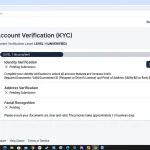
Nor does cryptocurrency itself establish that an account is anonymous. A casino may request identity information or conduct checks; the use of a digital asset does not remove that possibility. “No-KYC” is a marketing description when a site uses it, not a legal exemption and not proof that checks will never occur. Account conditions can differ, and a person’s ability to use a crypto wallet without a bank transfer says little about what the operator may ask for.
The word also blurs two separate questions: whether a payment can be linked to a person, and whether a gambling service is lawful or accountable in Australia. Even where a transaction does not resemble a card payment, the wider service remains offshore. Privacy in one step cannot settle the legal position of the whole arrangement. That is a narrower promise than the word implies.
Age remains a firm boundary. Gambling is for people aged 18 or older; a cryptocurrency wallet does not change that requirement. The same is true of the legal distinction between operator and player: it is not a general declaration that offshore services are safe for anyone, or that every consequence disappears when a payment is made in crypto.
An individual in Australia does not commit a criminal offence merely by gambling at an offshore online casino, as the Interactive Gambling Act 2001 primarily targets operators.
An anonymous casino, then, is not necessarily anonymous in its checks, and it is not an Australian-regulated casino in disguise. The law places its weight on operators, while the user is not criminalised simply for accessing an offshore platform. Those facts can coexist with an absence of local consumer protection and with uncertainty about what an individual site may require. Privacy is not a licence.
Online Casino Games and the Australian Boundary
An online casino can be reachable from Australia without belonging to Australia’s licensed gambling market. A website’s visibility says something about its technical availability; it says nothing, by itself, about whether its services are authorised under Australian law. The distinction is easy to miss because the internet presents local and offshore businesses in the same browser window. The law does not.
The Interactive Gambling Act 2001 prohibits operators from providing real-money online casino games to people in Australia. Australian-licensed operators therefore cannot offer that category of gambling to residents. This is not a domestic casino industry operating under a special licence for online play; the boundary is drawn against the provision of those services within Australia.
Offshore platforms occupy a different position. Crypto casinos based overseas are not licensed in Australia and sit outside the country’s regulatory framework. Their presence on the web does not make them Australian-licensed, nor does a foreign licence—where a platform holds one—turn that licence into domestic authorisation. A familiar-looking site, an Australian currency display or a page written for Australians cannot alter the legal category of the service.
Casinos That Accept Neosurf in Australia: What’s Verified
That difference matters because licensing is not decoration. It is the point at which a regulator’s authority and the protections attached to domestic oversight can be brought to bear. An offshore casino is not regulated by Australian authorities and offers no Australian consumer protection. If a dispute arises, the fact that the operator’s site was accessible locally does not bring it within the same framework as a licensed Australian service. The appearance of a market is not the market.
The word “anonymous” can blur this boundary. It describes a promise or feature claimed by a platform, not a legal status recognised by Australian gambling law. An anonymous casino online remains an offshore service if it is based outside the Australian licensing framework; the label cannot confer a local licence or make the activity part of a regulated domestic sector. The same is true of searches for anonymous casinos offering real-money play: wording does not change who is providing the service or where the operator stands.
The law’s focus is also important. The Interactive Gambling Act targets operators that provide prohibited services, rather than making an individual player’s access a criminal offence. Gambling at an offshore online casino is not, by itself, illegal for a person in Australia. That distinction should not be mistaken for endorsement, or for a guarantee that an offshore business is safe, accountable or protected by Australian consumer rules. Legal exposure and consumer security are separate questions.
Australia’s approach reflects a deliberate asymmetry: the domestic offer is prohibited, while the individual user is not criminalised for accessing an offshore platform. That can seem like a contradiction, but it is a choice about where enforcement is directed. The operator carries the regulatory burden; the player is left outside the protections that licensing would ordinarily provide. A narrow legal reassurance is not a broad consumer one.
Lack of Licensing Offshore casinos operate outside the Australian regulatory framework, meaning users have no local consumer protection or recourse in case of disputes.
So the phrase “best anonymous online casinos” cannot settle the question that matters most to the Australian boundary. A ranking, a polished interface or the promise of privacy cannot establish domestic legitimacy. Nor does the phrase “pokies anonymous Australia” describe a category of locally licensed service: it joins a popular Australian term to an offshore claim, not to a different legal regime. The online storefront may be close at hand. The Australian framework is not.
Deposits, Withdrawals and the Cost of Moving Crypto
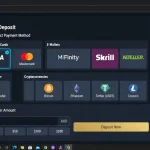
A deposit screen can make the smallest figure look like the whole price of entry. It is not. The amount accepted by a casino is only one part of a transfer: network fees, confirmation time, the operator’s processing rules and the changing value of the coin can all affect what arrives and what can later be withdrawn. A tiny displayed minimum does not make the transaction simple or cost-free.
AUD Banking and Payment Options at Roby Casino Australia
Specialist reviews have listed crypto deposit minimums as low as $5. Other specialist reviews describe more substantial thresholds: the equivalent of AUD 15 to AUD 30 at many operators, with Bitcoin minimums often falling between AUD 30 and AUD 50. These are reported terms, not a market-wide promise; the figure on a payment page can vary by operator and currency. A low entry amount may also be dwarfed by the cost of moving funds, particularly where the chosen network charges more than the deposit itself.
The network matters as much as the coin’s name. Tether, for instance, can be sent over different blockchains, and a casino’s deposit address is compatible only with the network it specifies. Sending funds over the wrong network can mean they do not arrive in a usable form, or are lost. The address and network therefore need to match exactly before a transfer is made. Crypto transfers are generally difficult to reverse.
Casinos That Accept PayID in Australia: Legal Context
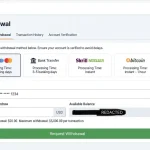
Specialist reviews have pointed to Litecoin and Tether sent via TRC-20 as options associated with quick confirmations and low fees for payouts. TRC-20 transfer costs can be only cents. That describes the network charge, not a guaranteed withdrawal time: an operator may still have its own processing steps, and a blockchain confirmation is not the same as money being released by a casino. The distinction is unglamorous, but it is where many payment claims become less impressive.
Bitcoin may be suitable for larger, less frequent cashouts when a wait of around half an hour is not a concern, according to a specialist review. For smaller or more frequent movements, the network fee can take a more visible share of the amount. The practical comparison is therefore not simply “fast” against “slow”; it is the amount being moved, the fee attached to that route and the time the operator takes after a transaction reaches the chain.
No-deposit offers do not remove these mechanics. A promotion that appears to require no initial payment may still come with conditions on eligibility, identity checks, withdrawals or the handling of any resulting balance. Cryptocurrency does not itself erase KYC requirements. Nor does a no-deposit label establish that a service is safe or approved for Australian residents.
Do
- Match the casino’s specified network exactly before transferring
- Account for network fees and processing times
Don’t
- Assume a low deposit minimum makes the transaction cost-free
- Send funds over an incompatible blockchain network
There is a further cost that does not appear beside the network fee. Cryptocurrency prices can move between the moment funds are deposited and the moment a withdrawal is made, changing their Australian-dollar value in either direction. Separately, the ATO treats cryptocurrency as a CGT asset; depositing crypto into a casino can itself count as a disposal and a CGT event, apart from any later win or loss. A transfer can therefore be cheap in network terms and still carry a tax consequence.
Offshore crypto casinos are not licensed by Australian authorities and do not provide Australian consumer protection. Their payment pages should not be mistaken for regulated financial services, and an advertised withdrawal route is not a guarantee of recourse if something goes wrong. Gambling is for adults aged 18 or older. The money may move quickly. Its protections do not.
What “Best” Can Mean Without a Safe Harbour
For an Australia-focused search for an anonymous crypto casino, check what each operator actually discloses before choosing. This list is a starting point for reviewing the available licensing and payment details; it does not establish that any operator offers anonymous play.
1. SpinsUp
License: Curacao Gaming Control Board OGL/2023/174/0082 (Dama N.V.) SpinsUp is listed with a Curaçao Gaming Control Board licence, OGL/2023/174/0082, held by Dama N.V.
2. Bizzo Casino
License: Curacao Gaming Control Board (TechSolutions Group N.V.) Bizzo Casino is listed with a Curaçao Gaming Control Board licence associated with TechSolutions Group N.V.
3. WinSpirit Casino
License: Curacao eGaming OGL/2024/923/0383 (Antillephone N.V.) · Min. deposit: A$30 WinSpirit Casino is listed with Curaçao eGaming licence OGL/2024/923/0383, associated with Antillephone N.V. Its minimum deposit is A$30.
4. DragonSlots Casino
License: Curacao Gaming Authority (Jumpman Gaming Ltd) DragonSlots Casino is listed with a Curaçao Gaming Authority licence associated with Jumpman Gaming Ltd.
5. Roby Casino
License: Curacao eGaming (Roby Games Ltd) Roby Casino is listed with a Curaçao eGaming licence associated with Roby Games Ltd.
6. LevelUp Casino
License: Curacao eGaming OGL/2023/174/0082 (Dama N.V.) · Min. deposit: A$15 LevelUp Casino is listed with Curaçao eGaming licence OGL/2023/174/0082, associated with Dama N.V. Its minimum deposit is A$15.
7. Lucky Dreams
License: Curacao · Min. deposit: A$20 (POLi) Lucky Dreams is listed with a Curaçao licence. The stated minimum deposit is A$20 when using POLi.
8. Ricky Casino
Payout speed: crypto under 1 hour, PayID 1-3 business days · Min. deposit: A$20 (A$30 to qualify for the bonus) Ricky Casino lists crypto payouts as taking under 1 hour and PayID payouts as taking 1–3 business days. The minimum deposit is A$20, or A$30 to qualify for the bonus.
9. GoldenCrown
License: Curacao Gaming Control Board OGL/2023/176/0095 (Hollycorn N.V.) GoldenCrown is listed with Curaçao Gaming Control Board licence OGL/2023/176/0095, held by Hollycorn N.V.
10. House of Pokies
License: international iGaming licence – jurisdiction not named in the source · Payout speed: PayID 1-24 hours · Min. deposit: A$30 (PayID from A$10) House of Pokies is listed with an international iGaming licence, though the source does not name the jurisdiction. PayID payouts are stated as 1–24 hours; the minimum deposit is A$30, or A$10 with PayID.
A label such as “best” sounds like a verdict. In the offshore crypto-casino market, it is more often a summary of selected features: payment options, advertised promotions, site design or a reviewer’s preferred balance of convenience and risk. Those details can help explain how a platform presents itself. They cannot establish that it is safe for Australians, locally regulated or accountable to Australian authorities.
That distinction matters because offshore crypto casinos do not hold Australian licences and sit outside the country’s regulatory framework. A ranking may compare one site with another, but it cannot create the protections that an Australian licence would imply. There is no Australian regulator supervising these operators on the basis of such a ranking, and no local consumer-protection framework is supplied by a “best” badge. A polished comparison is still a comparison, not a safe harbour.
The word “anonymous” also needs careful handling. No-KYC claims, where made, do not prove that identity checks will never occur or that access carries no risk. A site’s stated policies may be subject to its own terms and practices; a third-party assessment cannot guarantee how those will apply in an individual case. Nor does using Bitcoin or another cryptocurrency settle the question of identity. A review can describe what an operator says. It cannot certify anonymity.
Promotions require the same restraint. A free-spins offer, for instance, is a feature of marketing, not evidence of regulatory standing or consumer recourse. Its apparent value depends on conditions attached to it, while the wider issue remains unchanged: an offshore operator is outside the Australian framework. Attractive terms can occupy a great deal of a page. They do not answer the harder question.
A careful assessment therefore separates observable claims from conclusions. A comparison can report that a site lists certain payment methods or describes a particular account process. It should not convert those statements into assurances of safety, legality or anonymity. It should also make clear what it cannot verify, rather than allowing a confident ranking to do the work of a regulator. There is a difference between describing a platform and endorsing it.
Online pokies and PayID in Australia: what to know
The Australian Communications and Media Authority is the regulator of online gambling under the Interactive Gambling Act. It directs internet service providers to block prohibited offshore gambling sites. A specialist review reported that blocking notices had covered hundreds of domains by mid-2025; that figure describes notices at that point, not a permanent inventory or a guarantee about any site’s future availability. A ranking cannot make a blocked domain accessible, or make an accessible one locally regulated.
This is why “best anonymous crypto casino” is not a meaningful Australian safety category. At most, “best” can mean best according to a stated set of editorial criteria, for a particular comparison, at a particular time. It cannot mean approved by Australian authorities, protected under Australian consumer law or beyond regulatory action. Those are different claims, and a list cannot blur them into one.
For anyone considering offshore gambling, the legal and practical boundary should remain visible. Operators, not individual players, are the target of the law; accessing an offshore platform is not a criminal offence for users. Still, absence of player liability is not the same as endorsement, protection or an assurance that a site will remain available. Players must be at least 18 to gamble. The adjective does not change the framework.
Casino Sites That Can Vanish from the Australian Web
An offshore casino’s address can look like a fixed point on the internet. In Australia, it is not. The Australian Communications and Media Authority (ACMA), the regulator responsible for online gambling under the Interactive Gambling Act, can direct internet service providers to block prohibited offshore gambling sites. A domain that once opened may therefore stop loading for Australian users, even if the site itself has not disappeared elsewhere.
A specialist review reported that, by mid-2025, blocking notices had covered hundreds of domains. That figure describes notices issued by that point, not a permanent count: domains and enforcement activity can change. The practical consequence is simpler. A familiar address is no guarantee of continued access.
Same-Day Payout Casinos in Australia: How It Works
Blocking also makes the idea of a stable anonymous casino site less convincing. A domain is an entrance, not a promise of permanence. When an entrance is blocked, the operator may change its address, but a new address does not establish that the service is trustworthy, available for long, or beyond regulatory attention. Nor does a working link amount to approval by Australian authorities.
ACMA monitors online gambling activity, including activity involving cryptocurrencies. The payment method does not put a site outside that attention. In a market where offshore platforms sit beyond Australia’s regulatory framework, a disappearing domain is more than a small technical irritation: it is one visible sign of the distance between an operator and the protections attached to domestic regulation.
That distance can be easy to overlook when a page loads normally. The web’s familiar surface gives a service the appearance of permanence; blocking notices remind users that access depends on more than the operator keeping its servers running. Internet providers may be instructed to restrict a domain, and the change may arrive without warning.
There is no reliable “best” address to infer from a site’s continued availability. A domain can open today and fail tomorrow, while a replacement address says little about what has changed behind it. The blocklist is not a catalogue of recommended alternatives. It is an enforcement mechanism, and its effects can reach the Australian web wherever a prohibited domain is involved.
The address is temporary.
Which Cryptocurrencies Casinos Commonly Accept
The currency menu at offshore crypto casinos tends to begin with Bitcoin and Ethereum. Both are supported by almost all such casinos, making them the most familiar names in this part of the market. Tether (USDT) is another prominent option: as a stablecoin, it is designed to track the value of a conventional currency, though that design does not remove the need to understand what is being transferred.
Bitcoin (BTC)
Commonly accepted and suitable for larger, less frequent cashouts.
Ethereum (ETH)
One of the most familiar and widely supported coins in the market.
Tether (USDT)
A prominent stablecoin designed to track the value of conventional currency.
Litecoin (LTC)
Often associated with quicker confirmations and lower payout fees.
Litecoin and Ripple are also commonly accepted. Some casinos list Solana or Dogecoin alongside them, while others support a wider selection of altcoins. A specialist review describes Bitcoin, Ethereum, Tether and Litecoin as the main options, with Solana and Dogecoin appearing at some sites. The exact menu is not a fixed feature of the market; it depends on the individual platform and may change.
That variety can make a site seem more accommodating than it is. A currency’s presence on a payment page says little about the protections behind the platform. Offshore crypto casinos are not regulated by Australian authorities and do not provide Australian consumer protections. A broad coin list is not a substitute for oversight.
There is another distinction between a currency and the network used to transfer it. The same token may be available on different networks, and selecting the wrong one can result in funds being lost. The network shown by the casino must match the one used to send or receive the asset. This is a practical detail, not a technical flourish.
Crypto values can also move while funds are held or transferred. Bitcoin, Ethereum and many other coins may be worth more or less by the time a transaction is complete; a stablecoin is intended to limit that movement, not to make the entire transaction risk-free. The currency label alone cannot settle what an eventual balance will be worth.
Nor does payment in cryptocurrency establish anonymity. A platform may still require identity checks, and a coin accepted by an offshore casino carries no Australian regulatory endorsement. In Australia, gambling is for adults aged 18 or older. The menu is broad. The safeguards are not.
Casino Sites That Accept Osko in Australia: What’s Known
Casino Apps, Monitoring and Digital Access
A casino app changes the route to a website, not the status of the service behind it. An icon on a phone can make an offshore platform feel like an ordinary part of the digital landscape; it does not amount to Australian approval, oversight or protection. Offshore crypto casinos are not regulated by Australian authorities, and users do not receive the consumer protections attached to a locally regulated service. Cryptocurrency does not establish that an app is anonymous, either: using it does not remove the possibility of identity checks.
In Australia, the Australian Communications and Media Authority (ACMA) regulates online gambling under the Interactive Gambling Act 2001. Its attention extends to online gambling activity involving cryptocurrencies. That matters because payment technology can change quickly, while the regulator’s concern is the activity and service, not merely the device or currency used to reach it.
Casinos that accept PayPal in Australia: key facts
Access can also be interrupted at the network level. ACMA directs internet service providers to block prohibited offshore gambling sites. A specialist review reported that blocking notices had affected hundreds of domains by mid-2025; that is a dated snapshot, not a permanent count. When a domain is blocked, switching from a browser to an app does not turn the underlying address into a different service. Nor does a familiar-looking interface guarantee that the same domain will remain reachable.
The effect is practical as well as regulatory. A page may fail to load on a home connection, while an app may show an error or lose access to its service. Such disruption is not proof that a casino has closed, just as a working app is not proof that its operator is authorised in Australia. Digital access is conditional. The web has always been less like a public square than its metaphors suggest: someone owns the address, someone carries the connection, and regulators can intervene.
Attention: A casino app does not change the regulatory status of the service; offshore platforms remain outside Australian oversight and consumer protection.
People searching for an anonymous casino app may find that the word promises more than the technology can deliver. Crypto transactions may change how funds move, but they do not erase monitoring, identity requirements or the possibility of access being blocked. No-KYC claims should not be confused with a guarantee of privacy or legal standing.
Gambling is restricted to adults aged 18 or older. That requirement applies regardless of whether access is through a browser, a downloaded app or another device. A smaller screen changes the view, not the conditions.
What Changed for Australian Wagering in 2024
From 11 June 2024, licensed domestic wagering services in Australia could no longer accept credit cards or digital currency transactions for wagering. The change drew a line around how those services could be funded: both payment types were barred when used for a wager through a locally licensed service.
That boundary matters because “wagering” is not a synonym for every form of online gambling. The restriction concerns licensed domestic wagering services and their wagering transactions. It should not be read as a general rule that every Australian-facing offshore site follows the same payment arrangements, nor as evidence that an offshore casino is part of Australia’s licensed market. Offshore crypto casinos operate outside the Australian regulatory framework and are not regulated by Australian authorities; that means there is no domestic consumer protection attached to them.
The distinction can be easy to lose in a search for a list of anonymous casinos, or in older material labelled 2024. A date on a page does not make the legal category clear. The 2024 change was specific: domestic licensed wagering services could no longer take credit-card or digital-currency payments for wagering. It did not transform an offshore casino into a locally licensed service, and it did not make cryptocurrency a shield against identity checks.
Casinos That Accept Google Pay in Australia: What to Know
The rule also belongs to a wider Australian habit of drawing regulatory boundaries by service type rather than by the payment technology alone. A digital currency can be prohibited as a funding method in one defined domestic setting without that statement describing every offshore platform, every gambling product or every transaction. The wording is narrow. Its consequences are not a licence for offshore operators.
For people using any gambling service, the minimum age is 18. The 2024 payment restriction did not alter that threshold. And the practical divide remains plain: domestic licensed wagering has a specified payment rule; offshore casino access carries no Australian regulatory protection. Different categories. No shortcut between them.
New Domains, Old Regulatory Uncertainty
A recently encountered domain can look like a fresh beginning, but a new web address does not change the status of the service behind it. Offshore crypto casinos are not licensed in Australia and sit outside the country’s regulatory framework. They do not carry Australian consumer protections, and a domain’s appearance online is no assurance that access will remain available.
Safe online pokies in Australia: legal and payment risks
The Australian Communications and Media Authority directs internet service providers to block prohibited offshore gambling sites. A specialist review reported that blocking notices had covered hundreds of domains by mid-2025. Notices can affect domains as well as the services reached through them; an address that works at one point may later become inaccessible. A replacement address, if one appears, does not resolve the underlying regulatory uncertainty.
That is the old pattern in a new wrapper. A domain may be unfamiliar without being newly established, independently checked or suitable for Australian users. Nor does crypto establish anonymity: payment technology cannot settle questions about identity checks, access or consumer recourse. Cryptocurrency values can also change between deposit and withdrawal, adding financial uncertainty to the regulatory kind.
Australian law does not make an individual’s access to an offshore casino a criminal offence, but that does not turn the service into a locally regulated one. Anyone gambling must be at least 18. Domain names are temporary facts; regulatory status is the more consequential one.
Which crypto is best for casino deposits and withdrawals?
Litecoin and TRC-20 Tether are good choices for faster payouts because they offer quick confirmations, low fees and broad casino support. Bitcoin may suit larger, less frequent cashouts if a wait of around half an hour is acceptable.
Which cryptocurrencies do crypto casinos accept?
Most accept Bitcoin, Ethereum and Tether, while Litecoin, Ripple and other altcoins are also common. Some casinos also support Solana or Dogecoin, and many offer at least 10 cryptocurrencies.
What are the tax implications of winnings from an anonymous crypto casino in Australia?
Australian recreational gambling winnings are generally not taxed as income, and crypto received from gambling is not treated as ordinary income by the ATO. However, crypto is a CGT asset: depositing, selling, swapping or spending it can trigger CGT rules, with its value when won becoming its cost base. Investors who hold BTC for more than 12 months may qualify for the 50% CGT discount on gains, depending on their circumstances.
How fast are withdrawals at crypto casinos?
Litecoin and TRC-20 Tether are recommended for quicker payouts because they have fast confirmations and low fees. Bitcoin may involve a wait of around half an hour, making it more suitable for larger, less frequent cashouts.
What is the minimum deposit at a Bitcoin casino?
Minimum deposits at crypto casinos can start at $5, but many operators set them at the equivalent of AUD 15 to AUD 30. Bitcoin minimums are often higher, around AUD 30 to AUD 50.
Can Australians use Bitcoin to gamble online?
Yes, an individual in Australia does not commit a criminal offence merely by gambling at an offshore online casino. These casinos are not licensed in Australia and do not provide Australian consumer protection; the Interactive Gambling Act targets operators rather than individual players.
AUD Banking and Payment Options at Roby Casino Australia

AUD Deposit Options at Roby Casino Australia
Roby supports several deposit categories that are relevant to Australian players: Visa, Mastercard, Skrill, Neteller,...

AUD Withdrawal Limits and Times at Roby Casino Australia
Roby supports several payment categories that can be relevant to withdrawals, including cards, e-wallets, bank...

$1 Minimum Deposit Casinos in Australia: What to Know
A casino’s stated minimum may differ from a payment method’s floor or the amount needed...

$1 Minimum Deposit Pokies in Australia: How It Works
A casino’s stated minimum is only one part of the transaction; the payment route may...

$10 Minimum Deposit Casinos in Australia: How It Works
The amount accepted depends on both the casino cashier and payment route, while costs and...

$10 Minimum Deposit Pokies in Australia: What It Means
A site's stated minimum may differ from what its card processor, wallet or other payment...

$2 Minimum Deposit Casinos in Australia: What to Know
A low operator threshold may not survive the payment chain, where processors can set a...

$20 Minimum Deposit Casinos in Australia
Australian casino deposit minimums can depend on the operator’s terms or on the payment method...

$20 Minimum Deposit Pokies in Australia: What It Means
A displayed minimum may come from a payment provider rather than the operator, and the...

$5 Minimum Deposit Casinos in Australia: Payment Rules
The amount accepted by an operator can differ from the minimum transaction required by the...

$5 Minimum Deposit Pokies in Australia: What It Means
The operator’s stated floor can differ from the minimum accepted by a payment method, while...

Aristocrat Online Pokies in Australia: What to Know
The search phrase does not verify a game's maker or availability, and Australian rules set...

Aussie Crypto Casinos: Rules, Risks and Payments
Australia’s rules distinguish domestic wagering from online casino services, leaving offshore crypto platforms outside the...

New Australian Online Pokies: Games and Risks
A closer look at how release labels, free-play modes, account access and bonus terms shape...

Online casino payment methods for Australians
See how PayID, transfers, vouchers and mobile wallets differ across deposits, withdrawals, processing delays and...

Best-Paying Online Pokies in Australia: Bitcoin Guide
A practical look at Bitcoin payments, payout claims, bonus conditions and the limits of Australian...

Bitcoin Pokies Australia: How Payments Work
Bitcoin changes how an account is funded, not the pokies themselves; free-play credits and real-money...

Casino Sites That Accept Amex in Australia
Acceptance can differ between operators, while deposit conditions, withdrawal eligibility and payment costs depend on...

Casino Sites That Accept BPAY in Australia: What’s Known
BPAY availability and withdrawal terms need confirmation; Australian-facing language does not make offshore casino games...

Casino Sites That Accept Credit Cards in Australia
Australia’s rules apply before the cashier, while card acceptance, issuer checks and withdrawal support vary...

EcoPayz Casinos in Australia: What Is Verified
The evidence distinguishes payment acceptance from legality and explains why no verified EcoPayz deposit or...

Casino Sites That Accept Osko in Australia: What’s Known
Australian payment habits may make Osko familiar, but they do not confirm that a casino...

Casino Sites That Accept Paysafecard in Australia
Paysafecard availability does not establish that an offshore casino offer is lawful or that a...

Casino Sites That Accept Skrill in Australia Explained
Skrill availability can describe a cashier option, but it does not establish that an online...

Trustly Casino Sites in Australia: What Is Known
The Interactive Gambling Act 2001 prohibits operators from providing real-money online casino games to people...

Under an Hour Casino Withdrawals in Australia Explained
Withdrawal estimates depend on when the operator’s review ends and when the payment channel begins...

No-ID Verification for Casino Withdrawals in Australia
Identity checks remain part of withdrawal processing, while payment methods and bonus conditions can affect...

Casinos That Accept Apple Pay in Australia: Evidence
Mobile-wallet availability in everyday Australian payments does not establish that an online casino supports Apple...

Casinos That Accept Bitcoin in Australia: Payments
Bitcoin changes how funds move, while operator procedures still govern accounts, disputes and the terms...

Bitcoin Cash Casinos in Australia: Legal and Payment Guide
Australian law bars operators from offering online casino games locally; this guide also covers offshore...

CashToCode Casinos in Australia: Acceptance Checks
A payment option listed online does not establish that a casino accepts CashToCode for Australian...

Casinos That Accept Ethereum in Australia
Ethereum is a possible transaction method, but its availability does not establish which games a...

Casinos That Accept Google Pay in Australia: What to Know
Australian law prohibits operators from offering real-money online casino games to people in Australia, and...

Casinos That Accept Litecoin in Australia: What’s Verifiable
The page distinguishes cryptocurrency payment language from evidence of Australian availability, cashier support, or specific...

Casinos That Accept Mastercard in Australia: Legal Limits
A card option at the cashier does not establish legality, and the route used for...

Casinos That Accept MiFinity in Australia: What to Know
Familiar Australian payment options do not show whether an individual casino supports MiFinity or how...

Casinos That Accept Neosurf in Australia: What’s Verified
Neosurf payment claims, casino services and Australian gambling rules are distinct issues that require separate...

Casinos That Accept Neteller in Australia: What to Check
Neteller availability does not establish that an offshore casino may serve Australians or that deposits,...

Casinos That Accept PayID in Australia: Legal Context
Payment availability can explain a cashier’s options, but it cannot establish whether an offshore casino...

Casinos that accept PayPal in Australia: key facts
The article separates everyday payment familiarity from casino cashier availability and examines the limits of...

Casinos That Accept POLi in Australia: What to Know
A POLi label alone does not establish that an online casino can lawfully serve Australians...

Casinos That Accept Tether USDT in Australia
USDT payment claims do not establish which casinos accept it or verify their networks, games,...

Casinos That Accept Visa in Australia: Key Details
Visa availability varies by operator and card, while deposits, withdrawals and legal context remain separate...

Dragon Link Online Pokies in Australia: What Search Shows
The name alone does not establish a particular machine, an online version or availability to...

Easy Withdrawal Casinos in Australia: How Payouts Work
Withdrawal timing depends on operator review and fund release as well as the payment method’s...

Fast Casino Withdrawals in Australia: Payment Routes
Payment networks, casino approval, verification and terms all affect timing, while Australian law limits the...

Instant Bank Transfer Casinos in Australia: How They Work
Banking labels can cover different payment flows, and a deposit method may not be available...

Instant PayID Withdrawals for Real Money in Australia
PayID can move released funds through Australia's NPP, but it cannot determine when an operator...

Instant PayID Withdrawals in Australia: What to Know
PayID can move funds quickly after release, but casino checks, account verification and withdrawal terms...

Low deposit online casinos in Australia: payment limits
A low operator minimum does not guarantee a payment will go through, since the chosen...

New PayID Pokies in Australia: Payments and Checks
PayID can route quick bank transfers, but cashier details, bank limits, delays and bonus terms...

No-KYC Casino Australia: Crypto Payments Explained
A practical look at crypto and PayID payments, identity checks, and the conditions that can...

No Minimum Deposit Casinos in Australia: Payment Limits
The operator’s deposit rule is only one part of the chain; payment providers and purchase...

Online pokies instant withdrawals in Australia
A withdrawal request, operator approval and payment release are separate stages, so transfer speed alone...

Online pokies and PayID in Australia: what to know
PayID can move funds quickly, but cashier confirmation, bank limits, withdrawal checks and wagering terms...

Pay by Phone Casinos Australia: PayID and Bills
PayID can use a mobile number to identify a bank account, but the funds come...

Quick Casino Withdrawals in Australia: How Payouts Work
Payout timing depends on more than the payment method, while Australia's legal position on online...

Real cash online pokies in Australia: law and Bitcoin
A guide to Australia's restrictions on online pokies and the practical trade-offs of using Bitcoin...

Safe online pokies in Australia: legal and payment risks
The guide examines Australian legal limits, offshore operators, Bitcoin payment points, verification and bonus terms...

Same-Day Payout Casinos in Australia: How It Works
A withdrawal estimate can cover operator checks, the payment route, or both, so the stages...

Solana Casino Comparison for Australia
The guide separates Australian law on offshore operators from token transfers, bonus terms, cash-outs and...