Real Money Casino Table Games in Australia
 Available in AU
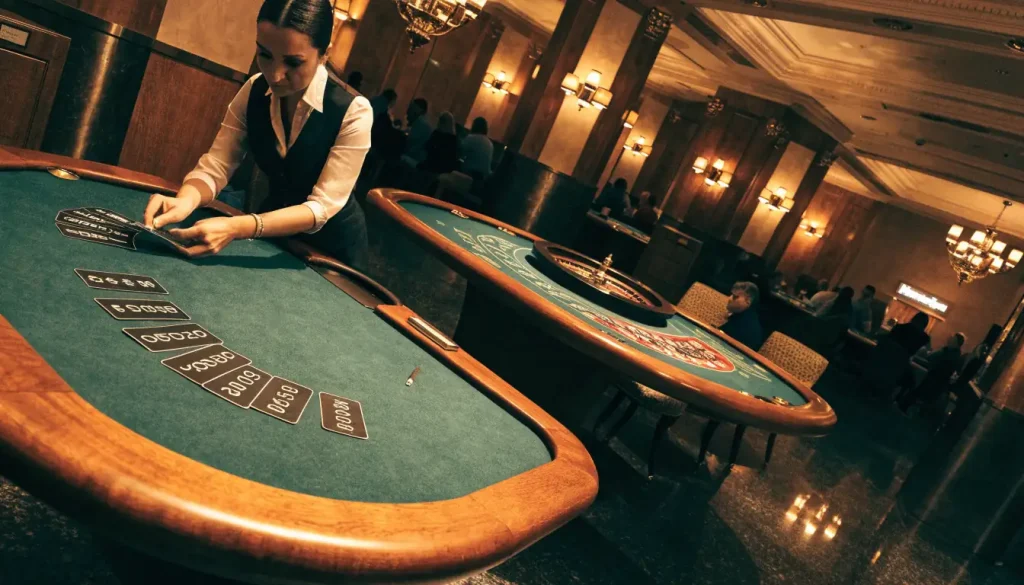
Live streams show activity at a physical table, while digital games use software to determine outcomes.
Table of Contents
- How Online Tables Recreate the Casino Floor
- Bitcoin at the Table: A Comparison the Evidence Cannot Make
- What the Available Facts Can—and Cannot—Say About Table-Game Odds
- The Contest at the Table: Hands, Dealers and Dice
- A Local Search with No Verified Map
- What Counts as a Casino Table Game Online
- Different Tables, Different Kinds of Play
- Card Tables: Hands, Bets and the Tie
- Roulette’s Zeroes and the Shape of the Wheel
- Poker at the Table Is a Contest of Hands
How Online Tables Recreate the Casino Floor
A casino table online can present two quite different kinds of evidence. One is a live image of a dealer working with physical equipment; the other is a digital game in which software determines the cards dealt or the roulette ball’s destination. Both may borrow the familiar appearance of a casino table, but the events behind the screen are produced differently.
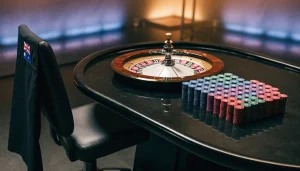
In a live-dealer format, a real person operates real casino equipment, and a video feed carries that activity to players. The dealer, cards, wheel or other equipment belong to a physical setting beyond the screen. What appears online is not an animation of a dealer but a live stream of one. The table’s visual presence comes from an actual room and the activity taking place there.
That distinction changes what the screen is showing. In a live stream, the dealer’s movements and the equipment are visible parts of the game’s presentation. The image connects the online viewer with a physical table, though it does not put the viewer in the room. The camera mediates the scene; the dealer and equipment remain on the other side of it.
An online version produced by software has a different origin. A Random Number Generator determines which cards are dealt or where the ball lands on a roulette wheel. The screen may still display a table, cards or a wheel, but those images do not mean a dealer has physically dealt the cards or spun the wheel in that moment. The outcome comes from the software process, not from filmed equipment.
The difference is easy to blur because both formats borrow the same visual vocabulary. A digital table can resemble a felt surface; a wheel can appear in motion; a card can turn over on screen. In a streamed game, those images show physical action captured by a camera. In a software-led version, they represent an outcome generated by the system. Appearance is not production. A convincing picture can conceal two entirely different arrangements.
3-Reel Slots in Australia: Features and RTP · Pokie Machines in Australia: What Players Should Know
This is less a contest between old and new than a question of where the game’s visible action originates. The live format retains a human dealer and physical apparatus, while the software version assigns the decisive role to a random-number process. One offers a view into a real table setting; the other renders a table game on screen. Neither description, by itself, says anything about the quality of the experience or the character of its outcomes. Those are separate questions, and the image cannot answer them.
The distinction also explains why “online table game” is an umbrella phrase rather than a description of one production method. The label can refer to a streamed table or to a digital version governed by software. A still image or a familiar layout is not enough to tell which is being used. The defining clue is the source of the action: a live dealer working with real equipment, or a Random Number Generator determining the result.
Best pokies in Tasmania: hours, access and legal context
There is a social history tucked into that contrast. The casino floor made the dealer part of the spectacle: a person whose gestures, timing and handling of equipment gave a game a visible human centre. Online transmission carries that figure into a remote setting, while software can reproduce the structure of a table game without reproducing its physical scene. The screen keeps the ritual, or its outline, and changes the machinery beneath it.
That change matters because the streamed table and the software-rendered table invite different interpretations of what is happening. In one, the viewer watches an event being performed in a room. In the other, the viewer sees an interface present a result determined by software. The distinction is not simply decorative. It concerns what produces the cards or the roulette outcome, even when the final display looks recognisably like a casino table.
For people looking at real-money casino table games in Australia, the legal setting cannot be detached from that technological distinction. The Interactive Gambling Act 2001 prohibits operators from providing real-money online casino games to people physically located in Australia. The rule concerns the provision of the service; a live stream does not turn the activity into something outside that framework, and software does not change it into a different legal category.
Legal Restriction
The Interactive Gambling Act 2001 prohibits operators from providing real-money online casino games to people physically located in Australia.
The floor, then, is recreated in more than one sense. A live stream brings the image of a physical table across a screen. A software version constructs a digital representation around outcomes determined by a Random Number Generator. The first transmits a scene; the second generates an outcome and displays it. Similar scenery, different machinery.
Bitcoin at the Table: A Comparison the Evidence Cannot Make
Bitcoin and a casino table belong to different parts of the transaction. One is a payment method; the other is a game format. Putting them together in a phrase does not establish that the currency changes how a hand is dealt, how a wheel is run or how a table game is played. It changes the subject from the table itself to the means of payment.
That distinction matters because “Bitcoin table games” can sound like a special category, as though a game played with Bitcoin must have its own rules or a different relationship between player and house. Nothing about the payment method alone implies that. In an online table game, the outcome may be generated by software, or a live dealer and physical casino equipment may be shown through a stream. Those are ways of producing the game, not properties of a currency.
The same separation applies to comparisons with conventional casino play. “Normal” can mean a game played in person, a digital game funded through a different method, or simply a familiar table format. These are not interchangeable comparisons. A payment method cannot, by itself, tell whether a table is live or software-based, or explain the mechanics of the game. The neat pairing of “Bitcoin versus normal” makes a poor measuring instrument.
Mines Casino Game in Australia: Rules and Risks · Melbourne Casino: Hotels, Dining and Visitor Details
It also leaves the word “best” without a stable meaning. Best for what: the structure of a game, the experience of watching a dealer, the way a payment is handled, or the chance of a particular outcome? These are separate questions. Calling a table a Bitcoin table does not answer them. Nor does it turn a broad label such as “top table games” into a meaningful category.
There is a more consequential boundary in Australia. The Interactive Gambling Act 2001 prohibits operators from providing real-money online casino games to people in the country. That prohibition includes casino-style table games. The legal issue does not disappear when the payment method is Bitcoin rather than another form of payment. A different means of transferring value does not change what kind of service is being provided.
This is one of the quiet habits of digital language: it attaches the name of a payment method to an activity and makes the activity seem newly distinct. The label may describe how a transaction is made, but it cannot settle the game’s rules, its format or its legal status. A table does not become a different table because the money has a different name.
So the phrase “casino table games for Bitcoin” combines two ideas without proving that they form a special kind of play. The actual distinction lies elsewhere: in how a game is produced and what rules govern it, while Bitcoin concerns payment. The table remains the table. The law remains the law. Dryly put.
A payment method like Bitcoin does not change a game’s rules, its production format, or its legal status under Australian law.
What the Available Facts Can—and Cannot—Say About Table-Game Odds
“Best odds” sounds like a tidy category, as if games could be arranged on a shelf from generous to severe. But odds can refer to different things: the chance of a particular outcome, the amount paid when it happens, or the long-run share of wagers returned. Those measures are related, but they are not interchangeable. A comparison that does not say which one it means has already blurred its subject.
Return to player, or RTP, is a theoretical measure of the proportion of wagers returned over a very large number of plays. It is not a universal label for every casino game, nor a ready-made table-game ranking. Carrying that figure across from pokies to blackjack, roulette or poker would make a precise-sounding comparison without a matching basis.
Table-game odds need to be understood in relation to the rules and the wager being considered. A game may offer several possible bets, each tied to a different outcome and payout. The word “odds” can describe the likelihood of that outcome; “return” can describe what a successful wager pays; and “house edge” is used to express the casino’s mathematical advantage over time. These are distinct ways of looking at the same structured contest, not three interchangeable names for a single number.
That distinction matters when someone asks which casino table games have the best odds. A ranking would need comparable figures calculated on a consistent basis. Without those, naming a game as the best—or the worst—would be a claim dressed up as a chart. The familiar table-game labels alone do not settle the question. A title does not carry one self-explanatory odds figure that applies to every wager or every way of playing it.
Crash casino games in Australia: legal limits
Even a house-edge chart, if presented, would need to make clear what its figures refer to and what assumptions sit behind them. A chart can look authoritative while concealing different bets, rules or calculation methods in adjacent rows. Neat columns do not repair mismatched comparisons. They merely give the mismatch borders.
Pokies provide a useful contrast, not a substitute. Their RTP describes a theoretical return across a vast run of spins; it does not promise what any individual session will return. Nor does it establish the relative value of table games. A long-run percentage and the chance of winning a particular hand answer different questions. Confusing them is like using a weather average to predict the next gust.
The phrase “best odds” therefore needs more care than it usually receives. It can mean a higher probability of winning a particular bet, a larger payout for a less likely outcome, or a smaller mathematical advantage for the house over time. Those meanings can point in different directions. A wager with a frequent win is not automatically the one with the strongest long-term return; a large possible payout does not, by itself, make a bet favourable.
There is no responsible table-game pecking order in a number taken from a different kind of game. The language of percentages may promise certainty. The comparison still has to earn it.
The Contest at the Table: Hands, Dealers and Dice
At a blackjack table, the action is framed as a contest between a player’s hand and the dealer’s. The aim is to bring the hand’s value closer to 21 than the dealer’s hand. That simple comparison gives the game its social shape: attention moves between the cards in front of a player and the person dealing them, while the target number supplies a boundary around the contest.
Blackjack
A contest between a player’s hand and the dealer’s to get closer to 21.
Dice Games
A wager centered on the immediate event of a roll and its produced result.
Poker
A competition to assemble the strongest possible poker hand against other players.
The dealer is not merely a hand with a different name. The role makes the table’s procedure visible. One side represents the house’s part in the game; the other consists of players trying to form a hand that meets the stated aim. The arrangement is unusually legible. A contest is announced, a number is fixed, and the opposing hands can be compared against it. There is no need to mistake that clarity for control over the outcome. The rules describe what counts as success, not a way to ensure it.
A dice table gives chance another shape. Players roll a pair of dice and bet on the outcome. Instead of comparing a hand with a dealer’s, the activity gathers around a roll: the dice are the immediate event, and the wager concerns what that event produces. The compactness of the arrangement is part of its character. A pair of objects, a throw, a result. The wager turns a small physical action into the centre of a shared game.
These formats make different demands on attention. Blackjack places the player’s hand in relation to the dealer’s and to the target of 21. A dice game directs attention towards the roll and the result on which bets have been placed. In one, the central image is a comparison; in the other, it is an event. The distinction matters more than any ranking of which game is “best”: the basic appeal, and the kind of attention each format organises, are not identical.
Bonus Buy Slots in Australia: How They Work
The table itself also gives these contests a public grammar. A hand or a roll is not just an abstract result; it is something around which a dealer and players can gather. The dealer’s presence marks the structure in blackjack, while the dice supply a visible moment of outcome in the other format. Such arrangements help explain why table games are often understood through their procedures as much as their names. The procedure tells everyone what the contest is about.
That description is not a guide to placing bets, nor does it make these formats available as real-money online games in Australia. Under the Interactive Gambling Act 2001, operators may not provide real-money online casino games to people physically located in the country. The game structures can still be described plainly: a hand measured against the dealer, or a pair of dice rolled against the terms of a wager. Description is not permission.
The contrast is spare, almost theatrical. One side holds a hand; another deals. Elsewhere, dice are cast and an outcome settles the wager. Different stages, different contests.
A Local Search with No Verified Map
A request for the closest casino with table games sounds like a piece of ordinary geography: a location, a route, perhaps a choice between nearby doors. In Australia, the phrase carries a legal complication. A physical distance search and an online casino service are not the same thing, and a map cannot settle the status of either.
Attention: A website appearing in a search result is not proof that an operator may lawfully provide its services to people in Australia.
The Interactive Gambling Act 2001 prohibits operators from providing real-money online casino games to people physically in Australia. That category includes table games such as blackjack, roulette and poker. The restriction falls on the service provider; it does not turn a person’s location search into a measure of which online services may lawfully be offered. The distinction is less tidy than a map pin.
The Australian Communications and Media Authority enforces the law and blocks unlicensed domestic platforms. This makes the familiar language of digital convenience—nearby, available, ready to play—poor evidence of lawful access. A website appearing in a search result is not proof that an operator may provide its service to people in Australia. Nor does the word “casino” identify whether a result refers to a physical place or an online platform.
That ambiguity matters because the same request can point in different directions. Someone might mean a brick-and-mortar venue with tables, or might be using “near me” as shorthand for an online casino they can open from home. The first is a question about physical premises; the second concerns an interactive gambling service governed by federal law. Treating the two as interchangeable turns geography into a false reassurance.
Casino Stays in Tasmania: What to Verify
The legal frame is not a local licensing checklist. Australia’s law bars local companies from offering real-money online casino games to residents, and ACMA acts against unlicensed domestic platforms. A foreign address or overseas-facing website does not erase the restriction on providing those services to people physically in Australia. The law concerns the service and its availability in the country, not the apparent distance between a player and a server.
There is also a difference between a search result and a verified local map. A list of names, a promotional label, or a claim that a table is close by may suggest convenience without establishing that the location exists, that it offers table games, or that an online service can lawfully accept Australian customers. Those details should not be inferred from wording alone.
So “nearest” is not a useful substitute for the questions that matter. A geographic result cannot establish what kind of venue it describes, and an online result cannot override the Interactive Gambling Act. Table games may be presented through live dealers or generated by software, but that format does not change the legal boundary around real-money online casino services in Australia.
The map is not the law.
What Counts as a Casino Table Game Online
When choosing real-money casino table games in Australia, it helps to check the available operator information before deciding where to play. These short verdicts highlight the details provided for each entry.
1. SpinsUp
License: Curacao Gaming Control Board OGL/2023/174/0082 (Dama N.V.) SpinsUp is listed with a Curacao Gaming Control Board licence, OGL/2023/174/0082, held by Dama N.V.
2. Bizzo Casino
License: Curacao Gaming Control Board (TechSolutions Group N.V.) Bizzo Casino is listed with a Curacao Gaming Control Board licence associated with TechSolutions Group N.V.
3. WinSpirit Casino
License: Curacao eGaming OGL/2024/923/0383 (Antillephone N.V.) · Min. deposit: A$30 WinSpirit Casino is listed with a Curacao eGaming licence, OGL/2024/923/0383, held by Antillephone N.V. Its stated minimum deposit is A$30.
4. DragonSlots Casino
License: Curacao Gaming Authority (Jumpman Gaming Ltd) DragonSlots Casino is listed with a Curacao Gaming Authority licence associated with Jumpman Gaming Ltd.
5. Roby Casino
License: Curacao eGaming (Roby Games Ltd) Roby Casino is listed with a Curacao eGaming licence associated with Roby Games Ltd.
6. LevelUp Casino
License: Curacao eGaming OGL/2023/174/0082 (Dama N.V.) · Min. deposit: A$15 LevelUp Casino is listed with a Curacao eGaming licence, OGL/2023/174/0082, held by Dama N.V. Its stated minimum deposit is A$15.
7. Lucky Dreams
License: Curacao · Min. deposit: A$20 (POLi) Lucky Dreams is listed with a Curacao licence. Its stated minimum deposit is A$20 when using POLi.
8. Ricky Casino
Payout speed: crypto under 1 hour, PayID 1-3 business days · Min. deposit: A$20 (A$30 to qualify for the bonus) Ricky Casino lists crypto payouts as taking under 1 hour and PayID payouts as taking 1–3 business days. The minimum deposit is A$20, or A$30 to qualify for the bonus.
9. GoldenCrown
License: Curacao Gaming Control Board OGL/2023/176/0095 (Hollycorn N.V.) GoldenCrown is listed with a Curacao Gaming Control Board licence, OGL/2023/176/0095, held by Hollycorn N.V.
10. House of Pokies
License: international iGaming licence – jurisdiction not named in the source · Payout speed: PayID 1-24 hours · Min. deposit: A$30 (PayID from A$10) House of Pokies lists an international iGaming licence, though the source does not name the jurisdiction. PayID payouts are stated as 1–24 hours; the minimum deposit is A$30, or A$10 with PayID.
“Casino table game” describes a kind of play associated with a casino table, but online the phrase can refer to different ways of presenting that setting. One clear format is the live-dealer game: a real dealer works with real casino equipment, while a live video stream carries the table to viewers. The physical table remains elsewhere; what reaches the screen is its real-time image.
That distinction matters because a streamed table is not simply a digital picture of a casino. The dealer and equipment shown are real, and the video is live. In that sense, the word “live” refers to the presentation: the action is being filmed as it happens, rather than represented by a prerecorded scene. It does not turn a screen into a casino floor, nor does it change the legal status of the service.
The phrase can also be used more loosely in everyday descriptions of online casino categories. “Table games” points to a family of formats associated with casino tables, while “live dealer” identifies a particular way those games are shown. The terms overlap, but they are not interchangeable. A live stream is a feature of the format, not a synonym for every game that might be grouped under the table-game label.
Live-dealer game
A format where a real dealer operates physical casino equipment and the activity is transmitted to viewers via a real-time video stream.
This is a modest definition, but a useful one. It keeps the focus on what is visible and verifiable about the live-dealer format: a human dealer, casino equipment and a real-time video feed. It does not imply that every online table game is streamed, or that a stream establishes where a service is based, who operates it or whether it may lawfully be offered in a particular country. A camera can show a table. It cannot settle those questions.
In Australia, that legal distinction is not incidental. The Interactive Gambling Act 2001 prohibits operators from providing real-money online casino games, including table games, to people physically located in the country. The law concerns the service being offered, not merely whether the screen shows a dealer or software-generated imagery. A live presentation does not create an exception.
So, when the phrase “online casino table game” is used, the live-dealer meaning is specific: real people and equipment are shown through a live stream. The broader label describes a category, not proof of a physical venue nearby or permission to access a real-money service from Australia. The camera is not a licence.
Different Tables, Different Kinds of Play
A table-game list can look like a catalogue, but its entries are not variations on one social ritual. Some games set a player’s hand against a dealer; others ask for a wager on which hand will prevail, whether a tie will occur, or what a pair of dice will show. Poker turns the table into a contest among hands. Each structure gives chance a different part to play, and gives the people around the table a different reason to watch.
Lightning Link Online Pokies in Australia Explained
Blackjack has a direct opponent: the dealer. The player’s aim is to finish with a hand closer to 21 than the dealer’s, making the round a comparison between two totals. Its drama is unusually legible. The table’s attention gathers around the exposed hand, while the dealer represents the fixed point against which each player’s position is measured. The contest is personal in form, even when several players sit at the same table.
Other card-table formats organise wagers around named sides rather than a player’s individual duel. A bet may be placed on the player’s hand, the Banker’s hand, or a tie. The choice is less about shaping a hand than deciding which outcome to back. That small change shifts the social arrangement: the bettor need not be the person whose hand is in play. The table becomes a study in allegiance as much as competition.
Dice make a different kind of spectacle. Players roll a pair and stake their bets on the outcome. The roll is brief, visible and communal: attention converges on an event that resolves in front of the table. There is no hand to assemble and no dealer’s total to compare against. The appeal lies in the interval before the dice settle, when several wagers can depend on the same movement.
Do
- Treat Blackjack as a comparison of totals
- View Dice games as an event-based wager
- See Poker as a contest of hand strength
Don’t
- Mistake the shared furniture for shared rituals
- Assume a single catalogue defines the social contract
- Confuse the target of 21 with the luck of a roll
Poker, by contrast, makes the hand itself the centre of the contest. Players try to build the strongest possible poker hand, so the table’s structure is not simply a sequence of outcomes to call. It is a competition in which each hand is measured against others. The cards matter, but so does the arrangement they create: a collection becomes a claim to superiority.
Their differences are more useful than an inflated catalogue: opponent, wager, roll, hand. The furniture may be shared. The social contract is not.
In Australia, the distinction between describing these formats and offering them for real-money online play is important. The Interactive Gambling Act 2001 prohibits operators from providing online casino-style games to people in the country. Familiarity with a game does not establish that it is legally available online. A table can be a cultural idea as well as a place to play.
Card Tables: Hands, Bets and the Tie
Card tables do not all ask players to do the same thing. In one format, the bet is placed on which hand will prevail: the player’s hand, the Banker’s hand, or a tie. In poker, the central contest is different. Players try to assemble the best possible hand, and their hands are set against one another.
That difference changes the table’s social grammar. A bet on a hand or a tie makes the choice legible before the outcome: the player has backed one side of a contest. Poker gives the hand itself a more prominent role. The aim is to build the strongest combination available, while other players are pursuing the same objective. One structure asks which side will win; the other turns the hands into rivals.
5-Reel Slots in Australia: How the Odds Work
The first arrangement is often associated with baccarat, a familiar name among casino card games. Its basic betting choices are unusually easy to describe: the player’s hand, the Banker’s hand, or a tie. The simplicity of the menu does not make the result a matter of personal skill. It means that the wager is directed at an outcome, rather than at the task of building a hand in competition with other players. A short choice. A consequential one.
Poker’s appeal rests on a different tension. The player is not merely backing a named side; the game is a contest to make the best possible hand. That objective gives the cards a role as both a set of pieces to arrange and a standard against which other hands are measured. The table’s drama comes from the distance between what each player holds and what would count as the strongest hand.
These formats belong under the broad label of card table games, but the label can conceal more than it explains. A hand-versus-hand wager and a hand-building contest are not interchangeable experiences. One places the decision in the bet; the other centres the contest on the quality of the hand. Both make cards the material of the game, yet they assign players different parts to play.
That distinction matters more than a catalogue of names. A card table may ask for a prediction about which hand wins, or make the players’ hands themselves the object of competition. The cards are shared furniture. The rules decide who gets to act upon them, and how.
Baccarat-style
Bets are placed on which side will prevail: the player’s hand, the Banker’s hand, or a tie.
Poker-style
Players compete to build the strongest possible hand combination among rivals.
Roulette’s Zeroes and the Shape of the Wheel
Roulette is often treated as one game with a single familiar wheel. Its principal versions are European, French and American, but the green pockets make an important distinction visible: European and French roulette have a green zero, while the American wheel has both 0 and 00. The difference is small in appearance and substantial as a matter of format.
The European and French versions each have 36 numbered spaces alongside the green 0. The American version also has numbered spaces and a green 0, but includes a second green pocket marked 00. That extra marking is not a decorative flourish. It identifies a different wheel, and a table labelled simply “roulette” may therefore leave out a detail that matters to understanding which version is being described.
The word French can suggest an entirely different arrangement, but on the point at issue here, French roulette shares the same count and single-zero feature as European roulette. The American format is the outlier in this comparison. These names are not interchangeable labels for one universal object; they distinguish versions by what the wheel contains.
That is the useful starting point for reading roulette rules. Before considering any table’s instructions, the wheel’s version should be clear. A description of European or French roulette refers to the single-zero format; a description of American roulette includes both 0 and 00. The markings tell the story without requiring elaborate terminology.
Online descriptions may present these versions side by side, but that does not change the legal setting in Australia: the Interactive Gambling Act 2001 prohibits operators from providing real-money online casino games to people in the country. A description of a wheel is not an invitation to play.
There is something almost bureaucratic about the difference: one extra green pocket, and the table belongs to another version. Yet roulette’s identity rests on precisely such details. The wheel is a compact piece of design, and its labels carry more meaning than the word “roulette” alone can convey.
Seven-Reel Slots in Australia: RTP and Bonus Features
Poker at the Table Is a Contest of Hands
Poker’s central drama is a contest over what counts as the strongest hand. Players try to assemble the best possible one, and the table becomes a small theatre of comparison: each person’s effort matters because it is measured against the efforts of others. The attraction is not simply the cards themselves, but the prospect of making a better hand than the opposition.
That structure distinguishes poker from a solitary game of chance. Its focus rests on competing hands, not on a player trying to approach a target set by a dealer or predicting a wheel’s result. The rules give the contest its shape; the hand gives it an object. Around that object, players weigh what they have against what they hope to produce. The ambition is plain. The outcome is not.
The label “poker” covers a family of table formats rather than one single arrangement. Pai gow poker is one name encountered within that family, but a shared label does not make every version identical. What unites them, at the broadest level, is the contest to build the best possible poker hand. Beyond that, a title alone does not explain how a particular table is organised or what its rules require.
There is also a distinction between the game as a familiar cultural form and its legal provision for money. In Australia, the Interactive Gambling Act 2001 prohibits operators from providing real-money online poker to people located in the country. Poker may remain recognisable as a contest of hands; that does not make a real-money online table a lawful local offering. The boundary concerns the service, not the name of the game.
A hand is both a combination and a claim: a player’s attempt to prevail under rules shared by the table. That compact idea explains poker’s durable appeal without turning it into a promise of skill, profit or access. The contest is simple to describe. Its setting matters.
Can you play table games online for real money?
No, not through an operator legally providing the service to people in Australia: the Interactive Gambling Act 2001 prohibits real-money online casino games for Australians. Online table games may use a live dealer or software-generated outcomes, but that does not change the legal restriction.
How long do withdrawals typically take from offshore casinos to Australian bank accounts?
Direct bank transfers typically take 3–7 business days. PayID withdrawals average 1–4 hours, with some platforms delivering funds within 30 minutes during business hours.
Can you legally gamble online in Australia?
Australian operators are prohibited from offering real-money online casino games to people in Australia under the Interactive Gambling Act 2001. The law’s stated restriction concerns operators providing the service, including live-dealer games.
Pokies

3-Reel Slots in Australia: Features and RTP
Learn how bonus rules, configured RTP, free-play options and Australia’s regulatory boundary shape the way...

5-Reel Slots in Australia: How the Odds Work
Explore how RTP, bonus rounds, paytables and game availability shape the experience without predicting the...
Seven-Reel Slots in Australia: RTP and Bonus Features
A practical look at how reel formats, bonus rules, RTP and free-play modes shape what...

Online Pokies Australia: Legal and Payment Guide
Australia’s rules put the licensing burden on operators, while bonus terms, payment routes and practice...

Aussie Online Casinos: Legal Status, Bonuses and Payments
A clear-eyed look at offshore casino sites, the terms attached to offers and the limits...
Aussie Pokies Online: What “Best” Really Means
A practical look at terminology, legal boundaries, game settings, payments and the limits of rankings...

Australian Pokies Online: Legal and Payment Risks
Offshore access does not equal local authorisation, and payment methods or bonus offers do not...

Bonus Buy Slots in Australia: How They Work
A bonus buy pays for direct entry to a feature round, but the result remains...

Best Casino in Adelaide: Venue and Online Context
A practical distinction between a city destination and online services, with context on the venue...

Casino in Brisbane: Hotels, Dining and Visitor Guide
Understand how accommodation, dining, gaming, transport and venue details differ across Brisbane casino search results....

Best Casino in Canberra: What the Search Can Establish
A practical look at accommodation, gaming searches and amenities, distinguishing what a search suggests from...

Darwin Casino: Venue, Work and Entertainment Guide
A practical look at venue information, employment and entertainment claims, and how online casino offers...

Hobart Casino Information: What Searches Can Confirm
Searches about poker, accommodation, dining and facilities raise distinct questions, and a keyword alone does...

Melbourne Casino: Hotels, Dining and Visitor Details
A guide to nearby stays, booking conditions, dining, entertainment and other questions that shape a...

Casino in Perth: Hotel Stays and Visitor Details
A practical look at accommodation, access and visitor questions, with a clear distinction between a...

Best Casino in Queensland: Rooms, Dining and More
A practical look at room categories and booking terms, with related details on dining, parking...

Best Casino in Sydney: Hotels, Play and Practicalities
A practical guide to comparing a Sydney casino stay with the venue’s gaming, dining and...
Casino Stays in Tasmania: What to Verify
Room rates, promotions and nearby amenities require a named property and current terms before they...

Casino in Victoria: Hotels, Gaming and What’s Verified
A clear guide to what casino searches can establish about accommodation, gaming, food, location and...

Western Australia Casinos: Hotel and Venue Details
Casino-related searches cover hotels, poker, dining and facilities, but property-specific terms and venue facts need...

Fast Payout Online Casinos in Australia: Legal Context
A clear look at what withdrawal-speed claims can—and cannot—show about offshore casino services, payment routes...

High-volatility slots in Australia: how they work
A guide to how volatility affects the pattern of payouts, why past spins do not...

Instant Payout Online Casinos in Australia
Offshore withdrawal claims, verification checks and payment routes do not establish licensing, guaranteed timing or...

Keno Online Casinos in Australia: Legal Rules
The guide examines real-money online keno, Australian gambling rules, venue machines, offshore payment risks and...
Live Dealer Casinos Online in Australia: Legal Context
The guide explains why live streams do not change the legal treatment of online casino...

Live Casino Online in Australia: Legal Limits
Australia has no locally licensed online casinos, so a site's visibility is not proof of...

Low-Volatility Slots in Australia: How They Work
Low volatility generally describes more frequent, smaller wins and less variation, but it does not...

Pokie Machines in Australia: What Players Should Know
A practical guide to online game features, RTP, free play and the legal and payment...
Best pokies in Adelaide: hours, access and rules
Venue listings do not confirm gaming-room hours; this guide also separates local access, online play...
Pokies in Brisbane: venues, online rules and limits
Brisbane searches can point to physical gaming venues or online services, but location-based wording does...

Best Pokies in Canberra: Hours, Venues and Limits
A practical look at venue hours, gaming-area access and what public information can—and cannot—establish about...

Pokies in Geelong: Checking Current Venue Information
Venue listings may show a building as open without confirming that its gaming room is...

Melbourne Pokies: Locations, Hours and What “Best” Means
Venue names and search labels alone do not confirm distance, opening hours or whether a...

Pokies in New South Wales: Hours and Venue Access
Venue schedules can differ from gaming-area access, so availability needs checking with the specific NSW...

Best Pokies in Perth: Hours, Venues and Checks
A practical guide to venue hours, return figures, duty of care and the limits of...
Best Pokies in South Australia: How to Compare
A practical look at RTP, venue hours, locations and the limits of online and venue-based...

Best Pokies in Sydney: What Search Results Can Prove
Search terms can suggest locations and rankings, but they do not verify addresses, opening hours,...

Best pokies in Tasmania: hours, access and legal context
Tasmanian venue listings, gaming-room schedules, chance and online-play rules require separate checks rather than a...

Progressive Jackpot Slots: How They Work
Progressive slots add part of eligible wagers to a changing prize pool, but the rules...

Online pokies for real money in Australia: legal guide
A practical look at offshore operators, payment limits, bonus terms and why access does not...

RTP for Australian pokies: what it really means
A guide to long-run return, independent spins and the practical limits of RTP. What a...

Best RTP Slots in Australia: Understanding RTP
RTP is a long-run theoretical measure, not a forecast of individual spins or a guarantee...

Video Slots in Australia: Spins, RTP and Play
Explore how random outcomes, return settings and play options shape the experience of online video...

Big Red Pokies Online in Australia: Rules and Demos
The name does not change Australia’s rules on real-money online pokies or what a free-play...

Casino Dice Games in Australia: Rules and Formats
Casino dice games vary in how they use the roll, set wagers and connect outcomes...

Crash casino games in Australia: legal limits
Australian players are not criminalised simply for using offshore gambling sites, but operators face restrictions...

Lightning Link Online Pokies in Australia Explained
Lightning Link is played on Australian venue machines, while online searches may lead to similarly...

Live Baccarat Online Casinos in Australia: Legal Guide
A practical look at Australia’s legal context, baccarat formats, payments and the features that distinguish...

Live Blackjack Online Casinos in Australia: Legal Context
Australia’s rules distinguish locally licensed services from offshore offers, while a live stream does not...

Live Roulette in Australia: English-Speaking Dealers
A practical overview of roulette mechanics, betting options, odds and the legal boundary for real-money...
Mines Casino Game in Australia: Rules and Risks
A Mines grid describes a play format, not proof of an Australian product or a...

Most Trusted Online Casino in Australia: Legal Limits
Australia has no domestic online-casino licences, so payment options, bonuses and game details must be...

Plinko Casino Australia: Games, Payments and Terms
Plinko’s falling-disc format sits between slot-style presentation and a distinct game, while payment options and...

Pokies Tips and Tricks: What Advice Can Change
A practical look at what players can control, what random outcomes mean, and why rituals...