Mines Casino Game in Australia: Rules and Risks
 Available in AU

A Mines grid describes a play format, not proof of an Australian product or a place where it can be played.
Table of Contents
- The Pokies Behind the Search Terms
- Australia’s Rules, and the Offshore Question
- Online Play Meets a Closing Door
- Free Play, Without the Cash Illusion
- A Demo Is Not a Test of the Stakes
- Bonus Arithmetic, in Small Print
- Real Money Has a Withdrawal Trail
- Where Access Is Blocked—and Why That Matters
- Risk Is Not a Strategy
- What a Casino Guru Can—and Cannot—Verify
The Pokies Behind the Search Terms
“Mines” sits awkwardly beside the word pokies. In ordinary Australian use, pokies means the familiar electronic gaming machines found in venues; in online language, the same word often stretches to cover digital games that look and behave differently. A Mines-style game is generally understood as a grid in which a player reveals spaces while avoiding hidden hazards. That description identifies a format, not a confirmed Australian product, a particular developer or a place where it can be played.
The distinction matters because a name can travel further than the thing it names. A person looking for a Mines game may be trying to identify a mechanic, a casino interface, a mobile application or a review. Those are separate questions bundled into a few words. The vocabulary makes them look like one product. It does not establish that they are.
Pokies have their own history and visual grammar: reels, symbols, lines or other arrangements that make a result legible at a glance. Digital casino software has widened that grammar. Providers such as Aristocrat, KA Gaming, Microgaming, NetEnt and Pragmatic Play belong to a broad software landscape, but naming a provider is not the same as identifying the maker of a particular Mines game. Nor does a familiar name settle how a game works, where it is offered or what its terms are. Those details belong to the individual product and its setting, not to the general category.
Choosing a Mines casino game site is about finding an operator whose available details fit your priorities. Use this list as a starting point, and check the relevant terms before playing.
1. SpinsUp
License: Curacao Gaming Control Board OGL/2023/174/0082 (Dama N.V.) SpinsUp lists a Curaçao Gaming Control Board licence, OGL/2023/174/0082, held by Dama N.V.
2. Bizzo Casino
License: Curacao Gaming Control Board (TechSolutions Group N.V.) Bizzo Casino lists a Curaçao Gaming Control Board licence held by TechSolutions Group N.V.
3. WinSpirit Casino
License: Curacao eGaming OGL/2024/923/0383 (Antillephone N.V.) · Min. deposit: A$30 WinSpirit Casino lists a Curaçao eGaming licence, OGL/2024/923/0383, held by Antillephone N.V. Its minimum deposit is A$30.
4. DragonSlots Casino
License: Curacao Gaming Authority (Jumpman Gaming Ltd) DragonSlots Casino lists a Curaçao Gaming Authority licence associated with Jumpman Gaming Ltd.
5. Roby Casino
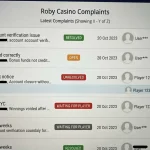
License: Curacao eGaming (Roby Games Ltd) Roby Casino lists a Curaçao eGaming licence held by Roby Games Ltd.
6. LevelUp Casino
License: Curacao eGaming OGL/2023/174/0082 (Dama N.V.) · Min. deposit: A$15 LevelUp Casino lists a Curaçao eGaming licence, OGL/2023/174/0082, held by Dama N.V. Its minimum deposit is A$15.
7. Lucky Dreams
License: Curacao · Min. deposit: A$20 (POLi) Lucky Dreams lists a Curaçao licence and a minimum deposit of A$20 via POLi.
8. Ricky Casino
Payout speed: crypto under 1 hour, PayID 1-3 business days · Min. deposit: A$20 (A$30 to qualify for the bonus) Ricky Casino lists crypto payouts in under an hour and PayID payouts in 1–3 business days. Its minimum deposit is A$20, or A$30 to qualify for the bonus.
9. GoldenCrown
License: Curacao Gaming Control Board OGL/2023/176/0095 (Hollycorn N.V.) GoldenCrown lists a Curaçao Gaming Control Board licence, OGL/2023/176/0095, held by Hollycorn N.V.
10. House of Pokies
License: international iGaming licence – jurisdiction not named in the source · Payout speed: PayID 1-24 hours · Min. deposit: A$30 (PayID from A$10) House of Pokies lists an international iGaming licence, though the source does not name the jurisdiction. PayID payouts are listed at 1–24 hours, and the minimum deposit is A$30, or A$10 via PayID.
The change from a venue machine to a screen is more than a change of furniture. On a screen, a game may be presented inside a wider interface, alongside account features, payment options, promotional language and links to other titles. The wrapper can make unrelated products seem like parts of a single family. A search for an app or a login may therefore reflect interest in the surrounding service rather than in the game’s mechanics. It can also be a mistaken route to a similarly named product.
A Mines-style format is not simply a pokie with its reels removed. Its central action is selection: a player chooses positions on a board, and the uncertainty concerns what those positions conceal. That makes the game’s presentation feel more direct than the symbolic theatre of spinning reels. The interface puts a decision in the foreground. It does not, by itself, make the result more controllable. A choice can be meaningful as an action without giving the player knowledge of what lies beneath the next square.
This is one reason the word “strategy” attaches readily to games of this kind. A visible grid seems to invite a pattern, and patterns are comforting things. But a clean interface is not evidence that a player can read hidden outcomes. The screen can show the choice; it cannot turn uncertainty into information merely by arranging it neatly.
Casino Dice Games in Australia: Rules and Formats · Darwin Casino: Venue, Work and Entertainment Guide
Pokie terminology also carries associations that do not automatically transfer to every digital game. A title might be described as a slot, a casino game or a Mines game by different pages, depending on the searcher’s vocabulary and the site’s own labels. These terms are not precise technical classifications. When they are placed together, they may point to a broad subject rather than a single, verifiable title.
Return-to-player figures illustrate the limits of category-wide assumptions. KA Gaming slot RTP percentages typically range from 94% to 96%, but that range concerns its slots, not every game associated with the word Mines. It cannot be used as a figure for an unidentified title. An RTP is tied to a particular game’s stated design; borrowing one from a provider’s slot range would be false precision dressed as useful detail.
The Australian setting gives the word pokies a particular cultural weight. It is not merely a translation of “slots”; it evokes a long-established form of gambling and the public arguments attached to it. A new digital format may borrow the familiar label while changing the pace, appearance and actions on screen. The inherited word does not make the products identical. The old vocabulary travels; the mechanics may not.
So the useful starting point is modest: “Mines” can describe a game format, while “pokies” names a wider local category that is often used loosely online. Neither label alone identifies a specific title or verifies its provider, features or availability. The interface may look simple. The naming is not.
"Mines" typically refers to a game format where players reveal spaces on a grid to avoid hazards, whereas "pokies" is a broader Australian term for both venue machines and digital casino games.
Australia’s Rules, and the Offshore Question
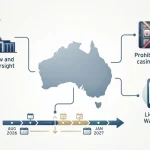
The legal distinction is less about what a game looks like than where and how it is offered. A Mines game presented online for real-money play sits within the wider question of online casino services, rather than becoming a different legal category because its board is simple or its rounds are short. Australia’s Interactive Gambling Act 2001 restricts operators from providing online casino services to people in Australia. The rule concerns the service offered to people here; an operator’s location or branding does not, by itself, change that position.
That framework places the principal legal burden on the business supplying the service, not on an Australian player merely for accessing an offshore site. Players are not criminalised for using offshore casinos. This is an important distinction, though it should not be mistaken for approval, protection or a guarantee that a dispute will be resolved locally. The law’s focus on operators leaves a peculiar asymmetry: a person may encounter a service that is prohibited to provide in Australia, while the practical consequences of dealing with a business based elsewhere remain uncertain.
An offshore licence belongs to the jurisdiction that issued it. It does not amount to an Australian authorisation, nor does it displace the restrictions in the Australian law. Offshore casino sites may accept Australian payments while operating under licences from other countries. The ability to take a payment is therefore evidence of a working transaction channel, not evidence that the service is permitted here. Commerce is often more agile than the rules designed to contain it.
Crash casino games in Australia: legal limits
The same boundary applies to advertising. Promoting real-money online casino services to Australian audiences is prohibited; an advertisement does not become acceptable simply because the operator is offshore or the message is dressed as a game review. This matters for Mines-related material as much as for more familiar casino formats. A page can describe a game without establishing that Australians may lawfully be offered the paid version. The distinction between information and inducement is not merely editorial; it is part of the regulatory landscape.
What the regulator does
The Australian Communications and Media Authority, usually shortened to ACMA, is the federal regulator charged with enforcing the Interactive Gambling Act 2001 and monitoring compliance with national interactive-gambling rules. Its role is not to issue an Australian online-casino licence to offshore businesses. Instead, it can take enforcement action against services that breach the law, including requesting that internet service providers block websites offering prohibited gambling services or advertising them in Australia.
ACMA’s enforcement record gives a sense of the scale of that work. Following enforcement action, it has blocked more than 1,455 illegal gambling and affiliate websites since November 2019. The figures on services that have left the Australian market are reported inconsistently: one account says more than 210 since enforcement began in 2017, while another puts the total above 190 over the same period. Both describe withdrawals after enforcement, but the difference remains.
Blocking and withdrawal are distinct outcomes. A website may become inaccessible through an Australian internet provider without its operator closing everywhere; a service may withdraw from Australia without disappearing from other markets. That distinction explains why the policy can be active yet the online landscape still look untidy. Regulation is not a switch that makes every offshore business vanish at once.
Legal Restriction
Under the Interactive Gambling Act 2001, operators are restricted from providing online casino services to people in Australia.
For Australian readers, the central point is not that a foreign licence settles the question, or that a site accepting local payments has crossed into legality. The Australian statute restricts the provision of online casino services here, while ACMA monitors and enforces that boundary. A person’s lack of criminal liability does not transform the operator’s conduct into a lawful local offer. Different responsibilities, different consequences.
Online Play Meets a Closing Door
A game can appear to be only a few taps away and still be inaccessible from Australia. A page may load in one moment, fail in another, or return a message that says little about why it has stopped. For someone looking for an online Mines-style casino game, that gap between visibility and access is part of the experience: a result on a screen is not evidence that a service is available, stable or suitable for Australian use.
Best pokies in Tasmania: hours, access and legal context
The Australian Communications and Media Authority, or ACMA, works to block offshore gambling websites. That intervention means access is not simply a matter of whether a site has a working address. Internet service providers may be asked to prevent Australian users from reaching websites associated with prohibited gambling services or their advertising. A blocked page can therefore be the visible end of a regulatory process, rather than a temporary fault in a browser.
The effect is not always legible from the user’s side. A page that fails to open does not explain whether the cause is a block, a technical outage, a changed address or some other restriction. Nor does a page that does open settle the question in the opposite direction. Websites change their presentation; links circulate long after the circumstances around them have changed. The interface offers little history.
This makes availability an unreliable signal. A search result, social post or saved bookmark can persist after a service has become unreachable, while a new address may appear without making the underlying offer more dependable. Access can also vary between networks or over time. None of these signs establishes that a site is authorised to serve people in Australia. A door that happens to open is not a permission slip.
Western Australia Casinos: Hotel and Venue Details
That uncertainty matters especially where the product is described as a simple online game. The Mines format is easy to imagine: a grid, concealed hazards and choices about when to stop. But the practical question is not only whether a familiar-looking game screen appears. It is whether the site behind it can be identified, whether the service remains accessible, and what happens when an account or balance becomes part of the arrangement. A polished page can make a complicated situation look like a small recreational choice.
ACMA’s blocking activity shapes that situation without guaranteeing that every attempt at access will produce the same result. Blocking is an enforcement tool, not a promise that every prohibited page will disappear from every screen at once. The internet is not a row of shopfronts with a single, visible shutter. Addresses, links and copies can circulate; enforcement can also change what is reachable. The practical landscape is uneven.
That unevenness can tempt people to treat technical workarounds as ordinary troubleshooting. Yet finding another route to a site does not resolve the uncertainty that made access difficult in the first place. It does not establish who is operating the service, what rules apply to a transaction or whether support will remain available when something goes wrong. A connection can be restored while confidence remains absent.
Best Casino in Queensland: Rooms, Dining and More
The same distinction applies to advertisements and recommendations. A promotion may be visible even when the associated service is not accessible, and a link shared by another person may lead somewhere different from its original destination. Visibility is not verification. The internet is good at keeping the invitation after the context has gone.
For a person interested in Mines online, the practical limit may arrive before the game itself: the page may not load, may change, or may provide no clear account of its status. That is not merely an inconvenience in the way a slow connection is. In gambling, access sits beside questions of money, identity and recourse. When the route is uncertain, the consequences can outlast the failed page.
A closing screen tells only part of the story. ACMA’s role helps explain why some offshore gambling sites cannot be reached from Australia, but a functioning link should not be read as the opposite verdict. Availability is a technical fact at a particular moment. It is not an endorsement, a guarantee or a measure of safety.
Best Casino in Adelaide: Venue and Online Context
The screen can open. The question remains.
Free Play, Without the Cash Illusion
“Free” sounds like a clean boundary: no money goes in, so no money can be lost. In casino language, however, it can describe several different things. It may mean a game that uses no cash stake, a promotional feature attached to an account, or simply a claim in a page title. The word alone does not establish which one is meant.
That distinction matters for searches about Mines. A person looking for a free casino version of the game may be trying to understand its format before risking money, or may expect a way to play without depositing. Neither intention proves that a particular free version exists, is accessible in Australia, or works in the way its label suggests. A search phrase is not a product description.
Free play, where offered, is not the same as real-money gambling. If no cash is staked and no cash winnings can be withdrawn, the experience does not provide a route to gambling income. Nor does a free label turn an account balance, promotional credit or displayed prize into withdrawable money. The practical test is what can be put in and taken out, not the adjective placed beside the game.
There is a quieter difference, too. A no-stake version can show the appearance of play without carrying the financial consequence that gives real-money gambling its force. A sequence of clicks may feel familiar; the decision to risk money is not. Treating one as a faithful rehearsal for the other mistakes resemblance for equivalence.
The phrase “fake casino Mines” can point to another kind of uncertainty: whether a site is presenting a genuine game, a mock-up, or a misleading offer. The label itself settles nothing. A page can use casino language without proving that its game is authentic or that any supposed winnings have value. The existence of a button marked “play free” is not evidence that a cash product sits behind it, and the existence of a cash product would not make a free mode a promise of future winnings.
Attention A "free" label does not guarantee a game is a verified product, nor does it serve as a legal loophole for real-money services prohibited in Australia.
For Australian readers, the boundary also has a legal context. Real-money online casino games are prohibited services when offered to people physically in Australia under the Interactive Gambling Act 2001. Free wording should not be read as a loophole or as evidence that a real-money service is permitted. The question is whether money is being staked or won, rather than whether the page presents itself as casual entertainment.
That leaves a useful, modest conclusion: “free” describes a claim to inspect, not a guarantee. It may refer to a no-cash activity, a marketing device or an imprecise label, and it cannot by itself establish availability, authenticity or value. A free Mines casino game should therefore not be assumed to be a verified product merely because the words appear together.
The distinction is plain. The details are not.
A Demo Is Not a Test of the Stakes
A demo is a way of seeing how a game presents itself without placing a cash stake. In principle, it can show the sequence of choices, the layout of the screen and the language used for outcomes. That is useful for understanding an interface. It is not evidence that a particular Mines game has a demo, nor that a version encountered elsewhere matches any real-money product.
The distinction matters because the word “demo” can sound like a rehearsal. A rehearsal suggests that the important conditions remain in place. They do not. Without money at risk, a player cannot learn what a cash stake feels like: the hesitation before a choice, the temptation to continue after a loss, or the weight attached to a result. A screen may look familiar while the experience is fundamentally different.
Pokies in Geelong: Checking Current Venue Information
Nor does a demo establish what would happen with money. It cannot, by itself, verify an operator’s terms, the handling of deposits or withdrawals, or whether a real-money service is lawful to offer in Australia. The Interactive Gambling Act 2001 prohibits operators from providing real-money online casino games to people in Australia. A no-cash demonstration is not a route around that distinction.
For a game called Mines, the label alone says little about what is being demonstrated. Different products can share a name or a broad visual idea without sharing their rules or mechanics. Even a working sample would show only the version on screen, not prove that another version behaves the same way. The interface is visible; the conditions behind it may not be.
That is the limit of a demo. It may answer a narrow question about presentation, but not whether a particular product is available, suitable, fair in practice or safe to approach with money. Calling a sample “practice” can make it sound as though it prepares someone for the real thing. It cannot reproduce the financial consequences.
The phrase “Mines casino demo” therefore describes an expectation, not a verified product. A demo may be offered in some contexts, but its existence should not be assumed from the name of a game or from a page using that label. And a demonstration without cash remains separate from gambling for money, which is for adults aged 18 or older.
A small screen can teach its own rules. It cannot teach the cost of breaking them.
Best pokies in Adelaide: hours, access and rules
Bonus Arithmetic, in Small Print
A promotional code can make a balance appear larger without making it withdrawable. That distinction matters whether the offer is described as a deposit match, a bonus code or a no-deposit bonus. The label says how funds are introduced; it does not settle who owns the balance in cash terms or when it can be taken out.
Bonus funds are not cash. Their value is conditional, and the conditions can attach not only to the bonus itself but also to winnings generated from it. Wagering requirements specify how much must be bet before those winnings become eligible for withdrawal. A specialist review gives a clear illustration: a $100 bonus carrying a 40x requirement calls for $4,000 in bets before bonus-derived winnings can be withdrawn. The multiplication is simple; the practical burden is less so. Reaching the required turnover does not mean that the original bonus is handed over as cash.
A specialist review describes bonus wagering requirements in the 30–50x range. That is a report of terms described in that kind of review, not a universal rule for every offer. Conditions differ, and the wording can determine which games count, whether a maximum bet applies, and what happens if the offer is cancelled or its conditions are breached. The headline amount rarely tells the whole story.
Contribution rates are another small print trap. A specialist review reports a case in which blackjack contributes only 10% toward wagering requirements. If a game contributes less than its full stake, the displayed turnover can advance much more slowly than the amount actually wagered suggests. Some games may not count at all. A balance can therefore look busy while remaining far from eligible for withdrawal.
Real Money Casino Table Games in Australia
The phrase “no deposit” changes the entry condition, not the arithmetic. It does not establish that an offer exists for a particular Mines game, nor that its funds are unrestricted. A code is not a shortcut around wagering rules. It is simply a key to terms, and sometimes to a long queue of them.
In Australia, a promotional label does not change the legal character of an online casino service offered for real money. Nor does an advertised balance remove the conditions attached to it. The distinction is plain, if not especially glamorous: funds credited for promotion are conditional, and a number on a screen is not necessarily money available to withdraw.
Real Money Has a Withdrawal Trail
A balance displayed beside a Mines game is not the same thing as money in a bank account. With real-money gambling, the route from a screen to a usable payment can involve identity checks, a minimum cashout amount, processing time and deductions along the way. Each step belongs to the payment arrangement, not to the game itself.
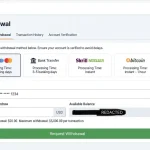
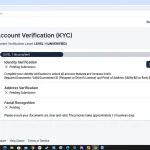
The first withdrawal may bring a KYC request. An operator could ask for identification, such as a passport or driver’s licence, and a recent utility bill to confirm an address. The name and details on the account and payment method may also need to match. Until the requested documents are reviewed, a cashout can remain pending; submitting paperwork is not the same as receiving funds.
Withdrawal Process
Identity Verification
The operator may request a passport, driver’s licence, and a recent utility bill to confirm the account holder’s address.
Threshold Check
The balance must meet the site’s minimum withdrawal requirement, commonly between A$75 and A$150.
Payment Transfer
Funds are sent via methods like BPAY or cryptocurrency, with the final amount affected by processing times and network fees.
Minimum withdrawal thresholds matter too. Offshore sites commonly set them between A$75 and A$150, so a smaller balance may not be eligible to leave the account yet. The threshold is a condition of withdrawal, not evidence that a balance is readily available or that more play will make cashing out worthwhile.
Payment methods bring different kinds of friction. A specialist review describes BPAY transfers as potentially taking a bank day, while a separate specialist review characterises crypto withdrawals as often clearing fastest. Speed, however, is only one part of the amount received: network fees and the spread applied when converting currencies can reduce the final value. A quick transfer can still arrive diminished.
The useful distinction is between the balance shown, the amount eligible for withdrawal and the amount that ultimately reaches the destination. Those figures may differ because of verification, account rules or payment costs. The withdrawal page should be read for its threshold, document requirements, processing terms and any fees before a cashout is requested. If those conditions are unclear, the displayed balance answers very little.
That is the unglamorous arithmetic of a cashout: a figure on screen has to pass through checks and payment systems before it becomes spendable money. For anyone considering real-money gambling, the minimum age is 18, and a possible payout should never be treated as income. The trail is part of the transaction.
Where Access Is Blocked—and Why That Matters
A request for somewhere to play a Mines-style casino game can meet a less visible part of the Australian online landscape: the connection itself may not lead to the service being sought. ACMA can ask Australian internet providers to block websites that offer prohibited interactive gambling services or advertise them. A page that fails to load, or disappears from one connection, is therefore not necessarily a technical fault at the player’s end.
Pokies in Brisbane: venues, online rules and limits
The scale of enforcement gives that interruption context. Since November 2019, ACMA has blocked more than 1,455 illegal gambling and affiliate websites after enforcement action. Accounts of services withdrawing from Australia since enforcement began in 2017 do not agree: one reports more than 210 departures, another more than 190. The figures describe different published counts, not a dependable directory of what remains reachable.
That distinction matters when someone tries to find a place to play Mines or encounters a name such as Lucky Mines. A name in a result, an old page, or a link passed around elsewhere does not establish that a service is accessible, lawful for an operator to provide in Australia, or endorsed by an Australian authority. Nor does a blocked page make another route a safer substitute. Access can change as enforcement and site availability change.
There is no useful catalogue to infer from a search result. A casino-style game may be presented under a familiar title, but that alone says nothing reliable about who operates the site, what happens to deposited funds, or whether the page will remain available. ACMA’s blocking role is a practical warning about the instability of offshore access, not a recommendation to look for a workaround.
The internet’s apparent geography can be deceptive. A service may accept Australian payment methods or display Australian-facing material while remaining outside the domestic framework; neither detail turns it into an approved local option. For a person looking for a place to play, the relevant fact is not simply whether a page opens today. It is that access may be restricted, and a working link is not a seal of legitimacy.
Regulatory Reality
- ACMA blocks illegal gambling and affiliate sites to enforce the Interactive Gambling Act 2001.
- Access to a site via a working link is a technical fact, not a seal of legitimacy or authorisation.
- A blocked page is a result of regulatory enforcement rather than a simple technical fault.
A closed door is information.
Risk Is Not a Strategy
The language of strategy gives chance a respectable coat. A Mines player may weigh how many tiles to reveal or when to stop, but those choices cannot turn gambling into dependable income. A sequence of wins does not make the next outcome owe anything, and a method that sounds controlled is not protection against losing money. The same is true of searches pairing Mines with Spribe: a provider name or a plan for play cannot settle the underlying risk.
Poker machines offer a less abstract measure of what is at stake. A report by gamble.com.au put Victorian players’ losses at $2.6 billion over the year it covered, more than $44.7 million above the 2015 figure. The same outlet reported that the Epping Plaza Hotel, in Melbourne’s north, generated more than $21 million from 100 machines over the year in its account. These are reported figures tied to particular periods, not timeless measures. Even so, the scale is difficult to mistake for a harmless pastime.
The debate over reform has often concerned how much a machine should allow a person to stake at once. Senator Nick Xenophon and MP Andrew Wilkie backed a proposal to cap poker-machine bets at $1. A bet limit cannot erase gambling risk, but the proposal recognised that the speed and size of losses are shaped partly by the design of play, not simply by a player’s private resolve. The argument was about the conditions under which losses accumulate.
That distinction matters when a game is presented as a puzzle to be solved. Caution, stopping rules and limits on spending may constrain exposure; they do not create an advantage that can be relied on as earnings. For vulnerable people, gambling can cause serious harm, including financial strain and damage to relationships. A strategy label does not soften those consequences.
Best Pokies in Canberra: Hours, Venues and Limits
Gambling is for adults aged 18 or older, but age alone is no guarantee of safety. Treating a casino game as a source of income asks chance to perform a job it cannot hold. The arithmetic is unmoved.
What a Casino Guru Can—and Cannot—Verify
A review bearing a casino-guru label may offer commentary on Mines, but the label itself establishes neither who made the game nor whether a named version is available to Australians. “Mines” can describe a game format as well as appear in a product name; a review needs to be read for what it actually identifies, rather than treated as proof that every service using the word refers to the same thing.
The distinction is plain, if easily blurred. A reviewer can report what a page says, describe a screen or explain how a version appeared to work. That is not independent confirmation of the operator’s identity, the game’s underlying software, its fairness, or the terms that would apply to a particular account. Even a confident verdict remains a verdict unless its evidence can be checked.
Melbourne Pokies: Locations, Hours and What “Best” Means
The same caution applies to claims about Australian access. A review’s description of an offshore site does not make that service locally authorised or establish that it can be reached consistently. Australia’s Interactive Gambling Act 2001 prohibits operators from providing real-money online casino games to people in Australia, and ACMA has an enforcement role. Commentary cannot change that position.
For a search such as “casino guru Mines”, the useful question is therefore not whether a page sounds definitive, but what it demonstrates. Does it name the specific game and operator? Are its claims tied to observable details, or repeated as assertions? Are review conclusions separated from facts that can be independently checked? Those distinctions matter more than a star rating.
A review can be a map of someone else’s claims. It is not the territory. Any gambling is for adults aged 18 or older, and no review can establish that play is safe or profitable.
Pokies

3-Reel Slots in Australia: Features and RTP
Learn how bonus rules, configured RTP, free-play options and Australia’s regulatory boundary shape the way...

5-Reel Slots in Australia: How the Odds Work
Explore how RTP, bonus rounds, paytables and game availability shape the experience without predicting the...

Seven-Reel Slots in Australia: RTP and Bonus Features
A practical look at how reel formats, bonus rules, RTP and free-play modes shape what...

Online Pokies Australia: Legal and Payment Guide
Australia’s rules put the licensing burden on operators, while bonus terms, payment routes and practice...

Aussie Online Casinos: Legal Status, Bonuses and Payments
A clear-eyed look at offshore casino sites, the terms attached to offers and the limits...

Aussie Pokies Online: What “Best” Really Means
A practical look at terminology, legal boundaries, game settings, payments and the limits of rankings...

Australian Pokies Online: Legal and Payment Risks
Offshore access does not equal local authorisation, and payment methods or bonus offers do not...

Bonus Buy Slots in Australia: How They Work
A bonus buy pays for direct entry to a feature round, but the result remains...

Best Casino in Adelaide: Venue and Online Context
A practical distinction between a city destination and online services, with context on the venue...

Casino in Brisbane: Hotels, Dining and Visitor Guide
Understand how accommodation, dining, gaming, transport and venue details differ across Brisbane casino search results....

Best Casino in Canberra: What the Search Can Establish
A practical look at accommodation, gaming searches and amenities, distinguishing what a search suggests from...

Darwin Casino: Venue, Work and Entertainment Guide
A practical look at venue information, employment and entertainment claims, and how online casino offers...

Hobart Casino Information: What Searches Can Confirm
Searches about poker, accommodation, dining and facilities raise distinct questions, and a keyword alone does...

Melbourne Casino: Hotels, Dining and Visitor Details
A guide to nearby stays, booking conditions, dining, entertainment and other questions that shape a...

Casino in Perth: Hotel Stays and Visitor Details
A practical look at accommodation, access and visitor questions, with a clear distinction between a...

Best Casino in Queensland: Rooms, Dining and More
A practical look at room categories and booking terms, with related details on dining, parking...

Best Casino in Sydney: Hotels, Play and Practicalities
A practical guide to comparing a Sydney casino stay with the venue’s gaming, dining and...

Casino Stays in Tasmania: What to Verify
Room rates, promotions and nearby amenities require a named property and current terms before they...

Casino in Victoria: Hotels, Gaming and What’s Verified
A clear guide to what casino searches can establish about accommodation, gaming, food, location and...

Western Australia Casinos: Hotel and Venue Details
Casino-related searches cover hotels, poker, dining and facilities, but property-specific terms and venue facts need...

Fast Payout Online Casinos in Australia: Legal Context
A clear look at what withdrawal-speed claims can—and cannot—show about offshore casino services, payment routes...

High-volatility slots in Australia: how they work
A guide to how volatility affects the pattern of payouts, why past spins do not...

Instant Payout Online Casinos in Australia
Offshore withdrawal claims, verification checks and payment routes do not establish licensing, guaranteed timing or...

Keno Online Casinos in Australia: Legal Rules
The guide examines real-money online keno, Australian gambling rules, venue machines, offshore payment risks and...

Live Dealer Casinos Online in Australia: Legal Context
The guide explains why live streams do not change the legal treatment of online casino...

Live Casino Online in Australia: Legal Limits
Australia has no locally licensed online casinos, so a site's visibility is not proof of...

Low-Volatility Slots in Australia: How They Work
Low volatility generally describes more frequent, smaller wins and less variation, but it does not...

Pokie Machines in Australia: What Players Should Know
A practical guide to online game features, RTP, free play and the legal and payment...

Best pokies in Adelaide: hours, access and rules
Venue listings do not confirm gaming-room hours; this guide also separates local access, online play...

Pokies in Brisbane: venues, online rules and limits
Brisbane searches can point to physical gaming venues or online services, but location-based wording does...

Best Pokies in Canberra: Hours, Venues and Limits
A practical look at venue hours, gaming-area access and what public information can—and cannot—establish about...

Pokies in Geelong: Checking Current Venue Information
Venue listings may show a building as open without confirming that its gaming room is...

Melbourne Pokies: Locations, Hours and What “Best” Means
Venue names and search labels alone do not confirm distance, opening hours or whether a...

Pokies in New South Wales: Hours and Venue Access
Venue schedules can differ from gaming-area access, so availability needs checking with the specific NSW...

Best Pokies in Perth: Hours, Venues and Checks
A practical guide to venue hours, return figures, duty of care and the limits of...

Best Pokies in South Australia: How to Compare
A practical look at RTP, venue hours, locations and the limits of online and venue-based...

Best Pokies in Sydney: What Search Results Can Prove
Search terms can suggest locations and rankings, but they do not verify addresses, opening hours,...

Best pokies in Tasmania: hours, access and legal context
Tasmanian venue listings, gaming-room schedules, chance and online-play rules require separate checks rather than a...

Progressive Jackpot Slots: How They Work
Progressive slots add part of eligible wagers to a changing prize pool, but the rules...

Online pokies for real money in Australia: legal guide
A practical look at offshore operators, payment limits, bonus terms and why access does not...

RTP for Australian pokies: what it really means
A guide to long-run return, independent spins and the practical limits of RTP. What a...

Best RTP Slots in Australia: Understanding RTP
RTP is a long-run theoretical measure, not a forecast of individual spins or a guarantee...

Video Slots in Australia: Spins, RTP and Play
Explore how random outcomes, return settings and play options shape the experience of online video...

Big Red Pokies Online in Australia: Rules and Demos
The name does not change Australia’s rules on real-money online pokies or what a free-play...

Casino Dice Games in Australia: Rules and Formats
Casino dice games vary in how they use the roll, set wagers and connect outcomes...

Crash casino games in Australia: legal limits
Australian players are not criminalised simply for using offshore gambling sites, but operators face restrictions...

Lightning Link Online Pokies in Australia Explained
Lightning Link is played on Australian venue machines, while online searches may lead to similarly...

Live Baccarat Online Casinos in Australia: Legal Guide
A practical look at Australia’s legal context, baccarat formats, payments and the features that distinguish...

Live Blackjack Online Casinos in Australia: Legal Context
Australia’s rules distinguish locally licensed services from offshore offers, while a live stream does not...

Live Roulette in Australia: English-Speaking Dealers
A practical overview of roulette mechanics, betting options, odds and the legal boundary for real-money...

Most Trusted Online Casino in Australia: Legal Limits
Australia has no domestic online-casino licences, so payment options, bonuses and game details must be...

Plinko Casino Australia: Games, Payments and Terms
Plinko’s falling-disc format sits between slot-style presentation and a distinct game, while payment options and...

Pokies Tips and Tricks: What Advice Can Change
A practical look at what players can control, what random outcomes mean, and why rituals...

Real Money Casino Table Games in Australia
Live streams show activity at a physical table, while digital games use software to determine...