Fast Payout Online Casinos in Australia: Legal Context
 Available in AU

A clear look at what withdrawal-speed claims can—and cannot—show about offshore casino services, payment routes and Australian licensing.
Table of Contents
- Fast Payouts Begin With a Legal Distinction
- Pokies, Randomness and the Return-Rate Detail
- Offshore Access, With No Local Safety Net
- Real-Money Withdrawals: Verification and Limits
- Bonuses Put a Price on the Wait
- What a “Top” Payout Claim Leaves Out
- Crypto Claims and the Limits of Payment Evidence
- PayID, Bank Transfers and the Australian Payment Layer
- New Sites, Old Questions of Access
- The Australian Context: Age and Enforcement
Fast Payouts Begin With a Legal Distinction
A promise of quick payment sounds like a narrow matter of timing. In Australia, it sits inside a larger question: whether a company may offer real-money online pokies to people in the country at all. The Interactive Gambling Act 2001 prohibits that service unless the company holds a domestic licence. None has been issued for online casinos. The practical result is plain: there is no Australian-licensed online casino.
That distinction changes what a payout comparison can mean. A claim about speed may describe how quickly a company says it handles a withdrawal, or how a particular payment route is said to work. It cannot, by itself, establish that the service is authorised to offer online casino games in Australia. Nor can a fast-payment label transform an unlicensed service into a locally licensed one. Speed is one attribute; legal status is another, and the first does not settle the second.
The language of casino rankings often makes these matters appear to belong on the same shelf. “Fast” suggests efficiency; “best” suggests a judgement made after comparing options. Yet a ranking of payout claims is not a register of Australian licences. A table may look orderly, its columns aligned and its verdicts crisp, while leaving the central legal distinction untouched. The layout is not the law.
High-volatility slots in Australia: how they work
This is not a technical footnote. The Australian framework draws a line around the provision of real-money online pokies, rather than treating the speed of the eventual transfer as the defining feature of the service. A casino does not cease to be an online casino because its payment page uses careful language, or because its promotional material emphasises a short wait. The legal character of the service does not depend on how reassuring its descriptions sound.
That is why phrases such as “fast payout online casino” need to be read with care in an Australian context. They describe an appealing feature, but say nothing decisive about whether the company is permitted to provide the underlying games to people here. A quick payout claim may be relevant to how a service presents its withdrawal process. It is not evidence of Australian authorisation, and it should not be mistaken for one.
That is an awkward fact for a market accustomed to presenting comparison as a simple act of sorting. The categories do not line up.
There is a familiar commercial habit behind the confusion. Businesses compete by making their service legible: faster, easier, more convenient. Those words invite a consumer to compare one feature with another. But the Australian rules do not ask only whether a service is convenient or whether its payout description sounds attractive. They prohibit companies from offering real-money online pokies to Australian residents without a domestic licence. Since no such licences have been granted, a favourable speed claim cannot supply the missing permission.
Australian Pokies Online: Legal and Payment Risks
The word “best” therefore needs restraint. It can sound like a final verdict, although the underlying comparison may concern only one claimed feature. Even a careful assessment of payment speed would not answer the separate question of legal authority. A fast payout casino is not, by that description alone, an Australian-licensed casino. In this market, that difference is not a matter of fine print. It is the first condition for interpreting every later claim.
There is also a social history in the way the question is framed. Payment speed is measurable in principle, while legality can feel distant until it interrupts an ordinary expectation: that a service offered in a familiar language, with familiar currency and familiar payment terms, belongs to the domestic market. The appearance of familiarity can do quiet work. It makes an online service seem like another shopfront, when the rules treat the provision of real-money online pokies as a restricted activity. A polished interface is not a licence.
So a discussion of fast payouts in Australia must begin by keeping two ideas apart. One concerns how quickly a company says it will send money after a withdrawal request. The other concerns whether that company is legally allowed to provide real-money online casino games to Australians. The first may be the subject of comparison; the second defines the boundary around the market. Confusing them makes a speed claim seem more substantial than it is.
Legal Status
There are no Australian-licensed online casinos. A claim of fast payouts does not establish legal authorisation to offer real-money pokies in Australia.
The legal distinction does not answer every question about payment timing. It answers the one that has to come first: a payout promise cannot establish permission to offer the game. In Australia, no online casino holds a domestic licence. Speed remains a claim, not a credential.
Pokies, Randomness and the Return-Rate Detail
A familiar pokie title can create a comforting illusion: the same reels, symbols and bonus round appear, so the game must behave the same wherever it is found. That conclusion does not necessarily follow. The name and presentation may be recognisable while the return-to-player setting differs. A specialist casino review reports that some game providers let casinos choose from several RTP settings for a particular pokie. On that account, the same game could carry different return percentages at different sites.
RTP, or return to player, describes a game’s theoretical return across a large volume of play. It is not a promise about what one session will produce, nor a schedule of what will come back after a particular number of spins. A stated percentage is therefore a description of the game’s configured long-run behaviour, not a forecast for an individual player. A short run can look nothing like the long-run figure.
RTP for Australian pokies: what it really means
That distinction matters when a game is being judged by name alone. A familiar title does not establish which RTP setting is in use. The game’s appearance cannot settle it either: matching graphics and features do not prove matching return percentages. Where the setting is not clearly disclosed, the title by itself leaves an important detail unanswered. Confidence built on recognition is not the same thing as information.
There is a second distinction, between the game’s return setting and the randomness of an individual spin. Each pokie spin is an independent event determined by a Random Number Generator, or RNG. In plain terms, the previous result does not instruct the next spin to compensate, repeat a pattern or deliver a win because a losing run has lasted a while. The reels may look as if they are telling a story. The RNG is not following its plot.
Independence does not mean every outcome is equally likely. It means the outcome of one spin does not determine the outcome of the next. The game’s configured probabilities and return setting concern the conditions under which outcomes are generated over time; the result of any single spin remains uncertain. A high or low return setting, where one is selected, cannot be read as a countdown to a payout.
This is where the language of “due” wins becomes misleading. A sequence of losses does not make a win more likely on the next spin, just as a recent win does not itself make another win less likely. Each spin starts as a separate random event. Human beings are adept at finding patterns, particularly when money and anticipation are involved; an RNG has no obligation to respect the pattern a player sees.
The return figure and the RNG answer different questions. RTP concerns the theoretical return across play at a particular setting. Randomness concerns how each individual outcome is produced. Neither tells a player exactly what will happen in a session. Even where the setting is known, short-term results can vary; where the setting is not known, the game’s familiar name cannot fill in the gap.
RTP and RNG
While RTP describes the theoretical long-run return of a game, the Random Number Generator (RNG) ensures each individual spin is an independent event.
This also separates a game’s mathematics from the speed implied by phrases such as fast-payout pokies. A quick cash-out, if offered, would concern the movement of funds after play; it would not alter the odds of the game or make a spin more likely to win. Conversely, knowing a return setting would not establish how quickly a site processes a withdrawal. These are different claims, and one cannot stand in for the other.
The practical reading of a pokie’s identity is therefore modest. A title tells what game is being presented; it does not necessarily reveal its selected RTP setting. A displayed return percentage, where provided, describes a theoretical rate rather than a personal result. And the RNG means that each spin remains independent, rather than responding to a player’s history or expectations.
This is less mysterious than it sounds, though not especially comforting. A familiar game can be familiar only in appearance, and a random result can feel intensely personal without being one. The mathematics offers no memory, no sense of fairness and no promise that the next spin will repair the last.
Keno Online Casinos in Australia: Legal Rules
Offshore Access, With No Local Safety Net
The law draws an awkward line between the person at the screen and the business on it. Australia’s Interactive Gambling Act is directed at operators providing prohibited online casino services, rather than at individual players. Australians are not criminally liable simply for playing on an offshore site that accepts them. That distinction, however, is not a local endorsement of the service. The operator’s conduct remains the legal concern; the player’s practical exposure is a different matter.
This can make an offshore casino appear more ordinary than it is. A site may take a deposit, display a balance and describe a withdrawal process in polished, reassuring language. None of that gives it a place in Australia’s legal system. Nor does being able to open an account mean that Australian authorities can make the business honour its promises.
That gap matters most when money is disputed. If an offshore casino refuses to pay winnings, an Australian player has no legal recourse in Australia. The promise of a quick transfer is therefore only one part of the decision: the more consequential question is what happens if the transfer does not arrive, or the operator says it will not release the funds. There is no domestic casino regulator standing between the player and that refusal.
Most Trusted Online Casino in Australia: Legal Limits
Speed has a narrow meaning. It describes how quickly an operator says it processes a payout under its own arrangements; it does not establish that a player can enforce the claim locally. A fast-payout claim may sound reassuring because it turns an uncertain relationship into a simple service expectation: request the money, wait, receive it. But the ordinary language of customer service can disguise an unusual legal position. The interface may feel familiar. The remedy is not.
That is the risk behind searches for a casino with fast payouts, or for pokies that pay quickly. Such phrases are about the time between a request and money arriving. They do not answer whether a player has any effective route if an offshore operator declines the request. A list of sites, however neatly ordered, cannot make that distinction disappear. The problem is not just how long a payment takes; it is who can be held to account when it never comes.
No Local Recourse
If an offshore casino refuses to pay winnings, Australian players have no legal recourse within the Australian legal system.
The player’s lack of criminal liability should not be mistaken for protection. Those are separate things. One concerns whether the individual is the target of the law; the other concerns whether the individual can secure a remedy against a business abroad. In Australia, the first distinction leaves players outside the law’s enforcement focus, while the second leaves them without local legal recourse if winnings are withheld.
This is not an argument that every offshore operator will refuse to pay. It is a more limited observation: a claim about speed cannot settle the question of what happens in a dispute. The lack of an Australian remedy exists before any particular withdrawal is requested, and it does not depend on whether a site’s payment language sounds confident. When a business is beyond the local framework, confidence is not the same as accountability.
The appeal of a quick payout is easy to understand. Waiting for money already won is a small theatre of powerlessness, and a site promising to shorten it speaks directly to that irritation. Yet a fast process, if it works, still leaves the underlying imbalance untouched. Offshore access may be possible, and the player is not the person the Act targets. But if the operator refuses to pay, the Australian player has no legal recourse here.
A quick promise. A distant counterparty.
Live Casino Online in Australia: Legal Limits
Real-Money Withdrawals: Verification and Limits
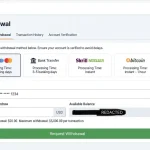
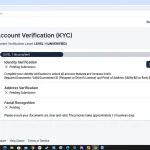
A balance displayed on a casino account is not necessarily money ready to leave it. Before the first withdrawal, identity checks may stand between the account total and a cash-out request. A specialist casino review reports that casinos commonly ask for identity and address evidence at this stage; the identity check may involve a photograph of an official document, while proof of address is a separate requirement. Some also request a selfie with the identity document.
These checks are often described as routine account security, but their timing matters. If the documents have not been supplied or accepted before a withdrawal is requested, the process can pause while the account is reviewed. A player may see winnings in a balance without having completed the step that makes a withdrawal possible. The distinction is plain, if not especially welcome: a displayed figure is not a completed payment.
Document requirements should therefore be understood as part of the withdrawal conditions, not as a minor formality to be discovered at the end. Identity and address evidence are the central items in the reported process. Requests for a selfie may add another step. The exact documents and review procedure depend on the casino, so there is no single checklist that can be assumed to apply everywhere.
The second obstacle is the amount that can be withdrawn within a set period. A specialist review reports that some casinos place weekly or monthly ceilings on cash-outs, with cited caps ranging from $5,000 to $10,000. Those figures are not a universal rule; they describe limits reported for some operators. But a cap can change the meaning of “payout” considerably. A $50,000 jackpot subject to such restrictions may be released in instalments over a period the review characterises as multi-year.
Identity Verification
Casinos commonly require photographs of official identity documents, proof of address, and sometimes a selfie.
Withdrawal Caps
Some operators set weekly or monthly cash-out limits, with reported caps ranging from $5,000 to $10,000.
That is a different kind of delay from a document check. Verification may hold up the first request while an account is assessed; a withdrawal cap can constrain the size or pace of payments even after a request is accepted. In both cases, the word “fast” describes only one part of a process. It cannot tell how much may be withdrawn at once, how often a request can be made, or whether the required documents have already been approved.
The figures also make clear why a headline promise about payout speed is incomplete. A quick transfer of an approved amount does not remove a weekly or monthly ceiling. Nor does a large account balance establish that the same sum can be withdrawn in one transaction. The available amount and the amount permitted for withdrawal may be two different things.
A cautious reading of real-money withdrawal terms therefore begins with the conditions attached to the account: what identity and address documents are required, whether a selfie is requested, and whether the casino sets a weekly or monthly cash-out limit. Those details determine whether the path from balance to payment is a single step or a sequence of checks and capped requests.
This is not a technical footnote. Verification asks whose account is being used; withdrawal limits govern how quickly money can leave it. One establishes access. The other sets the pace.
Bonuses Put a Price on the Wait
A bonus can look like money arriving early. Its terms may instead make it money that cannot yet leave. Wagering requirements attach a turnover target to bonus funds or winnings: the balance has to be wagered the specified number of times before a withdrawal is allowed. That is a different kind of delay from payment processing. The clock may not even start on a withdrawal until the required play is complete.
Live Dealer Casinos Online in Australia: Legal Context
The distinction matters for offers described as fast-payout bonuses, including no-deposit promotions. “No deposit” describes how an offer begins, not whether resulting winnings can be withdrawn freely. The terms determine what must happen first. A free-spin offer may also limit how much of its winnings can be cashed out, so a displayed balance is not necessarily the amount that can eventually be requested.
The arithmetic is less decorative than the headline. A specialist gambling review recommends treating a wagering requirement of 35x or less as a more manageable benchmark and describes anything above 40x as punishing. Those are that review’s judgments, not a universal rule or a guarantee of how an offer will work. The multiplier’s base matters just as much as the multiplier itself.
Consider the review’s example of a $500 bonus with a 40x requirement: the resulting turnover is $20,000 before winnings can be withdrawn. If the requirement applies to a $500 deposit plus a $500 bonus at 35x, the required betting reaches $35,000. The second figure is higher despite the smaller multiplier because the amount being multiplied is larger. Small print can do large arithmetic.
That turnover is not a prediction of how much a player will lose, nor does it mean that wagering the target produces a profit. It is the amount that must pass through bets under the stated terms. What counts toward it, which games qualify, and whether a bonus is tied to the deposit, the bonus, or both are details that can change the calculation. A multiplier without its base is an incomplete price tag.
Bonus Turnover
Step 1: Identify the Multiplier
A casino offers a $500 bonus with a 40x wagering requirement.
Step 2: Calculate the Total
The resulting turnover requirement is $20,000 ($500 × 40) before winnings can be withdrawn.
For a no-deposit bonus, the absence of an initial payment does not itself establish that winnings are immediately withdrawable. The relevant terms still need to be read for any wagering condition and any cash-out cap. With free spins, a cap can separate a large-looking win from the smaller amount eligible to leave the account. The headline celebrates the possible result; the cap describes the permitted one.
The distinction between a bonus balance and withdrawable funds is therefore essential to any claim about speed. A swift transfer cannot shorten a wagering condition that has not been met, and an advertised bonus cannot establish when or how much money can be withdrawn. The terms set the gate. The payment clock comes later.
There is a cultural sleight of hand in calling this “free”: the offer gives an apparent head start, while the conditions attach a measurable workload to it. For anyone assessing a promotion, the useful questions are what sum the multiplier applies to, what play qualifies, and whether winnings face a cap. Without those details, the bonus figure tells only half the story.
What a “Top” Payout Claim Leaves Out
Fast payouts can depend on both the payment method and the casino’s stated processing times. Use this list as a starting point, and check the available withdrawal details before choosing where to play.
1. SpinsUp
License: Curacao Gaming Control Board OGL/2023/174/0082 (Dama N.V.) SpinsUp is listed with a Curacao Gaming Control Board licence, OGL/2023/174/0082, held by Dama N.V. No payout speed is specified here.
2. Bizzo Casino
License: Curacao Gaming Control Board (TechSolutions Group N.V.) Bizzo Casino is listed with a Curacao Gaming Control Board licence associated with TechSolutions Group N.V. The information provided does not specify payout speed.
3. WinSpirit Casino
License: Curacao eGaming OGL/2024/923/0383 (Antillephone N.V.) · Min. deposit: A$30 WinSpirit Casino is listed with a Curacao eGaming licence, OGL/2024/923/0383, held by Antillephone N.V., and a minimum deposit of A$30. No payout timing is provided.
4. DragonSlots Casino
License: Curacao Gaming Authority (Jumpman Gaming Ltd) DragonSlots Casino is listed with a Curacao Gaming Authority licence associated with Jumpman Gaming Ltd. Payout speed is not specified in the available details.
5. Roby Casino
License: Curacao eGaming (Roby Games Ltd) Roby Casino is listed with a Curacao eGaming licence held by Roby Games Ltd. The available information does not give a payout timeframe.
6. LevelUp Casino
License: Curacao eGaming OGL/2023/174/0082 (Dama N.V.) · Min. deposit: A$15 LevelUp Casino is listed with a Curacao eGaming licence, OGL/2023/174/0082, held by Dama N.V.; its minimum deposit is A$15. No payout speed is stated.
7. Lucky Dreams
License: Curacao · Min. deposit: A$20 (POLi) Lucky Dreams is listed with a Curacao licence and a minimum deposit of A$20 via POLi. The provided details do not specify withdrawal timing.
8. Ricky Casino
Payout speed: crypto under 1 hour, PayID 1-3 business days · Min. deposit: A$20 (A$30 to qualify for the bonus) Ricky Casino states that crypto payouts take under 1 hour, while PayID payouts take 1–3 business days. The minimum deposit is A$20, or A$30 to qualify for the bonus.
9. GoldenCrown
License: Curacao Gaming Control Board OGL/2023/176/0095 (Hollycorn N.V.) GoldenCrown is listed with a Curacao Gaming Control Board licence, OGL/2023/176/0095, held by Hollycorn N.V. No payout speed is stated in the available information.
10. House of Pokies
License: international iGaming licence – jurisdiction not named in the source · Payout speed: PayID 1-24 hours · Min. deposit: A$30 (PayID from A$10) House of Pokies states a PayID payout time of 1–24 hours. Its minimum deposit is A$30, with PayID deposits from A$10; the source describes its licence as international but does not name the jurisdiction.
A headline about rapid payouts can make speed seem like a quality that belongs to a casino as a whole. It is narrower than that. A payment may move quickly after approval while the account around it remains subject to controls that shape how much can be deposited, how long play continues, or whether access can be stopped. “Top” is a tidy word for a messier arrangement.
Deposit limits, loss limits and session time limits are standard responsible-gambling tools. They set boundaries around money or time before play, rather than describing how quickly winnings arrive. Their presence does not establish a payout time, and a fast-payout claim does not explain whether such controls are available, how they work or how easily they can be changed. Those are separate questions, not footnotes to speed.
Self-exclusion makes the distinction sharper. It is a tool for closing off access, not a payment feature. A site may describe a withdrawal process in confident language, but that says little about what account controls are offered alongside it. Nor does a list of controls, by itself, prove that a payout claim is reliable. The claims belong to different parts of the relationship between a player and an operator.
Best Pokies in South Australia: How to Compare
In Australia, the limits of that relationship matter. BetStop applies to Australian-licensed operators; it does not bind offshore sites. Since Australia has no licensed online casino, the national self-exclusion scheme should not be mistaken for a safeguard that governs offshore casino accounts. A boundary on paper is only useful where it reaches.
The language of rankings tends to flatten these differences. A “top” label suggests one clean measure, as if speed could settle questions of control, transparency and access in a single sweep. It cannot. A cautious assessment separates the advertised transfer process from account settings that can limit deposits, losses or time, and from the option to exclude oneself. None substitutes for the others.
That is less dazzling than a league table. It is also more honest. A quick payout, where claimed, is one narrow feature; the controls around play tell a different story about what an account permits and what protections it can actually provide.
Do
- Separate payout speed from account control tools
- Check for deposit, loss, and session limits
- Verify if self-exclusion options are available
Don’t
- Assume a “top” label implies total transparency
- Mistake payout speed for regulatory standing
- Rely on BetStop for offshore casino accounts
Crypto Claims and the Limits of Payment Evidence
A casino’s use of the word “crypto” in a payment claim does not establish that a deposit or withdrawal is available, quick or safe. Those are separate propositions, and a label cannot settle any of them. A payment route might be described in confident language while leaving unanswered what the operator supports, what conditions apply and what happens when a transaction is delayed. Without those details, “fast” remains an adjective, not evidence.
That distinction matters in Australia, where the payment environment is changing. A specialist gambling review reports that Australian banks and credit card companies are increasingly blocking transactions to gambling sites they recognise. The statement concerns gambling transactions broadly; it does not establish how any particular cryptocurrency payment would be handled. It would be a mistake to turn a general account of banking restrictions into a claim about crypto deposits or withdrawals.
Melbourne Pokies: Locations, Hours and What “Best” Means
Nor does a crypto reference, by itself, demonstrate that a site can pay winnings promptly. A deposit method and a completed payout are not interchangeable facts. The first describes money moving into an account; the second would require evidence about the route out and the conditions attached to it. A headline that collapses both into one promise leaves the most important distinction blurred.
The larger point is almost old-fashioned: payment claims need particulars. A method’s name does not show whether it is accepted, whether a transaction will clear, or whether the same route applies in both directions. Those questions cannot be answered by adding “crypto” to a speed claim. The word may sound like a technical explanation. It is not one.
For Australian players, the documented concern about banks blocking recognised gambling transactions is relevant context, but it should not be stretched beyond what it says. It does not prove that crypto bypasses a bank, nor that it avoids delay or risk. It simply describes a changing obstacle in the wider payment landscape. Confident claims need more than a fashionable noun.
Casino Stays in Tasmania: What to Verify
PayID, Bank Transfers and the Australian Payment Layer
PayID is not a separate wallet so much as an address for a bank transfer. It sits over Australia’s New Payments Platform (NPP), allowing a payment to be directed using an email address, mobile number or Australian Business Number rather than conventional account details. The payment still connects to a bank account; the alias makes the route easier to identify, not independent of the banking system.
For real-money play at an online casino, PayID has to be linked to a bank account first. That connection matters more than the neatness of the alias. A payment can only proceed if the bank and the merchant’s payment arrangements permit it. A specialist review has reported that some Australian banks, including members of the Big Four, sometimes block PayID transfers to known gambling merchants. Such blocks are not a technical failure of the alias: they reflect a decision at the bank or payment-control level, and can change over time.
Nor does PayID support establish that a site is licensed, that its games are fair, or that a withdrawal will be quick. A deposit route and a cash-out process are different things. The former moves money into an account; the latter depends on the site’s own handling of a withdrawal and the receiving payment channel. A familiar domestic payment label cannot settle either question.
That distinction also applies to other payment names that appear in casino searches. The presence of PayPal in a search for a fast casino payment does not, by itself, show that a particular site accepts it or that it speeds up withdrawals. Payment branding is not evidence of performance.
Live Baccarat Online Casinos in Australia: Legal Guide
The NPP has made transfers easier to address. It has not made every merchant acceptable to every bank. Small distinction; real consequence. PayID is a payment mechanism, not a stamp of approval, and its availability says little about what happens after a balance is requested for withdrawal.
New Sites, Old Questions of Access
A newly appearing offshore casino can look like a fresh opening: a new name, a new design, a promise of quicker service. But novelty is not a status in Australian law, and a polished arrival does not settle whether the site can be reached from within the country.
The Australian Communications and Media Authority (ACMA) blocks access to illegal offshore gambling sites. Internet service providers are required to follow ACMA’s blocklist. That makes access a matter of enforcement as well as of what an operator chooses to display online. A site’s presence on the wider internet is not the same as reliable availability to people in Australia.
This is an old tension dressed in new colours. Online businesses can change their names and storefronts; the regulator’s concern is whether prohibited gambling services are being offered to Australians. The word “new” says little about that question. Nor does a fresh appearance establish that a site will remain reachable.
For anyone assessing newly surfaced offshore casinos, the useful distinction is between a site’s presentation and its status under the Australian framework. A new label cannot turn a prohibited service into an authorised one, and a page loading at one moment does not demonstrate that access will continue. ACMA’s blocklist gives internet service providers a concrete instruction, not a consumer rating.
There is no need to turn this into a catalogue of newcomers. Naming or endorsing them would confuse visibility with legitimacy, while the relevant point is narrower: access to illegal offshore gambling sites is actively restricted, and providers must comply with the blocklist. Online novelty is easy to manufacture. Access is another matter.
Melbourne Casino: Hotels, Dining and Visitor Details
The Australian Context: Age and Enforcement
Australia’s gambling framework draws a line between who may gamble and what services may be offered. The legal age for gambling, including online pokies, is 18. That age threshold does not make every form of online gambling lawful: the rules governing providers remain a separate matter. A birthday can change a person’s eligibility; it cannot change the status of a service.
The distinction matters in a country where gambling has long been part of public life, from licensed venues to household routines, yet online casino provision is treated differently. Regulation is not simply a matter of setting an age limit and leaving the rest to individual choice. The state also decides which services may be supplied and who is responsible for enforcing that boundary.
The Australian Communications and Media Authority, or ACMA, is the primary domestic regulator responsible for enforcing the Interactive Gambling Act 2001. The Act supplies the legal framework; ACMA is the body charged with applying it. That role places online gambling within a national system of oversight, rather than making the age rule the whole story.
For anyone assessing claims about a fast-paying casino in Australia, these two facts belong together. The age threshold identifies who may gamble under Australian rules. ACMA’s enforcement role identifies the regulator responsible for the law governing interactive gambling. Neither fact is a measure of payout speed, and neither turns a payment claim into evidence of regulatory standing.
BetStop is a separate safeguard: it applies to Australian-licensed operators and does not bind offshore sites. Its limits reflect the larger shape of the system. A domestic framework can define protections and enforce rules within its remit; it cannot make every service encountered online part of that framework.
The distinction is plain. Age is one threshold; enforcement is another.
What is the best payment method for fast withdrawals in Australia?
PayID enables transfers through Australia’s New Payments Platform, but a fast-payment claim does not establish that an online casino is licensed in Australia. No Australian-licensed online casino exists, and players have no legal recourse in Australia if an offshore casino withholds winnings.
What is the legal age for online gambling in Australia?
You must be 18 or older to gamble online in Australia.
Are online pokies legal for Australian players?
The law prohibits companies from offering real-money online pokies to Australian residents without a domestic licence, and no such licences have been issued. The law targets operators, not individual players; Australians can legally play at offshore sites that accept them, but have no legal recourse in Australia if a site refuses to pay.
Are there any pokies with a positive expected value for the player?
A stated RTP describes theoretical returns over a large number of plays, not a player’s expected result in a session. Some providers allow casinos to select different RTP settings for the same game, so the title alone does not establish its return percentage.
Are online pokies rigged?
Each spin is an independent random event determined by a Random Number Generator. However, the same pokie may have different RTP settings at different casinos.
Do PayID deposits qualify for bonuses?
Yes. PayID is treated like any other qualifying deposit method at the sites covered by the stated bonus terms.
How do I know if an online casino is safe to play at?
There is no Australian-licensed online casino, and a fast payout claim does not prove that a site is authorised to offer games in Australia. Players also have no legal recourse in Australia if an offshore casino refuses to pay winnings.
Pokies

3-Reel Slots in Australia: Features and RTP
Learn how bonus rules, configured RTP, free-play options and Australia’s regulatory boundary shape the way...

5-Reel Slots in Australia: How the Odds Work
Explore how RTP, bonus rounds, paytables and game availability shape the experience without predicting the...

Seven-Reel Slots in Australia: RTP and Bonus Features
A practical look at how reel formats, bonus rules, RTP and free-play modes shape what...

Online Pokies Australia: Legal and Payment Guide
Australia’s rules put the licensing burden on operators, while bonus terms, payment routes and practice...

Aussie Online Casinos: Legal Status, Bonuses and Payments
A clear-eyed look at offshore casino sites, the terms attached to offers and the limits...

Aussie Pokies Online: What “Best” Really Means
A practical look at terminology, legal boundaries, game settings, payments and the limits of rankings...

Australian Pokies Online: Legal and Payment Risks
Offshore access does not equal local authorisation, and payment methods or bonus offers do not...

Bonus Buy Slots in Australia: How They Work
A bonus buy pays for direct entry to a feature round, but the result remains...

Best Casino in Adelaide: Venue and Online Context
A practical distinction between a city destination and online services, with context on the venue...

Casino in Brisbane: Hotels, Dining and Visitor Guide
Understand how accommodation, dining, gaming, transport and venue details differ across Brisbane casino search results....

Best Casino in Canberra: What the Search Can Establish
A practical look at accommodation, gaming searches and amenities, distinguishing what a search suggests from...

Darwin Casino: Venue, Work and Entertainment Guide
A practical look at venue information, employment and entertainment claims, and how online casino offers...

Hobart Casino Information: What Searches Can Confirm
Searches about poker, accommodation, dining and facilities raise distinct questions, and a keyword alone does...

Melbourne Casino: Hotels, Dining and Visitor Details
A guide to nearby stays, booking conditions, dining, entertainment and other questions that shape a...

Casino in Perth: Hotel Stays and Visitor Details
A practical look at accommodation, access and visitor questions, with a clear distinction between a...

Best Casino in Queensland: Rooms, Dining and More
A practical look at room categories and booking terms, with related details on dining, parking...

Best Casino in Sydney: Hotels, Play and Practicalities
A practical guide to comparing a Sydney casino stay with the venue’s gaming, dining and...

Casino Stays in Tasmania: What to Verify
Room rates, promotions and nearby amenities require a named property and current terms before they...

Casino in Victoria: Hotels, Gaming and What’s Verified
A clear guide to what casino searches can establish about accommodation, gaming, food, location and...

Western Australia Casinos: Hotel and Venue Details
Casino-related searches cover hotels, poker, dining and facilities, but property-specific terms and venue facts need...

High-volatility slots in Australia: how they work
A guide to how volatility affects the pattern of payouts, why past spins do not...

Instant Payout Online Casinos in Australia
Offshore withdrawal claims, verification checks and payment routes do not establish licensing, guaranteed timing or...

Keno Online Casinos in Australia: Legal Rules
The guide examines real-money online keno, Australian gambling rules, venue machines, offshore payment risks and...

Live Dealer Casinos Online in Australia: Legal Context
The guide explains why live streams do not change the legal treatment of online casino...

Live Casino Online in Australia: Legal Limits
Australia has no locally licensed online casinos, so a site's visibility is not proof of...

Low-Volatility Slots in Australia: How They Work
Low volatility generally describes more frequent, smaller wins and less variation, but it does not...

Pokie Machines in Australia: What Players Should Know
A practical guide to online game features, RTP, free play and the legal and payment...

Best pokies in Adelaide: hours, access and rules
Venue listings do not confirm gaming-room hours; this guide also separates local access, online play...

Pokies in Brisbane: venues, online rules and limits
Brisbane searches can point to physical gaming venues or online services, but location-based wording does...

Best Pokies in Canberra: Hours, Venues and Limits
A practical look at venue hours, gaming-area access and what public information can—and cannot—establish about...

Pokies in Geelong: Checking Current Venue Information
Venue listings may show a building as open without confirming that its gaming room is...

Melbourne Pokies: Locations, Hours and What “Best” Means
Venue names and search labels alone do not confirm distance, opening hours or whether a...

Pokies in New South Wales: Hours and Venue Access
Venue schedules can differ from gaming-area access, so availability needs checking with the specific NSW...

Best Pokies in Perth: Hours, Venues and Checks
A practical guide to venue hours, return figures, duty of care and the limits of...

Best Pokies in South Australia: How to Compare
A practical look at RTP, venue hours, locations and the limits of online and venue-based...

Best Pokies in Sydney: What Search Results Can Prove
Search terms can suggest locations and rankings, but they do not verify addresses, opening hours,...

Best pokies in Tasmania: hours, access and legal context
Tasmanian venue listings, gaming-room schedules, chance and online-play rules require separate checks rather than a...

Progressive Jackpot Slots: How They Work
Progressive slots add part of eligible wagers to a changing prize pool, but the rules...

Online pokies for real money in Australia: legal guide
A practical look at offshore operators, payment limits, bonus terms and why access does not...

RTP for Australian pokies: what it really means
A guide to long-run return, independent spins and the practical limits of RTP. What a...

Best RTP Slots in Australia: Understanding RTP
RTP is a long-run theoretical measure, not a forecast of individual spins or a guarantee...

Video Slots in Australia: Spins, RTP and Play
Explore how random outcomes, return settings and play options shape the experience of online video...

Big Red Pokies Online in Australia: Rules and Demos
The name does not change Australia’s rules on real-money online pokies or what a free-play...

Casino Dice Games in Australia: Rules and Formats
Casino dice games vary in how they use the roll, set wagers and connect outcomes...

Crash casino games in Australia: legal limits
Australian players are not criminalised simply for using offshore gambling sites, but operators face restrictions...

Lightning Link Online Pokies in Australia Explained
Lightning Link is played on Australian venue machines, while online searches may lead to similarly...

Live Baccarat Online Casinos in Australia: Legal Guide
A practical look at Australia’s legal context, baccarat formats, payments and the features that distinguish...

Live Blackjack Online Casinos in Australia: Legal Context
Australia’s rules distinguish locally licensed services from offshore offers, while a live stream does not...

Live Roulette in Australia: English-Speaking Dealers
A practical overview of roulette mechanics, betting options, odds and the legal boundary for real-money...

Mines Casino Game in Australia: Rules and Risks
A Mines grid describes a play format, not proof of an Australian product or a...

Most Trusted Online Casino in Australia: Legal Limits
Australia has no domestic online-casino licences, so payment options, bonuses and game details must be...

Plinko Casino Australia: Games, Payments and Terms
Plinko’s falling-disc format sits between slot-style presentation and a distinct game, while payment options and...

Pokies Tips and Tricks: What Advice Can Change
A practical look at what players can control, what random outcomes mean, and why rituals...

Real Money Casino Table Games in Australia
Live streams show activity at a physical table, while digital games use software to determine...