No-KYC Casino Australia: Crypto Payments Explained
 Available in AU

A practical look at crypto and PayID payments, identity checks, and the conditions that can affect casino deposits and withdrawals.
Table of Contents
- Crypto Payments: Speed, Availability and the Bitcoin Question
- No-KYC Crypto Casinos and the Limits of the Label
- When Identity Checks Enter the Picture
- Deposits, Bonus Conditions and the Small Print
- PayID Withdrawals: Fast Transfers, Slower Approval
- The Australian Payment Landscape Beyond PayID
- Ethereum, Tether and Ripple: Asset Names Are Not a Verification Policy
- USDT Deposits and Crash Games: What the Evidence Can Support
- Free Spins and the Conditions Attached to Bonuses
- Live Casino Searches, Without Invented Game Claims
Crypto Payments: Speed, Availability and the Bitcoin Question
Cryptocurrency is often discussed as if it were a single shortcut: funds move, a casino receives them, and paperwork disappears. That picture confuses two separate systems. A payment network handles the movement of value; an operator sets the conditions for accepting a deposit or releasing a withdrawal. A faster transfer does not, by itself, settle what information an operator may request.
A specialist review has described cryptocurrency transactions as capable of being near-instant. That is a description of potential transaction speed, not a timetable for every payment. The time a transfer takes can depend on the network and on the service receiving it. Even when value moves quickly between addresses, the operator may still have its own handling process. “Instant” can describe one stage, not the whole journey.
Bitcoin is the name most often attached to the idea of a casino payment without identity checks. But the coin does not carry a rule that requires a business to dispense with checks. A cryptocurrency address is not the same thing as a verified customer account, and a transfer’s technical route does not dictate an operator’s policies. Crypto changes the payment instrument; it does not write the terms of the relationship.
For Australians considering no-KYC casinos in 2026, a useful first step is to check what is actually disclosed about licensing, deposits and payouts. These short verdicts highlight the available details without assuming that missing information means a particular policy or feature.
1. SpinsUp
License: Curacao Gaming Control Board OGL/2023/174/0082 (Dama N.V.) SpinsUp lists a Curaçao Gaming Control Board licence, OGL/2023/174/0082, held by Dama N.V.
2. Bizzo Casino
License: Curacao Gaming Control Board (TechSolutions Group N.V.) Bizzo Casino lists a Curaçao Gaming Control Board licence associated with TechSolutions Group N.V.
3. WinSpirit Casino
License: Curacao eGaming OGL/2024/923/0383 (Antillephone N.V.) · Min. deposit: A$30 WinSpirit Casino lists a Curaçao eGaming licence, OGL/2024/923/0383, held by Antillephone N.V. Its minimum deposit is A$30.
4. DragonSlots Casino
License: Curacao Gaming Authority (Jumpman Gaming Ltd) DragonSlots Casino lists a Curaçao Gaming Authority licence associated with Jumpman Gaming Ltd.
5. Roby Casino
License: Curacao eGaming (Roby Games Ltd) Roby Casino lists a Curaçao eGaming licence associated with Roby Games Ltd.
6. LevelUp Casino
License: Curacao eGaming OGL/2023/174/0082 (Dama N.V.) · Min. deposit: A$15 LevelUp Casino lists a Curaçao eGaming licence, OGL/2023/174/0082, held by Dama N.V. Its minimum deposit is A$15.
7. Lucky Dreams
License: Curacao · Min. deposit: A$20 (POLi) Lucky Dreams lists a Curaçao licence and a minimum deposit of A$20 via POLi.
8. Ricky Casino
Payout speed: crypto under 1 hour, PayID 1-3 business days · Min. deposit: A$20 (A$30 to qualify for the bonus) Ricky Casino lists crypto payouts in under one hour and PayID payouts in 1–3 business days. The minimum deposit is A$20, or A$30 to qualify for the bonus.
9. GoldenCrown
License: Curacao Gaming Control Board OGL/2023/176/0095 (Hollycorn N.V.) GoldenCrown lists a Curaçao Gaming Control Board licence, OGL/2023/176/0095, held by Hollycorn N.V.
10. House of Pokies
License: international iGaming licence – jurisdiction not named in the source · Payout speed: PayID 1-24 hours · Min. deposit: A$30 (PayID from A$10) House of Pokies lists an international iGaming licence, though the jurisdiction is not named in the source. PayID payouts are listed as 1–24 hours; the minimum deposit is A$30, or A$10 via PayID.
That distinction matters because “no KYC” is often used as a description of a service rather than of a payment technology. A person can send cryptocurrency without putting a name into the transaction itself, while a platform may separately ask who owns the account or where funds came from. The payment and the identity question meet at the operator’s boundary, not inside the coin. The details of that boundary belong to the operator’s stated conditions.
There is a further complication in Australia. Under the Interactive Gambling Act 2001, it is illegal for operators to provide real-money online casino games to people physically located in the country. The rule covers casino-style services such as slots, poker and table games. A cryptocurrency payment does not change the legal character of the service it funds. Changing the rail is not changing the destination.
This is why searches for a Bitcoin casino with no identity checks can lead to a misleadingly simple answer. The currency may be accepted by some services, according to specialist reviews, but that does not establish that a particular service is available to Australians, or that it will never ask for verification. Nor does a crypto option make an offshore casino lawful to provide to people in Australia. The law concerns the service, not merely the way money crosses a digital network.
$1 Minimum Deposit Pokies in Australia: How It Works
Cryptocurrency also brings its own practical distinctions. A transfer can be quick in one sense and still require care over the address and the chosen network. Sending value to an incorrect destination may be difficult or impossible to reverse. A displayed balance at a service may also reflect its own processing rules rather than the instant the transaction was initiated. These are features of a payment arrangement, not evidence that a platform has abandoned identity procedures.
It is tempting to treat the lack of a bank transfer as a lack of traceability. That is too neat. A crypto transaction can be visible on a public ledger, while the connection between an address and a person may depend on information held elsewhere. The transaction record and the customer record are different kinds of evidence. Neither guarantees anonymity, and neither tells the whole story alone.
A no-KYC claim therefore should not be inferred from the presence of Bitcoin or another cryptocurrency in a payment menu. Nor should rapid movement of funds be taken as proof that an account can be opened, funded or paid out without checks. Those are separate questions, governed by the service’s procedures and the legal setting in which it operates.
Crypto can make the movement of value feel almost frictionless. The institutional rules around it remain stubbornly human.
No-KYC Crypto Casinos and the Limits of the Label
The phrase “no KYC” sounds like a complete policy: no identity checks, at any point, for anyone. In practice, it is a label attached to a service, not proof that every account can remain unverified indefinitely. Adding cryptocurrency to the description does not settle what the operator’s rules are. A crypto casino may accept digital currency while retaining the ability to request identity documents.
A crypto casino may accept digital currency while still retaining the ability to request identity documents; the payment method does not guarantee the verification policy.
That distinction matters because payment method and verification policy answer different questions. Cryptocurrency describes how funds may be transferred. “No KYC” makes a claim about what information an operator asks from an account holder. One does not logically guarantee the other. A service can accept crypto and still reserve checks for particular circumstances; a label alone does not reveal how broadly that reservation applies.
A specialist review of payment options describes a mixed picture: Australian players may encounter cards, PayPal, Skrill and bank transfers, while some casinos also offer cryptocurrency. That general observation does not establish which operators accept crypto, what their current terms say, or whether a particular “no-KYC” claim is reliable. Availability and account policy are separate matters, and both can vary between services.
The wording itself can also conceal different meanings. “No KYC” might be used to suggest that verification is not part of ordinary registration, or to advertise a reduced-friction sign-up. It might instead be read as a promise that no documents will ever be requested. Those are not equivalent statements. Unless the terms define the scope of the claim, the strongest interpretation is not justified. A headline is not a contract.
This is why searches for a crypto casino without KYC, or for a supposedly top option in that category, cannot be answered responsibly by treating the label as a dependable ranking criterion. The phrase does not establish how an account is handled, what conditions apply, or what happens if the operator’s stated policy changes. Nor does it prove that a service is suitable for Australian residents. “Best” is especially slippery when the underlying feature is an assertion rather than a clearly established, durable standard.
$5 Minimum Deposit Pokies in Australia: What It Means
There is a more fundamental Australian context. Under the Interactive Gambling Act 2001, providing real-money online casino games to people physically located in Australia is illegal for operators. The prohibition covers casino-style services such as slots, poker and table games. Whether an operator accepts cryptocurrency, offers a bonus, or uses “no KYC” in its branding does not alter that legal position. The label cannot turn a prohibited service into a lawful one.
That makes promotional language particularly poor evidence. A claim that a new crypto casino has no KYC, or that an online crypto casino offers a deposit-free bonus, may sound precise while leaving the important questions unanswered. “New” says nothing about the stability of its terms; “no deposit” says nothing about identity policy. Bonus conditions are a separate matter altogether. A cluster of attractive words is still not a policy document.
The same caution applies when a service presents itself as private by design. Privacy can mean limiting routine data collection, but it does not necessarily mean an operator has surrendered every right to verify an account. The label may communicate a narrow feature, while readers infer a universal promise. That gap between claim and inference is where misunderstandings begin.
Legal Prohibition
Under the Interactive Gambling Act 2001, it is illegal for operators to provide real-money online casino games to people physically located in Australia.
The Australian prohibition should not be softened into advice to compare offshore operators or to seek one with a more reassuring label. Real-money online casino services are not made lawful for Australian users by using crypto or by avoiding identity checks at registration. The policy question is not merely whether a site asks for documents; it is also whether the service is permitted to provide casino gambling to people in Australia.
“No KYC” therefore works best as a claim to scrutinise, not a guarantee to rely on. Cryptocurrency does not certify anonymity, and a casino’s label does not establish that checks can never occur. In Australia, neither feature changes the legal status of real-money online casino provision. The words may be brief. Their limits are not.
When Identity Checks Enter the Picture
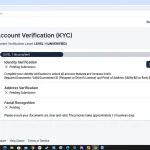
A no-KYC label can describe what happens at registration, not necessarily what happens when money is due to leave an account. The distinction matters because identity checks may be postponed until a withdrawal is requested. A specialist review reports that first withdrawals often prompt verification requests; that is a reported pattern, not a timetable or a guarantee about every operator.
The delay can feel like a change of terms. An account may have accepted a deposit without asking for documents, yet the operator may later ask for proof of identity before approving a cashout. The two moments serve different purposes from the operator’s perspective: opening an account and releasing funds are separate decisions. “No KYC” does not reliably mean “no identity check at any stage.”
$10 Minimum Deposit Pokies in Australia: What It Means
That gap is particularly awkward because withdrawal is when the player has least patience and the operator has most incentive to scrutinise the account. A name, date of birth or address that does not match the account record can lead to questions. So can a request to confirm that the person controlling the account is the person entitled to withdraw. The exact checks and documents vary; a slogan cannot settle them.
Completing verification early can significantly speed up later withdrawals. It moves the document review away from the point at which a cashout is waiting, reducing one avoidable source of delay. It does not ensure that every later request will be approved immediately: an operator may still review a particular transaction or ask for further information. But having an account already checked is less precarious than discovering the requirement after funds are pending.
There is a practical tension in the phrase “no-KYC casino Australia.” It suggests anonymity as a feature, while a request for identity documents can arrive at the moment of withdrawal. That tension is not resolved by paying with cryptocurrency or by choosing a newly opened account. The payment method and the operator’s identity policy are separate matters. A transfer can be technically quick while the account remains under review.
The Australian legal setting makes the label still less reassuring. Under the Interactive Gambling Act 2001, operators are prohibited from providing real-money online casino games—including slots, poker and table games—to people physically located in Australia. A no-KYC claim does not change that rule, nor does it turn an offshore service into a lawful Australian casino. The legal restriction is directed at providers; it does not make the player criminally liable for playing.
Fast Withdrawals
Completing identity verification early can significantly speed up later withdrawals by moving the document review away from the point of cashout.
For anyone assessing the mechanics rather than the advertising, the useful questions are plain: whether identity checks can be requested before a withdrawal is processed, what documents may be required, and whether the account details must match those documents. The answers belong in the operator’s terms and verification policy, not in a broad promise of anonymity. If those terms reserve the right to request checks, the promise has a boundary.
That boundary is where the neat marketing phrase meets the paperwork. Verification completed before a withdrawal request can reduce the chance that the first cashout becomes an administrative waiting room. It cannot erase the operator’s review powers or guarantee a particular outcome. In this market, the label is no substitute for either a clear policy or the law.
Deposits, Bonus Conditions and the Small Print
A “no deposit” label describes a promotional claim, not the whole set of rules attached to a balance. It does not, by itself, establish that a bonus is available, that its funds can be withdrawn, or that play carries no conditions. In Australia, that distinction sits within a more serious legal setting: the Interactive Gambling Act 2001 prohibits operators from providing real-money online casino games to people in the country. A bonus label does not alter that position.
The small print matters because promotional funds and deposited funds may be treated differently. A specialist review reports that wagering requirements can be calculated against the bonus alone or against the combined value of the deposit and bonus. Those are materially different bases. If the requirement applies to the combined amount, the deposit becomes part of the calculation; if it applies only to bonus funds, the deposit is not included in that particular wagering base. The latter arrangement is preferable, because it avoids attaching a bonus-related play condition to the deposited amount.
$20 Minimum Deposit Pokies in Australia: What It Means
That distinction can disappear in a headline. “Bonus funds” may sound like a separate pocket of money, while an offer’s terms may define the relevant balance more broadly. The calculation base is therefore not a technical footnote: it determines which funds are subject to the wagering condition. Without clear wording, the apparent value of a promotion says little about the conditions governing it.
“No deposit” can also be mistaken for “no commitment”. The phrase may describe an offer that does not require an initial payment, but it cannot be taken as proof that the associated funds are unrestricted. A wagering condition can still govern bonus funds. The useful question is not whether a promotion uses the word “free”, but what amount the condition covers and what must happen before those funds are treated as withdrawable. No headline answers that on its own.
Deposits bring a separate consideration. Operators generally require funds to be returned through the same payment method used to make the deposit, where that is possible. A payment route is therefore not merely a way into an account; it may shape how a later return is handled. This does not establish that every method will be available for every transaction, and it does not remove any promotional conditions. It is simply one reason the deposit terms and bonus terms should be read as distinct parts of the arrangement.
Do
- Prioritise checking the legal status of the service
- Analyse the precise wagering base
- Read the treatment of deposited funds
Don’t
- Rely solely on the headline promotion
- Assume a “no deposit” label means no commitment
- Ignore the small print regarding wagering
The order of attention matters. First comes the legal status of the service; then the meaning of the promotional wording; then the precise wagering base and the treatment of deposited funds. Reading only the headline reverses that order and gives the least consequential information the loudest place. That is familiar advertising architecture, but it is a poor guide to what a balance means.
A no-KYC or crypto label does not settle any of these bonus questions. Nor does a no-deposit claim establish that a particular operator provides an offer to Australians. A bonus is not evidence of legality, and a stated promotional value is not the same thing as money available without conditions. In this market, the legal boundary comes before the arithmetic.
The distinction is plain, if often obscured: bonus-only wagering and wagering on deposit plus bonus are not interchangeable. The former is preferable as a condition on funds. A promotion’s wording should make clear which basis applies; otherwise, its apparent generosity remains just that—apparent.
PayID Withdrawals: Fast Transfers, Slower Approval
PayID’s speed belongs to the payment rail, not to the whole withdrawal. It operates through Australia’s New Payments Platform, with transfers processed in real time through Osko. Once an operator releases a payment, the transfer can move quickly. Before that point, the request may still be waiting for checks, approval or a review by the operator. “Instant” describes only the final payment phase, not the journey from clicking a withdrawal button to money arriving.
Best-Paying Online Pokies in Australia: Bitcoin Guide
That distinction matters especially when a service markets itself as offering a no-KYC withdrawal. A casino cannot promise that identity checks will never apply: operators must verify a player’s identity before processing withdrawals. A first withdrawal may bring a request for documents, and completing verification early can reduce later delays. A fast payment method does not remove that requirement.
There is also a legal boundary that marketing language can obscure. Under Australia’s Interactive Gambling Act 2001, providing real-money online casino games to people in Australia is illegal for operators. A claim about instant PayID cashouts does not change the status of the service or turn a no-KYC promise into a reliable exemption from checks.
A specialist review of Australian PayID options reported withdrawals in under five minutes at the casinos it assessed, against one to three business days for standard bank transfers. Those are reported results, not a standing guarantee for every service or transaction. The same review described automatic approval for some withdrawals below $5,000 AUD at top-tier operators. That should not be read as a general rule: an operator may still pause a request for identity, account or other internal checks.
The gap between advertised speed and actual experience can be substantial. A specialist review noted that some sites used “instant” to describe withdrawals but took as long as 24 hours because of internal review. The payment network cannot hurry a decision that has not yet been made. Nor does a fast bank transfer mean a withdrawal request has itself been approved quickly.
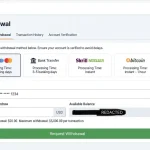
PayID Withdrawal
Step 1: Access Wallet
Log in to the account and open the Wallet or Withdrawal area.
Step 2: Enter Details
Enter the PayID identifier and specify the amount to be withdrawn.
Step 3: Confirm Request
Confirm the request and await operator approval and internal review.
Conditions can intervene at several stages. A casino may require identity verification before processing a withdrawal, and the first request can trigger scrutiny. Withdrawals exceeding $2,000 require disclosure of any manual review process. Bonus wagering conditions must also be met before funds are withdrawn; an unfinished requirement can hold up a cashout. Operators generally return funds to the deposit method where possible, and PayID withdrawals should use the same PayID details as the deposit to avoid a security review. Funds should go only to an account linked to the casino profile.
Limits deserve the same attention as speed claims. A specialist review said reputable PayID casinos publish minimum and maximum withdrawal amounts clearly. Per-transaction limits may not tell the whole story: weekly or monthly cashout caps can also apply, and large withdrawals may be released in instalments under operator policy. The terms should set out limits, fees and processing times; a headline promise cannot substitute for them.
In the described withdrawal process, a player logs in, opens the Wallet or Withdrawal area, enters a PayID identifier, specifies an amount and confirms the request. That is the request stage, not proof that the operator has approved it. Requests can be delayed by verification, a manual review, a limit or a payment window. The distinction is plain, if not always advertised plainly: real-time rails, human-paced decisions.
The Australian Payment Landscape Beyond PayID
Payment methods are often described as if they were interchangeable pipes: choose one, send funds, wait for them to arrive. In practice, each has a different role. A deposit channel may not be available for withdrawals, and the time taken by a payment provider is only one part of a transaction’s journey.
Bitcoin Pokies Australia: How Payments Work
That distinction matters especially in Australia. The Interactive Gambling Act 2001 prohibits operators from providing real-money online casino games to people located in the country. The payment methods discussed here describe features reported in the wider market, not an invitation to use offshore casino services.
Bank transfers and e-wallets
A traditional bank transfer can serve deposits or withdrawals, but it is not necessarily an instant process. One specialist review reported that a transfer could take as long as five business days to complete. The bank’s processing window is only part of the picture: an operator’s approval and any checks it performs may add time before funds are released.
E-wallets such as PayPal and Skrill sit between a bank account and a merchant. They can make funds easier to move between services, though the wallet itself does not determine when an operator approves a withdrawal. A specialist review reported e-wallet transactions completed within hours rather than days; this is a report about particular services, not a timetable that applies everywhere. Other payment information describes e-wallet withdrawals as typically processed within a day, again leaving room for variation between operators and transactions.
The distinction is useful, but not glamorous. A fast rail cannot hurry a decision made upstream.
Instant banking services
Some real-money casino reviews have described instant banking services, including POLi, as deposit options. These services connect a payment to a bank account, but their presence at any particular merchant cannot be assumed. Nor does an instant deposit imply that a later withdrawal will travel back through the same service or arrive at the same speed.
Attention: The term "instant" often describes only the final payment phase and not the entire journey from the withdrawal request to the arrival of funds.
This is the broader lesson behind payment labels: “instant” may describe one stage, not the whole route. Processing by a provider, an operator’s internal handling and a bank’s own procedures are separate events. A displayed method name says little on its own about the time or route for a cashout.
Prepaid vouchers
Neosurf and similar prepaid vouchers have a different purpose. A specialist review described them as generally suitable for deposits but not withdrawals. That makes sense of their basic function: a voucher can provide a way to pay without operating like a bank account capable of receiving a payout. Any balance later due would need to be sent by another supported method, subject to the operator’s arrangements.
Australian payment options also vary between services and over time. A review may list bank transfers, wallets or instant banking for a particular operator, but that is not a guarantee of current availability or of lawful access in Australia. Payment convenience does not alter the legal status of the underlying service.
Ethereum, Tether and Ripple: Asset Names Are Not a Verification Policy
Ethereum, Tether and Ripple are often treated as if naming a payment asset settles the more important question: what a platform will ask of its users. It does not. A casino’s acceptance of cryptocurrency, if offered, says nothing by itself about whether identity checks can arise, or how a particular operator handles them.
Dragon Link Online Pokies in Australia: What Search Shows
There is a broad speed claim worth keeping in proportion. A specialist review has described cryptocurrency transactions as capable of arriving near-instantly. That observation concerns transaction movement, not a casino’s approval process, and it cannot be assigned automatically to every asset, network or platform. A transfer may move quickly while the surrounding account process remains a separate matter.
The distinction is especially important when a service is described as “no KYC”. The phrase is not a technical property of Ethereum, Tether or Ripple. It is a claim about an operator’s procedures, and the coin symbol displayed at a cashier cannot confirm the scope or durability of that claim. An asset name is not a policy document.
Nor does a named token establish that any particular casino accepts it. Availability can differ between services and can change; no universal conclusion follows from the existence of a cryptocurrency option elsewhere. Specific claims require specific terms, including the operator’s own stated payment and account conditions. Without those, attaching a particular asset to a “no KYC” promise would turn a search phrase into evidence.
The legal setting in Australia is not altered by the payment rail. The Interactive Gambling Act 2001 prohibits operators from supplying real-money online casino games to people physically in Australia. Cryptocurrency does not create an exception to that rule, and a foreign-facing label does not change the nature of the service.
The useful distinction is plain: cryptocurrencies may be capable of rapid transactions, while identity policy belongs to the operator and legality to the governing law. Ethereum, Tether and Ripple are names of assets—not guarantees, permissions or substitutes for either.
Main Conclusions
- Cryptocurrency assets like Ethereum or Tether are not substitutes for a verification policy
- Asset names do not establish whether identity checks will occur
- The Interactive Gambling Act 2001 remains the primary legal boundary in Australia
USDT Deposits and Crash Games: What the Evidence Can Support
A search for a casino accepting USDT can sound like a straightforward question about deposits. It is not enough, by itself, to establish that a particular operator accepts the token, or that a deposit can be made without identity checks. The name of a payment asset does not confirm an operator’s payment arrangements.
The same restraint applies to crash games. The phrase may point to a particular style of game, but it does not establish that any operator offers one, still less that it is available under a no-KYC policy. Payment methods, identity rules and game menus are separate matters; one label cannot stand in for the others.
There is a narrow, practical distinction available for prepaid options. A specialist review describes cards and vouchers such as Neosurf as deposit methods rather than withdrawal routes. That observation concerns prepaid vouchers, not USDT, and it should not be extended to other payment types.
Safe online pokies in Australia: legal and payment risks
“No deposit” is another phrase that needs care. It can describe a promotional claim, but the wording alone does not establish that an offer exists or what conditions attach to it. A label is not a set of terms.
The broader Australian setting also matters: the Interactive Gambling Act 2001 prohibits operators from providing real-money online casino games to people in Australia. Searches for tokens or game formats do not alter that legal position. The details remain distinct.
Free Spins and the Conditions Attached to Bonuses
A free-spin headline can make a promotion look self-contained: spins are presented as the gift, and the small print is left to explain what happens to any winnings. The key condition is wagering. A specialist review notes that requirements may apply either to bonus funds alone or to the combined value of the deposit and bonus. The former is the more favourable structure, because it does not add the deposited money to the amount subject to wagering.
Anonymous crypto casinos in Australia: risks and tax
That distinction matters even when the promotion is described as free. The label does not settle how winnings can be used or whether they can be withdrawn; the bonus terms determine that. Without clear wording on which funds count, the apparent value of a promotion is difficult to assess.
Searches for free spins at casinos that say they require no identity checks do not establish that a particular offer exists, or that its conditions are lighter. A promotional phrase is not a payment rule. In Australia, there is also a legal boundary: providing real-money online casino games to people in the country is prohibited under the Interactive Gambling Act 2001. The wording of a bonus cannot change that.
The practical distinction is plain: free spins may attract attention, but wagering terms govern bonus funds. Prefer terms that apply wagering requirements to the bonus alone, rather than to the deposit and bonus together. The headline is the easy part.
Casinos That Accept Google Pay in Australia: What to Know
Live Casino Searches, Without Invented Game Claims
A live casino suggests a real-time format, often associated with a human presenter and a streamed table. But the label “no-KYC” does not establish that a particular service offers live games, or identify which games might be available. It is not evidence of a live dealer, a roulette table or any other specific feature.
That distinction matters in Australia. Under the Interactive Gambling Act 2001, operators cannot provide real-money online casino games to people physically in the country. The prohibition covers casino-style games such as blackjack, roulette, poker and slots. A marketing label does not change that legal position, nor does it establish that a service is lawful or accessible.
There is little to gain from dressing an unsubstantiated game claim in the language of certainty. A page that names a live table without reliable details turns a search phrase into an implied promise. The careful account is narrower: no particular live-casino offering can be confirmed under a no-KYC label. The absence of a named game is not a hidden recommendation. It is simply a boundary around what can responsibly be said.
How do you choose the best easy withdrawal casino site?
Check that withdrawal limits are clearly published, compare payout methods and processing times, and complete identity verification early to help avoid delays. In Australia, real-money online casino services are illegal for operators to provide to people physically in the country.
What are easy withdrawal casinos?
They are sites where withdrawals can be made through convenient payment methods and processed quickly. E-wallets are typically processed within 24 hours, while PayID withdrawals may be released in under five minutes; the casino’s own review process can still cause delays.
How fast are withdrawals?
E-wallet withdrawals are typically processed within 24 hours, while bank transfers and card payments can take several days; bank transfers may take up to five business days. PayID transfers can arrive in under five minutes once released, but checks or internal processing may delay them.
What payment methods are available?
Options can include credit and debit cards, PayPal, Skrill, bank transfers and, at some casinos, cryptocurrency. Some services also offer PayID or POLi, while prepaid vouchers such as Neosurf are generally for deposits rather than withdrawals.
AUD Banking and Payment Options at Roby Casino Australia

AUD Deposit Options at Roby Casino Australia
Roby supports several deposit categories that are relevant to Australian players: Visa, Mastercard, Skrill, Neteller,...

AUD Withdrawal Limits and Times at Roby Casino Australia
Roby supports several payment categories that can be relevant to withdrawals, including cards, e-wallets, bank...

$1 Minimum Deposit Casinos in Australia: What to Know
A casino’s stated minimum may differ from a payment method’s floor or the amount needed...

$1 Minimum Deposit Pokies in Australia: How It Works
A casino’s stated minimum is only one part of the transaction; the payment route may...

$10 Minimum Deposit Casinos in Australia: How It Works
The amount accepted depends on both the casino cashier and payment route, while costs and...

$10 Minimum Deposit Pokies in Australia: What It Means
A site's stated minimum may differ from what its card processor, wallet or other payment...

$2 Minimum Deposit Casinos in Australia: What to Know
A low operator threshold may not survive the payment chain, where processors can set a...

$20 Minimum Deposit Casinos in Australia
Australian casino deposit minimums can depend on the operator’s terms or on the payment method...

$20 Minimum Deposit Pokies in Australia: What It Means
A displayed minimum may come from a payment provider rather than the operator, and the...

$5 Minimum Deposit Casinos in Australia: Payment Rules
The amount accepted by an operator can differ from the minimum transaction required by the...

$5 Minimum Deposit Pokies in Australia: What It Means
The operator’s stated floor can differ from the minimum accepted by a payment method, while...

Anonymous crypto casinos in Australia: risks and tax
Bitcoin can ease casino payments, but anonymity, withdrawals, tax treatment and Australian access all have...

Aristocrat Online Pokies in Australia: What to Know
The search phrase does not verify a game's maker or availability, and Australian rules set...

Aussie Crypto Casinos: Rules, Risks and Payments
Australia’s rules distinguish domestic wagering from online casino services, leaving offshore crypto platforms outside the...

New Australian Online Pokies: Games and Risks
A closer look at how release labels, free-play modes, account access and bonus terms shape...

Online casino payment methods for Australians
See how PayID, transfers, vouchers and mobile wallets differ across deposits, withdrawals, processing delays and...

Best-Paying Online Pokies in Australia: Bitcoin Guide
A practical look at Bitcoin payments, payout claims, bonus conditions and the limits of Australian...

Bitcoin Pokies Australia: How Payments Work
Bitcoin changes how an account is funded, not the pokies themselves; free-play credits and real-money...

Casino Sites That Accept Amex in Australia
Acceptance can differ between operators, while deposit conditions, withdrawal eligibility and payment costs depend on...

Casino Sites That Accept BPAY in Australia: What’s Known
BPAY availability and withdrawal terms need confirmation; Australian-facing language does not make offshore casino games...

Casino Sites That Accept Credit Cards in Australia
Australia’s rules apply before the cashier, while card acceptance, issuer checks and withdrawal support vary...

EcoPayz Casinos in Australia: What Is Verified
The evidence distinguishes payment acceptance from legality and explains why no verified EcoPayz deposit or...

Casino Sites That Accept Osko in Australia: What’s Known
Australian payment habits may make Osko familiar, but they do not confirm that a casino...

Casino Sites That Accept Paysafecard in Australia
Paysafecard availability does not establish that an offshore casino offer is lawful or that a...

Casino Sites That Accept Skrill in Australia Explained
Skrill availability can describe a cashier option, but it does not establish that an online...

Trustly Casino Sites in Australia: What Is Known
The Interactive Gambling Act 2001 prohibits operators from providing real-money online casino games to people...

Under an Hour Casino Withdrawals in Australia Explained
Withdrawal estimates depend on when the operator’s review ends and when the payment channel begins...

No-ID Verification for Casino Withdrawals in Australia
Identity checks remain part of withdrawal processing, while payment methods and bonus conditions can affect...

Casinos That Accept Apple Pay in Australia: Evidence
Mobile-wallet availability in everyday Australian payments does not establish that an online casino supports Apple...

Casinos That Accept Bitcoin in Australia: Payments
Bitcoin changes how funds move, while operator procedures still govern accounts, disputes and the terms...

Bitcoin Cash Casinos in Australia: Legal and Payment Guide
Australian law bars operators from offering online casino games locally; this guide also covers offshore...

CashToCode Casinos in Australia: Acceptance Checks
A payment option listed online does not establish that a casino accepts CashToCode for Australian...

Casinos That Accept Ethereum in Australia
Ethereum is a possible transaction method, but its availability does not establish which games a...

Casinos That Accept Google Pay in Australia: What to Know
Australian law prohibits operators from offering real-money online casino games to people in Australia, and...

Casinos That Accept Litecoin in Australia: What’s Verifiable
The page distinguishes cryptocurrency payment language from evidence of Australian availability, cashier support, or specific...

Casinos That Accept Mastercard in Australia: Legal Limits
A card option at the cashier does not establish legality, and the route used for...

Casinos That Accept MiFinity in Australia: What to Know
Familiar Australian payment options do not show whether an individual casino supports MiFinity or how...

Casinos That Accept Neosurf in Australia: What’s Verified
Neosurf payment claims, casino services and Australian gambling rules are distinct issues that require separate...

Casinos That Accept Neteller in Australia: What to Check
Neteller availability does not establish that an offshore casino may serve Australians or that deposits,...

Casinos That Accept PayID in Australia: Legal Context
Payment availability can explain a cashier’s options, but it cannot establish whether an offshore casino...

Casinos that accept PayPal in Australia: key facts
The article separates everyday payment familiarity from casino cashier availability and examines the limits of...

Casinos That Accept POLi in Australia: What to Know
A POLi label alone does not establish that an online casino can lawfully serve Australians...

Casinos That Accept Tether USDT in Australia
USDT payment claims do not establish which casinos accept it or verify their networks, games,...

Casinos That Accept Visa in Australia: Key Details
Visa availability varies by operator and card, while deposits, withdrawals and legal context remain separate...

Dragon Link Online Pokies in Australia: What Search Shows
The name alone does not establish a particular machine, an online version or availability to...

Easy Withdrawal Casinos in Australia: How Payouts Work
Withdrawal timing depends on operator review and fund release as well as the payment method’s...

Fast Casino Withdrawals in Australia: Payment Routes
Payment networks, casino approval, verification and terms all affect timing, while Australian law limits the...

Instant Bank Transfer Casinos in Australia: How They Work
Banking labels can cover different payment flows, and a deposit method may not be available...

Instant PayID Withdrawals for Real Money in Australia
PayID can move released funds through Australia's NPP, but it cannot determine when an operator...

Instant PayID Withdrawals in Australia: What to Know
PayID can move funds quickly after release, but casino checks, account verification and withdrawal terms...

Low deposit online casinos in Australia: payment limits
A low operator minimum does not guarantee a payment will go through, since the chosen...

New PayID Pokies in Australia: Payments and Checks
PayID can route quick bank transfers, but cashier details, bank limits, delays and bonus terms...

No Minimum Deposit Casinos in Australia: Payment Limits
The operator’s deposit rule is only one part of the chain; payment providers and purchase...

Online pokies instant withdrawals in Australia
A withdrawal request, operator approval and payment release are separate stages, so transfer speed alone...

Online pokies and PayID in Australia: what to know
PayID can move funds quickly, but cashier confirmation, bank limits, withdrawal checks and wagering terms...

Pay by Phone Casinos Australia: PayID and Bills
PayID can use a mobile number to identify a bank account, but the funds come...

Quick Casino Withdrawals in Australia: How Payouts Work
Payout timing depends on more than the payment method, while Australia's legal position on online...

Real cash online pokies in Australia: law and Bitcoin
A guide to Australia's restrictions on online pokies and the practical trade-offs of using Bitcoin...

Safe online pokies in Australia: legal and payment risks
The guide examines Australian legal limits, offshore operators, Bitcoin payment points, verification and bonus terms...

Same-Day Payout Casinos in Australia: How It Works
A withdrawal estimate can cover operator checks, the payment route, or both, so the stages...

Solana Casino Comparison for Australia
The guide separates Australian law on offshore operators from token transfers, bonus terms, cash-outs and...