Casino Sites That Accept Credit Cards in Australia
 Available in AU

Australia’s rules apply before the cashier, while card acceptance, issuer checks and withdrawal support vary by operator.
Table of Contents
- The Legal Boundary Around Offshore Casino Payments
- What an Amex Deposit Involves
- Acceptance, Issuer Blocks and Transaction Checks
- Amex Beside Visa, Mastercard and Other Card Options
- What “Top” Can—and Cannot—Mean for Card Acceptance
- Real-Money Transactions and the Verification Step
- Why Withdrawals to Amex Are Less Certain Than Deposits
- Amex Gift Cards: Deposits Only
- When a Casino Does Not Take a Credit Card
- Currency Conversion and the Cost of Using Amex
The Legal Boundary Around Offshore Casino Payments
The phrase “casino sites that accept credit card Australia 2026” can sound like a question about payment options. In Australia, however, the more consequential boundary comes before the cashier: the law restricts the services that operators may offer to people in the country. A payment method cannot make a prohibited service lawful.
Under the Interactive Gambling Act 2001, it is illegal for operators to provide real-money online casino games to people physically located in Australia. The category includes poker and table games as well as casino-style games such as blackjack, roulette and pokies. The law is directed at the provider, not written as a blanket criminal offence for an individual who uses an offshore site. That distinction matters, but it is not an endorsement of the service or a guarantee that it will remain accessible.
The Australian Communications and Media Authority, or ACMA, enforces the Act. Offshore sites may be difficult to distinguish from locally available services in a browser or advertisement, but a foreign licence does not give an operator permission to provide prohibited real-money casino services to Australians. The regulatory boundary is set by Australian law, not by the address printed on a website or the jurisdiction that issued its licence.
Casinos That Accept Bitcoin in Australia: Payments
Enforcement is not merely a line in legislation. Offshore casino services are actively blocked and enforcement measures are used against them. Access may therefore be interrupted, and a site that appears available at one moment is not evidence that the arrangement is lawful or stable. The law also prohibits advertising real-money online casinos to Australian audiences. That is why promotional claims and lists of supposedly suitable operators should not be mistaken for official guidance.
The distinction between operator liability and player liability can be easily blurred. The Act makes provision of the prohibited service unlawful; it does not explicitly criminalise an Australian resident simply for using an offshore casino. The stated maximum daily penalties under the Act are $360,000 for an individual who violates it and $1.8 million for a body corporate. Those figures concern a person or company committing an offence, not a stated fine imposed on a player merely for placing a bet. The legal architecture is aimed chiefly at supply.
EcoPayz Casinos in Australia: What Is Verified · Bitcoin Cash Casinos in Australia: Legal and Payment Guide
That does not make the customer’s position equivalent to dealing with a domestic, protected service. Australian consumer law does not protect players who use offshore casinos. If a dispute arises over an account, a withheld balance or an operator’s conduct, the ordinary protections associated with Australian consumer transactions may not be available. A foreign company’s terms, its own complaint process and the practical reach of another jurisdiction’s regulators may become more important than domestic remedies. A logo or a polished website cannot fill that gap.
The consequences are practical as well as legal. A service can disappear from reach, change its terms, or become difficult to pursue from Australia. Even where a player is not expressly criminalised for using it, the player may have little leverage if something goes wrong. The absence of a player offence is not the same thing as a consumer safeguard. A narrow distinction, with a wide shadow.
Credit-card language can make the question seem especially ordinary: a card is familiar, the transaction may resemble other online purchases, and the cashier may present a choice of payment routes. But the familiar form of a payment does not alter the legal character of the underlying service. Nor does a successful transaction establish that the operator is authorised to provide casino games in Australia, or that consumer protections will follow the money.
The legal status also cannot be inferred from a casino’s claims about licensing elsewhere. An offshore licence may regulate the operator under another country’s rules, but it does not displace the Interactive Gambling Act for services offered to people in Australia. The relevant question is not simply whether an operator has paperwork somewhere; it is whether the service may lawfully be supplied to Australians. For real-money online casino games, the Australian rule is prohibitive.
Legal Risk
Under the Interactive Gambling Act 2001, it is illegal for operators to provide real-money online casino games to people physically located in Australia.
This is a market in which the boundary is drawn around supply, while the consequences for customers are often measured in lost recourse rather than prosecution. That division can be easy to miss when attention is fixed on whether a site takes a card. Yet payment acceptance is a technical condition, not a legal permission. It says nothing by itself about the status of the operator, the availability of a remedy, or whether Australian consumer law will stand behind a player. The cashier is not the regulator.
What an Amex Deposit Involves
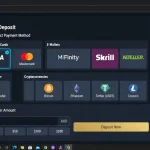
An Amex deposit is the movement of money from a card account into an online account. The cashier is the point where a payment method and an amount are displayed, and where a transaction may be submitted. That description is about the mechanics of a payment interface; it is not an endorsement of using such a service in Australia.
The legal distinction matters before any payment detail does. Under the Interactive Gambling Act 2001, operators cannot provide real-money online casino games to people physically located in Australia. A cashier that displays a card option does not alter that rule, nor does a successful payment turn the service into a lawful one. The Australian Communications and Media Authority enforces the Act. The practical existence of an offshore payment route and the legal status of the service are separate matters.
That separation is easy to overlook because payment screens are designed to make transactions feel ordinary. A card logo, a field for an amount in Australian dollars and a submission button resemble the familiar choreography of online shopping. Yet the same interface can sit inside a service that is prohibited from serving people in Australia. Familiarity is not permission.
Casino Sites That Accept Paysafecard in Australia · Casinos That Accept Google Pay in Australia: What to Know
There is also a difference between a payment being accepted and what it costs. Acceptance concerns whether a card transaction can be submitted and processed. Cost concerns any charges attached to it. Those charges may come from different places: the casino may set a payment fee, while card terms or currency conversion can affect the amount charged to the card account. A payment method listed on a screen therefore says little, by itself, about the final cost.
A specialist gambling review describes Amex deposits as typically having no fee, while also noting that charges depend on the casino. That should be read as a description of a particular operator’s terms, not as a standing rule for every service. Fees are not a property of the card brand alone. They depend on the arrangement attached to the transaction and can differ between operators or change when terms change.
The same distinction applies to the amount shown before submission. An amount entered in Australian dollars is the requested deposit amount, not necessarily a complete account of every cost associated with moving funds. If a separate fee is applied, the total charged may differ from the figure entered. A price displayed at one stage of a transaction is not a substitute for the applicable payment terms.
This is why “no deposit fee” and “no cost” are not interchangeable claims. A casino may not add a deposit charge, while another cost may arise elsewhere in the payment chain. Conversely, a payment option can be displayed without any promise that the casino will process every transaction under identical terms. The details belong to the service’s payment conditions, not to the general idea of paying by Amex.
A casino may not add a deposit charge, but other costs may arise elsewhere in the payment chain; fees depend on the specific service’s payment conditions.
There is a further boundary that a polished cashier cannot erase. Australian consumer law does not protect players using offshore casinos. A screen may resemble the familiar protections and routines of domestic commerce, but appearance does not create local consumer recourse. In this setting, the ordinary language of deposits risks making a legally restricted service look like a routine purchase.
The distinction between process and protection is therefore sharper than the interface suggests. A payment can be described as a card transaction without implying that the underlying gambling service is lawful in Australia. Nor does the use of a recognised card brand make the service locally regulated or provide the safeguards that apply to ordinary Australian consumer transactions.
For anyone studying how such payment interfaces work, the essential point is narrow: the cashier is where the operator presents its payment terms, while fees depend on those terms. That is a description, not an invitation to fund an account. The screen can make a prohibited service look frictionless. The law does not.
Acceptance, Issuer Blocks and Transaction Checks
A card symbol in a cashier is not a promise that every attempted payment will go through. It indicates that a payment route is presented as available; the transaction still depends on checks made by the operator, the payment processor and the card issuer. Those parties do not share one decision-making desk, and a refusal at any point can leave the payment incomplete.
Casino Sites That Accept Skrill in Australia Explained · Casinos That Accept POLi in Australia: What to Know
For Australian cardholders, an issuer-level restriction is one possible reason. Australian banks may block gambling-related transactions on Amex cards. In that case, a casino’s display of Amex as an accepted method cannot override the bank’s decision. The operator may be willing to process a payment while the issuer declines to authorise it. From the account holder’s perspective, the result may look like a generic error, even though the cause sits outside the cashier.
A separate account concerns Amex itself. A specialist review reports that Amex may block payments to a particular website, which could lead to a deposit being declined. That is a reported possibility, not a rule that applies to every website or every Amex card. Payment policies can change, and a description of acceptance does not settle what will happen in an individual case. The narrow point is that approval from the casino side is not the same as approval from the card network or issuer.
This distinction matters because “accepted” can describe several different things. A site may list a card brand, its payment processor may support that brand, and an issuer may still refuse a particular transaction. Alternatively, an account check may need attention before the operator processes financial activity. These are separate gates, and clearing one does not guarantee that the next will open.
Account checks can stop a payment
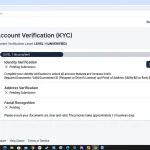
Online casinos typically ask customers to complete Know Your Customer checks before financial transactions. The purpose is to establish who holds the account and to assess the information associated with it. Until the required review is complete, a card payment may not proceed, even where the payment method appears in the cashier.
Account Verification vs Card Authorisation
Bank approval confirms a transaction is permitted, while account verification (KYC) concerns the customer’s identity. A card can be technically supported even if the account is not yet cleared for financial activity.
The check is not the same as card authorisation. A bank’s approval confirms that it will permit a transaction; an account verification process concerns the customer’s identity and account details. Either can be unresolved independently of the other. A card can therefore be technically supported while the account is not yet cleared for financial activity.
This separation can make a failed payment difficult to interpret. A brief message may not distinguish between an issuer refusal, an operator-side restriction or an outstanding account check. Repeating the attempt does not necessarily resolve the underlying issue. If the cause is a bank block, the casino cannot remove it; if account verification is pending, card acceptance alone cannot complete that review.
The practical meaning of a listed payment option is therefore limited. It describes a route the operator presents, not a guarantee of authorisation, account eligibility or successful processing. The same label can conceal different conditions, because the decision may be made by institutions with different rules and responsibilities. A neat row of card logos is a poor map of those boundaries.
Why failures are not all alike
An issuer block is a decision at the banking end. A website-specific Amex block, as described in a specialist review, is a separate possible restriction. An incomplete Know Your Customer assessment belongs to the account-check process. All may produce the same visible outcome—a payment that does not proceed—but they are not interchangeable explanations.
That distinction also limits what can be inferred from a failed attempt. It does not, by itself, prove that the card is unsupported everywhere, that the account has a problem, or that the issuer has blocked all gambling-related payments. The information available in a cashier or decline notice may be too general to establish which condition applied. The failure is clear; its source may not be.
Casino Sites That Accept BPAY in Australia: What’s Known · Casinos That Accept Tether USDT in Australia
Australia’s payment environment adds a further distance between a site’s displayed options and a local cardholder’s experience: a bank may impose its own restriction on gambling transactions. That decision is not a preference expressed by the casino, and a site’s payment page cannot serve as evidence that a bank will approve the charge. Acceptance is conditional, not portable.
A careful reading of payment information should treat each claim as narrow. A listed brand indicates stated availability; a completed identity check addresses the account; issuer authorisation concerns the bank’s decision. None substitutes for the others. Three different gates.
Amex Beside Visa, Mastercard and Other Card Options
A card logo can suggest a simple comparison: one network accepted, another not. In practice, acceptance is a decision made by the individual operator, so the name printed on a card does not settle whether it can be used on a particular site. Specialist reviews have described Visa as potentially more widely accepted by Australian online casinos than Amex. That is a comparison, not a guarantee for any operator or account.
The distinction matters because card acceptance is not a single, stable feature of the market. A site’s cashier may display particular card brands, but those options can differ between operators and may change. A specialist review has also reported that some online casinos do not accept American Express. The cautious reading is narrow: Amex is not accepted everywhere, and a listing for one site does not establish what another site permits.
Visa
Potentially more widely accepted by Australian online casinos according to specialist reviews.
Mastercard
Grouped as a credit-card option, but acceptance varies by individual operator.
American Express
Not accepted everywhere; listed as an option on some sites but not others.
Visa, Mastercard and Amex are often grouped together as credit-card options, but the grouping can obscure differences in acceptance. Visa may have broader reach in the Australian casino context described by specialist reviews; that does not mean every casino with a Visa option also takes Amex. Nor does it establish Mastercard’s position relative to either network.
This is why searches for a casino that accepts credit cards can lead to an incomplete picture. “Credit card” sounds like one category, while the cashier may distinguish between individual networks. Someone looking for an online casino that allows credit-card payment may find that the relevant question is not simply whether cards are listed, but which brands the operator names. The wording on a payment page is more specific than the broad label.
That difference should not be mistaken for a judgement about the quality of a payment option. Broader acceptance describes reach, not reliability, fairness or suitability. It also says nothing by itself about whether a particular transaction will be approved. A card brand appearing in a cashier is not a promise that it will work in every circumstance.
The same care applies to references to Mastercard.
There is a larger cultural habit behind the tidy grouping. In everyday commerce, payment cards are treated as interchangeable tools; at an online cashier, the network can become a gate. The distinction is administrative rather than dramatic, but it changes what the word “card” means in a particular setting. A broad category meets a narrow list of permitted brands.
For Australian readers, this is a description of how acceptance is presented, not an endorsement of using offshore casino services. The legal position is separate from the payment comparison, and a card being named as an option does not make an operator lawful or make the service protected. Card availability is a limited fact. Nothing more.
What “Top” Can—and Cannot—Mean for Card Acceptance
Payment options and availability can vary, so check a casino’s current cashier and terms before choosing a site that accepts credit cards in Australia. This list provides a quick reference to the available licensing and payment details for each operator.
1. SpinsUp
License: Curacao Gaming Control Board OGL/2023/174/0082 (Dama N.V.) SpinsUp is listed with a Curacao Gaming Control Board licence, OGL/2023/174/0082, held by Dama N.V.
2. Bizzo Casino
License: Curacao Gaming Control Board (TechSolutions Group N.V.) Bizzo Casino is listed under a Curacao Gaming Control Board licence held by TechSolutions Group N.V.
3. WinSpirit Casino
License: Curacao eGaming OGL/2024/923/0383 (Antillephone N.V.) · Min. deposit: A$30 WinSpirit Casino is listed with a Curacao eGaming licence, OGL/2024/923/0383, held by Antillephone N.V. Its minimum deposit is A$30.
4. DragonSlots Casino
License: Curacao Gaming Authority (Jumpman Gaming Ltd) DragonSlots Casino is listed with a Curacao Gaming Authority licence held by Jumpman Gaming Ltd.
5. Roby Casino
License: Curacao eGaming (Roby Games Ltd) Roby Casino is listed with a Curacao eGaming licence held by Roby Games Ltd.
6. LevelUp Casino
License: Curacao eGaming OGL/2023/174/0082 (Dama N.V.) · Min. deposit: A$15 LevelUp Casino is listed with a Curacao eGaming licence, OGL/2023/174/0082, held by Dama N.V. Its minimum deposit is A$15.
7. Lucky Dreams
License: Curacao · Min. deposit: A$20 (POLi) Lucky Dreams has a stated minimum deposit of A$20 via POLi. Its licence is listed as Curacao.
8. Ricky Casino
Payout speed: crypto under 1 hour, PayID 1-3 business days · Min. deposit: A$20 (A$30 to qualify for the bonus) Ricky Casino lists crypto payouts as taking under an hour and PayID payouts as taking 1–3 business days. The minimum deposit is A$20, or A$30 to qualify for the bonus.
9. GoldenCrown
License: Curacao Gaming Control Board OGL/2023/176/0095 (Hollycorn N.V.) GoldenCrown is listed with a Curacao Gaming Control Board licence, OGL/2023/176/0095, held by Hollycorn N.V.
10. House of Pokies
License: international iGaming licence – jurisdiction not named in the source · Payout speed: PayID 1-24 hours · Min. deposit: A$30 (PayID from A$10) House of Pokies lists an international iGaming licence, though the jurisdiction is not named. Its stated PayID payout time is 1–24 hours, with a minimum deposit of A$30 (A$10 via PayID).
Calling a card option “top” can sound like a verdict on the whole payment experience. For Amex, it is narrower: the card may be available for a transaction at a particular casino, but that fact alone says little about the limits attached to it. A label cannot make those terms uniform across operators.
A specialist gambling review has reported that Amex transaction limits can be higher than those attached to Visa or Mastercard. That comparison is not a dependable rule for every casino. Limits are set by individual operators, and the amount available can differ between sites. It is therefore possible for Amex to have a higher stated ceiling in one cashier and a different position elsewhere. A ranking based on the card brand alone would flatten those differences.
Deposit and withdrawal limits also need to be kept distinct. An operator may set one threshold for money going into an account and another for money coming out. Amex limits can vary between casinos, so a figure associated with one site does not establish what another will allow. Nor does a higher transaction ceiling necessarily mean that a casino accepts Amex for every payment type. Acceptance and limits answer separate questions.
Deposit and withdrawal limits are distinct; a higher transaction ceiling for deposits does not guarantee that a casino accepts the same card for withdrawals.
This makes “top credit card casino” a poor standalone measure of quality. It may suggest that a casino accepts a named card, or that one transaction limit compares favourably with another. Neither tells the whole story. The word “top” has no stable meaning unless the measure is stated: card availability, deposit limit, withdrawal limit, or some other defined feature. Without that distinction, a ranking blends unlike terms.
The same caution applies to lists of top credit card online casinos. A card brand can appear prominent in a comparison while the actual limit remains operator-specific. A casino’s displayed limits, rather than a broad label, are the relevant terms for that particular account. Even then, those terms should not be treated as transferable to another operator.
The sensible reading of a “top” label is modest: it points to a claimed advantage, not a universal standard. For Amex, one reported comparison concerns transaction limits; the wider practical point is that individual casinos set their own deposit and withdrawal limits. “Top” is a headline, not a payment term.
Real-Money Transactions and the Verification Step
A payment can appear to be a matter between a cardholder and a cashier. In practice, an online account may have its own checkpoint before money moves: the Know Your Customer assessment, commonly shortened to KYC. Online casinos generally require this assessment before carrying out financial transactions. The distinction matters. A payment option describes a route; verification concerns the account attached to it.
Trustly Casino Sites in Australia: What Is Known
KYC is the process through which an operator seeks to establish who holds an account. Its name belongs to a broader financial vocabulary, where identifying customers is treated as part of managing transactions. In a casino account, the assessment is a condition that may need to be completed before financial activity can proceed. It is not another card feature, and it does not tell anything by itself about whether a particular card will be accepted.
That makes “real money by credit card” an incomplete description of the process. It suggests a straight line from card choice to completed transaction, while an account check can sit between the two. A cashier may display a payment method, yet the account’s verification status remains a separate matter. Availability and readiness are not the same thing.
There is a social history in that distinction. Payment systems tend to make movement feel effortless; identity checks make the person behind the movement visible again. The convenience of a digital account and the scrutiny attached to it coexist, rather than cancelling one another out. The paperwork is less theatrical than the payment screen. It can still determine whether a transaction proceeds.
KYC should also not be confused with a promise that a transaction will be approved. Completing an assessment is one checkpoint, not a general assurance about payment processing. The relevant point is narrower: where an operator requires verification before financial transactions, an account that has not cleared that step may not be ready for them. Any explanation of credit-card casino payments that leaves out this account-level condition describes only part of the mechanism.
KYC
The Know Your Customer assessment is a process used by operators to establish the identity of the account holder before permitting financial transactions.
For Australian readers, the phrase “online casino real money credit card” can sound like a simple product category. It is not. A card, an account and a verification requirement are separate parts of the picture, and none should be treated as proof that a transaction is available or lawful. The account check concerns identity and access to financial activity; it does not change the rules governing the service itself.
A small gate, then.
Why Withdrawals to Amex Are Less Certain Than Deposits
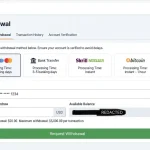
A card accepted for funding does not automatically provide a route for receiving money back. The distinction matters because a casino’s cashier may treat deposits and withdrawals as separate services, with separate conditions. A specialist review reports that some casinos do not permit winnings to be returned to Amex; the same review notes that an additional withdrawal fee may apply where this route is available. These are operator-specific terms, not a universal rule.
That uncertainty makes an online casino payout to a credit card less straightforward than the phrase suggests. A deposit moves funds from a card account to a casino balance. A withdrawal attempts the reverse, but the operator must support that transaction and the card must be eligible to receive it. A successful payment in one direction is not proof that the reverse journey is offered.
There may also be a prior-use condition. Casino withdrawals to Amex require an earlier deposit using Amex. Even then, the casino’s own withdrawal rules determine whether the method can be used for a particular payout. The cashier’s available options and the terms attached to them are therefore more relevant than the card logo alone.
Casino Sites That Accept Osko in Australia: What’s Known
Timing is another difference. A specialist review says an Amex withdrawal may take as long as five days to clear. That is a reported maximum, not a promise that every transfer will take that long or that every operator offers the route at all. Processing can involve the casino and the card system, leaving the customer with little control over the time between a request and cleared funds.
Fees deserve separate attention. The review reports that an additional charge may be applied to withdrawals, so a seemingly available cash-out method can still carry a cost. The fee is not inherent in every Amex transaction; it depends on the casino’s terms. A payment method’s availability and its price are different questions.
The result is a narrow distinction: paying with Amex and receiving a payout to Amex are not interchangeable permissions. One specialist review reports that not all Australian online casinos allow Amex withdrawals, and the terms can vary between operators. A credit card can open one door and leave the other closed.
Amex Gift Cards: Deposits Only
An Amex gift card has a narrower role than a standard payment card. At an online casino that accepts American Express, it may be usable to fund an account, but it cannot be used to receive a withdrawal. Acceptance of the brand, therefore, does not make every Amex product interchangeable.
Amex gift cards are one-way payment instruments; they may be usable for deposits if accepted by the cashier, but cannot be used to receive withdrawals.
That distinction matters because a gift card is a one-way payment instrument in this context. It may serve for a deposit where the operator’s cashier accepts it; it does not provide a route for winnings or other funds to be returned. A listing for an online casino accepting credit card payments should not be read as confirmation that gift cards are supported, either. The stated condition is that the casino accepts Amex, and the permitted use remains deposits only.
This is a limited payment fact, not an endorsement of casinos accepting credit cards. In Australia, the Interactive Gambling Act 2001 prohibits operators from providing real-money online casino games to people in the country. The law does not explicitly make players liable for using offshore sites, but Australian consumer law does not protect people who use them. A payment method cannot change that boundary.
Gift cards also should not be mistaken for a cash-out option simply because their branding matches a card accepted at the cashier. The practical distinction is plain: deposit use may be possible; withdrawal use is not. For anyone assessing a payment description, the relevant point is the product’s permitted direction of travel, not just the logo printed on it.
A gift card can make the entry point look familiar. The way back is different.
When a Casino Does Not Take a Credit Card
A missing credit-card option can look like a small cashier inconvenience. In Australia, it sits against a wider payment culture in which people move between cards, mobile wallets and services linked to bank accounts. Contactless credit and debit cards are accepted almost everywhere, as are mobile wallets such as Google Pay and Apple Pay. Payment choice is ordinary; it does not make every service being paid for lawful.
AUD Banking and Payment Options at Roby Casino Australia
That distinction matters when the service is an offshore online casino. The availability of a card, wallet or bank-linked payment route is not evidence that the casino may legally offer real-money games to people in Australia. Nor does a familiar payment brand turn an offshore transaction into one protected by Australian consumer law. Players using offshore casinos do not have that protection.
Bank transfers are another route used in commerce, but a specialist review describes them as potentially slower and more costly than other payment methods. Those differences are practical, not endorsements. A payment path that works for everyday purchases is not necessarily available for a particular service, and availability should not be confused with legitimacy.
Australia’s comfort with switching between payment types reflects convenience built into daily life. It says less about the legal standing of the business on the other end of a transaction. A cashier’s list is not a licence, and a familiar wallet is not consumer protection. The distinction is plain.
Currency Conversion and the Cost of Using Amex
Currency conversion and a casino surcharge are separate charges. The first is tied to changing the transaction from one currency into another; the second, if applied, is added by the operator to a transfer. Treating them as one fee makes it harder to see what a payment actually costs.
Casinos That Accept Litecoin in Australia: What’s Verifiable
A specialist payment review reports a 3% currency-conversion fee on Amex cards. That charge concerns the card’s currency handling, not a casino’s own pricing. Whether it applies to a particular transaction depends on its currency and the relevant card terms; the percentage should not be mistaken for a universal casino deposit fee.
A separate specialist review reports that a casino may add a 1.5% surcharge to Amex transfers. This is an operator-side charge, not the conversion fee, and it should be checked against the terms attached to the transaction. The two percentages describe different things and should not be assumed to apply together in every case.
The distinction matters because a payment displayed in a currency other than AUD can involve a conversion cost even where no casino surcharge is listed. Conversely, a surcharge can be attached to a transfer without being a currency-conversion charge. The cashier’s stated currency and the operator’s payment terms therefore shape the visible cost, while the card terms govern conversion.
Small print, separate ledgers.
How do you check if casino sites accept Amex deposits?
Check the cashier’s listed payment methods for American Express before attempting a deposit. Some casinos do not accept it.
What are the deposit and withdrawal limits at the best Amex casinos?
Limits are set by each casino and vary. Amex limits are usually higher than those for Mastercard and Visa, but check the casino’s cashier for its specific limits.
What are the fees involved with American Express payments?
Amex deposits are typically free, but a casino may add a 1.5% surcharge, and Amex cards incur a 3% currency conversion fee. Withdrawal fees may also apply, and not all casinos allow withdrawals to Amex.
How can I know if an online casino will accept American Express?
Look for American Express among the payment methods in the casino’s cashier. Some casinos do not accept Amex.
Are there any fees associated with using American Express at online casinos?
Deposits are typically free, though a casino may apply a 1.5% surcharge and Amex cards incur a 3% currency conversion fee. Withdrawal fees may apply, depending on the casino.
Are there any fees for depositing with American Express?
Amex deposits are typically free, but a casino may charge a 1.5% surcharge. A 3% currency conversion fee applies to Amex cards.
AUD Banking and Payment Options at Roby Casino Australia

AUD Deposit Options at Roby Casino Australia
Roby supports several deposit categories that are relevant to Australian players: Visa, Mastercard, Skrill, Neteller,...

AUD Withdrawal Limits and Times at Roby Casino Australia
Roby supports several payment categories that can be relevant to withdrawals, including cards, e-wallets, bank...

$1 Minimum Deposit Casinos in Australia: What to Know
A casino’s stated minimum may differ from a payment method’s floor or the amount needed...

$1 Minimum Deposit Pokies in Australia: How It Works
A casino’s stated minimum is only one part of the transaction; the payment route may...

$10 Minimum Deposit Casinos in Australia: How It Works
The amount accepted depends on both the casino cashier and payment route, while costs and...

$10 Minimum Deposit Pokies in Australia: What It Means
A site's stated minimum may differ from what its card processor, wallet or other payment...

$2 Minimum Deposit Casinos in Australia: What to Know
A low operator threshold may not survive the payment chain, where processors can set a...

$20 Minimum Deposit Casinos in Australia
Australian casino deposit minimums can depend on the operator’s terms or on the payment method...

$20 Minimum Deposit Pokies in Australia: What It Means
A displayed minimum may come from a payment provider rather than the operator, and the...

$5 Minimum Deposit Casinos in Australia: Payment Rules
The amount accepted by an operator can differ from the minimum transaction required by the...

$5 Minimum Deposit Pokies in Australia: What It Means
The operator’s stated floor can differ from the minimum accepted by a payment method, while...

Anonymous crypto casinos in Australia: risks and tax
Bitcoin can ease casino payments, but anonymity, withdrawals, tax treatment and Australian access all have...

Aristocrat Online Pokies in Australia: What to Know
The search phrase does not verify a game's maker or availability, and Australian rules set...

Aussie Crypto Casinos: Rules, Risks and Payments
Australia’s rules distinguish domestic wagering from online casino services, leaving offshore crypto platforms outside the...

New Australian Online Pokies: Games and Risks
A closer look at how release labels, free-play modes, account access and bonus terms shape...

Online casino payment methods for Australians
See how PayID, transfers, vouchers and mobile wallets differ across deposits, withdrawals, processing delays and...

Best-Paying Online Pokies in Australia: Bitcoin Guide
A practical look at Bitcoin payments, payout claims, bonus conditions and the limits of Australian...

Bitcoin Pokies Australia: How Payments Work
Bitcoin changes how an account is funded, not the pokies themselves; free-play credits and real-money...

Casino Sites That Accept Amex in Australia
Acceptance can differ between operators, while deposit conditions, withdrawal eligibility and payment costs depend on...

Casino Sites That Accept BPAY in Australia: What’s Known
BPAY availability and withdrawal terms need confirmation; Australian-facing language does not make offshore casino games...

EcoPayz Casinos in Australia: What Is Verified
The evidence distinguishes payment acceptance from legality and explains why no verified EcoPayz deposit or...

Casino Sites That Accept Osko in Australia: What’s Known
Australian payment habits may make Osko familiar, but they do not confirm that a casino...

Casino Sites That Accept Paysafecard in Australia
Paysafecard availability does not establish that an offshore casino offer is lawful or that a...

Casino Sites That Accept Skrill in Australia Explained
Skrill availability can describe a cashier option, but it does not establish that an online...

Trustly Casino Sites in Australia: What Is Known
The Interactive Gambling Act 2001 prohibits operators from providing real-money online casino games to people...

Under an Hour Casino Withdrawals in Australia Explained
Withdrawal estimates depend on when the operator’s review ends and when the payment channel begins...

No-ID Verification for Casino Withdrawals in Australia
Identity checks remain part of withdrawal processing, while payment methods and bonus conditions can affect...

Casinos That Accept Apple Pay in Australia: Evidence
Mobile-wallet availability in everyday Australian payments does not establish that an online casino supports Apple...

Casinos That Accept Bitcoin in Australia: Payments
Bitcoin changes how funds move, while operator procedures still govern accounts, disputes and the terms...

Bitcoin Cash Casinos in Australia: Legal and Payment Guide
Australian law bars operators from offering online casino games locally; this guide also covers offshore...

CashToCode Casinos in Australia: Acceptance Checks
A payment option listed online does not establish that a casino accepts CashToCode for Australian...

Casinos That Accept Ethereum in Australia
Ethereum is a possible transaction method, but its availability does not establish which games a...

Casinos That Accept Google Pay in Australia: What to Know
Australian law prohibits operators from offering real-money online casino games to people in Australia, and...

Casinos That Accept Litecoin in Australia: What’s Verifiable
The page distinguishes cryptocurrency payment language from evidence of Australian availability, cashier support, or specific...

Casinos That Accept Mastercard in Australia: Legal Limits
A card option at the cashier does not establish legality, and the route used for...

Casinos That Accept MiFinity in Australia: What to Know
Familiar Australian payment options do not show whether an individual casino supports MiFinity or how...

Casinos That Accept Neosurf in Australia: What’s Verified
Neosurf payment claims, casino services and Australian gambling rules are distinct issues that require separate...

Casinos That Accept Neteller in Australia: What to Check
Neteller availability does not establish that an offshore casino may serve Australians or that deposits,...

Casinos That Accept PayID in Australia: Legal Context
Payment availability can explain a cashier’s options, but it cannot establish whether an offshore casino...

Casinos that accept PayPal in Australia: key facts
The article separates everyday payment familiarity from casino cashier availability and examines the limits of...

Casinos That Accept POLi in Australia: What to Know
A POLi label alone does not establish that an online casino can lawfully serve Australians...

Casinos That Accept Tether USDT in Australia
USDT payment claims do not establish which casinos accept it or verify their networks, games,...

Casinos That Accept Visa in Australia: Key Details
Visa availability varies by operator and card, while deposits, withdrawals and legal context remain separate...

Dragon Link Online Pokies in Australia: What Search Shows
The name alone does not establish a particular machine, an online version or availability to...

Easy Withdrawal Casinos in Australia: How Payouts Work
Withdrawal timing depends on operator review and fund release as well as the payment method’s...

Fast Casino Withdrawals in Australia: Payment Routes
Payment networks, casino approval, verification and terms all affect timing, while Australian law limits the...

Instant Bank Transfer Casinos in Australia: How They Work
Banking labels can cover different payment flows, and a deposit method may not be available...

Instant PayID Withdrawals for Real Money in Australia
PayID can move released funds through Australia's NPP, but it cannot determine when an operator...

Instant PayID Withdrawals in Australia: What to Know
PayID can move funds quickly after release, but casino checks, account verification and withdrawal terms...

Low deposit online casinos in Australia: payment limits
A low operator minimum does not guarantee a payment will go through, since the chosen...

New PayID Pokies in Australia: Payments and Checks
PayID can route quick bank transfers, but cashier details, bank limits, delays and bonus terms...

No-KYC Casino Australia: Crypto Payments Explained
A practical look at crypto and PayID payments, identity checks, and the conditions that can...

No Minimum Deposit Casinos in Australia: Payment Limits
The operator’s deposit rule is only one part of the chain; payment providers and purchase...

Online pokies instant withdrawals in Australia
A withdrawal request, operator approval and payment release are separate stages, so transfer speed alone...

Online pokies and PayID in Australia: what to know
PayID can move funds quickly, but cashier confirmation, bank limits, withdrawal checks and wagering terms...

Pay by Phone Casinos Australia: PayID and Bills
PayID can use a mobile number to identify a bank account, but the funds come...

Quick Casino Withdrawals in Australia: How Payouts Work
Payout timing depends on more than the payment method, while Australia's legal position on online...

Real cash online pokies in Australia: law and Bitcoin
A guide to Australia's restrictions on online pokies and the practical trade-offs of using Bitcoin...

Safe online pokies in Australia: legal and payment risks
The guide examines Australian legal limits, offshore operators, Bitcoin payment points, verification and bonus terms...

Same-Day Payout Casinos in Australia: How It Works
A withdrawal estimate can cover operator checks, the payment route, or both, so the stages...

Solana Casino Comparison for Australia
The guide separates Australian law on offshore operators from token transfers, bonus terms, cash-outs and...