Casino Sites That Accept Amex in Australia
 Available in AU

Acceptance can differ between operators, while deposit conditions, withdrawal eligibility and payment costs depend on the route used.
Table of Contents
- Amex Acceptance Is Not a Given
- The Deposit: Currency, Limits and the Cashier
- Instant Deposits, Slower Withdrawals
- The Legal Boundary Around Offshore Casino Play
- What an Amex Payment Covers—and What It Costs
- Why an Amex Payment May Not Go Through
- Withdrawal Eligibility and the Route Back
- The Extra Charges Hidden in a Payment Route
- Australia’s Everyday Payment Habits
- When Amex Is Not the Only Payment Route
Amex Acceptance Is Not a Given
Amex is not a payment method that can be assumed to work across every Australian-facing online casino. A specialist review reports that some sites accept deposits made with American Express, while others do not. That is a description of uneven availability, not a dependable market-wide rule: payment arrangements can change, and a report about one operator does not establish what another will accept.
The distinction matters because a familiar card logo can suggest more certainty than it provides. A casino may display several payment methods, but their presence is specific to that operator. Amex can be available at one site and absent at another. Even when a specialist review records it as an option, the statement is best read as a report about that particular service at the time it was checked, not as a standing promise.
This makes the phrase “Australian online casino that accepts Amex” less like a stable category and more like a question about a particular operator’s current arrangements. There is no basis for treating acceptance as universal, or for assuming that a method listed in a review will be available everywhere. The relevant point is the variation itself.
Amex availability can depend on the casino and the payment options shown to Australian players. Use this list as a starting point, and confirm directly with each site whether Amex is currently accepted.
1. SpinsUp
License: Curacao Gaming Control Board OGL/2023/174/0082 (Dama N.V.) SpinsUp is listed with a Curaçao Gaming Control Board licence, issued to Dama N.V.
2. Bizzo Casino
License: Curacao Gaming Control Board (TechSolutions Group N.V.) Bizzo Casino is listed with a Curaçao Gaming Control Board licence held by TechSolutions Group N.V.
3. WinSpirit Casino
License: Curacao eGaming OGL/2024/923/0383 (Antillephone N.V.) · Min. deposit: A$30 WinSpirit Casino is listed with a Curaçao eGaming licence issued to Antillephone N.V. Its minimum deposit is A$30.
4. DragonSlots Casino
License: Curacao Gaming Authority (Jumpman Gaming Ltd) DragonSlots Casino is listed with a Curaçao Gaming Authority licence held by Jumpman Gaming Ltd.
5. Roby Casino
License: Curacao eGaming (Roby Games Ltd) Roby Casino is listed with a Curaçao eGaming licence held by Roby Games Ltd.
6. LevelUp Casino
License: Curacao eGaming OGL/2023/174/0082 (Dama N.V.) · Min. deposit: A$15 LevelUp Casino is listed with a Curaçao eGaming licence issued to Dama N.V. Its minimum deposit is A$15.
7. Lucky Dreams
License: Curacao · Min. deposit: A$20 (POLi) Lucky Dreams is listed with a Curaçao licence. Its minimum deposit via POLi is A$20.
8. Ricky Casino
Payout speed: crypto under 1 hour, PayID 1-3 business days · Min. deposit: A$20 (A$30 to qualify for the bonus) Ricky Casino lists crypto payouts as taking under an hour and PayID payouts as taking 1–3 business days. The minimum deposit is A$20, or A$30 to qualify for the bonus.
9. GoldenCrown
License: Curacao Gaming Control Board OGL/2023/176/0095 (Hollycorn N.V.) GoldenCrown is listed with a Curaçao Gaming Control Board licence held by Hollycorn N.V.
10. House of Pokies
License: international iGaming licence – jurisdiction not named in the source · Payout speed: PayID 1-24 hours · Min. deposit: A$30 (PayID from A$10) House of Pokies lists an international iGaming licence, but the source does not name the jurisdiction. PayID payouts are listed at 1–24 hours; the minimum deposit is A$30, or A$10 via PayID.
A review can help describe what has been reported, but it is not the same thing as an operator’s own current payment information. Nor does a mention of Amex establish that every customer, card or transaction will be handled in the same way. Those are separate questions, and the fact of acceptance should not be stretched to answer them.
There is also a difference between identifying a payment method and endorsing the service that offers it. A site’s reported support for Amex says something narrow about its payment options. It says nothing, by itself, about the site’s suitability, reliability or legal status. The payment detail should not be mistaken for a recommendation.
That caution is especially important in a market where search phrases often compress several ideas into one. “Amex pokies” may mean a question about whether a payment method appears in a cashier, but it can also sound like a request for a shortlist of places to play. Those are not equivalent. A payment method is a feature, not a measure of quality.
Claims about acceptance also have a limited shelf life. Payment arrangements are not permanent attributes of a brand, and a review can become outdated without the wording changing. A specialist review that reports acceptance at some Australian online casinos provides a snapshot, not a guarantee that the same option remains in place. The same restraint applies to reports that some casinos do not accept Amex.
Casino Sites That Accept BPAY in Australia: What’s Known · Casinos That Accept POLi in Australia: What to Know
So the answer to whether Australian online casinos accept Amex is neither a universal yes nor a universal no. Specialist reviews describe both availability and non-availability. The useful conclusion is modest: acceptance differs between operators, and any claim about it needs to be understood as specific and time-sensitive. The card’s presence at one site cannot stand in for the whole market.
That modesty is not a defect in the answer. It is the answer. A neat list of “Amex casinos” can make a moving set of payment arrangements look fixed, while a ranking can turn a narrow detail into an implied endorsement. Neither follows from the fact that some operators are reported to accept the card.
The wording of a cashier or review may make Amex look like an ordinary option, but the label alone does not settle what is available across Australian-facing services. One operator’s reported position cannot be carried over to another, and a general statement about acceptance should not be treated as a promise about any particular site.
For anyone researching the phrase “casino sites that accept Amex Australia,” the central distinction is simple: reports indicate that some accept it and some do not. Beyond that, broad claims quickly outrun what such reports establish. Availability is uneven, specific to an operator, and liable to change. No neat universal answer.
The Deposit: Currency, Limits and the Cashier
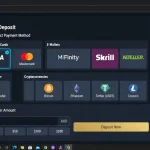
When Amex is available as a payment option, the deposit itself is a short sequence of choices. The card is selected in the cashier, its details are entered, and the intended deposit amount is specified in Australian dollars before the payment is submitted. That is the practical shape of a casino deposit by Amex: a payment method, card information, a currency and an amount, brought together on one screen.
Amex Deposit Process
Step 1: Selection
Select American Express as the payment method in the casino cashier.
Step 2: Card Details
Enter the required American Express card information.
Step 3: Amount and Currency
Specify the intended deposit amount in Australian dollars (AUD).
Step 4: Submission
Submit the payment request to the operator.
The cashier is where the operator’s rules become visible. It shows whether Amex is offered for that transaction and presents the amount fields and any applicable limits. Those limits are not set by the card brand for every casino in common; they are determined by each operator and can differ from one site to another. A specialist review reports that Amex limits may be higher than the limits attached to Visa or Mastercard, but this is a comparison reported for particular casino arrangements, not a standing rule for all cashiers. The displayed terms matter more than a broad comparison.
That distinction is easy to miss when a search for a small Amex deposit produces a number such as ten dollars. A search phrase is not a promise that every casino accepts that amount. The available minimum and maximum depend on the individual cashier, and the deposit amount has to fit within the terms shown there. A fixed figure cannot be supplied as a general Australian standard: the limit belongs to the operator’s payment setup, not to the phrase “Amex deposit.”
The currency field deserves equal attention. The specified amount is in AUD, so the entered figure represents Australian dollars rather than an unspecified amount in another currency. It is not a decorative label. Currency helps define the size of the transaction before submission, and the amount should be read alongside the cashier’s own limit information. If the cashier presents a currency other than AUD, that is a different transaction context from the AUD deposit described here.
EcoPayz Casinos in Australia: What Is Verified
Once the card details and amount are entered, the payment is submitted. At that point, the cashier has received the transaction request; the click itself does not establish that the deposit has been accepted. The sequence remains simple. The rules around it are not.
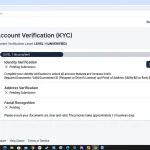
There is also an account-verification layer. Online casinos commonly ask customers to complete a Know Your Customer assessment before allowing financial transactions. KYC is the identity-checking process through which an operator verifies who is using an account. It is separate from filling in card details: a card number and a deposit amount describe a payment, while KYC concerns the account holder. The operator’s requirements therefore sit alongside the cashier’s transaction fields, rather than being part of the card-entry sequence itself.
This can make the order of events less tidy than a single-screen payment suggests. The cashier may show a payment method, while the account is still subject to identity assessment before financial activity is permitted. The relevant details are operator-specific: the general point is that verification is commonly required before financial transactions, not that every site applies an identical checklist or sequence. “KYC complete” is not another card field. It is a separate condition of the account.
KYC
The identity-checking process through which an operator verifies who is using an account before allowing financial transactions.
A deposit by Amex thus involves two kinds of limits. The first is numerical: the individual casino sets the transaction boundaries, and its cashier is the place to see them. The second is procedural: financial transactions may depend on the account having passed the operator’s identity assessment. Neither is settled simply by the presence of an Amex logo. A logo identifies a possible route; it does not define the amount allowed or remove account checks.
For Australian-dollar deposits, the clearest reading of the cashier is also the least dramatic one: confirm that Amex is presented as a method, enter the card information and the AUD amount, then submit the payment request. The transaction limits belong to that operator, and KYC may stand between account registration and financial activity. The mechanics are ordinary. The conditions are not universal.
Instant Deposits, Slower Withdrawals
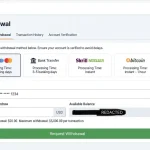
The timing of an Amex payment changes direction depending on whether money is going into a casino account or coming back out. Deposits are processed instantly. Withdrawals are a different matter: a specialist review reports that an Amex casino withdrawal can take up to five days to clear. The contrast is sharp, even if the two stages belong to the same payment route.
An instant deposit gives the transaction a clean, decisive beginning. The amount is processed without the delay associated with a withdrawal, so the balance changes promptly. That speed can make the whole system feel immediate. Money goes in; the account reflects it. But the outward journey is not the reverse of the inward one. A payment method can handle those two directions on different clocks.
Casino Sites That Accept Paysafecard in Australia
For Australian players considering real-money casino payments, this distinction matters more than the appealing shorthand of an “instant” transaction. Instant describes the deposit, not the complete cycle of moving funds in and out. A withdrawal may take as long as five days to clear, according to a specialist review. The reported period is an upper bound, not a promise that every withdrawal will take that long or a guarantee that it will finish sooner.
The difference is easy to overlook because payment language tends to compress separate events into one reassuring label. “Fast” sounds like a property of the method itself, as though speed travels both ways. In practice, the deposit and withdrawal are distinct movements. The first is reported as immediate; the second has a clearing period that may stretch across several days. One direction is brisk. The other keeps its own hours.
That mismatch shapes expectations. A person can see an instant deposit and assume that the same pace governs money leaving the account. Yet the reported withdrawal timing does not support that symmetry. Five days is not instant by another name. It is a period in which the transaction remains unfinished from the perspective of the person waiting for it to clear.
The small word “clear” carries much of the weight here. It marks the point at which a withdrawal has completed its passage, rather than merely being set in motion. The distinction is practical: a request and a cleared payment are not the same moment. For anyone keeping track of funds, the relevant question is not only when a withdrawal begins, but how long the stated clearance window may be.
Casinos That Accept Litecoin in Australia: What’s Verifiable
A specialist review’s estimate should be read as a report about timing, not as a universal timetable for every casino or transaction. The speed of a particular withdrawal may differ, and the phrase “up to” leaves room for that variation. What it does not do is turn the process into an instant one. The deposit timing and the withdrawal timing remain markedly different.
There is a familiar modern assumption behind the desire for instant movement: if a screen updates at once, the money itself must have travelled at the same speed. Digital interfaces make transactions look frictionless. Their neat confirmations conceal the more uneven passage of funds. A balance can change in an instant, while a withdrawal still takes time to clear. The screen is quick. The money has its own pace.
That is the plain timing picture for Amex casino payments: deposits are processed instantly, while a reported withdrawal may take up to five days to clear. The two facts sit side by side, but they do not cancel each other out. Fast in. Slower out.
The Legal Boundary Around Offshore Casino Play
A payment method can make a transaction possible without making the service lawful. That distinction matters in Australia, where the Interactive Gambling Act 2001 places the legal restriction on the operator providing online casino games to people in the country. The rule covers real-money casino play, including games such as poker, blackjack, roulette and pokies. Whether a site accepts Amex does not alter that boundary.
Casino Sites That Accept Skrill in Australia Explained
The Act targets the supply of the service, rather than explicitly making it a crime for an individual to use an offshore casino. That does not turn offshore play into a protected or officially approved activity. It means the law draws its central line around operators offering prohibited gambling services to people physically in Australia, while the player’s position is different. A distinction, not an endorsement.
The Australian Communications and Media Authority, commonly called ACMA, oversees enforcement of the Act. Its role is to act on breaches of the rules governing prohibited interactive gambling services. The regulator’s presence is part of the legal framework, not a stamp of approval for overseas websites that continue to appear accessible. An Amex logo, a cashier that lists the card, or a payment that goes through cannot serve as evidence that an operator is permitted to provide casino games in Australia.
This can be easy to miss because payment pages speak in the tidy language of commerce: card accepted, amount entered, transaction submitted. The law speaks to a different question. It concerns whether the operator may offer the underlying game to someone located in Australia. A site’s payment arrangements and its legal status are separate matters, even when they meet in the same browser window.
There is also a practical consequence for anyone considering an offshore service: Australian consumer law does not protect people using offshore casinos. If a dispute arises over an account, a balance or a promised service, the ordinary protections attached to Australian businesses cannot simply be assumed to apply. The distance is legal as well as geographic. A familiar card brand does not close it.
Legal Warning
The Interactive Gambling Act 2001 prohibits operators from providing online casino games to people in Australia, and Australian consumer law does not protect those using offshore casinos.
That is why searches for casino sites that accept Amex in Australia should not be read as a guide to lawful local gambling. They describe a payment feature, not an Australian licence or a right to offer casino games. The federal framework does not create a category of permitted offshore casino merely because a site accepts Australian customers’ payments. Payment acceptance and legal permission are not synonyms.
The contrast reflects a broader habit of modern commerce: the interface often makes a transaction feel ordinary before the underlying service has been examined. A cashier can be polished, the card familiar, and the transfer technically successful. None of those details changes what the Interactive Gambling Act prohibits operators from supplying to people in Australia. The legal boundary sits behind the payment screen, where convenience cannot redraw it.
What an Amex Payment Covers—and What It Costs
An Amex payment has a narrow job in an online casino cashier: it can fund an account where American Express is accepted. An Amex gift card has the same limited scope. It may be used for a deposit at a casino that takes the card, but it is not a way to receive winnings. The distinction matters because “payment method” can sound like a complete route for money in both directions. It is not.
The cashier’s fee display is therefore only part of the picture. A specialist payment review describes Amex gambling transactions as free, while specialist casino reviews report that deposits often carry no separate charge. Neither observation makes a universal promise. The casino’s own terms determine whether a charge is applied, and the cost of a payment can depend on the operator and the transaction involved.
Trustly Casino Sites in Australia: What Is Known
Withdrawal charges are a separate possibility. Specialist reviews note that a casino may impose a fee when money is withdrawn, even where the deposit itself cost nothing. That charge should not be confused with an Amex fee automatically attached to every gambling payment: the available descriptions distinguish between the card transaction and a fee set by the casino. Small print, as ever, has a job.
Gift cards sharpen the boundary. Their use is confined to deposits at sites that accept American Express; they do not turn into a payout channel simply because the original payment was made with one. That makes them a funding instrument, not a general-purpose casino balance card. The distinction is less glamorous than a payment logo, but more useful.
There is also a difference between a casino’s acceptance of Amex and its treatment of every Amex-branded product. A gift card may be subject to the same basic limitation—deposit use only—yet acceptance still depends on whether the casino takes American Express in the first place. A payment label alone does not establish that a particular card will work, nor does it settle the casino’s fee policy.
For anyone comparing the cost of using Amex, the sensible accounting is modest: a deposit may be free of a separate transaction fee, but that does not guarantee that every casino charges nothing, and a later withdrawal may carry its own charge. The exact terms belong to the operator’s payment rules, not to a general assumption about the card. No single fee description can stand in for every cashier.
Casinos That Accept PayID in Australia: Legal Context
This is why the word “free” needs a boundary around it. It may describe the Amex transaction itself, rather than every cost connected with moving funds through a casino account. Deposit charges, withdrawal charges and the casino’s own conditions are distinct matters. A card can be cost-free at one point in the process while the wider route still has a price. The distinction is plain. The wording often isn’t.
Why an Amex Payment May Not Go Through
An Amex payment can fail at more than one point in the chain. A specialist review has reported that American Express may block a deposit to a particular website. That is a decision attached to the destination, rather than proof that the card itself is unusable everywhere. Acceptance can therefore differ between websites, and a payment that works in one setting may be refused in another.
There is a separate gate at the Australian bank that issued the card. Banks may block gambling-related transactions on Amex at issuer level. In that case, the refusal comes from the bank, not from a cashier’s decision about which payment brands it displays. The two outcomes can look much the same at the point of payment: the transaction does not proceed.
Two gates. One failed payment.
That distinction matters because “Amex accepted” can describe only one part of the route. A website may offer Amex as a payment option while the card issuer still declines a gambling-related charge. Conversely, a bank’s willingness to process such a transaction does not establish that American Express will permit payment to a particular website. A listed card method is not a promise of approval.
Casino Sites That Accept Credit Cards in Australia
The wording on a payment screen may not reveal which party stopped the transaction. What is clear is that acceptance is not decided by a single switch. The card network’s treatment of a destination and the issuing bank’s controls are separate factors, each capable of interrupting the same attempted payment.
This is why a failed Amex payment does not, by itself, settle whether the problem lies with the card, the bank or the website. It records the outcome, not necessarily the source of the refusal. The payment route can be visible; its decision-making is less so.
Withdrawal Eligibility and the Route Back
An Amex deposit does not, by itself, establish that winnings can be returned to the same card. Withdrawal access is a separate condition, set by the operator, and an Amex option may be absent from the cashier’s withdrawal methods even when the card was accepted for a deposit. A specialist review reports that not all Australian-facing online casinos permit withdrawals to American Express; availability can therefore depend on the particular site and its current payment rules.
Casinos That Accept Mastercard in Australia: Legal Limits
Where an operator does offer an Amex withdrawal route, it may require a previous deposit made with Amex. This ties the return method to the original payment history: the card must have been used to fund the account before it can be used for a withdrawal. The condition is not a general promise that every Amex-funded balance can be paid back to the card. The operator’s rules still determine whether the route is available and whether a particular withdrawal qualifies.
The distinction matters because “Amex accepted” can describe only one part of the transaction. A payment method shown for deposits does not necessarily appear among withdrawal choices. The cashier’s separate deposit and withdrawal menus are the practical record of what the operator claims to support, while its written terms govern any conditions attached to that claim. Those details can change, so a past listing is not proof of a present withdrawal route.
A specialist review also notes that some operators may refuse withdrawals to Amex or attach an additional withdrawal fee. That possibility belongs to the operator’s own terms, not to a universal rule about the card. Fee information should be read alongside eligibility, rather than treated as evidence that withdrawal is possible.
CashToCode Casinos in Australia: Acceptance Checks
There is a wider boundary here. The Interactive Gambling Act 2001 prohibits operators from providing real-money online casino games to people in Australia, and Australian consumer law does not protect people using offshore casinos. Payment arrangements do not alter that position. A listed Amex route is a description of a payment feature, not an assurance of legal access or consumer recourse.
Eligibility first. The route back is conditional.
The Extra Charges Hidden in a Payment Route
The amount entered in a casino cashier is not always the full cost of an Amex payment. A charge can be added by the casino, while a separate currency-conversion fee may arise on the card side. They are different parts of the route, and one does not cancel out the other.
A specialist payment review reports that a casino may add a 1.5% surcharge to Amex transfers. That is a possible operator charge, not a fixed feature of every Amex casino payment. Its relevance depends on the casino’s own terms and the transaction being made. Where it applies, the surcharge increases the cost of sending funds; it is not a fee for converting currencies.
Casinos That Accept Neosurf in Australia: What’s Verified
Currency conversion is a separate matter. A specialist review reports a 3% conversion fee on Amex cards. This concerns the card’s conversion of a payment where the transaction and card account currencies differ, rather than a charge set by the casino. An amount displayed in Australian dollars can therefore still involve conversion if the card account is held in another currency.
The distinction matters because the two charges can sit on opposite sides of the same payment. A casino surcharge belongs to the operator’s payment terms; a conversion fee belongs to the card transaction. Checking only the cashier can miss the latter, while looking only at Amex terms may not reveal the former. The published figures should be treated as reported charges, not promises that every card or casino will apply them in the same way.
For a casino payment using Amex, the relevant question is not simply whether a fee exists. It is who applies it, what triggers it, and whether the displayed transaction currency matches the card account currency. Those details determine whether the cost comes from the casino, the currency conversion, or both.
Small print, real arithmetic.
Potential Amex Costs
A casino may apply a surcharge (such as 1.5%) to transfers, and a separate currency conversion fee (such as 3%) may be charged by the card issuer if account currencies differ.
Australia’s Everyday Payment Habits
Australia’s payment culture is built around movement between methods rather than loyalty to a single card. Contactless credit and debit payments are accepted almost everywhere, making the tap an ordinary part of daily transactions. Mobile wallets, including Google Pay and Apple Pay, are similarly widely accepted. The physical card has not vanished; it has acquired digital company.
That ease of switching shapes expectations. Australian consumers are comfortable moving between cards, phone-based wallets and services connected to bank accounts, such as PayPal. Payment choice is less a declaration of allegiance than a practical adjustment to the setting: a card at one counter, a phone at another, a bank-linked service online. Convenience has become a habit, not a novelty.
An online casino’s cashier sits inside this broader culture, but it does not simply reproduce the payment experience of a shop. Everyday contactless acceptance says little about whether a particular website accepts Amex. Nor does the near-ubiquity of mobile wallets establish that they are available for every online transaction. Payment systems may feel continuous to the person using them; the rules behind them are not.
This distinction matters in discussions of an Australian casino using Amex. The surrounding culture is familiar with cards and digital wallets, yet the availability of a payment method at a given online service is a separate question from its presence in ordinary commerce. A familiar logo can suggest a seamless route. In practice, the cashier’s listed methods define what that service permits.
AUD Banking and Payment Options at Roby Casino Australia
There is a small social history in this everyday flexibility. As phones became wallets and bank-linked services became part of online life, paying stopped being a single physical act. It became a sequence of choices made across settings. Australians are at ease with that sequence. But broad comfort with switching methods should not be mistaken for a guarantee that every payment route travels everywhere. Habits travel easily; acceptance does not.
When Amex Is Not the Only Payment Route
Amex is one possible card route, but it does not stand alone. Specialist casino-payment reviews describe Visa as more widely accepted than Amex at Australian-facing online casinos. That is a comparison of reported availability, not a guarantee: payment menus differ between operators, and a card logo on a page does not settle whether a particular transaction will pass.
The distinction matters because cards belong to familiar financial systems, yet their reach is not identical. Amex can be a less predictable option where a cashier supports some card networks but not others. For anyone assessing whether a casino payment method is available, the relevant detail is the operator’s current cashier information—not the assumption that one card’s acceptance implies another’s.
Cryptocurrency changes the mechanics. Bitcoin and Ethereum can be used for deposits and withdrawals that are processed instantly, with limited or no fees. That speed and low-fee potential come with a different kind of payment route: one that does not operate like a card transaction. It is a separate system, not simply another plastic card under a newer name.
Bank transfers sit at the slower end of the comparison. A specialist review source notes that they may take longer and carry higher fees. That can make them less immediate than digital currencies, while their bank-linked character remains distinct from card payments. The trade-off is plain: one route may be quicker, another may be more familiar, and charges or processing times can vary with the method and the service.
Casino Sites That Accept Osko in Australia: What’s Known
None of these options makes an online casino lawful to provide to people in Australia. The payment rail and the legal status of the service are different questions. Nor does a list of methods amount to consumer protection: Australian consumer law does not protect people using offshore casinos.
Payment choice, then, is not a simple ladder from old to new. Amex’s availability is narrower in the specialist-review comparison; Visa appears more broadly accepted; cryptocurrency offers speed with limited or no fees; and bank transfers may take longer and cost more. The cashier shows the route. The surrounding risks remain.
What are the deposit and withdrawal limits at the best Amex casinos?
Limits are set by each casino and can differ for deposits and withdrawals; check the cashier for the amounts that apply. Amex limits are usually higher than Visa or Mastercard limits.
How do you check if casino sites accept Amex deposits?
Check the casino’s cashier for American Express as a deposit option and review its displayed terms. Acceptance can vary by operator and may change.
Are casino Amex payments instant?
Amex casino deposits are processed instantly. Withdrawals can take up to five days to clear.
Why does my Amex deposit get declined at some casinos but not others?
Some casinos do not accept Amex, and Amex or your Australian bank may block gambling payments to a particular website. Acceptance and payment approvals can therefore differ between operators and transactions.
Which online casinos accept American Express for deposits?
Reported options for Australian players include Jackpot City Casino, Spin Palace, Ruby Fortune, Ignition Casino, Joe Fortune and PlayAmo. Check the cashier, as payment options can change.
How long do Amex casino deposits take to process?
Amex casino deposits are processed instantly.
AUD Banking and Payment Options at Roby Casino Australia

AUD Deposit Options at Roby Casino Australia
Roby supports several deposit categories that are relevant to Australian players: Visa, Mastercard, Skrill, Neteller,...

AUD Withdrawal Limits and Times at Roby Casino Australia
Roby supports several payment categories that can be relevant to withdrawals, including cards, e-wallets, bank...

$1 Minimum Deposit Casinos in Australia: What to Know
A casino’s stated minimum may differ from a payment method’s floor or the amount needed...

$1 Minimum Deposit Pokies in Australia: How It Works
A casino’s stated minimum is only one part of the transaction; the payment route may...

$10 Minimum Deposit Casinos in Australia: How It Works
The amount accepted depends on both the casino cashier and payment route, while costs and...

$10 Minimum Deposit Pokies in Australia: What It Means
A site's stated minimum may differ from what its card processor, wallet or other payment...

$2 Minimum Deposit Casinos in Australia: What to Know
A low operator threshold may not survive the payment chain, where processors can set a...

$20 Minimum Deposit Casinos in Australia
Australian casino deposit minimums can depend on the operator’s terms or on the payment method...

$20 Minimum Deposit Pokies in Australia: What It Means
A displayed minimum may come from a payment provider rather than the operator, and the...

$5 Minimum Deposit Casinos in Australia: Payment Rules
The amount accepted by an operator can differ from the minimum transaction required by the...

$5 Minimum Deposit Pokies in Australia: What It Means
The operator’s stated floor can differ from the minimum accepted by a payment method, while...

Anonymous crypto casinos in Australia: risks and tax
Bitcoin can ease casino payments, but anonymity, withdrawals, tax treatment and Australian access all have...

Aristocrat Online Pokies in Australia: What to Know
The search phrase does not verify a game's maker or availability, and Australian rules set...

Aussie Crypto Casinos: Rules, Risks and Payments
Australia’s rules distinguish domestic wagering from online casino services, leaving offshore crypto platforms outside the...

New Australian Online Pokies: Games and Risks
A closer look at how release labels, free-play modes, account access and bonus terms shape...

Online casino payment methods for Australians
See how PayID, transfers, vouchers and mobile wallets differ across deposits, withdrawals, processing delays and...

Best-Paying Online Pokies in Australia: Bitcoin Guide
A practical look at Bitcoin payments, payout claims, bonus conditions and the limits of Australian...

Bitcoin Pokies Australia: How Payments Work
Bitcoin changes how an account is funded, not the pokies themselves; free-play credits and real-money...

Casino Sites That Accept BPAY in Australia: What’s Known
BPAY availability and withdrawal terms need confirmation; Australian-facing language does not make offshore casino games...

Casino Sites That Accept Credit Cards in Australia
Australia’s rules apply before the cashier, while card acceptance, issuer checks and withdrawal support vary...

EcoPayz Casinos in Australia: What Is Verified
The evidence distinguishes payment acceptance from legality and explains why no verified EcoPayz deposit or...

Casino Sites That Accept Osko in Australia: What’s Known
Australian payment habits may make Osko familiar, but they do not confirm that a casino...

Casino Sites That Accept Paysafecard in Australia
Paysafecard availability does not establish that an offshore casino offer is lawful or that a...

Casino Sites That Accept Skrill in Australia Explained
Skrill availability can describe a cashier option, but it does not establish that an online...

Trustly Casino Sites in Australia: What Is Known
The Interactive Gambling Act 2001 prohibits operators from providing real-money online casino games to people...

Under an Hour Casino Withdrawals in Australia Explained
Withdrawal estimates depend on when the operator’s review ends and when the payment channel begins...

No-ID Verification for Casino Withdrawals in Australia
Identity checks remain part of withdrawal processing, while payment methods and bonus conditions can affect...

Casinos That Accept Apple Pay in Australia: Evidence
Mobile-wallet availability in everyday Australian payments does not establish that an online casino supports Apple...

Casinos That Accept Bitcoin in Australia: Payments
Bitcoin changes how funds move, while operator procedures still govern accounts, disputes and the terms...

Bitcoin Cash Casinos in Australia: Legal and Payment Guide
Australian law bars operators from offering online casino games locally; this guide also covers offshore...

CashToCode Casinos in Australia: Acceptance Checks
A payment option listed online does not establish that a casino accepts CashToCode for Australian...

Casinos That Accept Ethereum in Australia
Ethereum is a possible transaction method, but its availability does not establish which games a...

Casinos That Accept Google Pay in Australia: What to Know
Australian law prohibits operators from offering real-money online casino games to people in Australia, and...

Casinos That Accept Litecoin in Australia: What’s Verifiable
The page distinguishes cryptocurrency payment language from evidence of Australian availability, cashier support, or specific...

Casinos That Accept Mastercard in Australia: Legal Limits
A card option at the cashier does not establish legality, and the route used for...

Casinos That Accept MiFinity in Australia: What to Know
Familiar Australian payment options do not show whether an individual casino supports MiFinity or how...

Casinos That Accept Neosurf in Australia: What’s Verified
Neosurf payment claims, casino services and Australian gambling rules are distinct issues that require separate...

Casinos That Accept Neteller in Australia: What to Check
Neteller availability does not establish that an offshore casino may serve Australians or that deposits,...

Casinos That Accept PayID in Australia: Legal Context
Payment availability can explain a cashier’s options, but it cannot establish whether an offshore casino...

Casinos that accept PayPal in Australia: key facts
The article separates everyday payment familiarity from casino cashier availability and examines the limits of...

Casinos That Accept POLi in Australia: What to Know
A POLi label alone does not establish that an online casino can lawfully serve Australians...

Casinos That Accept Tether USDT in Australia
USDT payment claims do not establish which casinos accept it or verify their networks, games,...

Casinos That Accept Visa in Australia: Key Details
Visa availability varies by operator and card, while deposits, withdrawals and legal context remain separate...

Dragon Link Online Pokies in Australia: What Search Shows
The name alone does not establish a particular machine, an online version or availability to...

Easy Withdrawal Casinos in Australia: How Payouts Work
Withdrawal timing depends on operator review and fund release as well as the payment method’s...

Fast Casino Withdrawals in Australia: Payment Routes
Payment networks, casino approval, verification and terms all affect timing, while Australian law limits the...

Instant Bank Transfer Casinos in Australia: How They Work
Banking labels can cover different payment flows, and a deposit method may not be available...

Instant PayID Withdrawals for Real Money in Australia
PayID can move released funds through Australia's NPP, but it cannot determine when an operator...

Instant PayID Withdrawals in Australia: What to Know
PayID can move funds quickly after release, but casino checks, account verification and withdrawal terms...

Low deposit online casinos in Australia: payment limits
A low operator minimum does not guarantee a payment will go through, since the chosen...

New PayID Pokies in Australia: Payments and Checks
PayID can route quick bank transfers, but cashier details, bank limits, delays and bonus terms...

No-KYC Casino Australia: Crypto Payments Explained
A practical look at crypto and PayID payments, identity checks, and the conditions that can...

No Minimum Deposit Casinos in Australia: Payment Limits
The operator’s deposit rule is only one part of the chain; payment providers and purchase...

Online pokies instant withdrawals in Australia
A withdrawal request, operator approval and payment release are separate stages, so transfer speed alone...

Online pokies and PayID in Australia: what to know
PayID can move funds quickly, but cashier confirmation, bank limits, withdrawal checks and wagering terms...

Pay by Phone Casinos Australia: PayID and Bills
PayID can use a mobile number to identify a bank account, but the funds come...

Quick Casino Withdrawals in Australia: How Payouts Work
Payout timing depends on more than the payment method, while Australia's legal position on online...

Real cash online pokies in Australia: law and Bitcoin
A guide to Australia's restrictions on online pokies and the practical trade-offs of using Bitcoin...

Safe online pokies in Australia: legal and payment risks
The guide examines Australian legal limits, offshore operators, Bitcoin payment points, verification and bonus terms...

Same-Day Payout Casinos in Australia: How It Works
A withdrawal estimate can cover operator checks, the payment route, or both, so the stages...

Solana Casino Comparison for Australia
The guide separates Australian law on offshore operators from token transfers, bonus terms, cash-outs and...