$5 Minimum Deposit Casinos in Australia: Payment Rules
 Available in AU

The amount accepted by an operator can differ from the minimum transaction required by the payment route.
Table of Contents
- What a Real-Money Deposit Actually Buys
- The Offshore Context Behind an “Australian” Casino
- When Is Possible—and When It Is Only Nominal
- A Low Entry Point Does Not Make a Bonus a Bargain
- First-Deposit Promotions and Their Fine Print
- Making a Small Deposit from a Phone
- Voucher, E-Wallet and Bank-Transfer Floors
- Why the Casino’s Minimum and the Payment Minimum Differ
- The Small Deposit, the First Spin and the Cash-Out Floor
- AUD, PayID and the Payments That Still Set a Floor
What a $5 Real-Money Deposit Actually Buys
A $5 minimum is a claim about an entry point, not proof that five dollars can travel from a payment account into a casino balance. The distinction is easy to miss because the advertised figure looks precise. Yet a deposit has at least two gates: the operator’s stated threshold and the rules of the payment method. Passing one does not guarantee passage through the other.
An operator may set no minimum of its own. That does not mean every amount will be accepted. A processor or payment method can impose a separate minimum transaction amount, and that rule can become the practical floor. If the method requires more than the advertised amount, a $5 payment may not go through, even when the casino’s own terms appear to permit it. The headline and the transaction are speaking about different things.
This is why “minimum deposit” can be an unstable phrase. It might describe the lowest amount the operator says it accepts, the smallest amount a particular method will process, or the lowest sum that can be deposited successfully through the route chosen. Those meanings overlap only when the operator’s threshold and the payment method’s threshold happen to match. A single figure on a promotional page can conceal that distinction.
A $5 minimum-deposit offer can make it easier to start with a small budget, but the details provided here do not confirm that any listed casino accepts a $5 deposit. Check the minimum for your chosen payment method before depositing.
1. SpinsUp
License: Curacao Gaming Control Board OGL/2023/174/0082 (Dama N.V.) SpinsUp is listed with a Curaçao Gaming Control Board licence, OGL/2023/174/0082, held by Dama N.V.
2. Bizzo Casino
License: Curacao Gaming Control Board (TechSolutions Group N.V.) Bizzo Casino is listed with a Curaçao Gaming Control Board licence associated with TechSolutions Group N.V.
3. WinSpirit Casino
License: Curacao eGaming OGL/2024/923/0383 (Antillephone N.V.) · Min. deposit: A$30 WinSpirit Casino is listed with a Curaçao eGaming licence, OGL/2024/923/0383, and a stated minimum deposit of A$30.
4. DragonSlots Casino
License: Curacao Gaming Authority (Jumpman Gaming Ltd) DragonSlots Casino is listed with a Curaçao Gaming Authority licence associated with Jumpman Gaming Ltd.
5. Roby Casino
License: Curacao eGaming (Roby Games Ltd) Roby Casino is listed with a Curaçao eGaming licence associated with Roby Games Ltd.
6. LevelUp Casino
License: Curacao eGaming OGL/2023/174/0082 (Dama N.V.) · Min. deposit: A$15 LevelUp Casino is listed with a Curaçao eGaming licence, OGL/2023/174/0082, held by Dama N.V. Its stated minimum deposit is A$15.
7. Lucky Dreams
License: Curacao · Min. deposit: A$20 (POLi) Lucky Dreams is listed with a Curaçao licence and a A$20 minimum deposit via POLi.
8. Ricky Casino
Payout speed: crypto under 1 hour, PayID 1-3 business days · Min. deposit: A$20 (A$30 to qualify for the bonus) Ricky Casino lists a A$20 minimum deposit, or A$30 to qualify for the bonus. Stated payout speeds are under one hour for crypto and 1–3 business days for PayID.
9. GoldenCrown
License: Curacao Gaming Control Board OGL/2023/176/0095 (Hollycorn N.V.) GoldenCrown is listed with a Curaçao Gaming Control Board licence, OGL/2023/176/0095, held by Hollycorn N.V.
10. House of Pokies
License: international iGaming licence – jurisdiction not named in the source · Payout speed: PayID 1-24 hours · Min. deposit: A$30 (PayID from A$10) House of Pokies is listed with an international iGaming licence, though the jurisdiction is not named. Its stated minimum is A$30, with PayID deposits from A$10, and PayID payouts are listed at 1–24 hours.
A specialist review reports that usable deposits in Australia commonly have an effective minimum in the A$10–A$20 range. That is a report from one review, not a settled rule for every operator or payment route, and it can change as services alter their terms. Its value is as a reminder that a low advertised floor does not, by itself, establish the amount a payment will need to reach the account. The word “effective” does the important work.
For a person considering a $5 deposit online for real-money casino play, the useful question is therefore not simply whether a page prints that amount. It is whether the full transaction route accepts it. An amount can satisfy the operator’s stated minimum and still fall short of the payment method’s own threshold. Conversely, a method may allow a small transaction while the operator sets a higher minimum. Either mismatch changes what “$5 minimum” means in practice.
The wording can also give an impression of certainty that the underlying arrangements do not support. A stated minimum is a term attached to an operator or payment route at a particular time; it is not a universal standard. The payment service may have its own conditions, and the operator may list different limits for different methods. A figure separated from those conditions is incomplete, even when it is not technically false.
$2 Minimum Deposit Casinos in Australia: What to Know
That is the gap between a nominal minimum and a usable deposit. “Nominal” describes the threshold presented in the terms. “Usable” describes an amount that can actually complete the payment route and reach the account. The latter depends on more than the number beside the deposit button. It depends on the route through which the money is sent.
The small figure can also make the payment process seem simpler than it is. Five dollars sounds like a self-contained decision: a modest sum, a clear boundary. But a minimum is not a promise that every smaller or equal payment will be accepted. It is a boundary within a particular set of rules. Where a processor’s rule differs, the apparent simplicity disappears.
There is a further distinction between a deposit being accepted and a low amount being useful once deposited. That question belongs to the way games and account terms work, rather than to the payment threshold itself. For this part of the calculation, the narrow point is enough: successful payment and advertised eligibility are not interchangeable. A deposit page may state one floor while the chosen route sets another.
The phrase “$5 minimum deposit” should therefore be read as a conditional statement, not a complete description of what a transaction will do. It may identify the operator’s own lowest permitted amount, while leaving the payment method’s requirements unstated nearby or in separate terms. Until both thresholds are considered, the figure tells only part of the story.
A low entry figure is not the same as a low-friction transaction. The difference is small in wording and decisive at checkout.
Attention: A $5 minimum deposit is a nominal entry point; the actual payment may be blocked if the chosen payment method has a higher transaction threshold.
The Offshore Context Behind an “Australian” Casino
An “Australian” label can describe a market being targeted, not a business authorised under Australian law. Many online casinos using Australian branding are licensed offshore, with licences commonly issued in Curaçao, Malta or the Isle of Man. Such a licence comes from another jurisdiction; it is not an Australian casino licence.
That distinction matters when a small deposit is presented in Australian dollars. A $5 minimum deposit may sound like a local offer, but the currency and branding do not establish that the operator is permitted to provide casino games in Australia. The legal question is not how an account is labelled or where a payment is denominated. It is whether the service may be supplied to people in Australia.
The main federal statute is the Interactive Gambling Act 2001, usually shortened to the IGA. It prohibits operators from providing certain online gambling services to people in Australia. Online casino-style games—including pokies, poker, blackjack and roulette—fall within the prohibited services when offered to customers here. The law therefore places the central obligation on the service provider: an offshore licence does not displace the Australian restriction.
The distinction between an operator’s conduct and a player’s conduct is important. The IGA does not make an individual’s act of placing a bet with an offshore operator a criminal offence. That does not make the service lawful for the operator to provide in Australia, nor does it turn an overseas licence into local approval. The rule is directed at the supply of prohibited services; the individual bettor is not criminalised simply for placing a bet.
Bitcoin Pokies Australia: How Payments Work
A border can be legally consequential even when the website looks much like an ordinary commercial service. The interface may use Australian dollars and speak to an Australian audience, while the company and its licence sit elsewhere. The screen presents a familiar transaction. The legal framework does not treat familiarity as permission.
Enforcement belongs to the Australian Communications and Media Authority, or ACMA. It is the federal body charged with applying the IGA and monitoring compliance with national interactive-gambling rules. Its work is not limited to identifying providers. Where a website supplies prohibited gambling services or advertises them in Australia, ACMA can ask internet service providers to block access to it. Blocking is a practical measure aimed at limiting availability, not a declaration that every site carrying an Australian flag or currency is locally regulated.
The scale of that work is visible in the agency’s published enforcement tallies. Since November 2019, ACMA has blocked more than 1,455 illegal gambling and affiliate websites following enforcement action. It has also reported that more than 210 illegal services have left the Australian market since it began enforcing the rules in 2017. Another reported version puts the number of departures above 190.
Those figures describe enforcement activity and departures, not a guarantee that every prohibited site has disappeared. A blocked address may no longer be accessible through a particular route, while services can change their web presence. The figures are evidence of an active enforcement system, not a catalogue of approved alternatives. The distinction is plain enough.
The word “offshore” can sound like a technical footnote, as if it concerned only the location of a company’s paperwork. In this market it describes a real division: foreign licensing on one side, Australian restrictions on supplying casino services on the other. The provider’s licence may matter in the jurisdiction that issued it, but it does not override the IGA’s rule for services offered to people in Australia.
Legal Restriction
The Interactive Gambling Act 2001 prohibits operators from providing online casino services to people in Australia, regardless of whether the operator holds an offshore licence.
That context changes how claims about an Australian casino should be read. A low deposit, a local currency display or an Australian-themed name says something about the intended customer and the transaction presented on screen. None of those details establishes that the operator is authorised under Australian law. A $5 real-money deposit is a payment threshold, not a legal status.
The resulting arrangement is not a simple story of a player breaking the law by placing a bet. Australian law draws a different line: prohibited casino services must not be provided to people in Australia, while the individual’s act of betting is not criminalised under the IGA. ACMA enforces that boundary through monitoring and, where applicable, access-blocking requests. An offshore licence explains where an operator claims authority to work; it does not settle whether that operator may serve Australia.
When $5 Is Possible—and When It Is Only Nominal
A $5 deposit in cryptocurrency is possible in a narrow sense: a specialist review reports that some offshore operators have accepted deposits at that level. That is a report about particular services, not evidence that the amount is a dependable or broadly available entry point. Payment rules can differ between operators and may change, so a figure displayed beside a cryptocurrency option is best read as a stated threshold, not a promise that every transfer of that size will work.
The distinction matters because a casino’s own minimum can be unusually low for crypto. A specialist review describes nominal cryptocurrency floors as sometimes equivalent to $1 AUD. But the displayed floor answers only one question: what amount the operator says it will accept. It does not establish how much reaches the account after transaction costs, or whether the balance is large enough to be useful.
$1 Minimum Deposit Casinos in Australia: What to Know
A cryptocurrency transfer has a route as well as a value. The network and the payment arrangements may involve costs; on a small transfer, even a modest charge takes a larger share of the amount than it would from a larger one. The sum credited can therefore be less than the sum sent. If the casino also requires a minimum transfer amount, its threshold may not align neatly with the operator’s stated deposit minimum. A $5 minimum can exist on the page while remaining awkward in practice.
Currency conversion adds another qualification. A deposit described in AUD may be received through a cryptocurrency whose value is not fixed to the Australian dollar. The amount that must be sent to meet an AUD-denominated threshold can consequently vary. The relevant figure is not just the balance shown in a wallet, but the amount the operator records after conversion and any applicable costs. A small margin between the intended deposit and the stated floor leaves little room for either.
Then comes the game itself. A balance may clear the deposit threshold and still offer limited room to place bets. Minimum bet sizes vary by game, and a balance that cannot comfortably cover several bets may be spent quickly or leave little choice about how to play. The problem is not that a small deposit is inherently unusable; it is that the word “accepted” describes account funding, not the experience that follows.
Crypto deposits with low nominal floors can be affected by network transaction costs and currency conversion, potentially reducing the final balance credited to the account.
This is where a $5 deposit casino claim needs careful reading. The nominal figure can be accurate and still say very little about practical value. A deposit accepted by the cashier is not necessarily a deposit that survives transfer costs, conversion, and the game’s bet structure. The gap is especially visible with crypto because a low operator-set floor can appear independent of the costs and constraints around it. It is not.
There is also a market context behind the claim. An Australian-facing label does not make an offshore real-money casino a locally authorised service. Under Australian law, operators are prohibited from providing online casino games to people in Australia. A low cryptocurrency threshold should therefore be treated as a reported feature of an offshore service, not as an endorsement or assurance of access.
For anyone assessing the claim, the useful comparison is between the operator’s stated minimum, the amount expected to arrive after costs, and the smallest bets available in the relevant games. If those figures are not clear before a transfer, the advertised floor cannot establish whether $5 is enough. A technical minimum is easy to print. Practicality is less obedient.
A Low Entry Point Does Not Make a Bonus a Bargain
A small qualifying deposit can make a promotion look modest and manageable. The bonus attached to it may tell a different story. Its value depends not simply on what appears in the account, but on the wagering requirement, the rules governing each bet and any limit on the amount that can be cashed out.
$1 Minimum Deposit Pokies in Australia: How It Works
A specialist review reports wagering requirements of 35x to 50x the bonus amount for low-deposit promotions. The multiplier is applied to the bonus, not necessarily to the deposit, so the terms must be read carefully to establish what sum is subject to wagering. A generous-sounding match can therefore create a substantial amount of required betting before bonus winnings become eligible for cash out. The arithmetic is less glamorous than the banner.
The multiplier is only one part of the bargain. During wagering, a promotion may set a maximum stake. Bets above that ceiling can put winnings at risk, even when the player has otherwise followed the promotion’s conditions. The cap may apply to each bet or spin while wagering is in progress, rather than to the amount deposited. That distinction matters: a stake that seems ordinary in the game can still conflict with a bonus rule.
Game weighting changes the route through the requirement. Pokies typically count in full, while blackjack and roulette may contribute only a fraction of each bet. A player choosing a table game can therefore make less progress toward the stated target than the same amount of betting on pokies would produce. The headline multiplier does not reveal that difference on its own. A promotion with a lower figure can be more demanding in practice if the preferred games count less.
Then there is the cashout cap. Even after wagering is completed, a promotion may limit how much of the resulting winnings can be withdrawn. A large balance on screen is not necessarily a large amount available to leave the account. The cap may apply to bonus winnings, or be set out in terms that require careful reading; its scope matters as much as its size. Where the terms are unclear, the apparent value is difficult to assess.
Do
- Check the wagering multiplier
- Verify game weighting rules
- Confirm the maximum cashout cap
Don’t
- Assume a low deposit makes a bonus easy
- Ignore maximum stake limits
- Overlook how table games contribute
These conditions work together. A high multiplier asks for more betting; a maximum stake restricts how that betting can be done; game weighting determines how much each wager contributes; and a cashout cap can limit the result at the end. None of those rules is cancelled by a low minimum deposit. The small entry point describes the cost of joining the promotion, not the effort or outcome attached to it.
A useful comparison therefore starts with the bonus amount and the precise basis of the wagering requirement. It then follows the rules through: which games count, what stake is permitted while wagering, and whether a maximum cashout applies. The headline offer is only the front door. The terms decide how narrow the passage becomes.
A cheap entrance can lead to an expensive maze.
First-Deposit Promotions and Their Fine Print
A first-deposit promotion can make a small opening payment look more consequential than it is. The offer’s headline is only the entrance; its terms decide whether that deposit qualifies and what must happen before bonus winnings can be cashed out. For someone comparing a $5 deposit casino for new players, the first question is not how generous the headline sounds. It is whether a deposit of that size meets the stated threshold at all.
The qualifying deposit and the casino’s minimum deposit are not necessarily the same condition. An account may accept a small payment while the promotion requires a larger one. The terms should state the minimum amount eligible for the offer, and whether the qualifying amount refers to the player’s deposit, the bonus, or both. If that detail is unclear, the advertised match cannot be treated as part of the value of a $5 deposit. A low entry point and a qualifying offer are separate things.
$10 Minimum Deposit Pokies in Australia: What It Means
Then comes the wagering multiplier. It sets how much qualifying play is required before bonus-related winnings become eligible for cash out. The calculation can be tied to the bonus amount, the deposit, or a combined figure, so the label alone does not settle the matter. The wording in the terms is decisive. A multiplier without a clear base is a number without a usable meaning.
Game weighting changes how quickly that requirement is counted. Pokies may contribute fully, while table games can count for much less. A player who chooses a game with reduced weighting may therefore make less progress against the requirement than the same stake would suggest. The relevant comparison is not simply which games are available, but how each category contributes under that promotion’s rules.
There is also the maximum stake during wagering. Some offers cap the amount allowed on a single spin; the stated example is $5. Exceeding that cap can void winnings. The danger is procedural: a player may meet the wagering requirement and still lose the associated winnings because one bet breached a term. A maximum stake is not a suggestion.
These checks belong together, but they answer different questions. The qualifying deposit establishes whether the offer applies; the multiplier and game weighting define how progress is counted; the stake cap sets a boundary on play while the requirement remains active. A first-deposit offer should not be read as a simple addition to the account balance. Its conditions form a small system of gates, and passing one does not mean the others have been passed.
First-Deposit Review
- Check if $5 meets the promotion’s minimum qualifying deposit
- Identify the base amount used for the wagering multiplier
- Confirm which games contribute 100% toward requirements
- Verify the maximum stake permitted per spin/bet
For a nominal $5 deposit, the practical test is exact: does that amount meet the promotion’s minimum, what sum is multiplied for wagering, which games count, and what is the permitted stake while the requirement is active? If any answer is buried or ambiguous, the apparent simplicity of the offer disappears. Fine print is where the price of the offer is kept.
Making a Small Deposit from a Phone
A phone can make a deposit feel like a single action: choose an amount, select a payment route and confirm. But the screen does not set the amount that can actually be sent. A casino may display a $5 minimum while the payment method attached to the transaction refuses to process a deposit that small. The practical floor belongs to the route as much as to the operator.
That distinction matters when assessing a $5 deposit at a mobile casino in Australia. The operator’s stated minimum describes what its own cashier is prepared to accept; it does not guarantee that every available payment method will accept the same amount. A low figure on a mobile page is therefore only one part of the transaction. The amount must also pass the payment provider’s rules.
A specialist review has placed the effective minimum for a usable Australian deposit between $10 and $20 AUD. That is a reported estimate, not a fixed national threshold: payment options and their conditions differ. Still, it illustrates why a nominal $5 minimum may not translate into a successful $5 payment. On a phone, the discrepancy can be less obvious because the displayed amount and the final payment step may appear to belong to one continuous process.
$20 Minimum Deposit Pokies in Australia: What It Means
The small screen does not erase the separate decisions involved. The operator sets its own deposit conditions; the payment route applies its own. If the route’s minimum is higher than the amount entered, the deposit cannot be completed at that amount through that route. Choosing a different listed method might change the available floor, but the operator’s headline figure alone cannot establish what will work.
This is why “mobile” and “low minimum” should not be treated as synonyms. A mobile deposit is still a payment transaction, not a special category with its own universal $5 rule. The same amount can be acceptable to the casino’s cashier yet unavailable through a particular method. The reverse can also be true: a method may permit a small transfer while the operator sets a higher minimum.
There is no need to infer special phone features from the word “mobile”. What matters is the sequence of amounts: the minimum shown by the casino, the minimum imposed by the chosen payment route, and the amount finally accepted. If those figures do not align, the advertised floor is nominal for that transaction.
A small screen, a small deposit, and a small print line. The last one still decides.
Voucher, E-Wallet and Bank-Transfer Floors
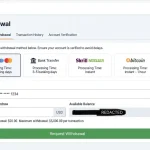
A $5 deposit can look like a small, clear threshold until the payment route enters the arithmetic. The amount accepted by a gambling site is only one part of the transaction. A voucher must first be bought; an e-wallet may impose its own floor or fee; a bank transfer can take days to arrive. Each route has a separate idea of what counts as a usable amount.
Vouchers
Purchase thresholds (e.g., Neosurf at $10 AUD) can effectively raise the minimum deposit amount.
E-wallets
Services like Skrill and Neteller may impose transaction minimums around $10 AUD and apply fees.
Bank Transfers
These often involve processing delays of several business days and potential bank charges.
Neosurf illustrates the voucher problem plainly. Its minimum purchase is typically $10 AUD, so a person holding a $5 target cannot buy a voucher for that amount. Even if a site states a lower deposit floor, the voucher’s purchase threshold effectively raises the sum needed to fund the account. The advertised minimum and the amount that can actually travel through the payment chain are not necessarily the same.
E-wallets are less straightforward. Specialist payment-method coverage reports that Skrill and Neteller deposits to gambling sites may carry fees, while their transaction minimum is often $10 AUD. Those conditions vary, so the wallet’s terms and the site’s cashier details matter more than a headline promising a low entry point. A fee can also make a small transfer poor value: part of the amount goes to the transaction rather than remaining available in the account.
Bank transfers have a different disadvantage. They are the least practical of these options for a low-value deposit because processing can take several business days, and the sending bank may charge a fee. That makes them a poor match for a transaction whose attraction is supposed to be a modest, immediate outlay. The delay does not change the nominal deposit amount, but it does change what the payment feels like: money has left one account without promptly appearing in another.
These constraints help explain why searches for a casino with a $5 minimum deposit can produce a gap between a stated figure and a workable payment. A site may set a low floor while the selected method sets a higher one. With vouchers, the purchase threshold is visible before the deposit begins; with e-wallets, the minimum and possible fee depend on the transaction terms; with bank transfers, delay and bank charges complicate a small sum.
Best-Paying Online Pokies in Australia: Bitcoin Guide
None of these routes makes a $5 deposit impossible in every case. They do show why the payment method cannot be treated as a footnote. A small number on a cashier page is only the first condition. The route has its own price, threshold or waiting time.
Why the Casino’s Minimum and the Payment Minimum Differ
A stated minimum deposit and the amount needed to fund it are not necessarily the same figure. The operator may set no minimum of its own, while the payment method sets a separate threshold. The smaller number can therefore describe only one part of the transaction.
This distinction matters when a page describes a casino with a minimum deposit of $5. That figure may refer to the smallest amount the operator says it will accept, not the smallest amount that can be sent through every available payment route. A payment processor can require more before it will complete a transaction. In practice, its rule may become the binding minimum.
Neosurf makes the difference concrete. Its voucher purchase minimum is typically $10 AUD. If a casino’s stated deposit floor is $5, a Neosurf user still needs a voucher worth at least $10 to fund an account. The operator’s lower threshold does not turn a $10 voucher into a $5 one, nor does it override the purchase requirement attached to the payment method.
The word “minimum” is doing two jobs. One refers to the operator’s acceptance condition; the other refers to the amount needed to use a chosen payment channel. A headline about a $5 casino minimum can be accurate in the first, narrow sense while saying little about what a particular payment route will permit.
Effective Minimum
The actual minimum deposit is determined by the higher of the two thresholds: the operator’s limit or the payment method’s limit.
That is not a technical quibble. A displayed threshold can shape expectations, but it cannot erase the rules of the mechanism that carries the money. The actual floor depends on which condition applies to the transaction: the operator’s own limit, the payment method’s limit, or both. Where the method’s minimum is higher, that higher amount determines what can be deposited through it.
For Australian readers, the distinction is descriptive, not an endorsement of offshore real-money casino services. The Interactive Gambling Act 2001 prohibits operators from providing online casino games to people in Australia. A low advertised threshold does not alter that legal position.
The Small Deposit, the First Spin and the Cash-Out Floor
A $5 first deposit can look like a complete starting sum, but the balance and the ability to cash out are separate matters. If a bonus is attached, its wagering requirement may mean that the credited funds and any winnings remain unavailable for withdrawal until the required betting is completed. The deposit amount alone says little about how far that process can go.
Game weighting changes the arithmetic. Pokies typically count their full stake towards a wagering requirement; blackjack and roulette may count only a fraction, such as 10% or 20%. That does not make a small balance stretch further in any dependable sense. It means the same amount wagered can make markedly different progress depending on the game, while the balance itself remains exposed to losses.
Then comes the cash-out floor. A specialist review source reports that minimum withdrawals at online casinos are often set between $20 and $50 AUD. That figure is not a universal rule: the operator’s terms determine the threshold, and it may sit well above a small opening deposit. A balance below that threshold may therefore be ineligible for withdrawal, even if it consists of winnings rather than bonus funds.
Safe online pokies in Australia: legal and payment risks
The distinction matters most when a small deposit is treated as a test of whether money can be taken back out. A low entry figure is not a promise of an equally low exit figure. Bonus wagering can delay eligibility; the cash-out minimum can then impose a separate barrier. Both conditions affect the practical value of a small balance, but they do different jobs.
The first is about how much qualifying play must be recorded. The second is about the amount required before a withdrawal request can be made. A small balance may clear one condition and still fail the other. The fine print, not the headline deposit figure, sets that boundary.
AUD, PayID and the Payments That Still Set a Floor
A deposit shown in Australian dollars is not necessarily a deposit that can be made through PayID for five dollars. The payment route has its own threshold, separate from the amount an operator may display as its minimum. A specialist payment review places the stated minimum for PayID or instant bank transfers at AU$10–AU$20; that is a reported range, not a fixed rule for every service. In practice, a five-dollar balance can therefore fall short before the casino’s own limit even enters the picture.
Dragon Link Online Pokies in Australia: What Search Shows
PayID’s reputation for speed belongs to a different part of the transaction. A specialist review describes PayID cash-outs as often arriving the same day, while Tether (USDT) sent over the TRC-20 network may clear within minutes after account verification. Those are reported payout timings, not evidence that a small deposit will be accepted. Getting money in and getting money out are separate tests.
The distinction matters in a market where familiar payment labels can linger after the service itself has gone. POLi shut down in Australia on 30 September 2023; it should not be treated as a current route for funding an online casino account. A page still presenting it as available is relying on an obsolete option.
AUD tells the currency. PayID names a transfer method. Neither label, by itself, settles the minimum that a particular transaction can pass. The payment floor remains the practical one.
What is the actual minimum deposit at a no minimum deposit casino in Australia?
A usable deposit commonly has an effective minimum of A$10–A$20, even when the casino itself sets no minimum. Some offshore operators accept as little as A$5 via cryptocurrency, but the payment method’s limits and transaction costs can affect what works in practice.
Are no minimum deposit casinos legal in Australia?
The Interactive Gambling Act 2001 prohibits operators from providing certain online casino services to people in Australia, and an offshore licence does not override that restriction. The Act does not make an individual’s act of betting with an offshore operator a criminal offence.
What payment method is best for small deposits in Australia?
Cryptocurrency can allow the smallest deposits, with some offshore operators accepting the equivalent of A$5 or less. Check transaction costs and the casino’s limits; Neosurf vouchers, Skrill and Neteller commonly have a A$10 minimum, while bank transfers are less practical for small amounts.
What is the minimum deposit and wagering requirements?
A usable deposit commonly has an effective minimum of A$10–A$20, although some cryptocurrency deposits can be lower. Low-deposit bonuses may require wagering of 35x–50x the bonus amount; slots usually count 100%, while blackjack and roulette may count only 10% or 20%.
Can I withdraw winnings from a low deposit?
Yes, but a minimum withdrawal commonly applies, typically A$20–A$50. Bonus wagering requirements and any maximum cashout cap can also affect how much you can withdraw.
Do low deposit bonuses have wagering requirements?
Yes. They may require wagering of 35x–50x the bonus amount; slots usually contribute 100%, while blackjack and roulette may contribute only 10% or 20%.
AUD Banking and Payment Options at Roby Casino Australia

AUD Deposit Options at Roby Casino Australia
Roby supports several deposit categories that are relevant to Australian players: Visa, Mastercard, Skrill, Neteller,...

AUD Withdrawal Limits and Times at Roby Casino Australia
Roby supports several payment categories that can be relevant to withdrawals, including cards, e-wallets, bank...

$1 Minimum Deposit Casinos in Australia: What to Know
A casino’s stated minimum may differ from a payment method’s floor or the amount needed...

$1 Minimum Deposit Pokies in Australia: How It Works
A casino’s stated minimum is only one part of the transaction; the payment route may...

$10 Minimum Deposit Casinos in Australia: How It Works
The amount accepted depends on both the casino cashier and payment route, while costs and...

$10 Minimum Deposit Pokies in Australia: What It Means
A site's stated minimum may differ from what its card processor, wallet or other payment...

$2 Minimum Deposit Casinos in Australia: What to Know
A low operator threshold may not survive the payment chain, where processors can set a...

$20 Minimum Deposit Casinos in Australia
Australian casino deposit minimums can depend on the operator’s terms or on the payment method...

$20 Minimum Deposit Pokies in Australia: What It Means
A displayed minimum may come from a payment provider rather than the operator, and the...

$5 Minimum Deposit Pokies in Australia: What It Means
The operator’s stated floor can differ from the minimum accepted by a payment method, while...

Anonymous crypto casinos in Australia: risks and tax
Bitcoin can ease casino payments, but anonymity, withdrawals, tax treatment and Australian access all have...

Aristocrat Online Pokies in Australia: What to Know
The search phrase does not verify a game's maker or availability, and Australian rules set...

Aussie Crypto Casinos: Rules, Risks and Payments
Australia’s rules distinguish domestic wagering from online casino services, leaving offshore crypto platforms outside the...

New Australian Online Pokies: Games and Risks
A closer look at how release labels, free-play modes, account access and bonus terms shape...

Online casino payment methods for Australians
See how PayID, transfers, vouchers and mobile wallets differ across deposits, withdrawals, processing delays and...

Best-Paying Online Pokies in Australia: Bitcoin Guide
A practical look at Bitcoin payments, payout claims, bonus conditions and the limits of Australian...

Bitcoin Pokies Australia: How Payments Work
Bitcoin changes how an account is funded, not the pokies themselves; free-play credits and real-money...

Casino Sites That Accept Amex in Australia
Acceptance can differ between operators, while deposit conditions, withdrawal eligibility and payment costs depend on...

Casino Sites That Accept BPAY in Australia: What’s Known
BPAY availability and withdrawal terms need confirmation; Australian-facing language does not make offshore casino games...

Casino Sites That Accept Credit Cards in Australia
Australia’s rules apply before the cashier, while card acceptance, issuer checks and withdrawal support vary...

EcoPayz Casinos in Australia: What Is Verified
The evidence distinguishes payment acceptance from legality and explains why no verified EcoPayz deposit or...

Casino Sites That Accept Osko in Australia: What’s Known
Australian payment habits may make Osko familiar, but they do not confirm that a casino...

Casino Sites That Accept Paysafecard in Australia
Paysafecard availability does not establish that an offshore casino offer is lawful or that a...

Casino Sites That Accept Skrill in Australia Explained
Skrill availability can describe a cashier option, but it does not establish that an online...

Trustly Casino Sites in Australia: What Is Known
The Interactive Gambling Act 2001 prohibits operators from providing real-money online casino games to people...

Under an Hour Casino Withdrawals in Australia Explained
Withdrawal estimates depend on when the operator’s review ends and when the payment channel begins...

No-ID Verification for Casino Withdrawals in Australia
Identity checks remain part of withdrawal processing, while payment methods and bonus conditions can affect...

Casinos That Accept Apple Pay in Australia: Evidence
Mobile-wallet availability in everyday Australian payments does not establish that an online casino supports Apple...

Casinos That Accept Bitcoin in Australia: Payments
Bitcoin changes how funds move, while operator procedures still govern accounts, disputes and the terms...

Bitcoin Cash Casinos in Australia: Legal and Payment Guide
Australian law bars operators from offering online casino games locally; this guide also covers offshore...

CashToCode Casinos in Australia: Acceptance Checks
A payment option listed online does not establish that a casino accepts CashToCode for Australian...

Casinos That Accept Ethereum in Australia
Ethereum is a possible transaction method, but its availability does not establish which games a...

Casinos That Accept Google Pay in Australia: What to Know
Australian law prohibits operators from offering real-money online casino games to people in Australia, and...

Casinos That Accept Litecoin in Australia: What’s Verifiable
The page distinguishes cryptocurrency payment language from evidence of Australian availability, cashier support, or specific...

Casinos That Accept Mastercard in Australia: Legal Limits
A card option at the cashier does not establish legality, and the route used for...

Casinos That Accept MiFinity in Australia: What to Know
Familiar Australian payment options do not show whether an individual casino supports MiFinity or how...

Casinos That Accept Neosurf in Australia: What’s Verified
Neosurf payment claims, casino services and Australian gambling rules are distinct issues that require separate...

Casinos That Accept Neteller in Australia: What to Check
Neteller availability does not establish that an offshore casino may serve Australians or that deposits,...

Casinos That Accept PayID in Australia: Legal Context
Payment availability can explain a cashier’s options, but it cannot establish whether an offshore casino...

Casinos that accept PayPal in Australia: key facts
The article separates everyday payment familiarity from casino cashier availability and examines the limits of...

Casinos That Accept POLi in Australia: What to Know
A POLi label alone does not establish that an online casino can lawfully serve Australians...

Casinos That Accept Tether USDT in Australia
USDT payment claims do not establish which casinos accept it or verify their networks, games,...

Casinos That Accept Visa in Australia: Key Details
Visa availability varies by operator and card, while deposits, withdrawals and legal context remain separate...

Dragon Link Online Pokies in Australia: What Search Shows
The name alone does not establish a particular machine, an online version or availability to...

Easy Withdrawal Casinos in Australia: How Payouts Work
Withdrawal timing depends on operator review and fund release as well as the payment method’s...

Fast Casino Withdrawals in Australia: Payment Routes
Payment networks, casino approval, verification and terms all affect timing, while Australian law limits the...

Instant Bank Transfer Casinos in Australia: How They Work
Banking labels can cover different payment flows, and a deposit method may not be available...

Instant PayID Withdrawals for Real Money in Australia
PayID can move released funds through Australia's NPP, but it cannot determine when an operator...

Instant PayID Withdrawals in Australia: What to Know
PayID can move funds quickly after release, but casino checks, account verification and withdrawal terms...

Low deposit online casinos in Australia: payment limits
A low operator minimum does not guarantee a payment will go through, since the chosen...

New PayID Pokies in Australia: Payments and Checks
PayID can route quick bank transfers, but cashier details, bank limits, delays and bonus terms...

No-KYC Casino Australia: Crypto Payments Explained
A practical look at crypto and PayID payments, identity checks, and the conditions that can...

No Minimum Deposit Casinos in Australia: Payment Limits
The operator’s deposit rule is only one part of the chain; payment providers and purchase...

Online pokies instant withdrawals in Australia
A withdrawal request, operator approval and payment release are separate stages, so transfer speed alone...

Online pokies and PayID in Australia: what to know
PayID can move funds quickly, but cashier confirmation, bank limits, withdrawal checks and wagering terms...

Pay by Phone Casinos Australia: PayID and Bills
PayID can use a mobile number to identify a bank account, but the funds come...

Quick Casino Withdrawals in Australia: How Payouts Work
Payout timing depends on more than the payment method, while Australia's legal position on online...

Real cash online pokies in Australia: law and Bitcoin
A guide to Australia's restrictions on online pokies and the practical trade-offs of using Bitcoin...

Safe online pokies in Australia: legal and payment risks
The guide examines Australian legal limits, offshore operators, Bitcoin payment points, verification and bonus terms...

Same-Day Payout Casinos in Australia: How It Works
A withdrawal estimate can cover operator checks, the payment route, or both, so the stages...

Solana Casino Comparison for Australia
The guide separates Australian law on offshore operators from token transfers, bonus terms, cash-outs and...