Curaçao casino licences for Australian players
 Available in AU

The guide distinguishes a foreign operator’s licence from Australia’s rules on supplying online casino games to residents.
Table of Contents
- The Australian law behind offshore casino access
- What a Curaçao licence does—and does not—mean in Australia
- Offshore casinos in a market ACMA can block
- Curaçao casino claims and the limits of a site list
- Online casino gaming and Australia’s legal boundary
- Safety, security and the protections that may be missing
- Crypto casinos still require identity checks
- A new casino is not proof of a safer one
- Does Curaçao have casinos—or is the question about online sites?
The Australian law behind offshore casino access
Australia’s online casino rules draw a line between the company offering a game and the person who encounters it. The Interactive Gambling Act 2001 prohibits domestic operators from providing online casino games to Australian residents. The restriction is directed at the supply of the service; it does not explicitly make an individual player a criminal for using an offshore casino site.
That distinction can be easy to miss. A site may be accessible from Australia, yet access does not turn its service into one that domestic operators may lawfully provide. Nor does the absence of an explicit offence for the player amount to official approval of the activity. The law’s architecture places its clearest prohibition on the operator, while leaving the player’s position materially different.
This is the necessary context for questions about a Curaçao casino licence and Australian players in 2026. The phrase “licensed offshore” describes a claim about an operator’s status elsewhere; it does not change the basic Australian rule about offering online casino games to residents. Those are separate questions, and collapsing them makes the legal picture seem simpler than it is.
For Australian players considering casinos with a Curaçao licence in 2026, checking the licence details can help clarify what is known about an operator. This list provides a concise reference based on the available information for each casino.
1. SpinsUp
License: Curacao Gaming Control Board OGL/2023/174/0082 (Dama N.V.) SpinsUp is listed with a Curaçao Gaming Control Board licence, OGL/2023/174/0082, held by Dama N.V.
2. Bizzo Casino
License: Curacao Gaming Control Board (TechSolutions Group N.V.) Bizzo Casino is listed with a Curaçao Gaming Control Board licence associated with TechSolutions Group N.V.
3. WinSpirit Casino
License: Curacao eGaming OGL/2024/923/0383 (Antillephone N.V.) · Min. deposit: A$30 WinSpirit Casino is listed with a Curaçao eGaming licence, OGL/2024/923/0383, held by Antillephone N.V. Its minimum deposit is A$30.
4. DragonSlots Casino
License: Curacao Gaming Authority (Jumpman Gaming Ltd) DragonSlots Casino is listed with a Curaçao Gaming Authority licence associated with Jumpman Gaming Ltd.
5. Roby Casino
License: Curacao eGaming (Roby Games Ltd) Roby Casino is listed with a Curaçao eGaming licence associated with Roby Games Ltd.
6. LevelUp Casino
License: Curacao eGaming OGL/2023/174/0082 (Dama N.V.) · Min. deposit: A$15 LevelUp Casino is listed with a Curaçao eGaming licence, OGL/2023/174/0082, held by Dama N.V. Its minimum deposit is A$15.
7. Lucky Dreams
License: Curacao · Min. deposit: A$20 (POLi) Lucky Dreams is listed with a Curaçao licence. Its minimum deposit is A$20 using POLi.
8. Ricky Casino
Payout speed: crypto under 1 hour, PayID 1-3 business days · Min. deposit: A$20 (A$30 to qualify for the bonus) Ricky Casino lists crypto payouts as taking under an hour and PayID payouts as taking 1–3 business days. The minimum deposit is A$20, or A$30 to qualify for the bonus.
9. GoldenCrown
License: Curacao Gaming Control Board OGL/2023/176/0095 (Hollycorn N.V.) GoldenCrown is listed with a Curaçao Gaming Control Board licence, OGL/2023/176/0095, held by Hollycorn N.V.
10. House of Pokies
License: international iGaming licence – jurisdiction not named in the source · Payout speed: PayID 1-24 hours · Min. deposit: A$30 (PayID from A$10) House of Pokies is listed with an international iGaming licence, though the source does not name the jurisdiction. PayID payouts are listed at 1–24 hours; the minimum deposit is A$30, or A$10 with PayID.
The distinction also reflects a broader choice in regulation: the state can prohibit a form of commercial supply without framing every customer as an offender. That is not the same as a declaration that offshore play is safe, endorsed or protected under Australian law. It is a narrower statement about where the Act places its explicit prohibition.
For individuals, then, the careful reading is neither “the law permits it” nor “the law criminalises every player.” The Act bars domestic operators from offering these games to residents, while not explicitly criminalising individuals who use offshore casino sites. A small but consequential difference.
What a Curaçao licence does—and does not—mean in Australia
A Curaçao licence and an Australian licence answer different questions. The first is a claim about permission granted under an offshore licensing system. It does not establish that a casino is licensed in Australia, nor does the word “licensed” on a website settle which rules apply to services offered to people here. The distinction is easy to blur: a seal, a licence number and official-sounding language can make a site appear locally authorised when none of those things proves it.
For Australian status, the relevant reference point is ACMA’s public register. ACMA is the country’s primary online gambling regulator, and Australians are encouraged to use the register to check whether a wagering service holds a valid Australian licence. That check is narrower and more useful than relying on a casino’s own description of its credentials. A claim made by the operator is not independent confirmation.
Online Craps in Australia: Casinos and Legal Limits · Playson Online Casinos in Australia: What to Verify
The register also gives the word “licence” a practical test. The question is not simply whether a business says it has a casino licence in Curaçao, but whether the service appears in the Australian register as holding the relevant local licence. An offshore credential cannot be substituted for that entry. If a service is absent, its offshore paperwork does not turn it into an Australian-licensed service.
What the offshore claim can establish
At most, a Curaçao licence claim points to an asserted relationship between an operator and an offshore licensing authority. Its meaning depends on the details behind the claim: which entity holds it, what service it covers and whether the licence is current. A logo alone supplies none of that context. Nor does a licence associated with one company automatically establish that every website using its name or branding is covered.
That is a matter of scope, not geography. The name of a jurisdiction can lend a claim an air of certainty, but a licence is not a universal passport. Even a genuine offshore licence says nothing by itself about whether the operator has Australian authorisation. Those are separate records and separate legal questions.
A casino’s wording can therefore be technically narrow while leaving a broader impression. “Licensed” may refer to an offshore status, while the page says little about the operator’s position in Australia. The Australian register offers a way to test the local part of the claim without treating promotional language as proof. It is the distinction between a credential somewhere and authority here.
Do
- Check ACMA’s public register for valid local licences
- Verify offshore licence numbers with the issuing authority
Don’t
- Treat a Curaçao licence as proof of Australian authorisation
- Rely on a site’s own promotional claims as independent confirmation
Reading claims without mistaking them for protection
A licence number should be treated as a detail to verify, not as a decorative mark of trust. Its presence does not establish that the number is genuine, that it belongs to the website being viewed or that the service is licensed in Australia. Any check of an offshore number would need to be made with the issuing authority; the Australian register answers the separate question of local licensing. Neither should be used as a substitute for the other.
The practical consequence is not that every offshore claim is necessarily false. It is that the claim, even if accurate on its own terms, cannot carry more weight than it supports. It does not make an offshore casino an Australian-regulated service, and it does not show that Australian consumer protections apply. Where an unlicensed service withholds winnings, Australian laws may not assist in recovering them. The apparent reassurance of a licence should not obscure that difference.
Nor does an offshore licence make a site safe to access through a VPN. Using one to reach a casino may lead to winnings being voided, an account being closed or a deposit being lost. A technical route around a location barrier does not change the operator’s Australian licensing status. A workaround is not authorisation.
The same care applies to labels such as “internationally regulated” or “licensed casino.” They describe neither the Australian register nor a specific local approval unless that approval can be independently confirmed there. For a service claiming Australian status, the public register is the relevant check; an offshore licence remains an offshore licence. The distinction is plain. The marketing often is not.
Pragmatic Play Online Casinos in Australia: Rules · Golden Pokies Casino Australia: How Online Play Works
Offshore casinos in a market ACMA can block
An offshore casino website can look like a settled destination: a familiar logo, a polished lobby, a page describing a licence. But access from Australia is not guaranteed by the appearance of the site, or by the jurisdiction named in its footer. ACMA has powers directed at the services offered to people in Australia and at the routes by which those services remain available.
Under the Interactive Gambling Act 2001, ACMA can act against operators that breach the law, including by issuing fines. It can also ask internet service providers to block websites offering prohibited interactive gambling services to Australian customers, as well as services that are unlicensed to adults in Australia. These are related but distinct tools: one concerns an operator’s conduct; the other concerns whether a website can be reached through an Australian internet connection.
A block is not the same thing as a ruling about every claim on a site. It is an access measure, used in response to services that fall within the relevant rules. Nor does a website’s continued availability establish that its service is permitted. A site may change addresses, appear under a different domain, or remain visible while access through some providers is blocked. The internet is good at producing new doors. That does not make them lawful entrances.
VPN Risks
Using a VPN to access offshore casinos may lead to winnings being voided, accounts being closed, or deposits being lost.
ACMA may seek a blocking order as a last resort when it considers customer safety to be at risk. That qualification matters. Blocking is a regulatory response, not a routine endorsement or a consumer rating. It does not tell a person that a site is safe because it has not yet been blocked; equally, the presence of a block says something about regulatory concern, not necessarily about the precise experience of every account holder.
The practical effect is that access can become unreliable or disappear. An Australian internet provider may prevent a page from loading after receiving a request to block it. A site may still be reachable by other means or at another address, but that technical possibility does not turn the service into an authorised one. Using a VPN to reach an offshore casino may also lead to voided winnings, account closure and loss of a deposit. Circumvention can add uncertainty without removing the underlying regulatory issue.
The distinction between a web address and an operator is also important. A blocked domain is a route to a service, not the whole service itself. Operators can use multiple domains, while providers can implement blocking at the website level. For that reason, seeing one page load does not establish that every part of a gambling service is available, lawful or protected under Australian rules. Nor does an inaccessible page, by itself, explain every reason it has stopped loading.
House of Pokies Casino Australia: A Practical Review
This is where online casinos based in Curaçao enter the Australian picture without becoming a special exception to it. The place named in a site’s branding or licence claim does not prevent ACMA from responding to a service offered to Australians. The regulator’s blocking powers turn on the service and its relation to Australian requirements, not on the persuasive geography of a website. An offshore licence and an Australian access block answer different questions.
That distinction can be easy to miss because websites present access as a simple matter of clicking through. Regulation is less theatrical. ACMA’s powers include action against operators and requests to internet providers; they do not guarantee that every prohibited site will vanish from view at once. Blocking is one enforcement method, not a promise of perfect visibility or a seal that sorts every site into safe and unsafe.
For people who lose access or have winnings withheld by an unlicensed service, Australian law may not provide the protections available in a regulated domestic market. Unlicensed services lack Australian consumer protections, and the fact that a site once opened on a phone or computer does not create them after a dispute. Access is not authorisation. A page loading is a modest technical event, not a legal finding.
The broader point is not that every offshore site will be blocked at the same moment, or that a blocked address tells the full story of an operator. It is that ACMA can intervene in both the provision of prohibited services and their accessibility in Australia. That power makes the online casino landscape less like a stable row of storefronts and more like a set of routes subject to enforcement. Sometimes the route closes first.
ACMA Enforcement
Since November 2019, ACMA has requested the blocking of 1,369 illegal gambling and affiliate websites.
Curaçao casino claims and the limits of a site list
A list of Curaçao casinos can tell its audience that certain websites describe themselves as connected with Curaçao. It cannot, by its format alone, establish that any one of them is authorised to offer online casino games to people in Australia. A heading such as “best Curaçao casinos” makes an even larger promise: it suggests that the listed sites have been compared on some meaningful basis. Unless the criteria and evidence are clear, the word “best” is decoration, not a finding.
This distinction matters because a casino licence is not a passport that travels unchanged across borders. A site may display an offshore licence claim, but that does not make it licensed in Australia. Nor does appearing in a directory settle whether the service is available to Australians under Australian rules. The list and the legal question are different documents, even when they sit on the same page.
A list can also become stale. Websites change their branding, terms, ownership or access arrangements; a directory may continue to circulate after the details it once described have changed. A name in a roundup is therefore not proof of present status. A logo or licence number copied into a profile is not independent confirmation either. Where a site makes a licence claim, the number should be checked against the issuing regulator’s official records rather than accepted because it appears repeatedly in promotional material.
Repetition is not verification. It is often only repetition.
Real-Money Pokies on Android in Australia
What a list can—and cannot—show
A directory may be useful as a record of what its publisher chose to include. It can group sites by a stated feature or summarise claims made by operators. But those functions should not be mistaken for regulatory approval. A comparison table can make unlike things look comparable: a site’s promotional description, an editor’s rating and an official authorisation are not equivalent kinds of evidence.
That is especially important when a page uses broad labels such as “licensed,” “safe” or “available to Australian players.” Each needs a defined meaning. “Licensed” may refer to an offshore licence rather than authorisation under Australian law. “Available” may describe whether a webpage loads, not whether the operator is permitted to provide the service here. And a positive review says something about the reviewer’s assessment, not necessarily about the site’s legal position.
The phrase “Curaçao casino licence” can therefore conceal several separate questions: who issued the licence, what entity it covers, whether the claim can be confirmed in an official record, and whether it authorises service to people in Australia. A general Curaçao casino list usually cannot answer all of these merely by placing a site’s name beside a badge. The badge is a claim; the record is the test.
Australia’s own public register serves a different purpose. ACMA has urged people to use its website and the national register to identify gambling products that are legal in the Australian market. That is a more relevant starting point for checking local status than a broad offshore directory. It does not turn every foreign listing into a local authorisation, nor does it certify a site simply because that site appears on a third-party page.
Attention: A site’s presence in a directory or the use of the word "best" does not establish regulatory approval or legal status in Australia.
The Australian context behind lists
The history of website blocking is another reason not to treat a catalogue of offshore sites as a settled guide. Since ACMA made its first request to block a gambling website in November 2019, it has restricted access to 1,369 illegal gambling and affiliate websites. The figure covers both gambling services and affiliate sites, and it describes an enforcement record—not a ranking, endorsement or complete inventory of every offshore casino.
A site list can sit uneasily beside that record. A website may be named in a directory while access to it is restricted, or a directory may omit a service whose status has changed. Neither inclusion nor omission, on its own, tells the whole story. The scale of ACMA’s blocking activity makes the point plainly: the Australian market is not simply a collection of overseas sites waiting to be sorted into “good” and “bad” lists.
A blocked site is not made legitimate by being easy to find elsewhere. A working page is not proof of authorisation either. Online access can shift, while legal status does not follow the convenience of a link. Directories often flatten these distinctions into a neat row, because neat rows are easy to scan. Reality is less obliging.
This is why a “Curaçao casino sites” page should be read as a publisher’s selection, not as a government register. Its descriptions may help explain what a site claims about itself, but they cannot substitute for confirmation from the relevant official source. If the page does not explain how claims were checked, what its labels mean, or when its information was reviewed, its apparent precision deserves little weight.
Real-Money Pokies Apps in Australia: How Access Works
Why “best” is a weak substitute for evidence
Ranking language can make the problem harder to see. “Best Curaçao casinos” sounds like a conclusion reached after comparison, yet a list may not disclose how the comparison was made. It may emphasise features that have little bearing on whether an operator may serve Australians. A polished layout, familiar payment logos or a long catalogue of games does not establish Australian authorisation.
Nor does a high placement establish that a site is protected by Australian consumer rules. If an unlicensed gambling service withholds winnings, Australian laws may not assist in resolving the dispute. The absence of local protections is not repaired by an offshore licence claim or by a reviewer’s favourable verdict. That is a material risk, not a footnote.
VPN access does not change the position. Using a VPN to reach a casino may lead to winnings being voided, an account being closed or a deposit being lost. A list that presents access workarounds as a practical solution would be concealing the very risk it ought to make visible. Technical reachability and lawful authorisation are separate matters.
A careful page can still be informative without pretending to certify its entries. It can distinguish operator claims from independently checked records, make clear what “licensed” refers to, and avoid describing offshore services as approved for Australians. Where those distinctions are missing, the list offers names but not dependable guidance.
Main Conclusions
- Offshore licences do not grant authority to operate within Australia
- Technical accessibility does not equal lawful authorisation
- ACMA can block access to prohibited gambling services
- Unlicensed services lack Australian consumer protections
The useful question is not whether a directory contains many Curaçao casinos, or whether it labels a few as the best. It is whether the claims attached to any particular site can be verified in the appropriate official record—and whether that record says anything about serving people in Australia. A general list cannot supply that answer by implication. It can only point toward a claim that still needs checking.
Online casino gaming and Australia’s legal boundary
The legal line is drawn around the game, not the passport of the company offering it. For people physically in Australia, real-money online slots and casino games including blackjack fall on the prohibited side of that line. A Curaçao connection—whether it describes an operator, a licence or a site’s branding—does not turn the underlying game into something else.
That distinction can be obscured by the language of online gambling. A site may present itself as a gaming club, a casino, or a collection of games delivered through a screen. Yet a slot remains a slot when its reels are digital, and blackjack remains a casino game when dealt by software rather than across a table. The change in setting is real; the change in legal category is not.
This is why the phrase “Curaçao gaming casino” can point in two different directions. It may refer to the place associated with an operator’s licensing claim, or simply to an online casino serving games to people elsewhere. Neither description answers the Australian question by itself. The relevant boundary concerns the provision of real-money online casino games to people in Australia.
There is a certain neatness to the digital disguise: the room disappears, the table becomes an interface, and the game arrives without the architecture that once announced a casino. The law does not depend on that architecture. An online slot does not become a different kind of entertainment because it is accessed from a phone, nor does a blackjack game acquire a new character from a foreign label attached to the website.
Australian Mobile Casinos: Access, Payments and Risks
The distinction also keeps game legality separate from claims about licensing. An offshore licence may describe the operator’s position in another jurisdiction; it does not make online casino gaming lawful for Australians. The game and the licence are related parts of the same commercial offering, but they answer different questions. One concerns what is being provided to people in Australia. The other concerns an operator’s claimed authority elsewhere.
For Australian audiences, that is the essential boundary: online slots and casino games such as blackjack are not lawful real-money offerings. A foreign address or Curaçao association does not redraw it. The screen changes the scenery. Not the rule.
Safety, security and the protections that may be missing
“Safe” can mean two different things in gambling: that payment details are handled securely, or that the rules protect people when play becomes harmful. A Curaçao connection, whether it refers to an online operator or a physical place, answers neither question by itself. A licence held elsewhere does not place an offshore casino under Australian consumer protections.
For a transaction, SSL encryption can help protect information as it travels between a device and a website. It is a technical safeguard, not a guarantee that an operator will handle a dispute fairly, release a withdrawal or remain available. An encrypted payment page and a trustworthy gambling service are not the same thing.
Technical vs Regulatory Safety
SSL encryption protects data during transmission but does not guarantee fair dispute resolution or the release of withdrawals by an operator.
The more consequential gap concerns harm prevention. In markets where licensed online casinos operate, responsible-gambling rules can require operators to provide safeguards. A specialist review describes deposit limits that players can set for daily, weekly or monthly periods; that description should not be mistaken for a feature guaranteed at every offshore site. A control is useful only if it exists, can be applied in practice and cannot be casually undone when a session turns sour.
Reputable platforms also explain gambling-related harm and point to professional support services across Australia. An offshore site may display similar language, but a help link alone does not establish that Australian rules apply or that the operator is accountable to Australian authorities. The distinction is less decorative than it sounds.
Where a service is not licensed in Australia, consumer protections available under Australian rules may not apply, and those laws may not assist if winnings are withheld. Claims about encryption, responsible play or customer support should therefore be read as claims about individual site practices, not as proof of local protection. A polished interface can make the difference difficult to see. It does not remove it.
Using a VPN to reach an offshore casino carries a separate practical risk: the operator may void winnings, close the account or retain the deposit if its terms prohibit that access. A VPN is not a safety measure; it can make an already uncertain dispute harder to resolve. The screen may look secure. The recourse may not be.
Wazdan Online Casinos in Australia: Games and Risks
Crypto casinos still require identity checks
The word “crypto” can make a casino account sound detached from ordinary financial paperwork. The payment method may be digital, but the account still belongs to a person, and a casino may require that person’s identity to be verified before releasing a withdrawal. A Curaçao label, or a reputation as one of the top casinos with a Curaçao licence, does not by itself explain how those checks work.
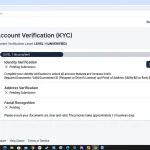
KYC procedures—short for “know your customer”—are part of that process. Verification commonly involves a photo ID, proof of address and evidence that the payment method used belongs to the account holder. The documents connect three things that can otherwise be treated as separate: the name on the account, the person requesting payment and the source used to fund the account.
That connection matters when a withdrawal is requested. A deposit made through a crypto payment method does not necessarily mean that funds can be withdrawn without checks, or that the operator will accept a transaction without matching account details. The requirements and handling of documents depend on the operator’s process; the word “crypto” is not a substitute for reading it.
A verification request can also arise at an inconvenient point: after an account has been used and a payment is pending. That is why KYC is not merely a box in a registration form. It can shape whether an account is treated as complete when money is due to leave it. A polished interface says little about the exact documents required, how they are submitted or how a mismatch is handled.
KYC Verification
Provide Photo ID
Submit a government-issued identification document to verify identity.
Proof of Address
Provide a document confirming the user’s current residential address.
Payment Verification
Submit evidence that the payment method used belongs to the account holder.
The same caution applies to claims about a “top” Curaçao crypto casino. A list or label cannot establish the quality of an operator’s identity checks, nor can a payment method settle questions about the account holder. Those are separate matters. The name of a payment technology may be new; the old administrative question remains: who is making the transaction?
For anyone comparing claims about a crypto casino, the meaningful detail is not simply whether digital currency appears among its payment options. It is whether the operator explains its identity-verification requirements clearly, including what evidence may be requested before withdrawal. If those terms are vague, the payment method has not answered the more consequential question. A digital wallet is not an identity document.
A new casino is not proof of a safer one
A newly launched casino can look like a clean page in a crowded market: fresh branding, polished menus and promises of a better experience. None of that establishes that the service is authorised to operate in Australia, or that it will deal fairly with customers. Newness describes a website’s age, not the quality of its oversight.
That distinction matters in a market where access can disappear. Since ACMA made its first request to block a gambling website in November 2019, roughly 1,011 illegal gambling and affiliate sites have been blocked. The scale of that record is a reminder that an address visible today may not remain reachable, and that a recent launch is no guarantee of staying power. Digital storefronts are easy to open; continuity is another matter.
Nor does an offshore licence settle the Australian question. A site may present a licence as a badge of legitimacy, but that does not make it licensed in Australia or bring it within Australian consumer protections. If an unlicensed service withholds winnings, Australian laws may not help recover them. A neat interface cannot repair that gap.
Online Pokies with E-Wallets in Australia
Accessing a casino through a VPN is no reliable workaround. It may breach the site’s terms and lead to an account being closed, winnings being voided or a deposit being lost. The apparent ability to reach a page says little about the protections available behind it.
The word “new” can be useful when describing a launch. It is not a safety standard, a regulatory finding or evidence that complaints will be resolved. In online gambling, novelty is a marketing fact. Protection is a different question.
Does Curaçao have casinos—or is the question about online sites?
The word “casino” can point to two different things: a place where people gather to play, or a website offering games for money. Curaçao in the first sense is a question about a physical destination. In the context of Australian gambling, it often means something else: an online operator based offshore, or one describing itself as connected to Curaçao.
iPhone casino apps in Australia: access explained
Those meanings should not be folded into one. The relevant Australian rule is directed at operators: under the Interactive Gambling Act 2001, domestic operators cannot offer online casino games to Australian residents. That says nothing about what buildings or venues exist on a Caribbean island.
The distinction matters because a place name can lend an online service a geographical aura. It may suggest a local presence, a licence, or some connection to the island, but the word alone establishes none of those things. Nor does an answer about physical casinos settle whether an online site may serve customers in Australia. They are separate questions, governed by different facts.
A search for Curaçao casinos may therefore begin with travel and end with a website, or the reverse. The first asks what can be found on the island; the second asks about gambling services accessed from Australia. The Australian rule concerns the latter, and it is the operator’s offer of online casino games that matters—not whether the same word also describes a venue elsewhere.
Geography is not a legal argument.
What are the legal consequences for Australian players using offshore casinos?
The Interactive Gambling Act prohibits domestic operators from offering online casino games to Australian residents, but it does not explicitly criminalise individuals for using offshore casino sites. That does not mean offshore play is approved or protected under Australian law; recovering withheld winnings may be difficult.
How long should a withdrawal take from a secure casino?
After approval, PayID and some e-wallet withdrawals can be quick, while bank transfers and cards may take several business days. Timing depends on the payment method and processing.
What documents might be needed for verification?
You may be asked for photo identification, proof of address and proof that you own the payment method used. Casinos may require identity verification before releasing withdrawals.
What responsible gambling tools and support services are available?
Licensed operators are required to provide responsible gambling measures, including deposit limits that can be set daily, weekly or monthly. Reputable platforms also provide information about gambling-related harm and direct players to professional support services in Australia.
Casinos

1spin4win Casinos in Australia: Games and Terms
A practical look at game listings, demo access, bonus conditions and the rules that shape...

Australian Mobile Casinos: Access, Payments and Risks
A practical guide to mobile access, payment routes, bonus conditions and the limits of offshore...

Betsoft Online Casinos in Australia: What to Check
A Betsoft name alone does not verify a game catalogue, free-play access or casino terms,...

BGaming Casinos in Australia: Bonuses and Withdrawals
A practical look at wagering rules, slot contributions, free-play claims, deposits and the checks that...

Booming Online Casinos in Australia: Offshore Rules
A practical look at offshore casino access, payment routes, verification, wagering terms and the limits...

Booongo Online Casinos in Australia: What to Check
The guide distinguishes game and demo claims from verified availability, and explains what bonus terms...

Casino apps for Android in Australia: what to know
Australian rules, browser-based access, payment options and verification all shape what mobile casino play involves....

iPhone casino apps in Australia: access explained
Australian casino sites commonly use browser access or a home-screen PWA rather than a native...

Casino Apps in Australia: How Mobile Access Works
Most Australian mobile casino access comes through a browser or PWA, while real-money services raise...

Casinos Not on BetStop in Australia: What It Means
Offshore platforms may accept Australian registrations, but that does not exempt them from Australian law...

Online Craps in Australia: Casinos and Legal Limits
A practical guide to electronic and live formats, offshore licensing, rules, bonus terms, payments and...

GameBeat Online Casinos in Australia: Bonus Guide
Explore how slot wagering, bonus conditions, game formats and withdrawal rules shape the experience of...

Best Instant Withdrawal Casinos in Australia
Withdrawal speed depends on more than the payment label: account checks, bonus terms and the...

International Casinos for Australian Players: What to Know
A practical look at Australia’s legal boundary, mobile play, payment routes, bonus terms and the...

KA Gaming Casinos in Australia: Slots and Wagering
KA Gaming searches can lead to different games and play modes, while casino availability and...

Microgaming Casinos in Australia: Bonus Rules
Microgaming slot rounds can contribute fully to wagering, but the promotion’s terms decide which games...

NetEnt Online Casinos in Australia: What to Know
The guide separates game-provider claims from offshore access, bonus conditions, payment checks and details that...
New Online Casino Sites in Australia: What to Check
New branding does not establish who operates a casino or what its licence claim means;...

Novomatic Online Casinos in Australia: What to Verify
A provider name or promotional heading alone cannot establish which Novomatic games a site offers...

Offshore Casinos for Australian Players: Access and Limits
A practical look at mobile access, licensing limits, bonus terms and payment routes for Australians...

Big Jackpot Pokies at Online Casinos: What to Know
A practical guide to jackpot tiers, game rules, bonus conditions and the limits of interpreting...

Big Jackpot Slots in Australia: Casino Guide
This guide separates jackpot mechanics and naming claims from the legal reality of offshore casino...

Platipus Casinos in Australia: Bonuses and Play
Demo sessions let players explore a game's pace and mechanics, while bonus wagering depends on...

Playson Online Casinos in Australia: What to Verify
A look at the evidence behind game listings, demo access, offshore casino claims and the...

Playtech Online Casinos in Australia: What to Know
A look at slots, mobile play, offshore sites, offers and withdrawals, with a focus on...

Pragmatic Play Online Casinos in Australia: Rules
Slots generally count in full toward wagering, but that records qualifying play rather than guaranteeing...

Quickspin Online Casinos in Australia: Bonus Maths
Slots generally contribute fully to wagering, but a branded search alone cannot confirm a game,...

Real-Money Online Casinos in Australia: Rules and Risks
Offshore casino options involve game terms, bonus wagering, payment holds and limits on the protection...

Relax Gaming Casinos in Australia: Slots and Bonuses
A practical look at offshore casino play, slot formats, bonuses, wagering conditions and the distinction...

RTG Casinos in Australia: Games, Terms and Trust
RTG identifies a software portfolio, not an operator’s terms, account conditions or the availability of...

Wazdan Online Casinos in Australia: Games and Risks
A practical look at game information, offshore access, bonus conditions and withdrawals, without treating branding...

Australian Online Casino Slots: How Pokies Work
A practical guide to slot outcomes, bonus terms and the distinction between online casino sites...

Golden Pokies Casino Australia: How Online Play Works
See how RNG outcomes, RTP, bonus conditions and cash-outs affect the experience, and what reviews...

Highest-Payout Online Casinos in Australia: RTP Explained
RTP describes a theoretical return over extensive play, while session results and withdrawal speed measure...

House of Pokies Casino Australia: A Practical Review
A grounded look at how independent spins, bonus conditions, account access and withdrawals shape the...

iPad Casinos in Australia: Compatibility and Access
Game availability depends on how each title is built, while screen fit, browser access and...

Inclave Casinos in Australia: Access and Legal Limits
The guide separates account access and promotional claims from the rules governing the supply of...

Secure Online Casinos in Australia: What to Check
In Australia, account protection and payment handling matter, but neither makes offshore real-money casino play...

Online Pokies with E-Wallets in Australia
Mobile pokies run through a casino website or app-like interface, while an e-wallet is a...

Online pokies in Australia: real-money no-deposit play
The guide separates operator obligations from player liability and examines bonus conditions, mobile access and...

Pocket Pokies Casino in Australia: What to Know
The name may feel familiar, but online access, bonus conditions and withdrawals call for separate...

Pokies Open Near Me in Australia: Casino Hours
Casino operating hours do not automatically confirm access to every gaming area, service or entrance....

Pokies Parlour Casinos in Australia: Licences and Offers
The article distinguishes informal parlour language from local casino licensing and examines what reviews, bonuses...

Real-Money Pokies on Android in Australia
The guide explains Australia’s legal boundary, app and browser options, virtual credits, and practical payment...

Real-Money Pokies Apps in Australia: How Access Works
Many services presented as pokies apps run through a mobile browser, with deposits, verification and...

Safe Online Casinos in Australia: Legal Risks
Australian casino safety depends on more than secure payments, including legality, offshore recourse, identity checks,...

Online Casino Australia Real Money: Legal Context
Australia has no locally licensed real-money online casino operating under this framework, though offshore sites...

Online Casinos in Australia: Ratings and Key Considerations
An overview of offshore casino sites, bonus rules, wagering conditions, mobile deposits and the checks...

Uptown Pokies Casino Australia: What Can Be Verified
A careful look at what the name establishes, what remains unverified, and how Australian rules...

VPN-Friendly Casinos in Australia: Access and Limits
A practical explanation of DNS blocking, casino detection, offshore access rules and why changing a...